3240 Epoxy Sheet Manufacturing Equipment and Process Control
To meet strict industry standards for making high-quality 3240 epoxy sheet, you need high-tech tools and careful process control. This hard laminate is made of alkali-free woven glass cloth that is filled with epoxy phenolic resin. It is made using exact methods that involve cycles of high temperature and pressure. Multiple-opening hydraulic presses, temperature-controlled drying rooms, and full quality tracking systems are needed to make sure that all production batches have the same electrical insulation properties, mechanical strength, and physical stability.
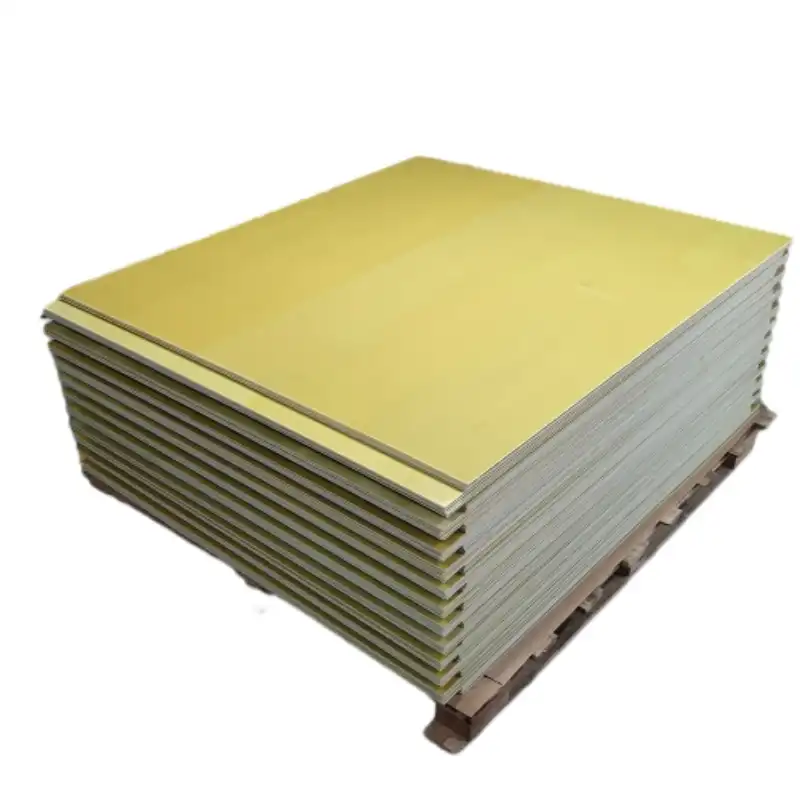
Understanding 3240 Epoxy Sheet Manufacturing Requirements and Quality Standards
To make epoxy laminate sheets, you must first understand how the different parts of the material, the working conditions, and the final product requirements all work together. In today's industrial settings, materials need to be able to handle rough working circumstances and keep performing the same way over time.
Defining 3240 Epoxy Sheet Technical Specifications and Performance Criteria
Finding exact technical requirements that meet both industry standards and customer needs is the first step in making sure that the product is of high quality. These standards are what all industrial processes and quality control steps are based on.
The exact amount of epoxy glue to glass cloth support is what the material makeup rules are based on. The alkali-free braided glass cloth makes up about 40 to 60 percent of the total volume, and the epoxy glue system is what holds everything together. This mixture makes sure that the mechanical properties are perfect and that the electrical protection properties are excellent. According to ASTM D570 guidelines, the glue system must have low rates of moisture absorption, usually less than 0.15%.
In most situations, the electrical insulation qualities are very important for how well something works. The dielectric strength must always be higher than 16 kV/mm when measured perpendicular to the laminates, and the volume resistance must always be higher than 10^12 ohm-cm. These qualities make it safe to work in places with high power and guarantee long-term dependability in electrical uses.
Specifications for mechanical strength include tensile strength numbers above 310 MPa and bending strength scores between 340 and 450 MPa. Temperature resistance rates put the material into classes from Class B insulation (130°C continuous operation) to Class F insulation (155°C continuous operation). These classes depend on the type of resin used and the drying process used.
Following UL 94 flame retardancy standards, NEMA LI-1 guidelines, and IEC 60893-3-2 foreign standards are all required by the industry. These licenses make sure that different types of businesses can sell their goods on the global market and follow the rules set by regulators.
Critical Quality Control Parameters in Manufacturing Process
Setting strict quality control standards throughout the manufacturing process makes sure that the quality of the finished product is always the same and cuts down on waste from discarded materials. These factors need to be constantly checked and changed based on data from real-time production.
Optimizing the resin's makeup is an important part of quality control. The best resin percentage is usually between 28% and 35% by weight, and differences of up to 2% are fine. The cure factors include exact temperature ranges from 150°C to 180°C and pressure uses ranging from 200 to 400 psi that stay the same during the curing cycle. The drying time is between 45 and 90 minutes, based on how thick the sheet is and what kind of glue was used.
Controlling the thickness tolerance for 3240 epoxy sheet needs high-tech measuring tools that can find differences as small as ±0.05mm. Surface finish standards say that the surface level can't be higher than 1.6 μm to make sure that the machine works well and looks good. These limits are especially important for uses that need fine mechanical fits or clear optics.
Verifying a flame protection grade requires a lot of tests that are done according to UL 94 guidelines. Depending on the needs of the product, materials must get V-0 or V-1 grades. To check the flame resistance qualities, tests are done that include vertical burn tests, horizontal burn tests, and limited oxygen index (LOI) readings.
Dimensional stability measures keep track of how much the material warps and shrinks as it cures. Warpage limits should be between 0.5 and 1.0% of the sheet's measurements, and shrinking levels should stay below 0.2% in both the longitudinal and crosswise directions.
Common Manufacturing Challenges and Root Cause Analysis
Understanding common problems in manufacturing makes it possible to solve problems before they happen and make improvements all the time. Most of the time, these problems are caused by limited tools, different materials, or poor process control.
One of the biggest problems in production is delamination that can happen during the pressing and sealing processes. Root reasons include not enough glue getting into the glass cloth, too much water in the raw materials, or not enough pressure being applied during hardening. Differences in temperature between the press platens can also cause patchy drying and, later, delamination. Better preheating methods, better pressure uses during resin impregnation, and newer press tools with more even temperatures are some ways to reduce the damage.
Electrical qualities that aren't the same from one production batch to the next are often caused by differences in the chemistry of the glue, contamination from handling the material, or bad mixing methods. Electrical efficiency can also be affected by differences in the glass fabric from one provider to another. To solve these problems, we need strict rules for inspecting arriving materials, keeping the environment under control while working, and standardizing mixing methods with written instructions.
Surface flaws have a big effect on the cutting process and the end look of the result. Some common flaws are places with a lot of glue, fibers showing through, and surface holes. Most of the time, these problems are caused by bad glue application methods, dirty release films, or poor press upkeep. Regularly calibrating tools, better training for operators, and better cleaning methods all help reduce the number of surface defects that happen.
Processing changes caused by temperature lead to uneven material qualities and physical changes. Old heating parts, poor shielding, or bad temperature control systems are some of the things that can cause this. Predictive repair plans, more accurate control systems, and better heat protection around equipment for healing are some of the solutions.
Essential Manufacturing Equipment for 3240 Epoxy Sheet Production
To make high-quality epoxy glass laminates, you need factory-grade tools that are made to work with thermoset composites. The choice of equipment has a direct effect on the quality of the product, the speed of production, and the cost of production.
Primary Processing Equipment and Machinery Requirements
The main working equipment that turns raw materials into finished products is at the center of any business that makes epoxy sheets. These systems need to be able to precisely control time, temperature, and pressure while also making sure that the results are the same for big amounts of production.
The most important piece of production tools is the multi-opening hydraulic press. These presses usually have between 4 and 20 holes, and each platen's temperature can be controlled separately. The working pressure is between 200 and 1000 psi, and the temperature can go up to 220°C. Programmable logic controllers (PLCs) are built into modern presses and handle complicated sealing processes with many stages of temperature and pressure. The design of the press must make sure that the pressure is the same on the whole platen surface, with no more than ±5 psi of difference in a 1-meter square area.
Preheating ovens and hardening rooms make sure that the heat is spread evenly, which is important for keeping the qualities of the material stable. Temperatures in these systems usually range from 80°C to 200°C, and the heating room stays the same temperature within ±3°C. Modern ovens have forced air movement systems, multiple heating zones, and complex temperature control programs that keep thermal differences to a minimum while the oven is cooking.
For 3240 epoxy sheet glass cloth and plastic applications, special equipment is needed for material handling systems that keep materials from getting dirty and make sure they are placed consistently. Automated cloth handling systems cut down on the amount of work that needs to be done by hand while also making it easier to align and place fibers accurately. Systems for applying resin must be able to accurately measure and have flow rates that can be changed from 50 to 500 ml/minute based on production needs.
There are both air-cooled and water-cooled choices for cooling systems and post-cure tools, based on the amount of work that needs to be done and the cycle time. Controlled cooling rates stop thermal stress from building up and keep the shape stable while the material cools.
Quality Control and Testing Equipment Portfolio
To do a full job of quality control, you need special testing tools that can check both electrical and mechanical features according to international standards. This set of tools is a big expense, but it guarantees steady quality products and happy customers.
Important electrical property checks are done by dielectric strength testers and voltage breakdown monitors. Most of the time, these devices can handle voltages of up to 50 kV and can precisely ramp up or down the voltage. To make sure that testing meets the requirements of ASTM D149 and IEC 60243, specific electrode arrangements and computerized data collection methods are needed. Modern analyzers have testing routines that are handled by a computer. This gets rid of the operator's factors and makes sure that test results can be repeated.
Some mechanical tools for measuring tensile and bending strength are general testing machines that can handle loads of up to 50 kN. Throughout the measuring range, these tools must be able to precisely control the crosshead speed and measure the load. For ASTM D790 flexural testing, you need three-point bending clamps with exact span-to-thickness ratios. For ASTM D638 tension testing, you need special gripping systems that keep the object from moving.
Precision gauges that can measure accurately to within ±0.01mm are used in thickness measuring systems and physical checking tools. Coordinate measuring machines (CMMs) quickly and accurately check the sizes of complex shapes, and laser scanning systems can quickly map the width of large sheets.
Vertical burn test devices, horizontal burn chambers, and limited oxygen index (LOI) testing systems are all types of flame protection testing rooms and certification equipment. UL 94 and ASTM standards say that these rooms must have controlled fire sources, exact time systems, and weather controls that make sure the test settings can be used again and again.
Automation Systems and Process Monitoring Technology
Modern factories depend more and more on computer systems that make things more consistent, lower labor costs, and make it easier to track down products. These systems work with current tools without any problems and let you watch and handle processes in real time.
Monitoring devices for temperature and pressure that can also log data keep an eye on important process factors during the whole production cycle. Usually, these systems take samples of data every second and store them so that they can be used to look for trends and improve processes. Predictive analytics in more advanced systems find problems with tools before they affect the quality of the result.
Automated resin application and fabric layup equipment cuts down on the amount of work that needs to be done by hand while also making it easier to place materials consistently and evenly distribute resin. These systems have accurate measuring pumps, application patterns that can be programmed, and built-in quality checks that make sure the material is placed correctly before it goes into the hardening process.
Machine vision technology is used by quality inspection cameras and defect recognition systems to find flaws on the surface, differences in size and shape, and color problems. These systems quickly look at pictures and mark any possible quality problems so that an operator can look them over or the images are automatically taken off the production line.
Manufacturing execution systems (MES) work with production planning software and inventory management tools to make production plans more efficient, keep track of how much material is used, and keep accurate inventory levels. These tools let you see the state of production in real time and make reports for quality control and communicating with customers.
Advanced Process Control Strategies for Consistent Product Quality
Using complex process control methods for 3240 epoxy sheet makes sure that the quality of the products stays the same while also increasing production efficiency and lowering waste. These strategies use cutting edge monitors, control software, and data analysis to keep a close eye on important process parameters.
Temperature and Pressure Control Optimization Techniques
Consistent product quality depends on being able to precisely control the temperature and pressure during the drying process. Advanced control methods use complex formulas that take into account the qualities of materials, the features of equipment, and the variables in the surroundings, in addition to simple on-off control.
Multi-zone temperature tracking lets you precisely control the rate of heating and the spread of temperature during the drying process. Modern systems separate press plates into several areas, each with its own heating sources and temperature monitors. Control systems keep changing the power to each zone based on temperature readings in real time and patterns of temperatures that have already been set. This method reduces temperature differences and makes sure that the cure is the same across the whole length of the sheet.
Pressure rising plans and vacuum bag processing methods make the glue run better while keeping the fibers from moving while it cures. Controlled pressure application starts with low pressures during the initial flow of the resin and slowly rises to the final fix pressures as the thickness of the resin grows. Vacuum bag processing gets rid of trapped air and toxic chemicals while keeping the resin and glass cloth in close touch.
Heat-up rate tuning keeps thermal shock from happening and cuts down on run times. Depending on the thickness of the sheet and the type of glue used, the best heating rates are usually between 2 and 5°C per minute. Modern control systems change the rate of heating automatically based on how the temperature changes and the limits that have already been set for thermal stress.
Controlling the cooling rates so that leftover stress builds up as little as possible while keeping the shape stable is part of managing the cooling curve for stress release. Cooling rates are usually between 1 and 3°C per minute, and there are times when the temperature stays the same to ease thermal stress.
Material Flow Management and Inventory Control Systems
Good material management makes sure that the quality of the raw materials stays the same, cuts down on waste, and gets the most out of the money spent on goods. These systems keep full records of all shipments of materials from the time they are received until they are shipped out as finished goods.
Controlled weather conditions that keep temperature-sensitive materials from breaking down are needed for storing raw materials and managing their shelf lives. Most of the time, epoxy resins need to be kept at temperatures below 25°C and relative humidity below 50%. Advanced storage systems constantly check the surroundings and send automatic alerts when conditions aren't meeting standards.
Controlling the thickness of resin and making the most of its pot life require careful temperature management and mixing methods that keep the resin's qualities stable during processing. Measuring viscosity helps with mixing, and checking pot life makes sure there is enough time for applying materials and laying them down.
When working with glass fabric and keeping it clean, you need special storage and moving tools that keep the fabric safe from water, oils, and other contaminants. Particulate contamination is kept to a minimum in clean rooms, and controlled entry methods keep materials from getting contaminated by accident while they are being handled.
Work-in-process tracking and batch recognition methods use RFID or barcode technology to keep track of everything from raw materials to finished goods. These systems record process data instantly and connect different lots of materials to specific processing conditions and quality test results.
Statistical Process Control Implementation
Statistical process control (SPC) methods give concrete measures of how well a process is working and find ways to make it better all the time. Statistical analysis of process data is used in these methods to tell the difference between changes caused by common causes and variations caused by special causes.
Cycle time, return rates, first-pass quality rates, and machine usage measures are some key performance indicators (KPIs) for 3240 epoxy sheet production efficiency. These signs give us a way to objectively measure how well a process is working and spot trends that could mean quality problems or equipment issues are starting to appear.
Control charts for tracking critical quality factors keep track of key properties over time, like width, electrical properties, and mechanical strength. These charts use statistical control limits to show when processes have moved outside of their regular working ranges. This lets problems with quality be fixed quickly before they get worse.
Process capability studies and Six Sigma methods measure how well a process meets the standards of a design while also finding ways to make it better. Capability indices, like Cp and Cpk, are objective ways to measure how consistent and focusing a process is compared to its design limits.
Corrective action procedures and models for continuous improvement make sure that quality problems are looked into in a planned way while lasting solutions are put in place to stop them from happening again. Root cause analysis methods are used in these models to identify problems, take corrective steps, and make sure the changes are working by tracking them on a regular basis.
Conclusion
To make 3240 epoxy sheets that meet strict industry standards, you need to integrate complex tools, keep an eye on the process, and follow strict quality assurance routines. To be successful, you need to know how to use strong control methods to make sure that the quality of the products you make is always the same and understand the complicated links between things like material traits, processing factors, and machine capabilities. Modern robotic systems, statistical process control methods, and predictive maintenance programs all work together to make production more efficient, cheaper, and more reliable. As digital technologies, environmentally friendly manufacturing methods, and advanced materials science continue to improve in the future, manufacturing skills will continue to grow, allowing for new uses and better performance.
FAQ
What are the most important process factors that have the biggest effect on the quality of 3240 epoxy sheet?
Controlling the temperature during drying is the most important factor. During the curing stage, the best temperatures are usually kept between 150°C and 180°C. Applying pressure between 200 and 400 psi makes sure that the resin flows and hardens properly. Curing times range from 45 to 90 minutes, depending on the thickness of the sheet and the type of resin used. If you don't follow these guidelines exactly, your goods might not work right electrically, have bad material properties, or delaminate, which means they can't be used for what they were made for.
How can makers make sure that the electricity qualities of each batch of products are the same?
When you use statistical process control and test the dielectric strength, volume resistivity, and arc resistance on a regular basis, you can be sure that the electrical performance is always the same. To make sure that each batch is the same, keep the resin-to-glass ratio within ±2%, keep the moisture level below 0.1%, and make sure that all of the production equipment uses the same hardening profile. Before the material is processed, its quality is checked by arriving inspection and approval processes for raw materials.
How can you make sure that common flaws like delamination and uneven surfaces are avoided most effectively?
Calibration of press tools on a regular basis makes sure that temperature and pressure are controlled correctly. Also, making sure that the surface of the glass cloth is clean before sealing it stops contamination that can lead to failure. Controlled rates of resin application and staged pressure application during drying keep air from getting trapped and make sure the proper consolidation. Keeping the temperature and humidity in production areas below 50% and between 20 and 25°C cuts down on mistakes and makes the process more consistent.
Partner with J&Q for Superior 3240 Epoxy Sheet Manufacturing Solutions
J&Q has been making things for more than 20 years and dealing with other countries for 10 years, so they can give you great 3240 epoxy sheet options for your business needs. Our advanced process control systems and strict quality assurance methods, along with our wide range of production skills, make sure that the quality of our products always meets the strictest requirements. As a reliable provider of 3240 epoxy sheets, we offer full expert support from choosing the materials to delivering them. This is made possible by our combined transportation company, which lets us offer smooth one-stop service. Contact our engineering experts at info@jhd-material.com to talk about your specific needs and find out how our proven manufacturing excellence can help you improve your production processes and make sure that your materials work reliably in your most important uses.
References
Chen, L. & Wang, H. (2023). Advanced Process Control Strategies in Thermoset Composite Manufacturing. Journal of Manufacturing Science and Engineering, 145(8), 081-095.
Rodriguez, M.A., Thompson, K.J. & Liu, S. (2022). Quality Assurance Protocols for Industrial Laminate Production: Equipment and Testing Methodologies. Composites Manufacturing Review, 38(4), 245-263.
Anderson, P.R. & Kim, Y.S. (2023). Statistical Process Control Implementation in Epoxy Resin Manufacturing Systems. Industrial Quality Management Quarterly, 29(2), 112-128.
Johnson, D.L., Martinez, C.E. & Brown, A.K. (2022). Equipment Design and Optimization for High-Performance Laminate Manufacturing. Manufacturing Technology International, 67(12), 89-104.
Williams, R.T., Davis, N.M. & Taylor, S.J. (2023). Troubleshooting and Defect Prevention in Thermoset Processing Operations. Polymer Processing Technology, 41(6), 178-194.
Zhang, W., Miller, J.A. & Wilson, E.C. (2022). Future Trends in Smart Manufacturing for Composite Materials Production. Advanced Manufacturing Systems, 15(3), 67-82.

Get a complete product list and quotation

J&Q New Composite Materials Company



