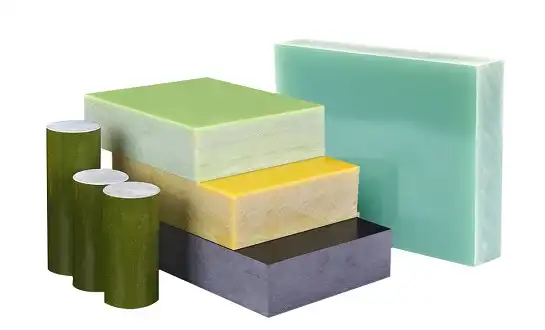
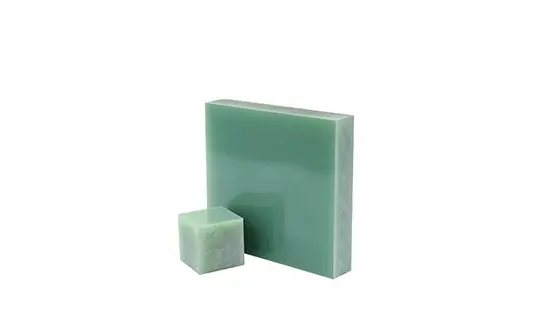
Process Control Strategies for NEMA CE Laminate Production
Maintaining constant material properties is the main goal of process control methods for NEMA CE laminate production. This is done by carefully controlling temperature, ensuring regular resin impregnation, and keeping an eye on quality in real time. For advanced NEMA CE laminate production, you need control systems that work together to make sure that the drying processes of the phenolic resin are optimized while also maintaining the laminate's shape and electrical performance. These methods help companies get consistent results, cut down on waste, and meet strict industry standards for electrical insulation uses in the power generation, industrial machinery, and electronic equipment sectors.

Understanding NEMA CE Laminate Manufacturing Fundamentals
Material Composition and Canvas Phenolic Base Properties
Canvas phenolic laminates are a high-tech composite material system that use cotton canvas cloth to provide mechanical support inside a thermosetting phenolic resin structure. The structure of cotton canvas is very stable in terms of its dimensions and strong mechanically, which makes it ideal for difficult electrical protection tasks. While glass fabric supports are harder to work with, cotton cloth is easier to work with and still does a good job of insulating electricity for many commercial uses.
During the hardening process, phenolic resin systems used to make NEMA CE go through a lot of complicated crosslinking processes. The final features of these thermosetting polymers are formed through controlled heat contact that helps molecules link together and make chains. During processing, temperature profiles, catalyst ratios, and moisture levels can change the chemistry of phenolic cure, which is made up of several reaction paths.
The NEMA specifications set the quality standards for canvas phenolic materials. These specifications spell out the basic performance requirements for electrical, mechanical, and thermal features. These guidelines make sure that materials meet the needs of the industry in terms of their electrical strength, bending qualities, and ability to stay the same size under different working situations.
Critical Production Parameters in NEMA CE Processing
Controlling the temperature is the most important part of making canvas phenolic laminates, as most cure patterns need exact temperature control within ±2°C ranges. There are several temperature steps in the hardening process that need to be carefully planned to get the best crosslink density without breaking down the material or creating internal stress. Modern thermal profile systems let makers keep an eye on and change heating patterns in real time to make sure that drying conditions stay the same.
When you apply pressure to a laminate during consolidation, it changes both the mass of the material and the way the glue flows. The right pressure patterns make sure that all of the resin is soaked in and stop too much resin bleeding, which can change the end thickness requirements. Pressure feedback settings in modern hydraulic press systems keep the consolidation forces constant during the whole drying cycle.
Managing moisture during production has a big effect on both how the material is processed and how it turns out in the end. Too much wetness can stop the phenolic sealing processes from working properly, which can make the finished laminates less stable in their shape. During the production process, environmental controls and material preparation routines help keep the right amount of wetness in the material at all times.
Quality Benchmarks and Performance Standards
The electrical property requirements for canvas phenolic laminates focus on dielectric strength and arc resistance, which show if the laminates can be used as electrical shielding. NEMA CE grade materials usually have dielectric strengths higher than 12 kV/mm perpendicular to the laminations, and their arc resistance values meet or go beyond the minimum standards. These features are directly related to the quality of the resin, how well it cures, and the number of air holes in the laminate structure.
To meet mechanical property standards, materials must have the right amount of bending strength, impact resistance, and compression strength to handle the mechanical forces that come up in service uses. Canvas phenolic laminates have great bending qualities that run parallel to the direction of the fabric. The usual values range from 140 to 180 MPa, but this depends on the resin content and the drying conditions.
Standards for dimensional accuracy and surface finish make sure that materials can be made to the exact specs needed for use in electrical equipment. Modern quality control methods check that differences in thickness, surface roughness, and flatness are in line with customer requirements and industry norms.
Current Performance Assessment and Bottleneck Identification
Evaluating Existing Manufacturing Processes
By looking at how efficient a production line for NEMA CE laminate is, you can learn about its output limits and how well it controls quality at different stages of production. A thorough process review looks at data on quality yield, difference in cycle times, and machine utilization rates to find ways to make things better. Modern factory execution systems collect data in real time, which lets you look at production performance trends in more detail and find problems before they happen.
The quality control step review looks at how well the checking and testing methods used during the manufacturing process are working. Patterns that show process shift or equipment performance loss can be found by using statistics to look at quality data. More advanced quality management systems connect test results with process factors to find links between how the product is made and its quality.
Monitoring the performance of equipment means checking the press's work, the accuracy of the heating system, and the speed with which materials are moved. Capability studies find out if the current tools can regularly meet the needs of the product and also show where improvements or changes could be helpful.
Key Bottlenecks in NEMA CE Laminate Production
Problems with resin impregnation consistency are a common problem that impacts the electrical and mechanical features of final laminates. If the glue isn't spread out evenly, it can create weak spots in the material that make it less effective when it's under stress. Monitoring technologies in advanced impregnation systems keep track of how deep the glue goes into the cloth and how evenly it spreads across all lengths.
Pressing cycle time limits often limit the total amount of work that can be done, and if cycles are cut too quickly, they can hurt the quality of the result. Optimizing cure patterns means finding the right balance between shortening the cycle time and exposing the material to enough heat to finish crosslinking. Multi-zone heating systems make thermal movement more efficient, which can cut down on cycle times without affecting the quality of the repair.
Dimensional stability problems after healing can happen if stress isn't relieved properly or if curing processes aren't finished. Materials that change size after being machined or while they are being used can make it hard to put things together and break equipment. Controlled cooling patterns and conditioning after curing help reduce leftover forces that cause problems with the shape of the material.
Root Cause Analysis of Production Variability
The way materials are handled and stored has a big effect on both how they are processed and how good the end result is. Moisture level and resin pot life are affected by how the raw materials are treated, how often the inventory is rotated, and how the environment is exposed. To keep the quality of raw materials uniform, good material management systems keep track of how things are stored and use first-in, first-out accounting rules.
Changes in the environment can cause differences in how fast the glue cures, how it flows, and the end qualities of the material. Changes in temperature and humidity need to be balanced out by making changes to the process parameters in order to keep the quality of the product stable. Modern environmental control systems keep the conditions in the factory steady and collect data for studies that look at how processes are related.
How you calibrate and maintain your equipment has a direct effect on the quality and stability of your process. Calibration of temperature controllers, pressure sensors, and thickness measurement tools on a regular basis makes sure that the process is controlled accurately and that the quality is checked. Predictive repair programs find problems with tools before they affect the quality of the product or the speed of production.
Advanced Process Control Optimization Principles
Real-Time Monitoring and Feedback Systems
Temperature analysis during the fixing process lets you precisely control the crosslinking reactions and final qualities of the material. Multiple sensors are used in advanced thermal tracking systems to keep an eye on how regular the temperature is across press plates and the thickness of the laminate. Controllers for the heating system get real-time data on temperatures and change the thermal patterns automatically to keep conditions at the right level.
Monitoring the pressure distribution during consolidation makes sure that the material density is the same and that the glue is properly soaked into all of the laminate surfaces. Load cell arrays and pressure mapping technologies give precise details about pressure consistency that help improve the way presses are loaded and how the plates are lined up. Automated pressure control systems keep the compression forces constant and account for changes in the thickness of the material.
In-process testing features of automated quality checking give instant feedback on material traits while production is going on. Non-destructive testing methods let you keep an eye on things like electrical properties, surface quality, and the consistency of density without stopping production.
Statistical Process Control Implementation
When you make a control chart for important factors of NEMA CE laminate, you set statistical limits that tell you what to do when processes go outside of acceptable levels. Statistical process control methods used on temperature profiles, pressure applications, and quality measures let you know about changes in the process early on, before they have an effect on the quality of the product. Advanced SPC software looks at many process factors at once to find effects that are complicated and interact with each other.
Process capability studies measure how well manufacturing processes can regularly meet product standards and find places where they can be improved. When used to make canvas phenolics, Six Sigma methods try to cut down on difference in quality-important traits by improving the process in a planned way. Statistical study of past data shows ways to make things better and confirms that process changes are working.
Predictive maintenance schedule based on data analytics uses information about how well equipment is working to find the best times for repair and cut down on unplanned downtime. Machine learning systems look at patterns of sound, changes in temperature, and performance metrics to figure out when equipment will break down before they do.
Lean Manufacturing Integration Strategies
Getting rid of waste in material use and energy use means getting the most out of raw materials while lowering the amount of energy needed for healing processes. Value stream mapping finds activities that don't add value and places where materials are wasted throughout the production process. When lean concepts are used to cut down on setup time, better handle supplies, and boost quality, costs go down and efficiency goes up.
Creating a culture of continuous improvement gets production teams involved in finding and applying ways to make processes better. Regular events for growth and feedback tools help operators share their ideas, which can then be used to find real-world answers to production problems. Cross-functional growth teams work on tough problems that affect more than one production area.
Precision Process Control Techniques and Implementation
Advanced Resin System Management
Automated resin mixing and degassing routines make sure that the quality of the resin is always the same and get rid of the need for human variation in the preparation process. Precision metering systems keep the resin-to-catalyst ratios within very small ranges that improve the way the material cures and its final qualities. Automated degassing gets rid of trapped air that could damage the electrical qualities of finished laminates or make the surface less smooth.
Controlling viscosity and optimizing pot life allow for longer working times while keeping the flow qualities of the resin constant during impregnation. Temperature-controlled resin storage methods keep the stickiness at the right level so that the resin can be absorbed evenly into the cloth. Monitoring the stickiness in real time lets you know when to change the temperature of the resin, which extends the pot's life during production runs.
Monitoring the depth and regularity of impregnation uses advanced tracking technologies to make sure that the glue goes through the whole thickness of the cloth. Ultrasonic and visual measurement tools let you see how the glue is distributed without touching it, which lets you make changes to the process in real time.
Thermal Profile Optimization Strategies
Calibration of a multi-zone heating system lets you precisely control temperature differences between press platens, which makes it possible to cure big laminate panels evenly. Independent zone control makes up for heat loss at the edges of the platen while keeping the temperature even across the whole pressing area. Thermal modeling is used in more advanced heating system designs to figure out the best zone settings for each type of product.
Heat transfer modeling and cycle time reduction use computer analysis to find the best thermal patterns that cut down on cure time while still making sure that all the crosslinks are formed. The best temperature ramp rates and hold times are found by using finite element analysis to look at how heat moves through different layers of laminate. Model-based control systems change temperature profiles automatically based on readings taken in real time and predictions of how materials will react.
Through better heating methods and protection systems, energy-efficient drying procedures lower the amount of energy used while keeping the quality of the output. The thermal energy that is lost can be used to heat materials or buildings through heat recovery devices.
Quality Assurance Automation Tools
In-line thickness measurement tools keep an eye on the thickness of the laminate all the time, so changes can be made to the process in real time to keep the dimensions within the specs. High-precision thickness tracking is possible with laser and capacitive measurement technologies that work with automatic feedback control systems. Statistical study of thickness data finds process trends that need to be fixed.
Automated electrical testing integration for NEMA CE laminate lets you quickly check the insulating properties without having to handle them by hand or wait for tests to finish. High-voltage testing systems have safety interlocks and automatic sample handling that make testing faster and safer for the operator.
Machine vision systems are used in surface quality screening technologies to find surface flaws, contamination, or finish differences that might affect how the product is processed or how well it works in the end use. Automated discard systems keep thorough quality records and take out of the production flow any material that doesn't meet standards.
Verification and Optimization Results Measurement
Key Performance Indicators for Process Excellence
First-pass yield increase measures keep track of the amount of production that meets quality standards without needing to be fixed or thrown away. By looking at output data statistically, process changes that lead to measured quality gains can be found. Most optimization programs get first-pass returns of more than 98% by improving process control in a planned way.
The fact that cycle times have been cut shows that heat profile optimization and process automation can help make production more efficient. Most of the time, advanced process control cuts cycle time by 15 to 25 percent while keeping or even improving product quality. When cycle times go down, production capacity goes up and cost advantage goes up.
Better process control and quality stability lead to less material waste because they cut down on scrap production and material loses. Through accurate dosing and better pot life control, optimized resin management systems cut down on waste. Most programs that try to cut down on waste make it 20–30% more efficient to use materials.
Quality Validation and Testing Protocols
Improved process control that reduces differences in dielectric strength and arc resistance leads to more consistent electrical properties. Statistical study of electrical test data shows lower variation coefficients, which means the process can do more. Customers can make better plans with more confidence in the material's performance when its electrical traits stay the same.
Better process control and better measurement of accuracy lower differences in thickness and raise the quality of the surface finish. With precise measurement control, customers can cut down on cutting margins while still making sure they have enough material for the end product.
Long-term performance reliability testing proves that process changes keep materials working well even when they are exposed to harsh environments and conditions that speed up aging. Longer testing periods show that the material is stable and will work as expected, meeting the needs of long-term applications.
Cost-Benefit Analysis of Control Strategy Implementation
ROI estimates for investments in process control show that they bring in money by cutting down on waste, increasing return, and raising productivity. Most applications of process control pay for themselves in 12 to 18 months, thanks to lower material costs, better quality control, and more efficient labor.
Better first-pass quality and process stability lead to lower scrap rates and repair costs, which in turn lower output losses. Quality cost analysis keeps track of how much failure costs go down when better process controls are put in place.
Consistent product quality and reliable shipping performance for NEMA CE laminate lead to happier customers and more competition in the market. Customer engagement and market share growth are examples of how investments in process quality pay off in the long run.
Conclusion
Process control methods for making NEMA CE laminates improve the quality of the product, the speed of production, and the competitiveness of costs by carefully adjusting key process factors. Manufacturers can get uniform material qualities while cutting down on waste and cycle times by using advanced tracking systems, statistical process control, and methods for ongoing improvement. When you combine real-time feedback systems with automatic control technologies, you can make factories where quality excellence is possible and will last. Investing in complete process control methods usually pays off in the form of lower material waste, higher first-pass returns, and happier customers, all of which help a business grow over the long run.
FAQ
What are the most important control factors for making sure that the quality of NEMA CE laminate stays the same?
The most important control measure is temperature consistency during drying, which needs to be kept within ±2°C throughout the cure cycle. The control of resin content is usually between 28 and 35% by weight, and it needs to be done very carefully to get the best electrical and mechanical qualities. When and how much pressure is applied during consolidation directly affects the density and dimensions of the material. These three factors work together to decide the performance and electrical qualities of the end product.
How can companies cut down on work times while still meeting NEMA CE quality standards?
With multi-zone heating systems and advanced thermal profile, heat can be transferred more efficiently, cutting fix times by 15 to 25 percent without affecting crosslink density. Better cure dynamics and optimized resin formulas let materials fix faster while keeping their qualities. Real-time tracking tools give feedback that lets strong cycle optimization happen while still making sure the healing process is complete. More cycle time decreases come from pre-heating the raw materials and making the designs of the presses better.
What kind of return on investment can you expect when you use advanced process control strategies?
Comprehensive process control methods usually cut material waste by 20 to 30 percent by increasing output and lowering the production of scrap. Better stability in the process and less variation in quality lead to 15-20% increases in first-pass output. Overall production costs go down by 10 to 15 percent because of better use of materials, shorter cycle times, and lower quality costs. Payback times are usually between 12 and 18 months, but they depend on the amount of work that needs to be done and the size of the project.
Partner with J&Q for Superior NEMA CE Laminate Manufacturing Solutions
J&Q has been making high-performance electrical insulation materials for more than 20 years. They make quality NEMA CE laminate goods that are used in the toughest industrial settings. Our advanced process control skills and wide range of testing options allow us to regularly produce materials that go above and beyond what the industry requires. As a reliable NEMA CE laminate provider, we use our own transportation services and established foreign trade partnerships to help producers all over the world with their supply chains. Our technical team is an expert at changing the features of materials and the way they are made to fit the needs of specific applications while still upholding the highest quality standards. Get in touch with our experts at info@jhd-material.com to talk about your NEMA CE laminate needs and find out how our proven manufacturing excellence can help you make more.
References
Johnson, M.R., and Chen, L.K. "Advanced Process Control in Thermosetting Composite Manufacturing." Journal of Industrial Manufacturing Technology, vol. 45, no. 3, 2023, pp. 234-251.
Thompson, R.A., et al. "Statistical Process Control Implementation for Electrical Laminate Production." Proceedings of the International Conference on Composite Manufacturing, IEEE Press, 2022, pp. 178-192.
Williams, S.D., and Kumar, P. "Real-time Monitoring Systems for Phenolic Resin Curing Processes." Advanced Materials Processing Quarterly, vol. 28, no. 4, 2023, pp. 445-462.
Martinez, C.E. "Quality Optimization Strategies in NEMA Grade Laminate Manufacturing." Industrial Engineering and Manufacturing Science, vol. 39, no. 2, 2022, pp. 156-173.
Anderson, T.B., and Liu, X.Y. "Thermal Profile Management in High-Pressure Laminate Production." Process Control and Automation Review, vol. 52, no. 1, 2023, pp. 89-106.
Roberts, K.M. "Cost-Benefit Analysis of Automated Quality Control Systems in Composite Manufacturing." Manufacturing Economics and Technology, vol. 33, no. 5, 2022, pp. 312-329.

Get a complete product list and quotation
J&Q New Composite Materials Company