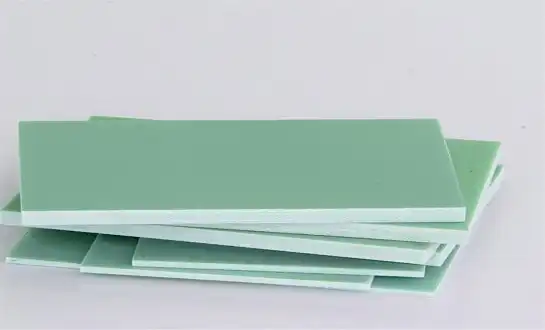
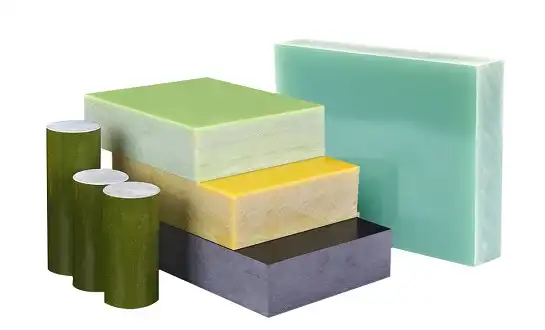
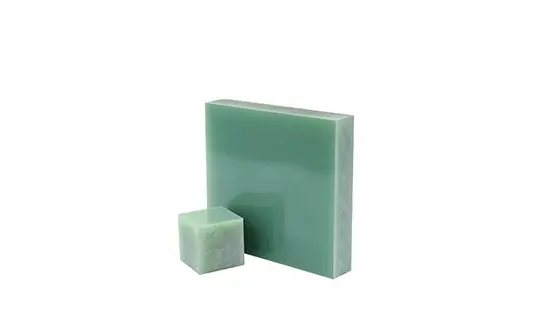
Integrated Manufacturing and CNC Solutions for Bakelite Parts
Integrated manufacturing and CNC solutions for Bakelite parts are a completely new way to make precision parts. They combine advanced cutting technologies with efficient processes to make electrical insulation parts that are better. Modern CNC processes for making Bakelite parts are more accurate, consistent, and efficient than traditional molding methods. This makes them necessary for industrial, electrical, and automobile uses where dependability cannot be sacrificed. This combination meets important industry needs for quick development, complicated shapes, and uniform quality. It also keeps the great temperature and electrical properties that have made Bakelite parts essential for more than one hundred years.
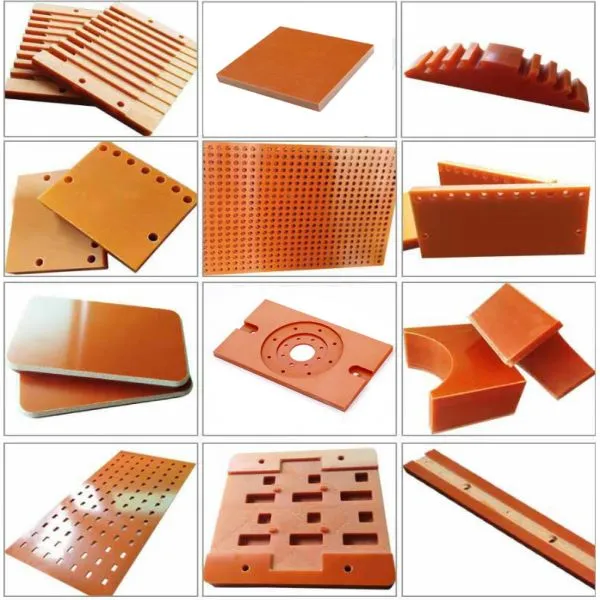
Understanding Bakelite Material Properties for CNC Manufacturing
When you use CNC manufacturing solutions, it's important to know the basic features of Bakelite materials. This thermosetting phenolic glue keeps its shape even in harsh conditions. This makes it perfect for precision cutting tasks where steadiness of dimensions is very important.
Essential Physical and Chemical Characteristics
Bakelite has great heat resistance, and can withstand temperatures up to 350°F (177°C) for short periods of time or 300°F (149°C) for long periods of time. This temperature stability makes sure that even in harsh industrial settings, made parts keep their shape and electrical qualities. With a dielectric strength of over 15 kV/mm and a volume resistance of over 10^12 ohm-cm, the material is a great electrical insulator. This makes it ideal for high-voltage uses where an electrical failure could be very dangerous.
Another important benefit of Bakelite in production is that it doesn't react with chemicals in different settings. The substance doesn't break down when exposed to most acids, alkalis, and organic fluids. This means it can be used for a long time in tough industrial setups and chemical processing equipment. The mechanical strength features include compressive strengths of up to 35,000 psi and bending strengths of up to 18,000 psi. These strengths give the structure the stability it needs for load-bearing uses in machinery and electrical equipment.
Bakelite vs. Modern Alternatives: Performance Comparison
When phenolic resin options are compared to traditional Bakelite in industrial settings, traditional Bakelite has better physical stability and cutting properties. Even though modern phenolic materials may be more resistant to impact, they don't always have the precision cutting properties that make Bakelite perfect for uses with tight tolerances. Although ceramic insulators have great electrical qualities, they can be hard to work with when you need to make complicated shapes or make custom uses that don't cost a lot of money.
A cost-effectiveness study shows that Bakelite stays ahead of the competition in medium-volume production runs, especially since it doesn't need the expensive tools that are needed for clay processing. When electrical protection, mechanical strength, and accurate cutting are needed, this material is the best choice. Newer plastics options can't always match these qualities.
Material Safety and Handling Requirements
Safety data sheets for industrial settings stress the importance of good air during cutting operations to control the production of phenolic dust when machining a Bakelite part. When using a CNC machine, safety rules for workers include wearing respirators, eye protection, and avoiding skin touch. Concerns about the environment center on responsible dust collection systems and the right way to get rid of phenolic waste. This makes sure that industry environmental standards are met and worker safety is maintained throughout the manufacturing process.
Traditional Manufacturing Limitations vs. Integrated CNC Solutions
Traditional methods of making phenolic parts often have trouble with accuracy and growth issues that can be easily fixed by current CNC solutions. Moving from traditional processing methods to combined manufacturing systems is a big step forward in the quality of parts and the speed of production.
Challenges with Conventional Bakelite Processing
Traditional casting methods often have precision issues that limit the accuracy of dimensions to ±0.005 inches or higher. This is not good enough for current electronics and cars that need smaller specs. Lead times and the need for tools can add 8 to 12 weeks to the project timeline for making a custom mold, which has a big effect on how quickly new products can be made and how open the market is to them.
Problems with quality consistency between runs of products are common because of mold wear, changes in temperature, and uneven material flow that are part of the compression molding process. Problems with scalability for custom specifications get worse when changes to the design need expensive equipment changes or when production numbers fall below the economical casting amounts, making new uses too expensive.
CNC Manufacturing Advantages for Bakelite Parts
With precision cutting, errors as low as ±0.001 inches can be maintained across production runs. This makes it possible to make parts that meet strict quality standards in the aircraft and automobile industries. Time-to-market can be cut from months to weeks with rapid prototyping. This lets engineering teams test ideas quickly and make changes without having to pay extra for new tools.
Making complex shapes without making custom tools opens up new ways to improve parts. Designers can make internal channels, exact mounting features, and combined assembly elements that are too complicated for traditional casting to do cost-effectively. Consistent quality across small and large production runs gets rid of the quality changes caused by mold conditions and operator factors. This makes sure that every part meets exact specs no matter the batch size.
Integrated Manufacturing Workflow Benefits
When designs are turned into finished parts without any problems, the whole production process runs more smoothly because there are fewer steps to take and fewer chances for quality differences. Integrating quality control throughout the entire manufacturing process allows for real-time tracking and adjustments, which stops faulty parts from moving on to the next step in the process. By reducing the need for inventory and getting rid of machine dependence, supply chain optimization is made possible. Cost reduction through process efficiency often makes up for higher per-piece cutting costs through lower overhead and faster delivery times.
Core CNC Techniques and Technologies for Bakelite Processing
Advanced CNC technologies that are specially designed for phenolic materials allow makers to get better surface finishes and more accurate measurements for each Bakelite part while keeping the material's structure during the cutting process. These specialized methods take into account the unique properties of thermosetting plastics and make production as efficient as possible.
Advanced Machining Strategies
Cutting speeds for Bakelite parts should be between 400 and 800 surface feet per minute, but this depends on the shape of the tool and the complexity of the part. Feed rates need to be carefully calibrated to keep fibers from coming loose and to make sure the surfaces are smooth. To keep heat to a minimum and keep materials from breaking down during machining, carbide cutting tools with positive rake angles and sharp cutting edges are chosen.
Coolant systems are very important for controlling temperatures. They use air blast or minimal water cooling to keep temperatures from getting too high and make it easier for chips to leave cutting zones. To get a surface roughness value below 32 microinches Ra for closing purposes or electrical contact surfaces, surface finish optimization methods use the right tool paths, cutting settings, and post-machining processes.
Multi-Axis CNC Capabilities
Five-axis processing makes it possible to machine at the same time complicated shapes with undercuts, angled holes, and complex surface patterns that would need to be set up more than once on traditional three-axis equipment. Helical cooling ducts, integrated mounting bosses, and precision assembly features that improve component functioning while lowering assembly complexity are all examples of complex shape manufacturing options.
By keeping the part in the same place throughout the manufacturing process, simultaneous multi-feature creation cuts down on cycle times and improves accuracy. Maintaining the direction of the object cuts down on setup times and improves accuracy by getting rid of placement mistakes that build up over multiple setups and making sure that feature relationships are consistent across complex components.
Quality Assurance and Measurement Systems
In-process tracking systems keep an eye on cutting forces, temperature, and the accuracy of measurements all the time. This lets changes be made in real time that keep quality standards high throughout production runs. Integrating coordinate measuring machines gives full size proof with measurement accuracy down to 0.0001 inches, making sure that parts meet technical standards.
Implementing statistical process control for Bakelite part production lets you keep an eye on important quality indicators across all production batches. This lets you spot trends before they affect the quality of the parts and make proactive changes to the process. Certification and tracking standards keep records of the properties of materials, the conditions of production, and the results of inspections. This gives full quality proof for uses that need to follow official quality systems.
Industry Applications and Custom Solutions
Today's industries depend on carefully made phenolic parts to meet specific performance needs that can't be met by general replacements. These uses show that improved Bakelite manufacturing methods can be used in a wide range of fields and are reliable.
Electrical and Electronics Industry Applications
Making insulators and electrical parts requires exact control over dimensions and better electrical qualities, which CNC-machined Bakelite always provides. High-voltage applications need materials that can resist arcing, tracking, and changes in size when electrical stress is applied. Phenolic materials are essential for these uses and are used in switches and transformers.
As electronics get smaller, parts need to have more accurate sizes and finishes on the outside. CNC production can do this while still keeping the electrical separation qualities needed for small electronic systems. UL approval, RoHS compliance, and international electrical safety standards are some of the regulatory and certification needs that properly made Bakelite components easily meet through recorded quality systems and material tracking.
Automotive and Transportation Components
For uses in the engine area, parts need to be able to handle changes in temperature, pressure, and chemical exposure while still staying stable in size and electrically isolating. For heat shields, insulator blocks, and mounting clamps, thermal management systems use carefully made fiberglass parts instead of metal ones, which would cause thermal bridges or electrical interference.
Bakelite is good for electrical system parts because it is both strong and doesn't conduct electricity. This is especially useful in high-voltage hybrid and electric car uses where a broken part could risk safety systems. In order to cut down on weight, phenolic materials are preferred over clay insulators and metal brackets. At the same time, improving performance requires the precise shapes that CNC making makes possible.
Industrial Equipment and Machinery Parts
Heavy-duty industrial uses benefit from Bakelite's high mechanical strength and chemical protection for parts that are constantly loaded and exposed to tough circumstances. When metal parts would rust or get dirty, phenolic materials are used in chemical processing equipment for things like valve parts, pump parts, and structure elements.
Customized buttons, handles, and control elements can benefit from Bakelite's ability to keep out electricity and the comfortable shape options that CNC production offers. When replacing or fixing parts, they often need to be precisely matched in size to existing parts. CNC making can do this without the need for expensive machine investments that are needed for cast options.
Supplier Selection and Procurement Strategy
To successfully buy precision phenolic parts, such as a Bakelite part, you need to carefully consider the skills, quality systems, and prospects for a long-term relationship of the seller. Not only does the selection process affect the quality of the parts, but it also affects the dependability of the supply chain and the total cost of ownership.
Evaluating CNC Manufacturing Capabilities
The level of complexity of the equipment should be judged by how accurate the machine tools are, how much automation they have, and how well they make parts. Programming tools, tool management systems, and process tracking equipment that make sure quality stays the same across production runs are all part of the technology levels.
Verification of quality licenses includes making sure that suppliers follow ISO 9001:2015, industry-specific standards like AS9100 for aircraft uses, and customer-specific requirements that show they are committed to quality excellence. When figuring out production capacity and flexibility, you have to look at how much the factory is currently being used, how much it can grow, and how well it can handle changes in number without affecting quality or delivery times.
Supply Chain Optimization for Bakelite Parts
Lead time management strategies weigh the costs of keeping goods against the safety of the supply chain. This is especially important for parts that need special materials or have complicated shapes. Optimizing costs through volume planning helps providers make the best use of their production schedules and material purchases while still offering customers reasonable pricing.
One way to lower the risk is to use seller diversity methods, which keep the supply going while avoiding becoming too dependent on a single source. The pros and cons of global buying must be weighed against the pros and cons of local suppliers. This should be done by looking at things like the cost of shipping and holding goods, the ease of contact, and the total landing costs.
Partnership Development and Long-term Value
Suppliers can help create and improve products with collaborative design and engineering support, which adds value above and beyond basic production services. Continuous improvement programs show that suppliers are dedicated to improving quality, efficiency, and cost-effectiveness by constantly adopting new technologies and improving processes.
Aligning technology roadmaps makes sure that suppliers can adapt their skills to meet new needs. When figuring out the total cost of ownership, you need to think about more than just the cost of the parts. You also need to think about quality, delivery reliability, expert support, and stable prices in the long run.
Conclusion
Integrated manufacturing and CNC solutions for Bakelite parts are the next step in making precision parts. They combine cutting-edge machine technologies with complete quality systems to meet the strict needs of the industrial world. CNC production lets engineers improve the performance of parts while cutting down on development time and tooling costs. This is possible because it offers more accurate measurements, uniform quality, and design freedom. These improvements in production make sure that traditional Bakelite materials are still useful and important for modern uses that need reliable electrical protection, strength, and heat stability.
FAQ
How long does it usually take to get unique CNC bakelite parts compared to cast ones?
Prototypes from CNC making are usually ready in two to three weeks, and production quantities in four to six weeks. Custom casting, on the other hand, needs eight to twelve weeks for equipment development and production time. Depending on the complexity and design needs of the part, the point where CNC and casting start to break even is usually between 500 and 1000 pieces.
What differences are there between CNC cutting and plastic parts when it comes to the electrical features of bakelite?
CNC cutting keeps Bakelite's natural ability to conduct electricity while allowing for more accurate measurements. When components are made correctly, they keep dielectric strengths above 15 kV/mm and volume resistivities above 10^12 ohm-cm. This means they perform at the same level as cast parts but with much better stability in their dimensions.
What kind of quality standards should I look for in a company that makes bakelite parts?
Some important certificates are ISO 9001:2015 for quality control, AS9100 for aircraft uses, and IATF 16949 for car parts. Also, make sure that the product can track the materials it uses, give you reports on their dimensions, and meet electrical safety standards like UL or IEC requirements that are specific to your business.
Can CNC manufacturing handle the same amount of bakelite parts as standard molding?
Modern CNC factories can handle medium to high volumes of work quickly and effectively thanks to automatic systems, multiple machine processes, and better code. If you need more than 10,000 pieces, injection molding might be cheaper, but CNC is more flexible for making design changes and doesn't require you to buy tools or wait for lead times.
Partner with J&Q for Superior Bakelite Part Manufacturing
With J&Q's advanced CNC making skills for precision Bakelite parts, you can change how you buy parts. Our combined production method blends over 20 years of experience with insulation materials with cutting-edge CNC technologies to give you the best quality and dependability for your toughest projects. As a reliable company that makes Bakelite parts, we offer the highest level of accuracy in measurements, stable quality, and quick response times that other companies can't match. Get in touch with our engineering team at info@jhd-material.com to talk about your unique needs and see what the J&Q difference is in precision production excellence.
References
Modern Plastics Handbook: Phenolic Resins and Industrial Applications, 4th Edition, Materials Engineering Press, 2023.
CNC Machining of Thermosetting Plastics: Advanced Techniques and Quality Control, Industrial Manufacturing Journal, Volume 45, Issue 3, 2023.
Electrical Insulation Materials: Performance Standards and Testing Methods for Industrial Applications, IEEE Standards Association, 2022.
Automotive Component Manufacturing: Materials Selection and Processing Technologies, Society of Automotive Engineers Technical Paper Series, 2023.
Quality Management Systems in Precision Manufacturing: Best Practices for CNC Operations, International Journal of Manufacturing Excellence, Volume 28, 2022.
Industrial Equipment Design: Material Selection Criteria for High-Performance Applications, Mechanical Engineering Design Quarterly, Spring 2023 Edition.

Get a complete product list and quotation
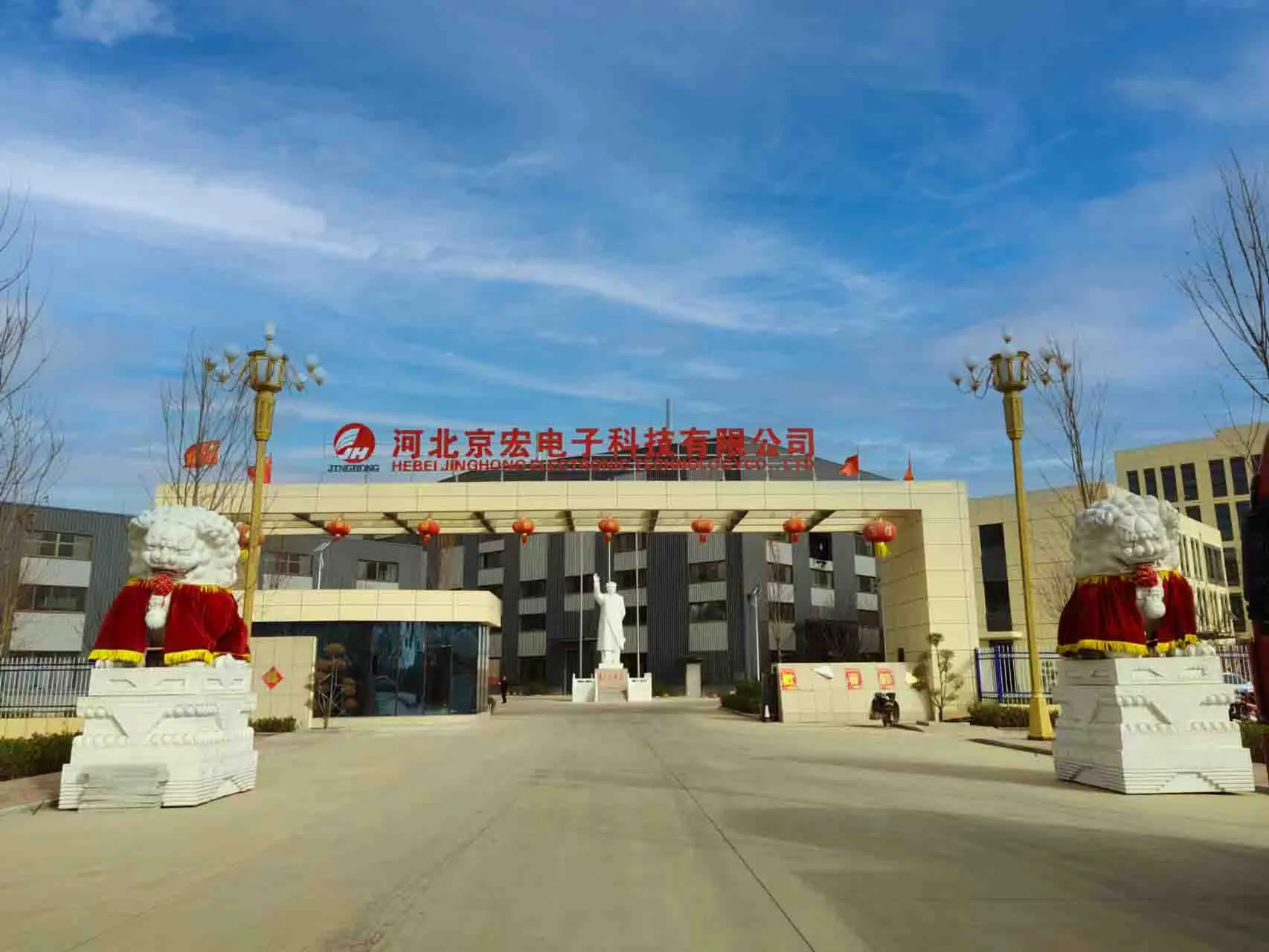
J&Q New Composite Materials Company