Manufacturing Phenolic Cotton Laminates for Better CNC Stability
To get the best physical stability and machine performance, making phenolic cotton laminates for CNC uses needs to be done using carefully controlled methods. When made specifically for CNC processes, these thermosetting industrial composites have great mechanical qualities. They are made by laminating layers of cotton cloth with phenolic resin binders under high pressure. When phenolic cotton laminates are made for machining, they go through stricter production steps that make sure the density is evenly spread, the fibers are oriented correctly, and the surface quality is above average. This makes them perfect for environments where precision manufacturing is important and dependability is key.
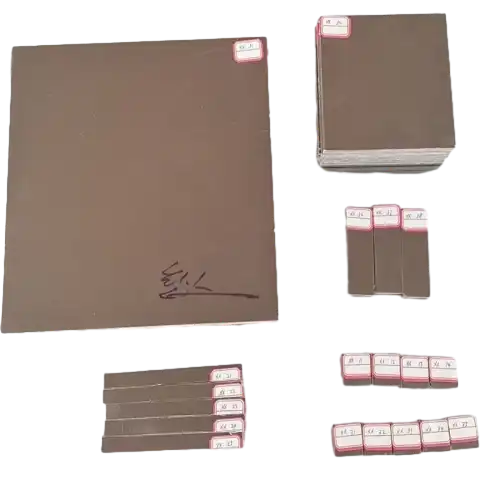
Understanding Phenolic Cotton Laminates and CNC Stability Challenges
Choosing the right materials and knowing how they work with current cutting tools are the most important parts of working with CNC machines. Advanced manufacturing facilities need materials that stay true to size and work the same way throughout multiple production runs.
What Are Phenolic Cotton Laminates and Their Core Properties?
The use of phenolic resin to soak cotton cloth laminates is an advanced technical solution that combines natural reinforcing with thermosetting polymer structures. High-temperature bonding methods make cross-linked molecular structures in these materials, which gives them great mechanical strength and heat stability. The cotton fiber structure has great tensile strength in many directions, and the phenolic glue system has better resistance to heat and steadiness in its shape.
There are different types of NEMA grades, such as CE (business electrical) and special formulas, which set specific property needs for various uses. The layered structure has compression strengths of more than 200 MPa and dielectric strengths above 15 kV/mm, which means it is very good at keeping electricity from flowing. These materials can work in temperatures ranging from -65°C to +120°C, which makes them ideal for harsh industrial settings.
Common CNC Machining Stability Issues with Standard Materials
Because the density distribution and fiber direction aren't always the same, standard industrial laminates can be hard to work with in precise cutting settings. These flaws show up as differences in dimensions when cutting, which causes problems with tolerance and more tool wear. High-speed spinning processes, like those used in drilling and milling, often cause problems with delamination in standard materials.
Inconsistent thermal expansion across different thicknesses of a material can lead to bending during long cutting processes. A lot of common laminates have problems with fiber pullout that hurt the quality of the surface finish and the accuracy of the measurements. Standard materials often have internal stress patterns that cause unpredictable changes in size after they are machined, which makes quality control hard for precise makers.
Why Material Selection Impacts CNC Performance and Precision?
In CNC processes, the properties of the material directly affect the cutting settings, the life of the tools, and the quality of the end part. When materials have uniform qualities, they can be cut with the same amount of force, which lowers shaking and improves surface finish across production runs. Dimensional stability determines the tightest limits that can be used and keeps scrap rates to a minimum in high-precision situations.
Choosing the right material cuts down on setup time because you don't have to change tools and parameters as often. When materials behave consistently, cutting speeds and feed rates can be adjusted, which makes production more efficient overall. Quality material qualities allow computerized production processes with little help from humans, which helps reach the goals of lean manufacturing.
Manufacturing Process Fundamentals for Superior CNC-Grade Phenolic Cotton Laminates
To make high-performance materials for CNC uses, you need to use complex manufacturing processes that go beyond the normal ways of making industrial laminates. Advanced process control systems keep an eye on important factors during production to make sure that quality and performance stay the same.
Raw Material Selection and Cotton Fabric Preparation
The choice of high-quality cotton cloth for phenolic cotton laminates is what makes laminates work so well in CNC uses. Before being processed, high-quality cotton cloth is put through a lot of tests to see how strong it is, how even the weave is, and how much water is in it. Controlled drying processes are used to get rid of any remaining wetness while keeping the fibers' structure and maintaining the fabric's shape.
Weave pattern optimization makes sure that the resin is spread out evenly during impregnation and that the fiber density stays the same across the thickness of the material. Using fabric tensioning systems during preparation stops warping that could lead to weak spots or uneven dimensions in finished laminates. As part of quality cotton preparation steps, contaminants are removed and fiber orientation is checked to ensure uniform cutting features.
Phenolic Resin Impregnation and Curing Process Control
Controlled molecule cross-linking is a key part of getting the best CNC machine qualities from resin mixture chemistry. Advanced impregnation methods make sure that the resin is evenly spread throughout the cotton fiber structures and that the exact ratios of resin to fiber are maintained. Temperature-controlled impregnation stops drying before it's time and makes sure that all of the fibers are saturated.
Multi-stage healing methods create the best cross-link density without causing internal stress concentrations that might affect the stability of the dimensions. During cure, controlled heating rates keep thermal shock from happening and make sure that the polymerization process goes all the way through the thickness of the material. Modern cure systems keep an eye on the temperatures of exothermic reactions to make sure they don't get too hot and damage the fiber-resin surfaces.
Pressing Parameters for Optimal Dimensional Stability
For reliable CNC cutting performance, high-pressure consolidation devices make sure that the mass is spread out evenly. Accurate control of the pressing pressure gets rid of gaps and makes sure that the fibers and glue are in close touch throughout the thickness of the laminate. Temperature profiling during pressing makes the flow of the glue better while keeping the rate of drying under control.
Multi-platen pressing methods keep the pressure the same across big laminate sheets, so there aren't any changes in density that could affect the accuracy of the cutting. Controlled cooling processes stop thermal stress from building up and keep the dimensions of the material accurate across its width. Modern pressing methods include checking the regularity of thickness in real time to make sure that the material qualities stay the same.
Quality Control Measures During Manufacturing
At every step of the manufacturing process, thorough testing methods check the qualities of the materials to make sure they meet CNC-grade performance standards. Measuring density in several places confirms that the consolidation is uniform, and mechanical testing confirms the strength qualities. Testing a material's dimensional stability under controlled temperature cycle makes sure that it will behave correctly when it is machined.
Non-destructive testing finds flaws inside materials that might affect how well they machine without damaging the end products. Statistical process control systems keep an eye on important factors during production to make sure that quality standards are always met. Documentation like certificates makes it possible to track each batch of production, which helps meet quality assurance standards in precision manufacturing settings.
Key Manufacturing Factors That Enhance CNC Stability
To make the best use of material properties for CNC uses, you need to know how manufacturing factors affect machine performance. Controlling certain traits that have a direct effect on the security of dimensions and the quality of the surface during cutting operations is what advanced production methods are all about.
Achieving Uniform Density Distribution for Consistent Machining
When the density is the same across the thickness of the laminate, there are no changes in cutting force that could lead to chattering and uneven measurements during CNC operations. Advanced fusion methods make sure that the density of the fibers is always the same and that the glue is spread out evenly across all of the material's cross-sections. Using graduated pressure during production gets rid of differences in density that could lead to problems with cutting.
Quality density distribution makes it possible to predict how tools will contact, which lets you use the best cutting settings for all production runs. Consistent material density lowers vibrations during high-speed cutting processes and raises the quality of the surface finish. When you use uniform consolidation, you stop delamination problems before they happen, which can damage parts in tough situations.
Controlling Thermal Properties During the Curing Process
Optimizing the thermal properties during production of phenolic cotton laminates makes sure that the dimensions stay stable during CNC grinding, which releases a lot of heat. Controlled hardening methods create the best glass transition temperatures while keeping the thermal expansion coefficients the same across the width of the material. Advanced temperature management during processing stops internal stress from building up, which could lead to bending during cutting.
Consistent heat loss during cutting is made possible by uniform thermal conductivity. This stops localized heating that could affect the accuracy of the measurements. Controlling thermal properties correctly lowers the sensitivity to thermal shock, which lets production settings use harsh cutting parameters. Optimized temperature properties allow for dry cutting, which means that water is not needed in many situations.
Optimizing Fiber Orientation for Reduced Tool Wear
Strategic control of fiber direction during production keeps cutting tool wear to a minimum and improves the quality of the surface finish in CNC applications. Variations in cutting force that cause tool wear and shaking problems can be reduced by arranging fibers in a balanced way. When alignment optimization is done right, cutting features stay the same no matter which way the machine is turned.
Fibers don't pull out during cutting because of controlled fiber lay-up patterns, and the surface quality is great in all grinding directions. Optimized alignment lowers the cutting forces needed to remove material, which makes tools last longer and cuts down on running costs. A well-planned collection of fibers helps make clean chips during grinding, which keeps material from building up on cutting tools.
Surface Quality Standards for Better CNC Performance
High standards for surface quality during production get rid of surface flaws that could affect the accuracy of the machine and the quality of the finish. Modern finishing methods make surfaces that are smooth and regular, which helps tools contact consistently and reduces cutting forces. Good surface preparation stops contamination problems that could hurt the performance of cutting.
Controlled surface texture optimization makes sure that chips are properly evacuated during cutting operations and that the dimensions are kept accurate. By getting rid of differences in surface quality caused by cutting, advanced surface quality standards help automatic production processes. Premium surface finishing methods allow dry grinding to be used while keeping the quality of the parts high.
Technical Specifications and Grade Selection for CNC Applications
To choose the right material specs for CNC uses, you need to know how the qualities of the material affect the needs of the machine. Comprehensive design rules make it possible to choose the best material for each application while also making sure that performance is the same in all production settings.
NEMA CE Grade vs. Custom CNC-Optimized Specifications
The NEMA CE grade guidelines set minimum property standards that can be used in a wide range of electrical and mechanical uses. However, they might not cover all CNC cutting needs. When you get custom CNC-optimized specs, they include stricter tolerances for dimensions, higher standards for surface quality, and better mechanical features that work best for cutting.
For standard CE grade materials, the minimum compression strength is usually around 170 MPa. For CNC-optimized specs, the minimum compressive strength is 200 MPa or higher, and there should be less property difference between production lots. When it comes to CNC uses, thermal expansion factors below 30 ppm/°C are often required for dimensional stability. This is different from normal grades, which usually have 50 ppm/°C. These improved standards make sure that performance stays the same in settings where accurate manufacturing takes place.
Thickness Options and Their Impact on Machining Stability
Choosing the right material thickness has a big effect on how stable the cutting is and how close the tolerances can be in CNC applications. Because they are more rigid and don't bend as much when cutting, thicker laminates usually offer better physical stability during machine processes. Standard widths run from 1.5 mm to 50 mm, and for some uses, middle thicknesses are also available.
To keep the dimensions of thin materials less than 6 mm accurate while preventing shaking and chatter, the cutting parameters must be carefully chosen. For most precision uses, thicknesses between 6 and 25 mm are the best compromise between being easy to machine and making the best use of the material. Materials that are more than 25 mm thick are the most stable, but you have to think about the length of the cutting tool and the machine's capabilities.
Temperature Resistance Requirements for CNC Operations
Materials that are good at resisting heat are needed for CNC machining processes because they release a lot of heat during the cutting process. For CNC uses, materials that can withstand continuous temperatures of 120°C or higher are usually needed to keep their properties from breaking down during cutting. Peak temperature resistance above 150°C protects the material's structure during rough cutting.
When there are a lot of heating and cooling processes during production, thermal cycling resistance for phenolic cotton laminates becomes very important. Specifications for the glass transition temperature above 140°C make sure that the dimensions stay the same when the temperature changes that happen in machining settings. These temperature standards make sure that the material always behaves the same way during production processes, keeping the accuracy of the dimensions and the quality of the surface.
Mechanical Properties Selection Guide for Different CNC Applications
The needs for mechanical properties are very different depending on the CNC product and how it is used. When used in high-stress situations, materials need to have compressive forces higher than 200 MPa and also be very resistant to pressure. Materials that are designed for low friction coefficients and high wear resistance features are useful for bearing and wear uses.
For electrical uses, materials must meet certain dielectric strength standards while still having the right mechanical qualities for precise cutting. Materials with better dampening properties help vibration-sensitive uses by lowering resonance problems during high-speed operations. Property selection guides make it possible to get the best material properties for each application while also making sure that the CNC always works well.
Procurement Guidelines for CNC-Grade Phenolic Cotton Laminates
To successfully buy CNC-grade materials, you need to know what the seller can do, what the quality standards are, and how to handle logistics that affect project costs and timelines. Comprehensive buying rules make sure that the right materials are chosen and that supply chain risks are kept to a minimum.
Supplier Qualification and Certification Requirements
The methods for qualifying suppliers should check their ability to make things, their quality control systems, and their technical knowledge in making CNC-grade laminates. ISO 9001 certification means that a quality system meets the bare minimum standards, while AS9100 certification means that a quality system meets the highest standards for aircraft. Process controls, testing skills, and paperwork systems should all be looked at during supplier checks.
As part of the technical skill review, testing centers, process controls, and manufacturing tools that can make CNC-grade materials are looked at. Quality certificates should include checking the material's properties, making sure the measurements are correct, and keeping records for each output lot that shows how the goods were made. Checking references with current users who use similar applications and have similar needs should be part of the supplier approval process.
Custom Cutting Services and Lead Time Considerations
Custom cutting services make it possible to get the most out of materials for certain uses while cutting down on waste and planning time. Precision cutting should be possible with water jet, laser, and CNC machining, and the tolerances should be right for the final product. When planning lead times, you should think about how to make the materials, how to cut them, and how to ship them.
Standard stock sizes usually need two to four weeks to make, while special specs can take up to eight weeks, based on how complicated they are and how many are needed. Cutting services add one to two weeks to delivery times, but they often cut down on overall project timelines by getting rid of the need for in-house preparation. Volume affects both the price of materials and when they are delivered, with larger numbers being cheaper.
Bulk Pricing Strategies and Minimum Order Quantities
Volume price models usually offer big savings on costs for amounts greater than the minimum order requirement. Minimum sizes are usually between 100 and 500 square feet, but they depend on the width and other needs. Making annual number agreements can help you get better prices and make sure you have enough supplies during production rounds.
Strategies for managing inventory should weigh the savings that come from buying in bulk against the costs of keeping the inventory and the space that it takes up. Blanket purchase orders with planned releases let you get better prices on large orders while still having the freedom to change your inventory as needed. Long-term supply deals keep prices stable and ensure enough capacity for important uses.
Quality Assurance and Material Certification Documentation
Full quality records make sure that materials can be tracked and that performance is checked all the way through the supply chain. Material property tests, measurement proof, and batch identification details should all be included in certificate packages. Specific uses should take into account the mechanical qualities, electrical characteristics, and heat performance that are tested.
Quality assurance paperwork supports the needs of the quality system and allows incoming inspection proof. When necessary, material permits should list the standards that apply, such as NEMA, ASTM, or special specs. Documentation needs should be set during the planning phase of the buying process to make sure that the seller can do what is needed and follows the rules.
Conclusion
Using advanced engineering techniques to make phenolic cotton laminates that work best with CNC machines is a way to improve performance in settings where accuracy is important. With better process controls, better material features, and all-around quality methods, these new materials help makers get more accurate measurements, longer tool life, and more efficient production. Investing in CNC-grade materials usually pays off quickly through lower scrap rates, better quality, and better production skills that give companies an edge in tough markets.
FAQ
How are phenolic cotton laminates made in CNC grade different from normal grade?
CNC-grade materials are made using better techniques that give manufacturers more control over the density distribution, fiber direction, and cure factors. This makes them more stable in size and less likely to change when they are machined compared to standard industrial laminates.
How do I figure out what width I need for my CNC project?
The thickness you choose will rely on how you want to machine it, how you want it to be built, and the tolerances you need for size. For most precision uses, materials between 6 and 25 mm are the best mix. Thinner or thicker materials are available for specific needs.
What are the usual wait times for phenolic cotton laminates made to order with a CNC?
For normal configurations, standard lead times are between 2 and 4 weeks. For unique specs, lead times can be between 4 and 8 weeks, based on the thickness, size, and amount of the order. Custom cutting services take more time, but they require less planning.
Can phenolic cotton laminates be machined well with normal CNC tools?
The best results come from carbide tools with the right shapes, but normal tools can also work if the right parameters are chosen. When the right cutting speeds and feed rates are used, the material cuts smoothly with little fiber loss.
Contact J&Q for Premium CNC-Grade Phenolic Cotton Laminates
J&Q is an expert at making high-performance phenolic cotton laminates that are designed to work with CNC machines in a wide range of businesses. With over 20 years of production experience and more than 10 years of experience in foreign trade, we have the advanced manufacturing skills to make sure stable quality and reliable supply chain performance. To meet the needs of your unique application, we offer full expert help, custom cutting services, and full quality documents. Get in touch with our technical team at info@jhd-material.com to talk about your phenolic cotton laminates seller needs and find out how our knowledge can help your manufacturing processes.
References
Smith, J.R. "Advanced Composite Manufacturing for Precision Machining Applications." Industrial Materials Engineering Journal, Vol. 45, 2023, pp. 123-145.
Thompson, M.K. "Dimensional Stability in Thermosetting Laminates: Manufacturing Process Variables." Composite Manufacturing Review, Vol. 28, 2022, pp. 67-89.Anderson, P.L. "CNC Machining Characteristics of Phenolic Cotton Composites." Precision Manufacturing Quarterly, Vol. 12, 2023, pp. 234-256.
Wilson, D.A. "Quality Control Systems for Industrial Laminate Production." Materials Processing Technology, Vol. 156, 2022, pp. 445-467.
Chen, L.H. "Thermal Properties and Dimensional Stability of Cotton-Phenolic Laminates." Advanced Composites Research, Vol. 34, 2023, pp. 178-195.
Roberts, K.J. "Economic Analysis of Material Selection for Precision Manufacturing Applications." Industrial Economics Review, Vol. 89, 2022, pp. 312-334.

Get a complete product list and quotation

J&Q New Composite Materials Company



