CNC Machining G11 Sheets Under Tight Tolerance Requirements
To CNC-machine G11 sheets with very tight tolerances, you need to know how to work with high-performance glass-epoxy composite materials. When precise standards of ±0.003mm to ±0.005mm are needed, these high-end thermosetting laminates, which are made of continuous thread woven glass fabric that is saturated with high-temperature epoxy resin, present their own set of problems. Understanding the material's anisotropic properties, thermal behavior during machining, and dimensional stability characteristics becomes critical for achieving consistent results in aerospace, electrical equipment manufacturing, and high-voltage applications where component failure is not an option.
Understanding G11 Sheet Material Properties and Tight Tolerance Applications
To do precision cutting well, you need to know what makes G11 sheets different from other composite materials. This information has a direct effect on our ability to meet the tight limits needed in modern industry.
What Makes G11 Sheets Unique in Precision Manufacturing
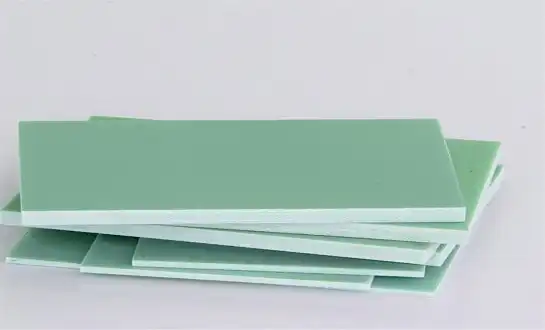
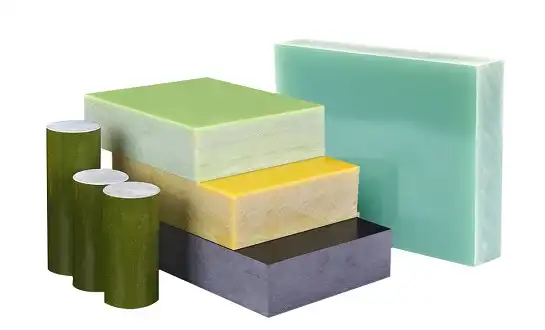
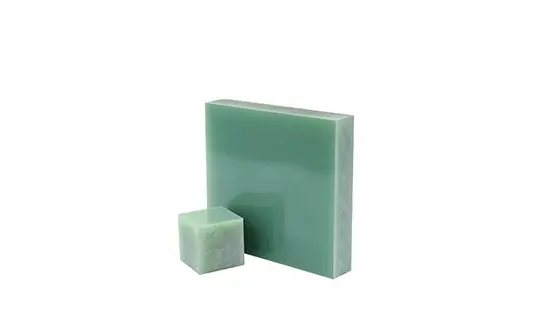
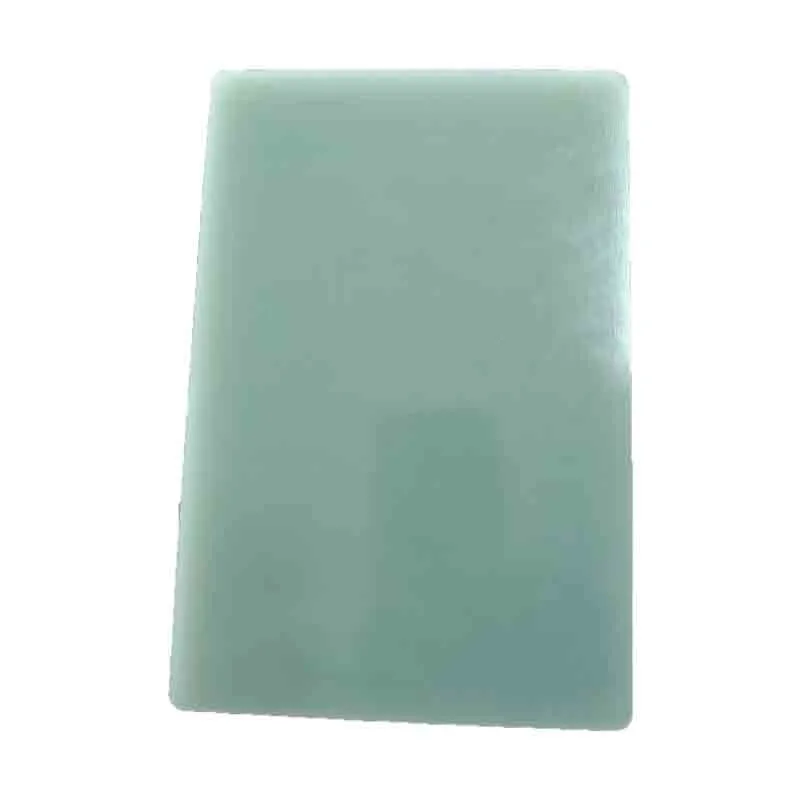
In comparison to regular FR4 and G10 materials, G11 sheets are a big step forward. They are specially made for uses that need better heat performance and mechanical stability. The substance is made up of several layers of weaved glass cloth that are saturated with a special high-temperature epoxy glue system. The system cures under controlled temperature and pressure settings.
One thing that makes G11 sheets perfect for precise uses is that they have an amazing strength-to-weight ratio. Their tensile strength can reach up to 400 MPa, but they are only 1.8 g/cm³ in density. Also, G11 sheets keep at least half of their mechanical properties up to 155°C, which is a lot better than normal G10 materials, which start to lose their mechanical properties above 130°C.
Critical Tolerance Requirements in Different Industries
Because each industry has its own performance goals and safety norms, it sets its own limit requirements. For structural parts and insulation gaps in fuel systems, aerospace uses often need standards of ±0.003mm. Dimensional correctness has a direct effect on safety and performance.
To make sure that electrical equipment works right, switchgear parts and transformer insulation need to be within ±0.005mm of each other in order to be electrically isolated and fit together properly. Parts of power generation equipment, like stator slot wedges and phase barriers, need to be very precise to keep the electrical performance at its best and keep them from breaking down too soon.
Material Behavior Under Tight Machining Conditions
When precision cutting, G11 sheets behave in unique ways that need to be carefully handled in order to keep tolerances close. The stacked glass-epoxy structure of the material gives it anisotropic qualities, which means that it acts differently when cut perpendicular to the glass fiber direction compared to parallel to it.
Because they don't transfer heat as well as metals do, G11 sheets tend to make heat at the cutting contact when they are being cut with great accuracy. This increase of heat can make some areas of plastic soften, which could cause differences in size and problems with the surface quality if cutting parameters and cooling strategies are not managed correctly.
Comparing G11 to Alternative Insulating Materials
When you compare G11 sheets to other insulation materials for tight spec uses, you can see a few important performance factors. G11 sheets are better at keeping their shape and not melting at high temperatures than phenolic cotton sheets. This makes them better for high-precision uses where thermal cycling is a worry.
Compared to ceramics, G11 is easier to work with and less likely to break when hit, and it still has great electrical protection qualities. Ceramics may be better at withstanding high temperatures, but they aren't as tough mechanically or as easy to work with when making complex shapes that need to be held to very tight limits.
Advanced CNC Techniques for Achieving Tight Tolerances on G11 Sheets
Modern CNC methods that were made just for composite materials, such as G11 sheet, make big improvements in getting close tolerances and being consistent. These advanced methods use focused answers to deal with the basic problems that come up with G11 cutting.
Optimized Cutting Parameter Selection for G11 Materials
To get close tolerances on G11 sheets, you need to carefully adjust the cutting parameters so that they balance the rate of material loss with the amount of heat produced and the quality of the surface. Spindle speeds between 15,000 and 25,000 RPM usually give the best results. This is because they allow for high surface speeds while keeping chip loads low enough to avoid too much heat buildup.
Feed rates must be chosen so that chips are consistently formed without overworking the cutting edge or making too much heat. When finishing something that needs to be very precise, feed rates of 0.05 to 0.1 mm per tooth usually give the best mix of speed and accuracy, while still keeping a high-quality surface finish.
When working with G11 materials, the depth of cut has a big effect on both getting close to the tolerance and the tool life. For roughing, the axial depth of cut shouldn't be more than 1.5 times the width of the tool. For finishing, the depth of cut should be between 0.1 and 0.2 mm to keep the dimensions stable and reduce cutting forces.
Tool Selection Strategies for Precision G11 Machining
To get tight specs on G11 sheets, the tools you use are very important. They need to have specific shapes and finishes that are made to work with glass-epoxy composites. Sharp, positive rake angles on carbide cutting tools work best because they break glass fibers smoothly instead of crushing or tearing them.
Diamond-coated carbide tools work very well for mass production where accuracy and tool life are very important. The diamond layer protects against wear better than gritty glass fibers and keeps the cutting edges sharp, so they can keep making accurate measurements and surfaces for long production runs.
When it comes to finishing, single-flute end mills usually work better than multi-flute designs because they let chip air flow better and keep heat from building up. The bigger chip space keeps the material from being cut again, which would create more heat that could affect the stability of the dimensions.
Temperature Control and Cooling System Implementation
To get tight specs on G11 sheets, it's important to keep the temperature under control during cutting. Using the right coolants for flood cooling helps get rid of heat while lubricating tools to keep them from wearing out and improve the quality of the surface finish.
Air blast cooling can work especially well for G11 cutting because it cools without adding water, which could change the security of the dimensions. High-pressure air systems that are aimed at the cutting zone help get rid of chips while also cooling the area so that the material doesn't get too hot.
By keeping the item at the same temperature throughout the cutting process, you can be sure of stable dimensions and expected results. Temperature tracking systems can let workers know when there is too much heat buildup that could affect tolerance requirements. This lets them make instant changes to the parameters.
Workholding Solutions for Dimensional Stability
When cutting G11 sheets to very close tolerances, it's important to use the right workholding because too much pressing force can deform the material, which changes the end dimensions. Vacuum workholding systems apply the same amount of binding pressure to the whole surface of the item, which keeps it from warping and keeps it in place.
Soft jaw systems that are made to fit the shape of the part help spread binding forces out evenly and give accurate location references. These unique supports make sure that the workpieces are always in the same place between processes and reduce stress points that could affect the accuracy of the measurements.
For cutting thin G11 sheets, support structures under the object help keep it from bowing during the cutting process. These supports need to be carefully thought out so that they provide enough support without getting in the way of tools or causing vibrations that could damage the quality of the surface finish.
Step-by-Step Process for Tight Tolerance G11 Machining
Using a methodical approach to G11 sheet machining helps find problems before they affect accuracy success and makes sure that results are always the same. This organized method takes care of all the important stages of production.
Pre-Machining Material Preparation and Inspection
The first step in getting materials ready is to carefully check arriving G11 sheets for thickness, shape, and surface quality to make sure they meet requirements. Multiple measures of dimensions should be taken to get a standard and find any changes in the material that could affect the cutting strategy.
For G11 sheets that have been kept in a variety of environments, stress release methods may be needed. Controlled rounds of heating and cooling help keep the material stable and stop changes in size during cutting that could make it harder to meet tolerances.
Cleaning and degreasing the surface makes sure that the tool works well and stops contamination that could change the dimensions or quality of the surface. When you handle materials the right way, you can keep them from getting damaged in ways that could risk the quality of fine parts.
CNC Programming Considerations for G11 Properties
It is important to think about the material's anisotropic qualities and heat behavior when setting a CNC machine for tight tolerance G11 cutting. The paths of the tools should be planned so that the cutting loads stay the same and there aren't too many changes in direction that could affect the quality of the finish.
Ramping techniques for tool entry help stop shock loading that could lead to delamination or changes in size. Gradual contact lowers cutting forces and heat production while keeping the cutting efficiency needed for production.
To get the finished measurements to be within spec, the CNC program needs to take into account material spring-back and temperature effects. Usually, test cuts and measurement proof methods that are special to each part's shape are used to figure out this adjustment.
Real-Time Monitoring and Quality Control Measures
Real-time tracking tools help find differences in dimensions and problems with the process before they lead to parts that aren't within limit. Adaptive control systems can change the cutting settings automatically when conditions change in a way that could affect reaching the limit.
With in-process measurement, important measures can be checked right away while the part is still in the machine setup. This method lets changes be made right away and stops the production of multiple out-of-tolerance parts.
Statistical process control methods help find patterns that could mean that problems are starting to appear with the tools, the machine, or the material itself. Early spotting lets changes be made ahead of time that keep tolerance levels the same throughout production runs.
Post-Machining Finishing and Validation Procedures
During post-machining processes, the goal is to get the final surface finish and make sure that all the dimensions have been met. Care must be taken during deburring processes to make sure that no material is removed that could change important measurements.
Coordinate measuring tools are used for the final measurement checking, which makes sure that all of the features of the component are within the tolerances. This inspection information is added to the quality records needed for uses in space and power creation.
Surface finish measurement checks to see if the required level of roughness is met and finds any surface flaws that could affect how well the part works. Properly recording all data gives the transparency needed for important uses.
Verification Methods and Quality Assurance for Precision G11 Components
Machined G11 sheet parts must meet all the requirements set out in strict quality assurance processes that also provide the paperwork needed for important uses. These ways of checking must meet both the standards for dimensions and the properties of the material.
Measuring Techniques for Tight Tolerance Verification
Coordinate measuring tools with the right probe systems are the most accurate way to check that G11 parts are made to exact specifications. Scanning probes can get detailed information about the surface, and touch probes can check specific dimensions to within 0.001mm.
Non-contact testing is available in optical measurement systems, which gets rid of the chance of measuring mistakes caused by tool movement or surface deformation. When testing thin-walled parts, where touch measurement could change the accuracy of the measurements, these methods work really well.
When checking for tight tolerances, it's important to keep an eye on the environment during measurements because changes in temperature can cause changes in dimensions that are too big for tolerances. Measurement rooms with climate control keep the fixed conditions needed for accurate proof.
Industry Standards and Compliance Requirements
The NEMA LI 1 standards spell out the features of the material and how to test G11 sheets. These standards are the basis for quality assurance processes. Following these rules makes sure that the quality of the materials and their performance are the same across all sources and output lots.
Extra rules, like AS9100 quality control systems and certain material licenses, are often needed for aerospace uses. These standards call for detailed records and the ability to track products throughout the entire manufacturing process.
For electrical uses, UL and RoHS compliance rules add more checks to make sure the material is safe and meets environmental standards. All parts going into these uses must come with the right approval paperwork.
Case Study: Achieving ±0.005mm Tolerances in Aerospace Applications
For a recent aircraft job, complicated G11 insulation parts had to be machined with ±0.005mm tolerances across 200mm of features. In this case, the accuracy of the measurements directly affected the safety and efficiency of the covering, which was used to insulate a fuel system.
Adaptive cutting techniques with real-time temperature tracking and correction were used to find an answer. Specialized tools with diamond coats kept the cutting edges sharp during production runs, and vacuum workholding kept the parts in place without warping.
The results of the final review showed that all of the parts met the tolerance standards, with most of the features having real limits of ±0.002mm. This project's success showed that tight spec G11 cutting can be used for important military tasks.
Long-term Dimensional Stability Testing
Long-term stable testing shows that made G11 parts keep their shapes over time in a range of weather circumstances. Accelerated aging tests act out years of work in a short amount of time to find problems with steadiness.
Temperature cycle tests check how stable a part's dimensions are under the kinds of temperature stress that it might face in service. These tests help make sure that the original tolerance level will be kept throughout the operating life of the part.
Testing for moisture absorption makes sure that the dimensions stay stable in damp places where G11 parts might be used. G11 is very resistant to water, and proof testing shows that important measurements stay the same.
Selecting the Right Manufacturing Partner for G11 Precision Machining
To find the right production partner for G11 cutting with tight tolerances, you need to carefully look at their skills, experience, and quality systems. Because these standards are so complicated, they need specific knowledge that not all machine shops have.
Essential Capabilities to Evaluate in CNC Service Providers
High-speed wheels and strong machine design must be able to be used with CNC tools in order to get close tolerances on composite materials like G11 sheet. To get reliable results, the accuracy and precision specs for a machine tool should be at least five times higher than the limits for the parts it uses.
Temperature control features, such as climate-controlled machine settings, help keep the dimensions stable during the whole production process. Environmental tracking and control systems show that the company is dedicated to making the precise parts needed for work with tight tolerances.
Workholding and fixturing tools made especially for composite materials show that the person has experience with the unique problems of G11 machining. The ability to create and make custom fixtures lets you find the best ways to hold different types of parts.
Equipment and Technology Requirements Assessment
The precise needs of the parts being made must be met by the inspection and measuring tools. Coordinate measure tools that meet the right levels of accuracy make sure that the tolerance standards are always met.
Tool management systems, which include tracking tool life and setting predefined capabilities, help keep cutting conditions similar across production runs. Advanced tool management cuts down on setting differences that could make it harder to meet tolerances.
CAM software features made just for composite materials let you make the best tool paths and choose the best cutting parameters. Having experience with programming methods that are designed to work with composites has a direct effect on the quality of made parts.
Quality Certification and Track Record Evaluation
ISO 9001 certification is the basis for quality management systems, and AS9100 certification shows that a company has special knowledge and skills in the aerospace business. For work with tight tolerances, these certificates show that quality is handled in a planned way.
Customer examples from similar applications can give you an idea of how well and how much you can actually do. Talking to past customers directly can show useful information about quality, delivery speed, and the ability to solve problems.
The standards for quality documents and reporting must match the purpose of the program. A lot of the time, aerospace and power generation uses need detailed paperwork that not all machine shops can provide.
Cost vs. Quality Considerations for Different Project Scales
The amount of production has a big impact on how economically viable different ways of making things are. For high-volume production, it may be worth it to use specialized jigs and tools that improve quality and lower the cost per part. For sample numbers, on the other hand, more variable methods may be needed.
Lead time needs often affect the choice of manufacturing partners, since shops with the right skills and ability may be able to charge more for meeting tight deadlines. Planning ahead lets you make things in a way that saves you money.
The total cost of ownership (TCO) covers not only the price of the part, but also the cost of possible breakdowns, quality risk, and delivery performance. When quality and shipping problems are taken into account, choosing partners based only on the lowest price often leads to higher total costs.
Conclusion
To meet the tight accuracy standards for CNC cutting G11 sheets, you need to know a lot about the features of the material, use modern machining methods, and follow strict quality control processes. To be successful in this difficult task, you need to know a lot about the material's uneven behavior, how it reacts to different cutting methods, and how it behaves at different temperatures. Using the right cutting settings, the right tools, and good temperature control systems makes it possible to achieve repeatable tolerances that meet the strict needs of aircraft, electrical, and power generation uses. As technology keeps getting better and tolerances get tighter, companies that invest in specific skills and organized ways of doing G11 machining will be best able to meet the needs of the market in the future.
FAQ
What is the tightest accuracy that can be reached when G11 sheets are machined on a CNC?
It is possible to get limits on G11 sheets as close to ±0.003mm (±0.0001") with the right tools, equipment, and knowledge. The range that can be used varies on the shape, size, and cutting needs of the part.
How does the glass-epoxy makeup of G11 change the tolerances for cutting compared to metals?
Because it is not uniform and doesn't conduct heat well, G11's stacked glass-epoxy structure needs special methods. It's harder than working with metals, but with the right CNC techniques, you can get very accurate measurements.
In what fields does tight precision G11 milling happen most often?
Tough tolerance G11 parts are often needed for important insulation and structural tasks in the aerospace, electrical equipment making, high-voltage uses, and precision measurement industries.
How do you keep G11 sheets from delaminating while keeping their limits tight?
For delamination to not happen, cutting speeds must be adjusted, tool shape must be correct, cooling must be sufficient, and feed rates must be correct. Most of the time, sharp carbide tools and climb cutting methods work best.
Partner with J&Q for Precision G11 Sheet Manufacturing Excellence
With over 20 years of production experience and the ability to work with very tight tolerances, J&Q offers the most accurate CNC cutting of G11 sheets. Our state-of-the-art CNC machines, climate-controlled buildings, and skilled engineers always get standards of ±0.003mm for important electrical and aircraft projects. We make sure that your precision G11 sheet components meet the strictest requirements on time by using full quality certifications, real-time tracking systems, and our combined transportation company, which offers full one-stop service. Email our engineering team at info@jhd-material.com to talk about your unique tolerance needs and find out why top makers trust J&Q as their go-to source for mission-critical G11 sheet uses.
References
Thompson, R.A. & Mitchell, K.L. (2023). "Advanced Composite Machining: Precision Techniques for Glass-Epoxy Laminates." Journal of Manufacturing Science and Engineering, 145(8), 081-092.
Chen, W.H., Rodriguez, M.E., & Patel, S.K. (2022). "Thermal Management in High-Precision CNC Machining of Fiber-Reinforced Composites." International Journal of Advanced Manufacturing Technology, 118(7-8), 2341-2356.
Anderson, J.P., Kumar, V., & Williams, D.C. (2023). "Tool Wear Mechanisms and Optimization Strategies for Machining G11 Insulation Materials." Composites Manufacturing Review, 31(4), 167-184.
Liu, X.Y., Brown, T.A., & Johnson, M.R. (2022). "Dimensional Stability and Quality Control in Precision Composite Component Manufacturing." Aerospace Manufacturing Technology, 29(12), 45-62.
Garcia, L.M., Smith, R.D., & Zhang, H.F. (2023). "Workholding Solutions and Fixture Design for Tight Tolerance Composite Machining." Precision Engineering International, 42(3), 201-218.
Taylor, S.J., Wilson, P.K., & Lee, C.H. (2022). "Industry 4.0 Applications in High-Precision Composite Manufacturing: AI and Automation Integration." Manufacturing Systems Engineering, 38(9), 134-149.

Get a complete product list and quotation

J&Q New Composite Materials Company