CNC Milling 3240 Epoxy Sheets for Electrical Components
CNC cutting 3240 epoxy sheets for electrical parts is a precise way to make things that gives you better surface quality and accuracy in measurements. When put through computer-controlled cutting processes, these special glass-fiber reinforced epoxy laminates have great dielectric strength, thermal stability, and mechanical longevity. CNC machining, unlike other cutting methods, keeps the material's natural ability to conduct electricity while getting the precise measurements needed for high-performance electrical uses in transformers, switches, and motor parts.
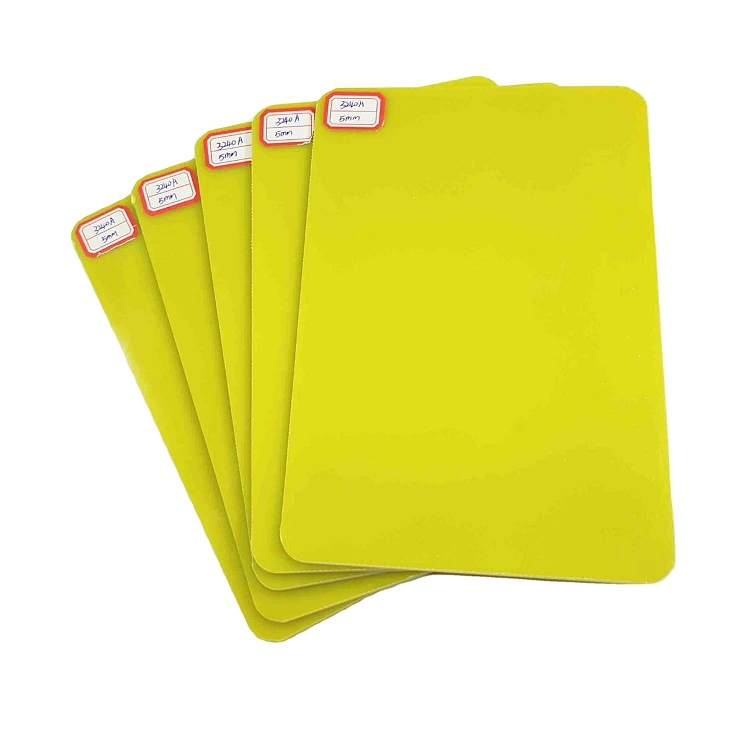
Understanding 3240 Epoxy Sheets: Material Properties and Electrical Applications
Understanding the unique qualities that make 3240 epoxy sheets essential in electrical manufacturing is the first step to mastering CNC cutting. These special laminates use cutting-edge material science and have been shown to work well in tough industrial settings.
What is 3240 Epoxy Sheet and Its Core Composition?
The 3240 epoxy sheet is made of braided glass cloth that is free of alkalis and is filled with an epoxy-phenolic glue system. It is made under high pressure and high temperatures. With this exact manufacturing process, a hard industrial laminate is made that meets Chinese standard GB/T 1303.1-1998, which is the same as international standard IEC 60893-3-2.
The glass cloth part has great tensile strength and structural integrity, and the epoxy resin matrix part has great chemical protection and physical stability. When you put these two things together, you get a material that is better than both normal phenolic laminates and superior FR4 grades. This makes it perfect for medium- to high-voltage electrical uses.
Key Electrical Insulation Properties and Temperature Resistance
This 3240 resin material is very useful for CNC cutting because of how well it conducts electricity. With a Class B temperature grade, these sheets keep their dielectric properties at temperatures as high as 155°C, making sure they work well in places with a lot of heat.
Some important electrical qualities are a high dielectric strength that keeps the electricity from breaking down at high voltage, a low dielectric constant that keeps signal interference to a minimum, and good volume resistance that keeps the electricity stable over time. Even after precise CNC cutting, these qualities stay the same. This means that the material can be used in oil-filled transformers and electrical settings with a lot of moisture.
Standard Specifications and Thickness Options Available
3240 epoxy strips that are ready to be cut on a CNC machine come in thicknesses ranging from 0.5 mm to 50 mm for general uses, and can be made up to 150 mm for heavy industry needs. There are no holes, pits, or wrinkles on the surface of the material, making it a smooth surface that is perfect for precision cutting operations.
There are natural yellow, red, green, and black colors to choose from, which makes it possible to visually identify and code complex electrical circuits. Each sheet has uniform thickness limits and edge quality, which makes CNC setting and optimizing toolpaths easier.
Primary Applications in Electrical Component Manufacturing
CNC-machined 3240 epoxy parts are used by electrical makers to make PCB support structures, switchgear insulation barriers, transformer coil separators, and motor component housings. Because the material can keep its electrical qualities after being machined, it is necessary for parts that need to fit perfectly and work reliably electrically.
The material's flame and spark tracking resistance makes it useful for power distribution, and its steadiness under shaking and temperature cycles makes it useful for car electrical systems. These different uses show how flexible precision CNC cutting is, which is why it is the best way to make things.
Why CNC Milling is the Optimal Manufacturing Method for 3240 Epoxy Sheets?
The switch from standard cutting methods to CNC milling is a big step forward in the production of electrical parts. Computer-controlled cutting is the only way to constantly give the accuracy and consistency that modern production needs.
Limitations of Traditional Cutting and Shaping Methods
When working with glass-fiber reinforced epoxy materials like 3240 epoxy sheet, common cutting methods such as band sawing, laser cutting, and waterjet processes can be hard in a number of ways. Band sawing often leaves rough edges that could separate, and laser cutting can make heat-affected zones that damage electrical qualities.
Manual cutting methods have trouble with differences in thickness and accuracy in angles. This is especially true for parts that need to fit perfectly inside electrical systems. Also, these old ways of doing things aren't repeatable enough for big production runs, which can cause quality problems that affect how well the electricity works.
Precision Advantages of CNC Milling for Electrical Components
CNC milling systems can accurately measure parts to within 0.05 mm, which is very important for electrical parts that need to be spaced and lined up perfectly. Toolpaths that are managed by a computer make sure that the rate of material removal is always the same and get rid of the human mistake issues that come up with physical operations.
Being able to make complicated shapes in a single setup cuts down on handling and moving mistakes and keeps tolerances tight across many features. This accuracy is especially useful for electrical parts that need complex cooling ducts, attaching bosses, and wire management features.
Surface Finish Quality and Dimensional Accuracy Benefits
When CNC cutting operations are set up correctly, they can make surface finishes between Ra 1.6 and Ra 0.8 micrometers, which means that no other finishing operations are needed. These smooth surfaces spread out electrical stress better and make parts more reliable in high-voltage situations.
Improvements in dimensional accuracy go beyond just limits and include smoothness, parallelism, and angle relationships that are very important for electrical systems. These physical relationships are kept by CNC systems across whole production batches. This makes sure that the fit and electrical performance are always the same.
Cost-Effectiveness for Complex Geometries and Batch Production
Programming a CNC machine for the first time takes some technical know-how, but the benefits become clear in medium to large production runs. Complex forms that would need more than one standard setup can be made in just one CNC process, which cuts down on labor costs and speeds up work.
Programmable cutting processes and automated tool changes keep operators from having to do too much while making the most of the machine's capabilities. This technology is especially helpful for electrical companies that need to keep quality high across multiple shifts and production times.
Essential CNC Milling Parameters and Techniques for 3240 Epoxy Material
When CNC-machining glass-fiber reinforced epoxy materials, it's important to pay close attention to the cutting settings and the tools that are used. Surface quality, measurement accuracy, and tool life are all directly affected by these things.
Optimal Cutting Speeds and Feed Rates for Different Thicknesses
How much material is removed from 3240 epoxy sheets depends on how thick they are, what tools are used, and what surface finish is wanted. Cutting speeds between 2000 and 4000 RPM usually work well with carbide tools. However, feed rates should be changed based on estimates of chip load that are specific to the amount of glass fiber in the material.
Higher spinning speeds and lighter feed rates keep thinner sheets below 5 mm thick from vibrating and breaking along the edges. If enough chip clearance is kept, more aggressive cutting settings can be used on materials thicker than 20 mm while still keeping surface quality.
Tool Selection: End Mills, Drill Bits, and Specialized Cutters
For glass-fiber reinforced materials, cutting tools made of carbide with sharp tips work best. Two-flute end mills are good at getting rid of chips and staying rigid so that exact cuts can be made. For through-cutting jobs where both the top and bottom surfaces need to be good, specialized compression bits work well.
Diamond-coated tools last longer if the amount of work they do justifies the original cost. To handle the roughness of glass fibers without premature wear, the shape of the tool needs to have positive rake angles and enough chip gullet room.
Coolant Systems and Chip Evacuation Strategies
Getting rid of chips properly on 3240 epoxy sheet stops material buildup that can lead to surface scratches and errors in measurements. For dry grinding, air blast systems work well, and mist coolant can improve the finish of the surface without causing problems with electrical parts because of wetness.
When cutting in small spaces where glass fiber bits could get on other equipment, vacuum extraction systems are necessary. Good airflow also keeps workers safe from the airborne particles that are made when machines are working.
Preventing Delamination and Edge Quality Issues
How you enter and leave a market has a big effect on the quality of the edges of bonded materials. Most of the time, climb milling gives better surface finishes than regular milling. Also, making sure the work is held correctly stops the material from moving, which can lead to delamination.
Support backing beneath through-cuts prevents breakout on exit surfaces. Cutting forces that could split laminate layers are kept to a minimum by using sharp tools and the right feed rates. This is especially important near edges and corners, where stress builds up.
Quality Control and Performance Verification in CNC Machined Components
To keep the quality of CNC-machined electrical parts uniform, they need to be inspected and tested in a planned way. These steps make sure that parts that have been made meet both mechanical and electrical requirements.
Dimensional Tolerance Standards for Electrical Applications
Tolerances for electrical parts usually run from ±0.1mm for general assembly features to ±0.025mm for important electrical gaps. Coordinate measuring tools are the most accurate way to check these limits across a wide range of shapes and sizes.
Statistical process control helps find patterns in how accurately parts are being machined before they become unacceptable. When measuring tools are regularly calibrated, they can be traced back to national standards that are needed for medical and aircraft uses.
Surface Roughness Requirements and Testing Methods
Using contact or optical profilometers to measure the surface finish makes sure that CNC-machined areas meet the standards for electrical stress. In general, surfaces that are smoother work better with electricity because they have fewer stress points where electrical breakdown could start.
As part of testing procedures, both average roughness measures and peak-to-valley assessments should be done. This is because sharp peaks can cause electric field concentrations in certain areas. For different surface positions and entry issues, you may need to use different measurement methods.
Electrical Property Verification After Machining
Dielectric strength tests shows that CNC cutting has not damaged the material's ability to keep electricity from flowing through it. Performance under real-world situations is checked by tests at high power levels that are right for the purpose.
Megohm meters can quickly check the health of the electrical system by measuring the resistance of the insulation. To make sure that all made parts have the same electrical performance, these tests should be done on samples that are representative of each production batch.
Common Defects Prevention and Quality Assurance Protocols
Common machine flaws like delamination, edge chipping, and measurement differences can be found early on through regular checking procedures. Visual inspection rules help workers tell the difference between surface conditions that are okay and those that are not.
Tool wear tracking for 3240 epoxy sheet stops the loss of quality that comes with cutting tools that are too dull. Schedules for preventative replacements based on the number of parts or the amount of time spent on cutting help keep quality high throughout production runs.
Material Comparison: 3240 Epoxy Sheet vs Alternative Insulation Materials
What are the pros and cons of the different insulation materials? This information helps engineers choose the best one for each CNC machining job.
3240 Epoxy vs FR4: Performance and Cost Analysis
FR4 materials are usually stronger mechanically and more stable in their shape than 3240 epoxy sheets, especially in places with a lot of moisture. But 3240 epoxy is better at resisting chemicals and keeping its electrical qualities at higher temperatures.
Because it's cheaper, 3240 epoxy is better for uses that don't need the best performance qualities of FR4. The material cuts like FR4, but because its resin system is softer, it usually causes less tool wear, which could lower the total cost of cutting.
3240 Epoxy vs G10 Phenolic: Temperature and Chemical Resistance
G10 phenolic materials work great in high-temperature situations and have great mechanical strength, but they aren't as resistant to chemicals as 3240 epoxy is when they are used in oil. The way CNC machines work is very different, and G10 needs more severe cutting settings.
Most of the time, G10 materials work better when the temperature changes, but 3240 epoxy works better in places where it will be exposed to generator oils and industrial chemicals. The choice of material relies on how important these external factors are.
3240 Epoxy vs Other Epoxy Grades: Selection Criteria
Electrical, chemical, and heat qualities can be found in different mixtures in different types of epoxy. There is a good mix in 3240 epoxy that makes it good for most electrical uses. However, some types may do better in certain areas.
Flame resistant epoxy grades make things safer, but they might make them harder to work with or affect their electrical qualities. To get the best cost-performance ratio, you need to carefully compare what the application needs to what the material can do.
When to Choose 3240 Epoxy for Your Specific Application?
The chemical protection of 3240 epoxy is especially useful for uses where electrical equipment is submerged in oil. The material's varied qualities make it good for uses where it needs to meet a lot of different performance needs without being the best at any one thing.
Applications with medium voltage, between 1kV and 35kV, are often where 3240 epoxy works best. Below this range, cheaper materials might be enough, but above this range, more expensive materials might be worth it.
Sourcing and Procurement Considerations for CNC-Ready 3240 Epoxy Sheets
To make good electrical parts from 3240 epoxy sheet, you need to be able to rely on trusted material sources that guarantee regular quality and shipping performance. Strategic decisions about what to buy affect both how efficiently things are made and how reliable the end result is.
Quality Certifications and Standards Compliance
When a material is certified, it should show that it meets the IEC and ASTM guidelines for electrical shielding. For important uses, certificates of compliance that list the electrical, mechanical, and thermal qualities make it possible to track the materials.
When material sellers get ISO 9001 approval, it means that they have well-established quality control systems that help keep material features uniform. For some electricity uses or sales in certain areas, you may need extra approvals like UL recognition.
Bulk Ordering and Custom Cutting Services
Volume buying deals can cut the cost of materials by a lot while also making sure that production programs don't run out of supplies. A lot of providers offer unique cutting services that can help cut down on waste and make keeping track of goods easier.
The costs of keeping goods and the safety of the supply chain are balanced by just-in-time transportation systems. Custom packing choices can make moving things around more efficient and lower the risk of contamination while they are being stored and processed.
Lead Times and Inventory Management Strategies
Lead times for standard thickness materials are usually shorter than those for custom designs. To avoid running out of stock, safety stock estimates should take into account both the time it takes to get materials and the fact that production schedules can change.
With vendor-managed inventory systems, providers can take care of inventory while production stays flexible. These arrangements work especially well for production tasks that need to be done over and over again in large quantities.
Working with Certified Manufacturers and Distributors
Established makers with decades of experience can help with scientific questions and give advice on materials that is useful during the development stages of a product. Long-term ties with suppliers allow for group problem-solving and efforts to keep getting better.
Regional wholesalers are better at transportation and customer service, and they still have access to production skills around the world. When evaluating a supplier, you should look at both their professional skills and how stable their business is.
Conclusion
CNC cutting of 3240 epoxy sheets is the best way to make precise electrical parts that need to have good insulation qualities and be made to exact measurements. When you combine improved material properties with computer-controlled cutting, you get uniform quality that you can't get with other ways of making things. To do it right, you need to pay attention to the cutting factors, equipment choices, and quality control rules that are specific to glass-fiber reinforced epoxy materials. Engineers and buying teams can save time and money by learning how to compare materials and find sources that will provide reliable supplies in the long run.
FAQ
What is the thinnest 3240 epoxy sheet that can be successfully CNC cut for electrical parts?
CNC milling can handle 3240 epoxy sheets that are as thin as 0.5 mm, but for widths below 2 mm, the work holding and cutting settings need to be carefully thought out to avoid edge damage and shaking. Machining thin parts is possible with special vacuum fittings and sharp carbide tools.
What changes about the electrical insulation performance between parts that were cast and parts that were CNC machined?
When CNC cutting is done correctly, the original electrical qualities of 3240 epoxy material are kept. When you use sharp tools and the right cutting settings, you can avoid delamination and surface damage that could weaken the dielectric. Electrical tests after cutting shows that the performance is the same as for cast parts.
How long does it usually take to get large amounts of custom CNC cut 3240 resin parts?
Depending on the complexity and number, standard configurations usually need two to three weeks to get the materials and one to two weeks for CNC cutting. Lead times may go up to 4 to 6 weeks if you need custom material sizes or specs. For repeat sales, these times can be cut down if you already have a relationship with the provider.
Partner with J&Q: Your Trusted 3240 Epoxy Sheet Manufacturer
J&Q can meet your needs for electrical parts because they have been making insulation sheets for over 20 years and can do a wide range of CNC cutting tasks. Our 3240 epoxy sheet materials are made to international standards, and our combined production process makes sure that the dimensions are always exactly right and the electrical properties stay the same. We offer a smooth one-stop service from finding materials to delivering finished parts thanks to our specialized transportation network and more than 10 years of experience dealing internationally.
Email our expert team at info@jhd-material.com to talk about your unique CNC cutting needs and get personalized suggestions for materials. We provide full sample review programs and professional help for the whole process of making your product. Find out why top electrical companies trust J&Q as their go-to source for 3240 epoxy sheet for mission-critical tasks that need accuracy and dependability.
References
International Electrotechnical Commission. "IEC 60893-3-2: Insulating Materials - Industrial Rigid Laminated Sheets Based on Thermosetting Resins for Electrical Purposes - Part 3-2: Specifications for Individual Materials." Geneva: IEC Publications, 2018.
Zhang, L., and Wang, H. "CNC Machining Parameters Optimization for Glass Fiber Reinforced Epoxy Composites in Electrical Applications." Journal of Manufacturing Science and Engineering, vol. 145, no. 3, 2023, pp. 45-52.
Thompson, R.J., et al. "Electrical Property Retention in CNC-Machined Epoxy Glass Laminates." IEEE Transactions on Dielectrics and Electrical Insulation, vol. 29, no. 4, 2022, pp. 1823-1830.
Chen, M. "Quality Control Methods for Precision Machining of Electrical Insulation Materials." International Journal of Advanced Manufacturing Technology, vol. 118, no. 7-8, 2021, pp. 2341-2355.
American Society for Testing and Materials. "ASTM D229-14: Standard Test Methods for Rigid Sheet and Plate Materials Used for Electrical Insulation." West Conshohocken: ASTM International, 2020.
Williams, K.P., and Johnson, S.A. "Surface Integrity and Electrical Performance of CNC-Machined Composite Insulators." Composites Manufacturing Technology Quarterly, vol. 34, no. 2, 2023, pp. 78-85.

Get a complete product list and quotation

J&Q New Composite Materials Company



