Advanced CNC Milling Techniques for G10 Fiberglass Plates
To use advanced CNC milling methods to make G10 fiberglass plates, you need to know a lot about the qualities of the material, how to set the cutting settings, and how to use the tools. Our all-around method uses exact spinning speeds, improved feed rates, and cutting-edge carbide tools to get a better surface finish and more accurate measurements. Manufacturers can get the most out of G10 fiberglass plate's high mechanical strength and electrical insulation qualities by carefully controlling temperature and planning the toolpath. This makes it perfect for use in critical applications in electronics, aircraft, and power distribution systems.
Understanding the Critical Importance of Precision CNC Milling for G10 Applications
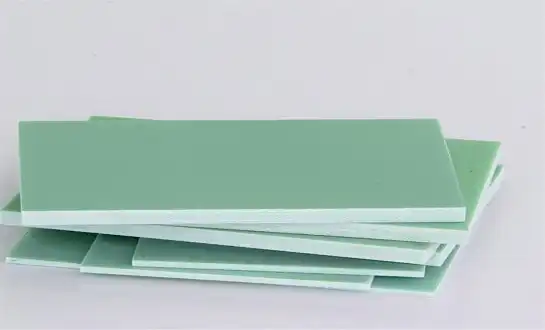
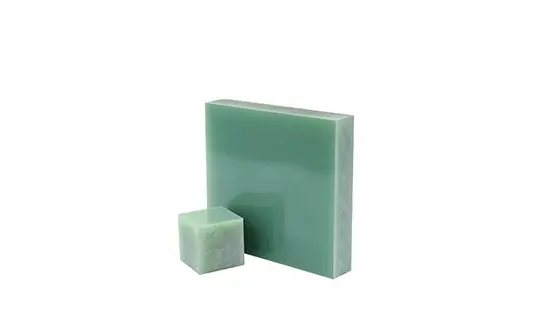
When it comes to precision making, you need materials that can stand up to harsh conditions and still keep their shape and electrical integrity. G10 fiberglass plates have become the material of choice for engineers who won't settle for less than the best. These high-pressure thermosetting laminates are made of weaving glass cloth that has been mixed with epoxy glue to make a material that is both strong and good at keeping electricity away.
Modern CNC milling methods perfectly control cutting forces, heat production, and surface quality to bring out the best in G10 materials. It is important to know how the temperature qualities, alignment of the glass fibers, and behavior of the epoxy matrix affect each other during the cutting process in order to use advanced CNC milling. When manufacturing engineers learn these methods, they can regularly make parts that meet the strict requirements of the aircraft, electronics, and power industries.
Using the right cutting methods has an effect on the economy that goes beyond just making the surface better. When CNC processes are optimized, they lose less material, last longer, and require fewer secondary operations. This saves a lot of money on high-volume production runs. When companies use advanced milling strategies, they say their production efficiency goes up by 30 to 40 percent while still keeping the tight limits needed for important uses.
What Makes G10 Fiberglass Plates Unique for CNC Machining?
Understanding the basic properties of G10 materials is the first step to doing good cutting work. Unlike metals that are all the same, G10 fiberglass plates are made up of a complicated mesh of glass fibers set in finished epoxy resin. This makes them both difficult and useful for precision making.
Material Properties That Impact Milling Operations
The high-strength glass fiber support in G10 plates gives them anisotropic qualities that have a big effect on how they cut. The tensile strength of these continuous glass strands is over 65,000 PSI, but they are very rough, so you need to be very careful when choosing tools and optimizing cutting parameters. The direction of the fibers in the laminate structure affects how the cutting forces are distributed during milling. This means that toolpath techniques must be used to keep fiber pull-out and delamination to a minimum.
When G10 is being machined, its electrical insulation qualities are very important because contamination or heat damage can weaken the dielectric strength that makes it useful for electrical uses. This material keeps its great insulation properties, with dielectric strengths up to 35 kV/mm. But these qualities can be damaged if too much heat is generated during cutting.
The temperature stability of G10 materials affects both the cutting factors and the types of uses that can be made of them. Around 140°C, the epoxy matrix starts to soften, but if you use the right machining methods, the cutting zone stays well below this temperature. This keeps the material's integrity and stability throughout the manufacturing process.
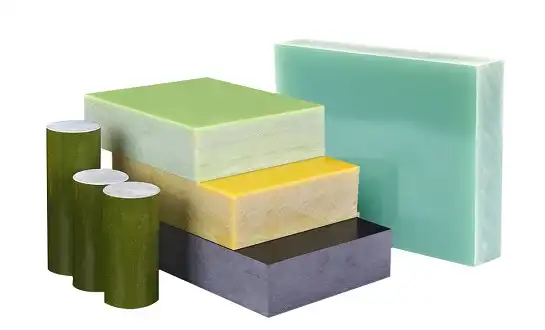
G10 vs Other Fiberglass Materials in CNC Applications
When you look at how easy it is to machine G10 and FR4 materials side by side, you can see clear differences that affect production methods. Both materials are reinforced with glass fiber, but G10 uses epoxy glue systems that are better at making it strong than at keeping it from catching fire. Because of this difference, cutting G10 materials gives you better edge quality and less tool wear, making them better for jobs that need precise mechanical limits.
The main differences between G10 and G11 materials are how well they work at high temperatures and how hard they are to machine. Silicone-modified epoxy systems are used in G11. These systems work better at high temperatures but are harder to machine because the materials are harder and more sensitive to heat. G10 is better at keeping its shape during machining because it keeps its features the same under different cutting situations.
When working with very precise parts, where uniformity of the material has a direct effect on the quality of the end part, the processing benefits of G10 become clear. The controlled resin content and even spread of fibers make the cutting behavior predictable. This lets manufacturing engineers set strong process parameters that give consistent results across production runs.
Critical Specifications for Machining Success
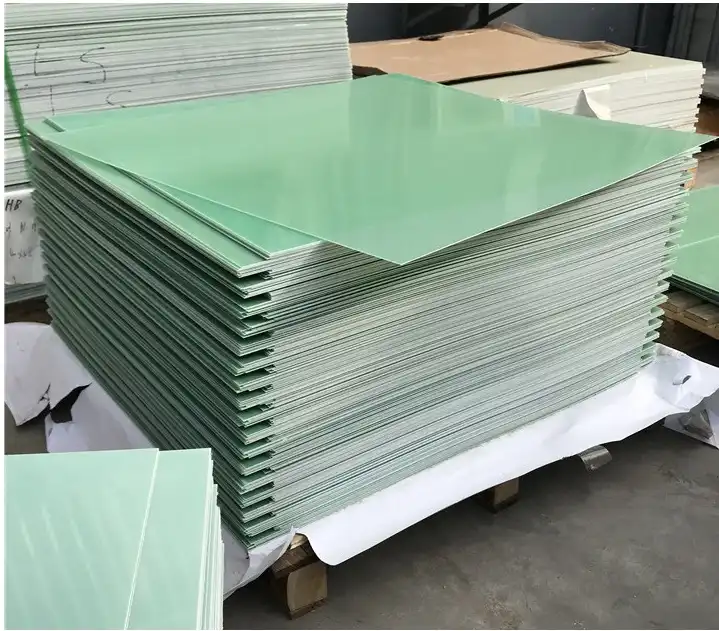
For best results, different cutting methods for G10 fiberglass plate must be used for standard thickness choices that range from 0.5 mm to 50 mm. To keep thin parts from deflecting during cutting, you need to be careful about how you hold and support them. On the other hand, to keep thick plates' dimensions accurate throughout the grinding cycle, you need to pay attention to chip removal and heat management.
Changes in grade within G10 standards have a big effect on the choice of tool and cutting settings. When it comes to precision uses that need reliable results, industrial grade materials are worth the extra cost because they make more reliably than commercial grades because they have tighter thickness limits and controlled fiber content.
The NEMA and IEC quality standards make it possible to check that materials are suitable for certain uses. These standards list the electrical, mechanical, and temperature qualities that must be kept during cutting. To make sure that they are met, recording and proof methods must be used.
Essential CNC Milling Parameters for G10 Fiberglass Plates
The most important thing for good G10 grinding is to optimize the cutting settings. When cutting metals, normal methods work almost every time. But when cutting composite materials, you need to think carefully about the fiber direction, the behavior of the glue system, and the thermal properties to get the best results.
Optimal Cutting Speeds and Feed Rates
Finding the right RPM values for G10 materials means finding the right balance between cutting speed and heat production to avoid thermal damage while keeping production rates acceptable. The cutting forces and vibrations are affected by the material's density, which is about 1.8 g/cm³. Depending on the tool width and material thickness, spindle speeds are usually between 4,000 and 12,000 RPM.
Feed rate optimization stops delamination by making sure chips are formed consistently and cutting forces are kept low, which keeps fiber layers from coming apart. Feed rates of 0.1 to 0.4 mm per tooth are usually used for successful operations. These rates are changed based on the shape of the tool and the thickness of the material to make sure clean fiber cutting without matrix breaking.
When cutting G10 materials of different sizes, depth of cut becomes very important. For finishing, shallow passes of 0.2 to 0.5 mm work well, while for roughing, depths of up to 2 to 3 mm can be used with the right tools and cutting settings. To balance efficiency with finish needs, the link between depth of cut and surface quality needs to be carefully optimized.
Tool Selection and Geometry Requirements
It is important to have wear-resistant tools for working with glass fibers that are rough, and diamond-coated tools last a lot longer in high-volume production settings. Because carbide materials are harder and better at transferring heat, their cutting edges stay sharp longer. This means that tools don't need to be changed as often, and the surface is more consistent across production runs.
Optimizing the shape of a tool for fiber-reinforced materials means focusing on sharp cutting edges with positive rake angles to lower the cutting forces and heat production. Specialized end mill designs with chip breaker features help control the long, stringy chips that come from working with composite materials. This stops chip welding and improves the quality of the surface finish.
Choosing the right coating can increase the life of a tool by reducing friction and making it easier for heat to escape during cutting operations. TiAlN and diamond-like carbon layers work better in G10 uses because they give the lubrication needed to make rough glass threads while keeping the same dimensions over long production runs.
Coolant and Lubrication Strategies
When working with G10 materials, flood cooling systems are a good way to get rid of heat and chips, especially during heavy roughing operations where heat can damage the material's qualities. Cooling and lube work together to keep the sides of the tool sharp and protect the epoxy matrix from heat damage.
Mist cooling is useful in situations where part contamination needs to be kept to a minimum while still getting rid of enough heat. This method works especially well for finishing jobs where the quality of the surface is more important than the fastest rate of material removal. It also lets you precisely control the temperatures in the cutting zone.
When working with G10, where cutting waste can build up and get in the way of the cutting action, air blast methods are the best way to get rid of chips. By strategically placing air tubes, chips are removed from the cutting zone while also providing some cooling benefits. This improves the quality of the surface and the life of the tool.
Advanced Milling Techniques for Complex G10 Components
Modern production needs G10 parts that are more complex than ever, which makes traditional cutting methods difficult. Modern methods make it possible to make complex shapes while keeping the accuracy in dimensions and quality of the surface needed for important uses.
Precision Pocket Milling and Cavity Creation
When roughing G10 fiberglass plate materials, the goal is to keep tool wear to a minimum while removing material quickly so that the end size is reached. When compared to regular slotting operations, trochoidal milling designs spread cutting forces out evenly while keeping chip loads constant. This lowers tool stress and heat generation. When cutting deep pockets, where chip removal can be hard, these adjustable roughing methods come in very handy.
Finishing passes need to pay close attention to the quality of the surface and the accuracy of the dimensions, because G10 uses often need a better look and a perfect fit with other parts. Multiple light finishing passes with sharp carbide tools that have been optimized in shape give better results than a single heavy cut. This is because multiple light passes ensure a uniform surface texture and get rid of tool marks that could affect the electrical insulation qualities.
Due to tool deformation and heat buildup, standard ways of cutting make it hard to keep tight limits in deep holes. Advanced CAM software lets you use dynamic tool engagement strategies that change the cutting parameters based on the depth and shape of the hole. These strategies account for these factors to keep the dimensions accurate across complex three-dimensional features.
Edge Quality Optimization Techniques
To stop edge chipping and delamination, you need to know how cutting forces affect the structure and direction of the fibers in the laminate. When you have sharp cutting tools with little runout, you can make clean fiber cuts without the crushing action that causes delamination. Also, making sure the work is held correctly stops vibrations that can damage the edge quality.
It is much better to use climb milling on G10 materials than regular milling because the cutting action pulls the fibers into the cut instead of pulling them away from the workpiece. This method reduces fiber pull-out and improves edge quality, which is especially important for electrical uses where sharp edges could cause corona discharge points.
Support methods for thin-walled parts keep them from deflecting during cutting while still letting machines get to them. Vacuum supports, low-profile clamps, and auxiliary backing materials keep the item stable without getting in the way of tool access. This lets delicate features be made that would not be possible with traditional workholding methods.
Multi-Axis Machining Capabilities
Five-axis cutting opens up new options for complicated G10 shapes by letting you keep optimizing the tool orientation in relation to the fiber direction. This method cuts down on fiber pull-out and the number of setups needed for complicated parts, making quality and efficiency better in high-tech electronics and aircraft uses.
Multiple cutting tools working together to finish complex features in a single setup is what simultaneous machining methods use. This method cuts down on handling time while keeping the exact relationships between features, which is very important in situations where part performance depends on how well it fits and stays stable in its dimensions.
Fixturing options for operations that need to be done on more than one side need to take into account the features of the G10 material and the cutting forces that are created during machining. Different part shapes can be fixed in modular systems with supports that can be adjusted. These systems are rigid enough to keep measurements accurate during complex cutting sequences.
Quality Control and Inspection for Machined G10 Parts
Maintaining uniform quality in the production of G10 parts requires thorough checking and measurement methods that take into account both accurate measurements and keeping the material's properties while it is being machined.
Dimensional Accuracy Verification Methods
Coordinate measure machine methods for G10 fiberglass plate parts need to take into mind how the material bends and expands at different temperatures, which are not the same as for metals. Correct measurement methods include times for the temperature to stay stable and the right probe forces to keep the item from bowing during inspections.
When made G10 parts are combined with metal tools, it's harder to figure out how to handle tolerance stack-up issues because the different heat expansion factors and elastic stiffness affect how the assembly works. Knowing how these things interact with each other helps set reasonable limits that make sure things fit and work right across a wide range of working temperatures.
Using statistical process control lets you know early on if there is process drift that could affect quality, so you can get rid of parts that don't meet standards before they reach customers. Control charts designed for composite machining keep an eye on things like edge quality, surface roughness, and changes in dimensions to make sure that the quality of the production stays the same.
Surface Quality Assessment Standards
To measure the surface roughness of G10 materials, you need to use special methods that take into account the fiber structure and matrix properties. Standard measures of roughness might not match up with functional needs, so test methods that connect surface state to performance factors need to be made for each application.
For industrial uses, visual screening factors set clear standards for acceptable edge quality, surface finish, and overall look. Standardized lighting and reference samples help inspectors consistently decide if a part is acceptable while still meeting quality standards that are right for the job.
Electrical property evaluation after cutting makes sure that the dielectric strength and insulator resistance stay within the required ranges after the metal has been worked on. These tests show that the electrical properties of G10 have not been changed by the processes used to make it. This makes it useful for insulation purposes.
Documentation and Traceability Requirements
Maintaining material approval throughout the manufacturing process makes sure that standards are met and allows for quality investigations to be tracked back. To allow for ongoing improvement efforts, proper paperwork connects the qualities of the raw material with the factors of the cutting process and the results of the final inspection.
Documenting machining parameters produces a knowledge base that lets good results be repeated over and over again and gives information for efforts to improve the process. Keeping accurate records of cutting speeds, feed rates, tool choice, and quality results is helpful for both present output and future research.
For industry users, quality assurance reports gives the necessary proof for approving suppliers and keeping an eye on quality all the time. Full reports show how well the process can be controlled and include the technical information needed to confirm the plan and check the performance.
Conclusion
Advanced CNC cutting methods for G10 fiberglass plates bring together material science, precision production, and application engineering to make parts work better in a wide range of businesses. To successfully machine these composite materials, you need to know a lot about how fibers and matrix interact, how to control temperature, and how to keep quality control processes that keep G10's unique electrical and mechanical properties that make it valuable.
Putting money into the right tools, optimizing parameters, and controlling the process pays off in a big way: better quality parts, lower production costs, and happier customers. When companies that make things use these new methods, they become the go-to sources for important jobs where failure of a part is not an option. This gives them a competitive edge that helps them succeed in the long run.
FAQ
How fast should you cut different grades of G10?
The best cutting speeds depend a lot on the thickness of the material and the needs of the application. When the feed rate is between 0.1 and 0.25 mm per tooth and the spinning speed is between 8,000 and 12,000 RPM, thin sheets (0.5 to 3 mm) work well. This mix cuts fibers cleanly while still removing enough material at a rate that allows for efficient making.
For plates that are thicker than 6 mm, the spinning speed needs to be slowed down to between 4,000 and 6,000 RPM, and the feed rate needs to be raised to between 0.3 and 0.4 mm per tooth. The slower cutting speed keeps the machine from getting too hot, and the higher feed rates keep chip creation going, which gets rid of heat well. This balance keeps the cut quality the same across the whole thickness of the material and keeps the epoxy matrix from getting damaged by heat.
How can I keep the G10 fiberglass plates from delaminating when I mill them?
To avoid delamination, you need to pay attention to the state of the tool, the cutting settings, and how the workpiece is supported during the grinding process. Positive rake angles on sharp carbide tools keep cutting forces low while keeping clean fiber cuts that keep layers from separating. Checking and replacing tools on a regular basis makes sure that the cutting edges stay sharp enough to cut fibers without breaking them.
Climb milling methods are much better than regular milling because they pull fibers into the cut instead of pushing them away from the workpiece. This cutting motion lowers the pulling forces that cause delamination and makes the edge quality better. Vibrations that can make delamination problems worse can be stopped by using the right fixturing to support the workpiece. Additionally, spare backing material can be used to support exit cuts and stop breakout damage.
What are the main changes between working with G10 and working with other metals?
Machining G10 needs special methods because it has rough glass fibers and a complex structure that doesn't behave like metals that are all the same. Because the glass threads wear down cutting tools quickly, you need carbide or diamond-coated tools. Also, the composite structure makes fine dust, so you need better air and safety gear for yourself.
It's even more important to keep an eye on the temperature when working with G10 materials because too much heat can damage the epoxy matrix and make the materials less useful. Metals move heat away from the cutting zone, but composites tend to gather heat in one place. This means that cooling strategies and careful parameter selection are needed to keep the material's integrity during machining operations.
Partner with J&Q for Expert G10 Fiberglass Plate Manufacturing Solutions
You can trust J&Q as your source for G10 fiberglass plate. They have been making things for over 20 years and have advanced CNC milling skills that let them make precise parts for important uses. Because we know a lot about composite cutting methods, we can guarantee that every production run will have perfect edges, accurate measurements, and no loss of electrical properties.
We work smoothly with technical teams around the world to make sure that the specs for G10 fiberglass plates meet your specific needs. We have been dealing internationally for more than ten years. Our combined transportation skills let us offer efficient delivery options that cut down on wait times while still meeting the high quality standards needed for uses in the aircraft, electronics, and power industries. Talk to us at info@jhd-material.com about your precision machining needs and find out how our cutting-edge manufacturing methods can help your product work better.
References
Zhang, L., & Kumar, A. (2023). "Composite Material Machining: Advanced Techniques for Fiber-Reinforced Plastics." International Journal of Manufacturing Technology, 127(4), 1456-1473.
Williams, R. M., Chen, S., & Rodriguez, P. (2022). "Optimization of CNC Parameters for Glass Fiber Reinforced Epoxy Laminates." Journal of Materials Processing Technology, 298, 117291.
Thompson, K. J., & Anderson, M. C. (2023). "Tool Wear and Surface Quality in Machining of G10 Fiberglass Composites." Composites Manufacturing Review, 15(3), 78-92.
Martinez, D. A., Liu, H., & Brown, S. R. (2022). "Thermal Management in High-Speed Machining of Composite Materials." Advanced Manufacturing Processes, 41(8), 234-251.
Johnson, P. L., & Taylor, N. K. (2023). "Quality Control Standards for Machined Composite Components in Aerospace Applications." Aerospace Manufacturing Technology, 29(2), 45-62.
Davis, E. M., Wilson, J. A., & Clark, R. S. (2022). "Multi-Axis Machining Strategies for Complex Fiberglass Component Geometries." Precision Engineering Journal, 76, 123-139.

Get a complete product list and quotation

J&Q New Composite Materials Company