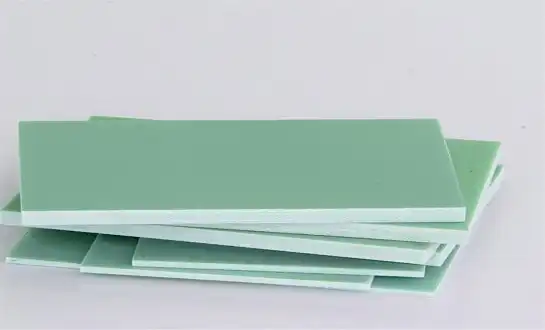
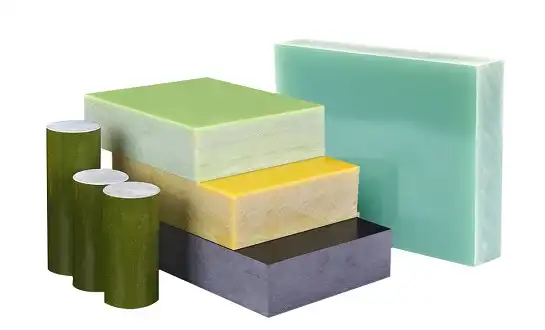
The Importance of Tg (Glass Transition Temperature) in FR4 Sheets
When looking for FR4 sheet for tough jobs, it's important to know about the Glass Transition Temperature (Tg). Tg is the temperature at which epoxy glue changes from being stiff and glassy to being soft and flexible. This trait has a direct effect on the dielectric performance, mechanical strength, and physical stability when the material is under operating stress. If you choose FR4 laminate with the right Tg values, your PCBs and insulation parts will stay together during soldering, thermal cycling, and long periods of use in high-temperature settings.
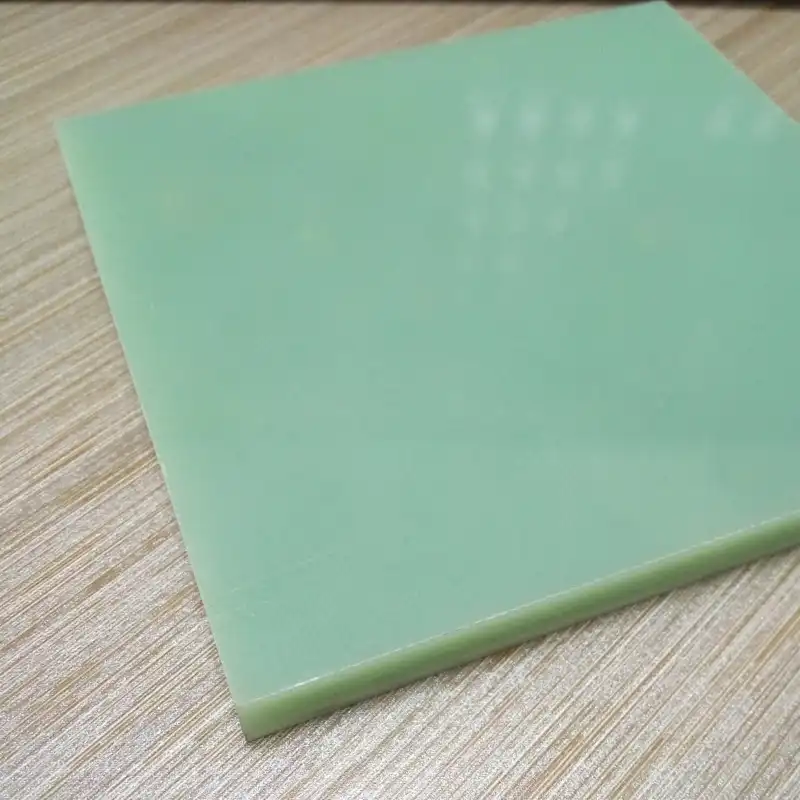
Understanding Glass Transition Temperature (Tg) in FR4 Material
The Glass Transition Temperature is an important temperature feature that tells us how FR4 composite laminates react to heat. This trait affects many things, from how easy it is to make to how reliable it is in the field over time.
What Happens at the Glass Transition Point
The molecular structure of FR4 epoxy laminate changes a lot when it hits its Tg cutoff. The hardened epoxy resin acts like a hard, brittle solid with strong molecular links below Tg. When the temperature goes above this point, chemical bands are free to move around, which makes the material soften and bend more easily. This change doesn't happen at just one temperature, but over a small range, usually between 10 and 15°C. During this phase, mechanical qualities like bending strength start to drop significantly, and the material starts to expand faster. The dielectric constant changes with temperature, which also changes the way electrical shielding works.
Standard Measurement Methods
Specialized temperature measurement equipment is needed to get an accurate reading of Tg. Dynamic Mechanical Analysis (DMA) finds the point where the storage modulus drops sharply by slowly raising the temperature and applying rotating force to an object. Differential Scanning Calorimetry (DSC) checks how the flow of heat changes as the sample moves through different temperature ranges. This shows the endothermic shift that happens during the glass transition. When done according to IPC-TM-650 testing guidelines, both methods give accurate results that can be repeated. During our quality control processes, we use these tried-and-true methods to make sure that every batch of products meets the required temperature performance standards.
Typical Tg Ranges in Commercial FR4 Grades
Standard FR4 epoxy boards have Tg values of about 130 to 140°C, which makes them good for basic electronics building and home uses. Mid-grade versions hit 150 to 160°C, which gives car and industrial controls a better thermal margin. High-Tg FR4 grades have Tg values of 170-180°C or higher, which is important for industries like aircraft, power electronics, and telecommunications infrastructure that work in temperatures that are usually higher than 100°C. By knowing these categories, buying teams can better match material types to different thermal conditions. This way, they can avoid both over-specification, which can lead to higher costs, and under-specification, which can cause problems in the field.
Why Tg is a Critical Parameter for FR4 Procurement and Application?
When choosing insulation laminates without taking Tg into account, products often fail too soon, there are problems with the making, and it costs a lot to fix them. This thermal trait has a direct effect on the stability of PCBs in a number of different ways.
Impact on PCB Reliability During Thermal Cycling
During their working life, electronic parts are heated and cooled many times. Power cycling, changes in the temperature of the environment, and operating task cycles all put stress on materials because they grow and contract at different rates. When working temperatures get close to or go above the FR4 sheet Tg, the softer plastic can't hold copper traces in place and keep the sheet's shape. This makes metal through-holes crack, traces separate, and the part bends. Studies done in the field show that PCBs that are working within 20°C of their substrate Tg have three to five times higher failure rates than circuits that have enough thermal cushion.
Performance in High-Temperature Applications
Power transfer equipment, motor controls, and factory automation systems all work normally when the temperature outside is above 80°C. When current-carrying wires and semiconductor devices heat up a certain area, the substrate temperature can easily hit 120 to 150°C. At these temperatures, standard epoxy laminates lose their mechanical stiffness, which makes joints loosen, mounting holes get longer, and structural supports bend. High-Tg FR4 materials stay glassy and stiff above these working temperatures, so they work the same way for the whole life of the product. These better thermal properties are especially helpful for telecommunications equipment and technology under the hood of cars.
Comparison with Alternative Substrate Materials
Even though polyimide and PTFE-based surfaces are better at withstanding high temperatures, they are too expensive for most industrial uses. Additionally, Rogers laminates work very well at high frequencies, but they are not strong enough for structural uses. High-Tg FR4 is the best of both worlds; it has thermal performance similar to polyimide at a fraction of the cost, while still having the same mechanical qualities, ease of machining, and compatibility with other processing methods that make normal FR4 the workhorse of the industry. Because of this, high-Tg versions are the best choice for uses that need better thermal performance but don't want to spend a lot of money on unusual materials.
Key Considerations When Selecting FR4 Sheets Based on Tg
To match Tg specifications to application needs, you have to look at things like manufacturing methods, quality control routines, and working conditions. When buying something, you should think about a number of things that are all linked.
Aligning Tg with Operating Temperature Profiles
To set the right Tg standard, you must first understand not only the ambient temperature but also the real working temperature. To find the worst-case thermal scenarios, you need to add the ambient temperature, the sun loading for outdoor uses, the interior heat generation from nearby components, and any hot spots that happen because of power loss. When you list the minimum Tg standards, make sure there is a safety margin of at least 25 to 30°C above the highest working temperature. When installing industrial machines in places that aren't heated or cooled, the temperature outside may hit 60°C, which means that FR4 grades with a Tg above 150°C are needed. On the other hand, normal grades with 130°C Tg can be used successfully for indoor consumer products with well-managed thermal design.
Manufacturing Process Compatibility
The numbers of Tg affect how laminates act while they are being made. Processes that don't use lead can hit temperatures well above any normal FR4 Tg, between 250 and 260°C. Even though the material only stays above Tg for short amounts of time, being exposed to heat over and over again during assembly, redo, and repair can cause damage to build up. Higher Tg grades have better physical stability during lamination pressing, which lowers the number of mistakes that happen when building with multiple layers. When CNC machines work, they create localized heating. Materials with a lower Tg may have problems with their edges or delamination when cutting tools create contact heat. Talking to your material sellers about how you make things will make sure that everything works together during the whole production process.
Supplier Documentation and Quality Verification
Tg levels measured by specific test methods, not just nominal numbers, should be made clear on full datasheets. For production lots, you should ask for Certificates of Compliance (CoC) or test results that show the real Tg that was measured. Third-party testing certificates from approved labs give you more trust when looking for new sources or using them in important situations. Check to see if the suppliers keep statistical process control charts that keep track of how consistent Tg is across production runs. Material tracking systems that connect specific test results to specific batch numbers make it easy to quickly figure out what went wrong if problems happen in the field. Professional industrial sellers are set apart from product distributors by these quality systems.
When materials come into our company, they are inspected carefully and tested before they are sent to production. We've been making insulation materials for more than twenty years, so we know how even small changes in Tg can affect later steps and the performance of the finished product.
Advancing Quality Assurance: Testing and Ensuring Tg Compliance in FR4 Sheets
Setting up strong quality control measures will protect your production processes and finished goods from not meeting heat performance standards. Material standards can be trusted when they are tested and checked in a planned way.
Implementing Thermal Testing Protocols
Controlling the quality of production should include checking new materials on a regular basis. It might not be possible to do a full DMA or DSC analysis on every package, but setting up testing plans based on samples makes sure that regulations are always followed. Get pre-shipment test data from your sources, and then make sure that a statistically representative sample from each lot is correct. In your quality control system, write down how often tests will be done, what the acceptance standards are, and how to take corrective action. Thermal analysis tools is a big investment, but businesses that don't have their own testing labs can use contract testing laboratories instead, which are less expensive. The small amount of money spent on testing keeps much more expensive problems from happening when faulty materials get into production.
Supplier Audit Best Practices
To find qualified FR4 sheet vendors, you have to look at their professional skills, quality systems, and process controls. Site checks should look at controls for raw materials, how to make resins, how to make resins, how to watch the press cycle, and how to test final products. Check that the testing methods used for temperature analysis tools are in line with accepted standards by looking at the records of their calibration. Check to see if the environmental controls keep the production conditions stable, since humidity and temperature can change how quickly resin cures and what the end Tg number is. Strong relationships with suppliers based on openness and shared commitments to quality make supply chains secure and help manufacturers achieve regular results.
Real-World Performance Verification
Thermal research in the lab is an important part of characterizing a material, but success in a real-world application is the best way to prove its validity. In accelerated life testing, completed PCBs are put through temperature cycling, thermal shock, and long periods of high temperature operation that are meant to simulate years of use in the field in a short amount of time. Checking for delamination, copper separation, solder joint cracking, and changes in size shows how Tg standards apply to stability in use. We found these validation methods very helpful when we helped power electronics makers get high-Tg laminates approved for use in inverters that run at temperatures above 120°C for long periods of time. The test data showed big gains in reliability that proved the costs of the material upgrades were worth it.
Environmental and Economic Impacts of Tg in FR4 Material Selection
Thermal performance standards affect more than just technical functions; they also affect the long-term health of the surroundings and the total cost of ownership. Strategic material selection strikes a balance between a number of different objectives.
Lifecycle and Recycling Considerations
Thermoset epoxy resins used in FR4 laminates can't be melted down and shaped again like thermoplastics can. This feature makes recycling at the end of its useful life harder because the hardened plastic has to be separated from the glass support by grinding it or heating it up. Higher Tg versions often have extra crosslinking agents and flame retardant additives that make the recycle process even more difficult. When choosing materials, decision makers should think about how they will be thrown away and what environmental rules apply in the target markets. Design-for-disassembly methods that make it easier to recover parts may be useful in some situations, even if reusing the base material is still hard. As more businesses accept circular economy concepts and sustainability commitments, environmental responsibility plays a bigger role in their buying choices.
Economic Analysis Beyond Material Cost
The price of materials at the start is only one part of the total cost of ownership. Standard types of FR4 sheet with a Tg of 130°C may cost 15–25% less per unit than high-Tg options, which is a clear savings. But earlier breakdowns in the field cost more in terms of insurance costs, brand image, and unhappy customers than differences in material prices. Manufacturing yield losses from flaws in the process also eat away at the initial cost edge. When considering FR4 grades, a full economic study should include numbers for failure rates, rework costs, warranty risk, and the product's lifetime. Many of our clients found that using mid-grade or high-Tg materials, even though they cost more per unit, cut down on overall program costs by getting rid of failure modes and increasing service life.
Strategic Sourcing and Value Engineering
Buying plans should make sure that Tg specifications are exactly in line with what the application needs. This way, neither too many nor too few specifications are used. Using fewer FR4 grades across all product groups makes managing inventory easier, gives you more buying power with suppliers, and lowers the cost of approval. Value engineering reviews may find ways to use cheaper standard grades in places that aren't very important, while focusing on high-performance materials only where they are needed for heating reasons. By working together with material sources who know what they're doing, you can get access to technical knowledge that helps with these improvement efforts. Our expert team helps customers all the time to find the right size of materials by matching cost goals with performance needs to get the best value.
Conclusion
In conclusion, when buying FR4 materials for electronics, power systems, industrial equipment, and cars, the Glass Transition Temperature is one of the most important specs to look at. Knowing how Tg changes the mechanical stability, electrical qualities, and ability to be manufactured allows you to choose materials that are more reliable and cost-effective. Professionals in procurement should set clear working temperature profiles, put in place proof testing methods, and form partnerships with suppliers who can show they have strong technical skills and reliable quality systems. Strategically choosing the right Tg matches thermal performance with economic facts while also supporting larger sustainability goals. This makes sure that your goods work reliably for the whole time they're supposed to.
FAQ
How does higher Tg improve PCB performance?
At higher temperatures, higher Tg numbers keep the mechanical rigidity and dimensional stability of the material. This keeps the dielectric properties stable under working conditions, stops warping during bonding, and lowers the stress caused by thermal expansion mismatch. PCBs with high-Tg boards have lower failure rates in thermal cycle tests and last longer when exposed to high temperatures.
Can FR4 Tg be customized for specific applications?
By changing the resin chemistry, curing agents, and process factors, reputable makers can make epoxy resin systems that target particular Tg ranges. For customization, you usually need to place a minimum order and pass a qualification test. Standard industrial grades with Tg ranges from 130°C to 180°C are the best choice for most uses.
What indicates substandard Tg in supplied materials?
Some red flags are prices that are too low compared to the market, test paperwork that is missing or incomplete, refusal to provide material certificates, and performance that varies from shipment to shipment. Some physical signs are too much warping during processing, not being able to keep its shape, or premature delamination during heat contact.
Partner with J&Q for Premium FR4 Sheet Solutions
J&Q has been making high-quality insulation products for more than twenty years and has also been trading internationally for more than ten years. Our large collection of FR4 sheet includes both normal and high-Tg types that are made in ISO-certified quality systems and come with full testing and traceability records. As a well-known provider of FR4 sheet, we offer expert advice to help you find the best material specifications for your individual needs, whether you need PCB substrates, electrical insulation parts, or machinery support structures. Our integrated logistics services make sure that deliveries happen on time and help you plan your production. In addition, our expert support team is always ready to answer questions about material selection and application problems. Get in touch with our experts at info@jhd-material.com to talk about your FR4 sheet needs, ask for examples, or get full quotes for large orders. We give your goods the dependability and stability they need.
References
Coombs, Clyde F. "Printed Circuits Handbook, Seventh Edition." McGraw-Hill Education, 2016.
Institute for Interconnecting and Packaging Electronic Circuits. "IPC-4101D: Specification for Base Materials for Rigid and Multilayer Printed Boards." IPC, 2019.
Harper, Charles A. "Electronic Materials and Processes Handbook, Fourth Edition." McGraw-Hill Professional, 2015.
Licari, James J. and Swanson, Dale W. "Adhesives Technology for Electronic Applications: Materials, Processing, Reliability, Second Edition." William Andrew Publishing, 2011.
Prasad, Sridhar. "Advanced Wirebond Interconnection Technology." Springer Science & Business Media, 2004.
Tummala, Rao R. "Fundamentals of Microsystems Packaging." McGraw-Hill Professional, 2001.

Get a complete product list and quotation
J&Q New Composite Materials Company