Selecting Cutting Tools for High-Speed FR4 Sheet CNC Machining
When cutting FR4 sheet at high speeds, the choice of tool has a direct effect on how well the job is done and the quality of the parts. FR4 sheet is a glass-reinforced epoxy material that is very good at insulating electricity and being strong, so it is essential for making PCBs and using it in industry. The rough glass fibers and thermosetting resin matrix make it hard to machine. You need carbide or diamond-tipped cutting tools that can keep their sharpness while handling high temperatures and fast wear.
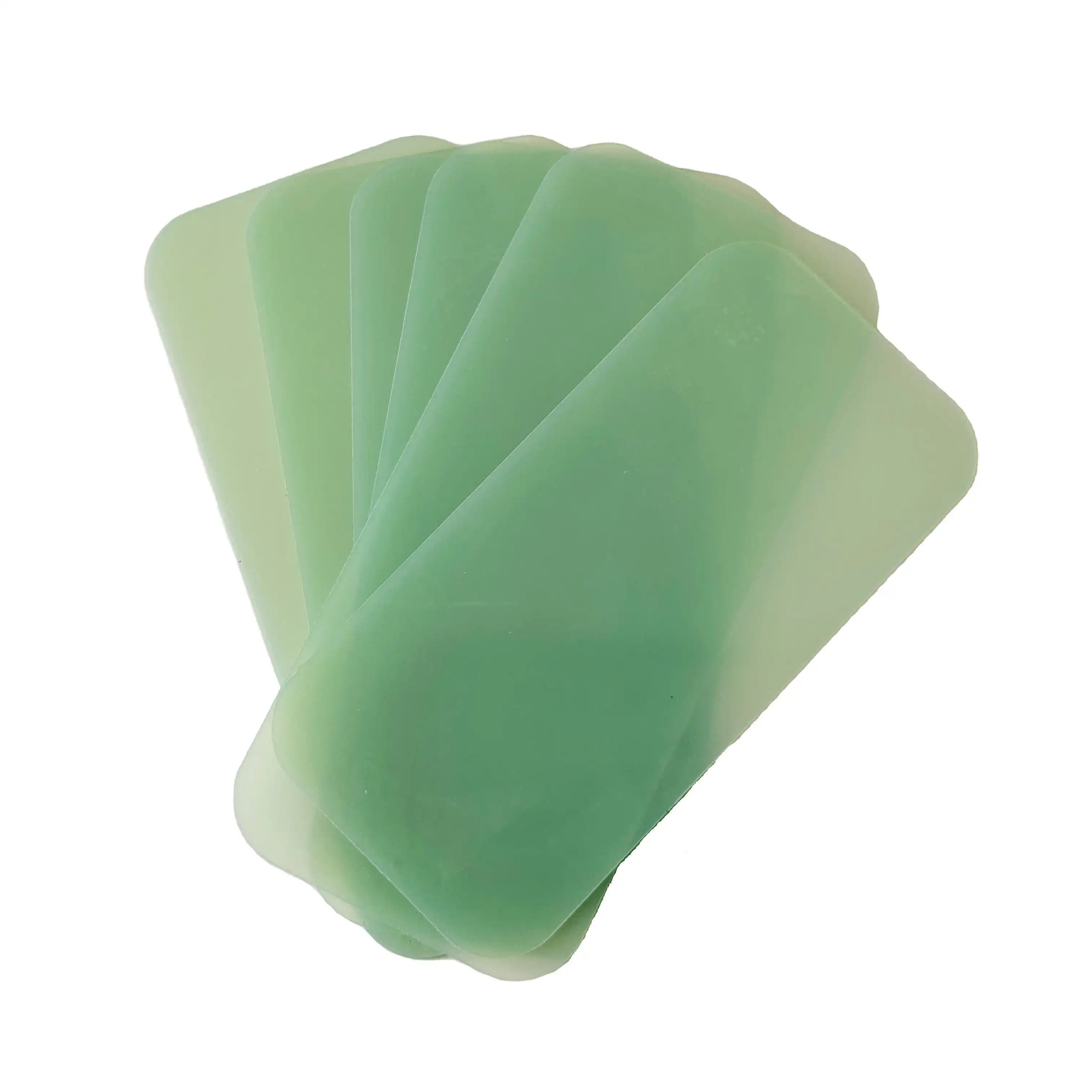
Understanding FR4 Material and Its Machining Challenges
The Composition Behind the Complexity
UL94 V-0 approval means that FR4 sheet can put out fires on its own. It is made of continuous filament glass cloth that is bound with flame-retardant epoxy resin. For normal grades, this composition provides better dielectric strength and dimensional stability across temperature ranges from -55°C to 130°C. High-Tg versions work reliably up to 180°C. The material's glass transition temperature has a big impact on how easy it is to machine. If the cutting temperature goes above this point, the plastic softens and the item deforms.
Common Machining Obstacles
Three major problems are made worse by high-speed CNC processes. Delamination happens when layers separate because of bad feed rates, which weakens the structure and makes it harder to split electrical signals. When tools are dull, they tear glass fibers instead of cutting them neatly, leaving rough ends that need to be finished again. When there isn't enough cooling at the cutting zone, heat builds up and causes damage that shows up as discolored or melting resin. Metals move heat away from the tool contact, but FR4 sheet's low thermal conductivity keeps heat in, which speeds up tool wear and surface quality problems.
Material Variations That Matter
Standard FR4 sheet can be used for most things, but High-Tg FR4 sheet is better for power devices because it can handle higher temperatures better. G10 laminates don't have any flame retardants based on bromine, but they have the same level of mechanical strength. Knowing these differences helps engineering teams choose the right grades. For example, choosing standard FR4 sheet for low-cost uses and High-Tg materials for high-temperature areas makes sure that the best use of materials is made without spending too much.
Criteria for Selecting Cutting Tools for FR4 CNC Machining
Tool Material Foundations
Carbide cutting tools are the standard for FR4 sheet grinding because they are hard and don't wear down easily like high-speed steel does when it comes to glass fibers. The useful life of diamond-coated carbide tools is much longer—in some production settings, the tools last 5–10 times longer than untreated options. The diamond coating keeps the cutting edges sharp over long production runs, lowering the number of times they need to be changed and improving consistency between parts.
Geometry Considerations for Clean Cuts
Tool shape has a big effect on the quality of the cut and how well chips are removed. Upcut circular shapes push chips up, which keeps them from building up in blind holes and pockets. Downcut spirals squeeze the material while it's being cut, which lowers chipping on the top surface, which is important for keeping the copper clad on PCB blocks intact. When you use compression bits, they combine the two geometries and give you clean edges on both faces at the same time. Rake angles of 10 to 15 degrees are good for cutting with strong edges, and helix angles of 30 to 45 degrees make it easy to remove chips without using too much cutting force.
Coating Technologies That Extend Life
In addition to diamond coats, there are other surface processes that can improve the performance of a tool in certain situations. Titanium aluminum nitride (TiAlN) coatings can handle temperatures of up to 800°C and act as heat shields when working quickly. Chromium nitride (CrN) coats are great at releasing things, so glue doesn't stick to them and build up edges. Understanding coating limitations matters—diamond coatings excel in abrasive wear resistance but chip under impact loads, making them ideal for routing operations rather than drilling applications requiring intermittent cutting action.
Dimensional Matching to Material Thickness
The width and length of the tool used for cutting must match the thickness and feature standards of the FR4 sheet. Sheets ranging from 0.4mm to 3.2mm are usually used to make PCBs, with 1.6mm being the most popular. Routing operations usually use end mills with a width of 1.0mm to 3.175mm. Smaller tools can make turns with tighter radiuses but need slower feed rates. For drilling, you need stub-length drills that don't bend too much. Length-to-diameter ratios higher than 3:1 increase the chance of hole position mistake and breaking in thin laminates.
Comparative Analysis of Cutting Tools for FR4 vs Other PCB Materials
Metal Core PCB Requirements
Aluminum-backed PCBs have metal cores and FR4 sheet insulator layers to keep heat in check. To machine these alloys, you need tools that can switch between materials without breaking. Because metal and plastic layers are not all the same strength, carbide tools with special edge preparations can handle the difference. Slower spindle speeds (15,000–20,000 RPM vs. 24,000–30,000 RPM for normal FR4 sheet) and flood coolant stop the difference in thermal expansion that leads to delamination at the edges of materials.
Ceramic Substrate Differences
For high-frequency uses, ceramic surfaces like alumina and aluminum nitride are used more and more, which need to be ground with diamonds instead of being cut. Because these materials are so hard and brittle, they need different process physics. Instead of plastic distortion, material loss happens through micro-fracture. When looking for providers for mixed-material production lines, it's helpful if they offer both FR4 sheet and the right tools for different types of substrates. This makes managing vendors and getting technical support easier.
Flexible Circuit Considerations
Polyimide-based stretch circuits have problems with being too soft instead of too hard. Material tension that leads to errors in measurements can be avoided with sharp tools and accurate depth control. This difference shows why FR4 sheet is still the best choice for fixed applications that need stable dimensions: its balanced properties allow for consistent cutting results without the need for special fixtures and process control that are needed for flexible materials.
Best Practices and Case Studies in High-Speed FR4 Sheet Machining
Validated Parameter Ranges
The best surface finish for FR4 sheet is achieved at spindle speeds between 24,000 and 36,000 RPM, while tool life is still pretty good. Feed rates of 1.5 to 3.0 meters per minute are good for both output and edge quality. Too fast of speeds can tear fibers, and too slow of rates can make the machine too hot. When slotting, the depth of cut shouldn't be more than half of the tool's width per pass. However, full-thickness drilling is still common, and chip removal should be done during the right peck cycles.
Troubleshooting Real Production Issues
Fiber pullout usually means that the cutting edges are worn or that the spinning speed is too slow. Most problems can be fixed by increasing RPM or replacing tools more often. If there is constant delamination in the same places, it means that the fixings aren't strong enough and the material can bend while it's being cut. Improving vacuum hold-down or lowering the open span will get rid of the problem. If resin smears on cut surfaces, it means that too much heat is building up. This can be fixed by either better dust extraction or slower feed rates, which lower the friction energy input.
Case Study: Automotive Battery Barrier Production
A company that makes parts for electric vehicles that use FR4 sheet insulation barriers had to deal with yield losses due to edge chipping during high-volume production. 95% of flaws that caused rejection went away when normal upcut end mills were replaced with compression geometry tools. The compression design kept the bottom edges clean and stopped the top-surface fibers from lifting, which is very important for parts that need to be put together with tight tolerances. With the best settings (28,000 RPM, 2.2 m/min feed, and 0.5 mm depth per pass), cycle time dropped by 18% and scrap rates dropped below 0.5%.
Procurement Guidance for Cutting Tools and FR4 sheets
Supplier Certification and Quality Assurance
Getting FR4 sheet from approved sources guarantees consistent materials, which has a direct effect on how predictable machining is. Reputable makers keep tight process controls, which ensures that the width is within 0.1 mm of the target and the resin content is regular. These consistency factors tell us if set settings for tools stay the same across production lots or if they need to be changed all the time. Asking for certifications of materials that include their glass transition temperature, dielectric strength, and flammability scores lets new checking processes stop problems with handling before they reach production equipment.
Balancing Cost and Performance
When buying tools, you need to look at the total cost of ownership, not just the unit price. Premium diamond-coated tools cost three to four times more at first, but they last five to ten times longer, which lowers the cost of each tool and eliminates the need for downtime for changeovers. Tiered pricing is often unlocked by making large promises. For example, procurement managers who are in charge of coordinating needs across various production lines can combine orders to get bulk savings without overstocking any one place.
Strategic Supplier Partnerships
Long-term partnerships with providers who can provide both FR4 sheet and cutting tool knowledge give businesses a technical edge over their competitors. Suppliers who offer development services let you test the process before committing to full production. This lowers the risk of launching a new product. Custom manufacturing solutions that meet specific feature needs, like non-standard diameters, custom profiles, or finishes that are made for a certain purpose, set capable partners apart from transactional vendors.
Working with sources who have a lot of knowledge makes it easier to figure out what's wrong when production problems arise. Instead of having to deal with different relationships for material and tooling issues, combined support figures out whether the issues are caused by differences in the material, tool wear, or the need to optimize parameters. This unified responsibility speeds up the process of solving problems, keeping delivery promises and reducing output delays.
Conclusion
Choosing the right cutting tools for high-speed CNC making of FR4 sheets requires a balance between knowledge of how materials work and the needs of production. Carbide and diamond-coated tools are used to deal with the rough glass fiber content, and improved shapes and coatings are used to deal with the thermal problems that come with epoxy resin systems. Validated machining settings that keep the quality of the edge while stretching the life of the tool give businesses a direct competitive edge through higher yield rates and lower running costs. Strategic relationships for buying certified materials and technical help let engineering teams focus on coming up with new designs instead of fixing problems with the process, which supports long-term manufacturing success.
FAQ
What cutting tool materials work best for high-speed FR4 processing?
Carbide tools are the least bad choice because they are hard enough to cut through rough glass threads. Diamond-coated carbide works better and lasts longer than untreated options. It also keeps glue from building up, which lowers the quality of the cut. The finishing expense pays off in high-volume production by cutting down on the number of times the tool needs to be changed and keeping the surface finish the same over its lifetime.
How does FR4 thickness influence tool selection and parameters?
Thinner laminates (0.4 to 0.8 mm) need shorter tools that don't bend as much and slower feed rates that keep the material from bending while it's being cut. Standard 1.6 mm FR4 sheet can fit general-purpose tool shapes with features that are adjusted. Longer flute lengths are better for thicker materials (2.4–3.2 mm), and you may need to make more than one depth pass to keep the edge quality high, especially when cutting complex curves or features with tight radiuses.
Are coated cutting tools necessary for FR4 machining?
Which coating to use varies on how much is being made and what quality standards are needed. Carbide that isn't treated is good for testing or low-volume work where cost is more important than tool life. Diamond coatings are necessary in production settings where uniform edge quality, longer tool life, and less downtime for changeovers have a direct effect on delivery performance and revenue.
Partner With J&Q for Premium FR4 Sheet and Expert Machining Support
J&Q has been making high-quality soundproofing materials for more than 20 years and is also a master in high-performance laminates. Our approved FR4 sheet product meets strict UL and ROHS standards, giving you the exact machining you need. Engineering teams can get expert advice that helps them choose the best tools and set the right settings for machining in order to make PCB substrates, transformer insulation, or car parts.
As a well-known seller of FR4 sheets, we know how hard it is for electronics makers and industrial machinery builders to get the materials they need. Our combined logistics skills ensure reliable delivery plans that support just-in-time production needs, and our flexible MOQ policies allow for both small-scale production and the development of prototypes. Get in touch with our technical team at info@jhd-material.com to talk about your FR4 sheet needs and get personalized suggestions that match the material's specs to your cutting methods and performance goals.
References
Harper, C.A. (2006). Electronic Materials and Processes Handbook. McGraw-Hill Professional, Chapter 4: Laminate Materials for Printed Circuits.
Kalpakjian, S. & Schmid, S.R. (2014). Manufacturing Engineering and Technology. Pearson Education, Section 23.8: Machining Composite Materials.
IPC-4101 Specification for Base Materials for Rigid and Multilayer Printed Boards (2020). IPC International Standards Committee.
Astakhov, V.P. (2011). Machining of Hard Materials – Definitions and Industrial Applications. Springer Advanced Manufacturing Series.
NEMA Standards Publication LI 1-1998: Industrial Laminating Thermosetting Products. National Electrical Manufacturers Association.
Weinert, K. & Kempmann, C. (2004). Cutting Temperatures and Their Effects on the Machining Behavior in Drilling Reinforced Plastic Composites. Advanced Engineering Materials, 6(8), 684-689.

Get a complete product list and quotation

J&Q New Composite Materials Company



