Quality Inspection Standards for CNC Machined G10 Parts
Standards for quality control of CNC-machined G10 parts include checking for correct dimensions, a smooth surface, electrical protection, and the part's ability to hold up under stress. Through systematic measurement methods, statistical process control, and detailed paperwork, effective inspection procedures make sure that every G10 part meets NEMA standards, UL certifications, and application-specific needs. These standards have a direct effect on how reliable a product is, how well it meets regulations, and how well it works over time in important electricity and industry settings.
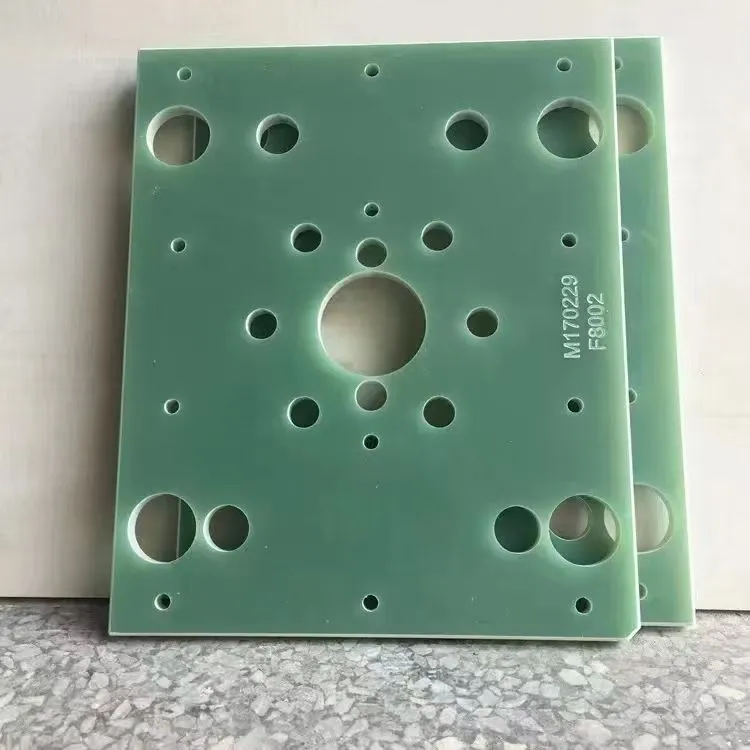
Understanding G10 Material Properties and CNC Machining Challenges
When you work with G10 products, you face special chances and problems that affect the requirements for inspections. Knowing these things about them helps you set up the right quality control measures for made parts.
What Makes G10 Material Unique in Industrial Applications
The unique mix of electrical insulation qualities and industrial strength in G10 fiberglass laminate makes it stand out from other materials. This high-pressure thermosetting laminate is made of continuous thread glass cloth that has been soaked in epoxy resin. This makes a hybrid material that stays the same size even when the temperature changes a lot.
The material doesn't absorb much water, so its electrical qualities stay the same even in damp places. This makes it perfect for power transfer equipment and generator parts. Compared to phenolic materials, G10 has a higher dielectric strength of up to 35 kV/mm and is also very easy to machine for making precise parts.
Common Quality Issues in G10 CNC Machining
When CNC cutting G10 materials, there are certain quality issues that need special checking methods. The biggest problem is delamination, which happens when the wrong cutting settings are used or the tools are worn out and split the glass fiber layers. This flaw hurts both the material strength and the electrical protection.
Because glass fibers are rough, they speed up tool wear when working with G10. This causes dimensions to shift and the surface to look bad. In electrical uses, burrs that form along cut edges can be failure places, and fiber pull-out can make active paths that hurt the performance of insulation.
During cutting, heat can break down epoxy glue, which can lead to weak spots and the possibility of water absorption. Because of these things, there need to be specific checking procedures that look at both obvious and tiny quality markers.
Impact of Material Properties on Inspection Requirements
Because G10 materials have special qualities, they need testing methods that go beyond simple size checks. Because glass fiber reinforcement is not uniform, its strength changes depending on its direction. This means that testing methods must be tailored to each direction.
The electrical properties stay fixed only when the structure of the material stays the same. This is why finding delamination is so important for quality control. Because the material has a low temperature expansion rate, it is possible to keep tolerances very close, but exact measuring methods are needed to make sure that the dimensions are correct.
Electrical performance is directly affected by the quality of the surface, since tiny cracks or fiber exposure can let water in and weaken the insulator. These features of the material affect the testing methods that make sure quality right away and dependability in the long run.
Essential Quality Inspection Standards for G10 Parts
Comprehensive quality assurance relies on well-known industry standards that give made parts measured criteria for evaluation. These guidelines make sure that all providers and apps are the same.
International Standards and Certifications (IPC, ASTM, MIL-SPEC)
IPC guidelines control how electronics are put together, and IPC-4101 talks directly about glass fiber reinforced laminates. These standards spell out the electrical performance requirements, limits for size, and weather testing procedures that are necessary for using electronic components.
ASTM D229 sets standard test procedures for finding out the electrical qualities of solid insulating materials. It includes instructions for measuring dielectric strength, volume resistivity, and surface resistance. Regarding checking the uniformity of materials, ASTM D792 talks about important ways for figuring out density.
According to the MIL-I-24768 standards, insulating materials must meet strict performance standards for use in defense and aircraft uses. These standards require thorough testing methods that check how well mechanical, electrical, and biological systems work in harsh circumstances.
Dimensional Tolerance Requirements for G10 Components
Standard deviations in the sizes of finished G10 parts are usually between ±0.005 inches for general uses and ±0.002 inches for precise electrical parts. When it comes to electrical gaps, critical measurements need even tighter control, often up to ±0.001 inches.
For normal uses, changes in thickness must stay within ±0.003 inches, but for some electrical parts, they may need to be within ±0.0015 inches. Surface alignment requirements usually say that the surface of the component must be flat within 0.002 inches all the way across.
For normal features, angular tolerances are usually within ±0.5 degrees. For important alignment surfaces, they are even tighter, at ±0.25 degrees. These specs make sure that the parts fit and work right while still meeting the electrical performance standards for a wide range of uses.
Surface Finish and Roughness Specifications
The surface finish needs for G10 parts are very different depending on the purpose. For visual purposes, polished surfaces may need to be 32 microinches Ra or better, while standard cut surfaces usually get to 125 microinches Ra.
Maximum surface roughness values are often given in electrical uses to stop corona discharge and make sure that the shielding works well. Critical areas may need 63 microinches Ra to keep electrical fields from concentrating and to keep wetness from sticking around.
Specifications for edge quality talk about burr height limits, usually saying that the biggest burr size can't be more than 0.002 inches. When deburring, the edge radius must stay the same, and fibers must not be exposed in a way that could damage their electrical qualities.
Electrical Insulation Performance Standards
Dielectric strength testing shows that the material can handle electrical force without breaking. For short-term tests, standard requirements say that the minimum number must be 30 kV/mm. Long-term performance factors cover uses with continuous power.
It is important to measure the volume resistance to make sure that the insulation meets the standards, which are usually higher than 10^14 ohm-cm at room temperature and humidity. Specifications for surface resistance stop tracking and keep the separation between wires.
Comparative tracking index (CTI) scores show how well a material works in dirty situations. G10 materials usually get CTI numbers above 250V. These measures make sure that the performance is reliable in workplace settings where people are exposed to contamination.
Critical Inspection Parameters and Testing Methods
To keep quality high, finished G10 parts need to be measured in a way that takes into account all of their important performance factors.
Dimensional Accuracy Measurement Techniques
When they are properly adjusted, coordinate measuring tools can get measurements with an error of less than ±0.0001 inches, which is the best level of accuracy for complex shapes. CMM tools let you look at a lot of different parts at once and keep track of statistical process control data.
Optical comparators are quick and accurate ways to measure two-dimensional features and check the shape of edges. These systems let you zoom in up to 100 times to get a better look at the quality of the edges and confirm the measurements of features.
Height gauges and precision micrometers meet basic measuring needs and can be traced back to national standards. Digital signs that can collect data allow for real-time process tracking and trend analysis for projects that aim to make things better all the time.
Surface Quality Assessment Procedures
Profilometers that can tell the difference between fiber texture and cutting marks are needed to measure surface roughness. Contact stylus devices detect Ra and Rz accurately without damaging the surface of the component.
Optical surface analysis tools let you measure big areas without touching them, which gives you a full picture of the surface of important parts. These methods find small flaws in the material, like fiber pull-out or plastic gaps, that could hurt its performance.
Visual inspection procedures set standard criteria for classifying surface defects, such as finding delamination, figuring out fiber exposure, and finding pollution. Depending on how important the application is, magnification needs usually fall between 10X and 40X.
Electrical Properties Testing Protocols
For measuring dielectric strength of a G10 part, high-voltage test equipment is used that can give controlled voltage ramps up to the breaking point. Protocols for testing spell out the electrode setup, voltage rise rate, and weather factors that must be met for the same results to be obtained each time.
Megohm meters with voltage outputs that match the needs of the application are used to measure insulation resistance. The length of the test and the voltage levels used must follow set standards, taking into account the shape of the part and how it will be used.
Hipot testing checks the stability of the insulation under long-term voltage stress, usually by adding 120% of the maximum voltage for a set amount of time. These tests find problems before they happen and make sure that the quality of the making is the same across all runs.
Mechanical Strength and Durability Evaluation
Using three-point or four-point bent shapes, flexural strength testing figures out how much weight something can hold. Standard test examples let you compare the qualities of a material to those that have already been published, while custom fixtures can be made to fit the exact shape of a component.
Measurements of compressive strength make sure that structures are stable when they are crushed. This is especially important for fixing points and supporting surfaces. Anisotropic material qualities can be taken into account in testing methods by checking the strength of the material in different directions.
Impact resistance testing checks how tough a material is and how well it can handle being hit hard. Charpy or Izod test methods give consistent readings of impact energy that match what is expected in the field.
Thermal Performance Verification
Thermal cycling tests check how stable the dimensions are and how well the material holds up under different temperatures. Temperature ranges for testing usually go from -55°C to +155°C, and rest times and change rates are set.
Measurements of the coefficient of thermal expansion confirm forecasts of changes in size across a range of working temperatures. These readings make sure that the right amount of room is built in for heat growth and that the setup works reliably.
Heat displacement temperature testing finds the highest temperature that can be used while the machine is under load. The results show what the limits of an application are and what the safe working settings are for certain component types.
Advanced Inspection Equipment and Technologies
Modern checking methods use cutting-edge tools to give a full picture of quality while keeping production running smoothly.
Coordinate Measuring Machines (CMM) for Precision Measurement
When CMM systems are equipped with scanning tools, they can quickly profile surfaces and measure features automatically. Statistical analysis tools in more advanced software packages help improve processes and keep an eye on quality trends.
With portable CMM tools, accurate measurements can be made right in the production area, allowing for real-time quality feedback and quick corrections. These systems are as accurate as scientific tools and can be used in a variety of ways.
Multisensor CMM platforms use both touch and visual measurement methods in the same setting. This cuts down on handling time and increases measurement options. Integrated systems give thorough review records that meet the needs of both customers and those who need to track things.
Optical Inspection Systems for Surface Analysis
High-resolution digital microscope tools make it possible to look at and record surface defects in great detail. Automated picture analysis software keeps assessment standards uniform across multiple workers and counts the features of defects.
Three-dimensional surface measuring devices make detailed maps of the terrain without damaging the surface through touch. These systems can find small surface flaws that might affect how well electricity works or how the surface looks.
Machine vision systems work directly with production tools to keep an eye on quality all the time. Real-time flaw spotting lets the process be changed right away, stopping the production of bad parts.
Electrical Testing Equipment for Insulation Properties
Automated electrical testing devices make it easier to check the properties of insulation while keeping the accuracy of measurements. Computer-controlled test routines make sure that rules are always followed and that all data is properly documented.
High-voltage testing tools made just for layered materials, such as a G10 part, can handle different part shapes while keeping the user safe. Integrated safety systems keep equipment from getting damaged and make sure it works properly.
Environmental rooms let you try electrical systems in controlled temperature and humidity settings, which gives you a more accurate picture of how well they'll work in real-life service situations.
Non-Destructive Testing Methods for Internal Quality
Ultrasound screening devices can find internal delamination and hole creation without hurting the parts. Modern signal processing methods can tell the difference between material surfaces and real flaws, which makes quality measurement more accurate.
X-ray screening tools show details about the structure inside and find manufacturing flaws that can't be seen by looking at the surface. With digital radiography, you can get data right away and handle images more efficiently.
Thermographic scanning methods find localized heating patterns that show problems inside the machine or strange electrical activity. These ways make it possible to do quick screening in places with a lot of production.
Quality Control Process Implementation
Systematic quality control makes sure that results are always the same, while also making the best use of resources and keeping production running smoothly.
Pre-Production Material Verification
Before cutting starts, the incoming material is inspected to make sure it meets the required grades and certifications. A certificate of compliance paper makes it possible to track things and sets the basic qualities of materials.
Sample testing methods use standard test examples to check important material features, confirm source specs, and find possible quality problems before committing to production.
The right way to store and handle materials keeps them in good shape and stops pollution that could lower the quality of made parts. During the whole production process, environmental controls and handling rules keep the qualities of the materials safe.
In-Process Monitoring and Control Points
Using strategic measurement places during the cutting process lets you find flaws early on and make changes to the process before finishing up expensive parts. Machine workers get input right away from real-time tracking tools.
Monitoring the state of tools stops quality loss from happening because of tool wear, keeping the surface finish and size accuracy the same throughout production runs. Automated methods for replacing tools keep production running smoothly and prevent problems with servicing.
Monitoring of process parameters keeps an eye on cutting speeds, feed rates, and cooling conditions that have an impact on the quality of the end part. Statistical process control charts show patterns and let you plan ahead for upkeep.
Final Inspection Checklist and Documentation
Comprehensive inspection plans make sure that all important quality factors are evaluated in a planned way. This keeps things consistent across multiple inspectors and work shifts and stops mistakes from happening.
Digital paperwork systems keep full records of inspections that can be linked back to specific lots of materials, machine sets, and operator duties. Electronic records make it easy to quickly find data and look at trends for projects that aim to improve things all the time.
Quality control stamps and certificates reassure customers and make it clear who is responsible for what quality results in. Standardized document forms make it easier to communicate with customers and follow the rules.
Statistical Process Control for Consistent Quality
Implementing control charts keeps an eye on important quality indicators and finds changes in the work process before they lead to faulty parts. Software for statistical research can send out automatic messages and find trends.
Capability studies set baselines for process performance and check that the ability to regularly meet customer needs is being tested. Regular capacity reviews make sure that the process keeps working well and find ways to make it better.
Data collection systems combine the results of measuring tools with production management systems. This gives the whole company complete quality measures and lets everyone make decisions based on data.
Supplier Qualification and Quality Assurance
For supplier relationships to work for G10 part procurement, they need to be regularly evaluated and watched over to make sure that quality is always delivered and that things are always getting better.
Evaluating CNC Machining Capabilities
Machine capacity tests check how accurate, repeatable, and well statistical process control is used in the equipment. Measurement system analysis and process capability studies are two types of thorough reviews.
Evaluation of tools and fixtures makes sure that the right equipment is used for G10 cutting. Specialized understanding of the tools and the right way to set them up have a big effect on the quality of the end component.
Training operators and checking their certifications makes sure that all of the suppliers follow the same cutting procedures and are aware of quality issues. Training plans that are written down show a dedication to high achievement.
Quality Management System Requirements
ISO 9001 certification sets the basic standards for a quality management system. AS9100 or ISO/TS 16949 certifications, on the other hand, address the quality needs of a specific business. Comprehensive quality systems make sure that quality control is done in a planned way.
Documentation control systems keep track of the most recent versions of specs, processes, and review needs. Change control methods stop changes that aren't approved and could hurt quality.
Corrective and preventive action systems deal with quality problems in a planned way and take steps to make sure they don't happen again. Root cause analysis skills ensure that problems are solved effectively.
Supplier Audit and Certification Process
On-site exams check that the quality system is being used correctly and see how much production can actually be done. Protocols for audits talk about the state of the tools, the skill level of the operators, and quality control processes.
Certification methods make a provider an accepted one based on their past success and skills. Regular renewal makes sure that ongoing agreement with changing standards is maintained.
Performance tracking tools keep track of shipping performance and quality metrics over time. Scorecard systems help suppliers improve their businesses by giving them concrete ways to be judged.
Ongoing Performance Monitoring
Tracking quality measures lets you spot performance trends and possible problems early on. Performance reviews that happen on a regular basis give comments and set goals for improvement.
Continuous growth programs urge suppliers to come up with new ideas and find better ways to do things. Collaborative relationships help both people succeed and help the partnership grow over time.
Communication methods make sure that problems are solved quickly and that everyone knows what is expected of them in terms of high performance. Supplier ties are strengthened by regular talks and feedback sessions.
Cost-Effective Quality Inspection Strategies
To find the best balance between quality standards and cost concerns, you need to do a lot of strategy planning and use risk-based methods to make the best use of your resources while still meeting quality standards.
Risk-Based Inspection Planning
Risk assessment methods for G10 part production figure out what the most important quality factors are and how often they should be inspected. Characteristics that are high in risk get more attention, while characteristics that are low in risk use sampling methods.
Failure mode and effects analysis (FMEA) finds possible quality problems and helps create inspection strategies. Systematic risk evaluation makes sure that all important quality aspects are covered.
Cost-benefit analysis compares the money spent on inspections to the money that could be lost if something goes wrong. This helps make the best use of resources and decides how much quality control costs are reasonable.
Sampling Methods for High-Volume Production
Statistical sample plans lower the cost of inspections while keeping the general standard level high. MIL-STD-105E and other similar standards give tried-and-true ways to pick samples for different levels of risk.
With automated checking systems, sampling rates can be raised without the costs going up by the same amount. Integration with production tools lets you keep an eye on quality all the time at a lower cost per unit.
Based on a supplier's past performance and quality records, skip-lot inspection methods cut down on the need for regular inspections. Gradually increasing the level of inspection shows the real level of risk and the supplier's skills.
Balancing Quality Requirements with Budget Constraints
Value engineering helps find quality control methods that are both effective and affordable, meeting basic needs without spending too much. Focused inspection methods focus on important factors while reducing the number of routine checks.
The cost of automatic checking equipment is weighed against the saves in work and better quality that come from using it. A long-term cost study looks at things like lowered failure costs and higher customer happiness.
Investing in supplier growth raises quality upfront and lowers the need for inspections downstream. Partnership methods let both users and providers share the costs and benefits of improving quality.
ROI Analysis of Quality Inspection Investments
A quantitative study of investments in quality checking shows that they save money directly by preventing defects and indirectly by making customers happier and lowering the number of guarantee claims.
Quality control efforts pay off in measured ways, like higher productivity from less redo and waste. Statistical research shows that the amount of money spent on inspections is related to how efficiently the manufacturing process works as a whole.
Long-term gains include better relationships with suppliers, a better image for the company, and more market possibilities because of proven quality skills.
Conclusion
To meet quality standards for CNC-machined G10 parts, methods must be thorough and take into account the features of the material, the difficulties of making, and the needs of the application. Effective inspection procedures check the accuracy of the dimensions, test the electrical properties, and check the mechanical soundness of the part to make sure it works reliably. Choosing the right tools, controlling the process in a planned way, and having strong relationships with suppliers that support efforts to keep improving while keeping costs low are all important for a successful implementation.
FAQ
Which quality factors are the most important for G10 parts that are used in electricity applications?
The most important electrical factors are dielectric strength and insulation resistance, which usually need to be at least 30 kV/mm and 10^14 ohm-cm, respectively. Specifications for the surface finish stop corona discharge, and accurate measurements make sure there are enough electrical gaps. The quality of the edge must keep fibers from being exposed, which could lead to electrical paths.
How often should quality checks be done on G10 parts that are being machined on a CNC?
How often you inspect relies on how much you're making and how important the parts are. In high-volume production, the first piece is usually inspected, samples are taken at regular intervals during production runs, and all parts must be inspected once they are finished. For critical applications, inspection rates may need to be 100%, but for normal uses, inspection rates of 2% to 5% are common.
What kinds of licenses should I look for in a G10 CNC cutting supplier?
ISO 9001 approval sets basic standards for quality management, and UL recognition makes sure that materials meet electricity safety standards. For aircraft purposes, AS9100 approval shows that the product meets quality standards, and ITAR registration may be needed for defense uses. Certifications for materials should include proof of NEMA grade and RoHS compliance.
Partner with J&Q for Superior G10 Part Quality Assurance
J&Q can help you make G10 parts because they have over 20 years of experience working with insulation materials and 10 years of experience dealing internationally. Our full range of quality testing services, along with our own transportation services, allow us to provide total solutions for even the toughest electrical and industrial needs. Certified quality control systems and advanced testing tools make sure that every part meets your exact requirements while keeping delivery times competitive.
Get in touch with our expert team at info@jhd-material.com to talk about your unique G10 part provider needs and find out how our tried-and-true quality assurance processes can help you make better purchases.
References
National Electrical Manufacturers Association. "NEMA Standards for Industrial Laminated Thermosetting Products." NEMA LI 1-2019.
ASTM International. "Standard Test Methods for Rigid Sheet and Plate Materials Used for Electrical Insulation." ASTM D229-20.
Institute for Interconnecting and Packaging Electronic Circuits. "Specification for Base Materials for Rigid and Multilayer Printed Boards." IPC-4101E.
Military Specification. "Plastic Sheet, Laminated, Glass Fabric Base, Epoxy Resin." MIL-I-24768/GEE.
International Organization for Standardization. "Quality Management Systems for the Aerospace Industry." ISO 9001:2015 / AS9100D.
Underwriters Laboratories. "Standard for Safety of Insulating Materials for Use in Electrical Equipment." UL 1446.

Get a complete product list and quotation

J&Q New Composite Materials Company