Precision Cutting Techniques for Phenolic Paper Sheets
For making phenolic paper sheets, precise cutting methods need unique ways to keep the material's structure while meeting exact requirements. These designed thermosetting composites are made from phenolic resin-soaked kraft paper. They need to be cut in a way that doesn't damage their insulating qualities or mechanical strength. Modern methods like CNC machining, laser cutting, and water jet processing make sure that the edges are clean and don't delaminate. This is important for electrical insulation uses where the quality of the surface and accuracy of the dimensions have a direct effect on how well the insulation works.
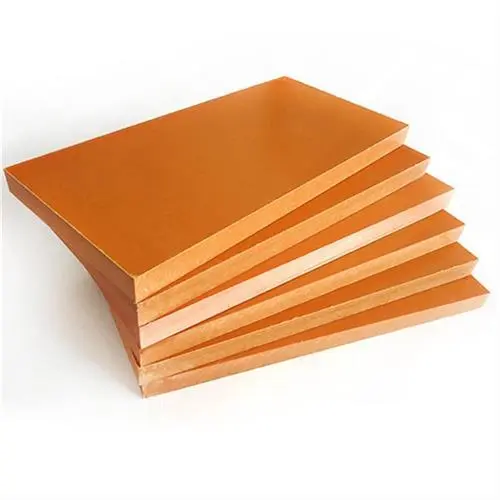
Understanding Phenolic Paper Sheet Properties and Cutting Requirements
Understanding the basic features of phenolic layered materials has a direct effect on the choice of cutting strategy and the success of operations. When they are processed, these materials behave in ways that are very different from metals or other mixed materials.
Material Composition and Structure
Phenolic paper laminates are made up of several layers of kraft paper that have been fully saturated with phenolic glue under controlled pressure and temperature conditions. This way of making things makes a structure that is uniform, with areas that are high in glue and areas that are high in fibers alternating throughout the thickness of the material. The phenolic glue keeps the temperature stable and protects against chemicals, and the paper base gives it strength and stability in terms of its shape.
These materials can handle low to medium voltages because their dielectric strength is usually between 12 and 16 kV/mm. As part of its thermal resistance, the material can withstand temperatures up to 150°C for short periods of time and 120°C continuously (Class E thermal grade). These traits have a direct effect on the cutting parameters because too much heat during processing can damage the resin matrix and make the electrical qualities less reliable.
The density of most materials is between 1.30 and 1.40 g/cm³, which makes for a relatively light but strong base. Because the structure is stacked, cutting forces must be applied perpendicular to the direction of lamination to keep the layers from coming apart. Knowing about these structural features helps workers choose the best cutting speeds and tool shapes for the job.
Common Cutting Challenges
The most common problem that comes up when working with phenolic laminates is delamination. This happens when cutting forces separate the resin-paper contact, leaving loose fibers along the cut edges that can make the insulation less effective. The problem gets worse when cutting tools are dull or when feed rates are too high, which create pulling forces instead of clean slicing action.
Another big problem is that cutting makes heat, which is especially bad for high-speed activities. Too much temperature rise can soften glue, which can cause material to build up on cutting tools and make the surface finish look bad. The breakdown of the material at high temperatures also changes its electrical qualities near the cut edge, which could lower the breakdown voltage in important situations.
For electrical uses, accuracy of at least ±0.1mm is often needed for dimension error. To reach these limits, you have to carefully think about how the tool will bend, how the material will move during cutting, and how the temperature will affect the material's growth. Because the paper base is flexible, the edges may be rough if the cutting factors are not right for the grade and thickness of the material.
Industry Standards and Specifications
There are set rules for the quality of phenolic paper sheets, such as NEMA grades (X, XX, XXX) and IEC 60893 requirements. The electrical, mechanical, and heat qualities that must be kept after cutting are spelled out in these guidelines. Cut edges should have very little delamination (usually less than 0.5 mm from the edge) and the right level of surface roughness for the job.
Tolerance needs change depending on the purpose. For example, PCB drilling backup uses might need dimensions to be accurate to within 0.05 mm, but structural insulation parts might be fine with 0.2 mm. When you know these needs, you can choose the best cutting method for your jobs.
Proper dust collection systems to control the creation of particles, enough air to get rid of flammable compounds, and personal protective equipment for workers are all safety issues that need to be thought through during cutting operations. When the phenolic resin is cut, it can release formaldehyde, so it's important to have good air for worker safety and to follow the rules.
Core Precision Cutting Techniques for Phenolic Paper Sheets
Modern precise cutting methods have changed how makers work with phenolic paper sheet, making it possible for them to be more accurate and produce better quality goods while keeping production costs low. Each method has its own benefits that make it better for certain types of applications.
CNC Machining Techniques
Choosing the right router bit is very important for getting the best cutting results with phenolic laminates. The best results come from carbide tools with sharp cutting edges and the right rake angles. Single-flute spiral bits are good for thin materials, while multi-flute bits are better for thicker sheets. The cutting shape should help chips escape while reducing heat production by removing material efficiently.
To optimize the feed rate, you have to find the right balance between cutting speed and surface quality needs. Depending on the width of the material and the diameter of the tool, the normal feed rates are between 1000 and 3000 mm/min. Higher speeds can burn or wear down tools too quickly, while slower speeds may leave surfaces rough because they rub instead of cut. Monitoring cutting forces in real time helps workers keep the right settings throughout production runs.
For both part quality and human safety, it's important to collect dust and have enough air flow. When chips are removed properly, they don't build up and cause surface flaws or errors in measurements. Proper ventilation systems also control the particles in the air and any flammable fumes that might come from the phenolic resin while it is being cut.
Laser Cutting Applications
When using a CO2 laser on solid materials, the settings need to be carefully tweaked in order to get clean cuts without too much heat damage. Depending on the thickness of the material, the power sets are usually between 100 and 300 watts, and the cutting speed is between 500 and 2000 mm/min. Changing the duty cycle and pulse frequency helps manage the heat intake and keeps materials from burning or breaking down too quickly.
Minimizing the heat-affected zone is very important for keeping the electrical qualities near the cut edges. If the gas aid pressure and makeup are right, it can help remove hot material and cool the cutting zone. Most of the time, nitrogen support gas works well, but compressed air might be enough for less important cuts. The goal is to get full entry with as little heat effect as possible on the object around it.
Because laser cutting can close the edges, it is a great choice for electrical uses. The strong heat naturally covers the cut edge, keeping the dielectric strength and stopping moisture from getting in. Additionally, this gets rid of the need for extra closing steps and improves long-term performance in damp places.
Water Jet Cutting for Thick Sheets
Which abrasive or clean water jet to use depends on the thickness of the material and the speed at which it needs to be cut. Pure water jet can cut through materials up to 10 mm thick and gives you great edge quality with a small kerf width. For thicker materials, you need an abrasive water jet, which trades a slightly wider kerf width for the ability to work with sheets that are 50 mm thick or more.
To get the best results, cutting speeds and quality factors need to be carefully balanced. In general, slower cutting speeds make better edges, but they also make less work get done. Modern water jet systems have cutting speeds that can be changed along the tool path. This lets workers find the best speed for each part of the shape while still meeting quality standards.
Water jet cutting can make complicated forms without having to change tools or use special fittings, which is useful for complex geometry uses. The small kerf width lets parts fit together tightly, which makes the best use of the material. With cold cutting, you don't have to worry about heat warping, which could affect the accuracy of the dimensions of precise parts.
Punch and Die Cutting for High Volume
When designing a tool for phenolic materials, the main goal is to get clean cutting action while reducing delamination. The best results come from cutting edges that are sharp and have small clearance angles. Also, making sure there is enough space between the punch and the die ensures a clean breakout without needing too much force. The materials used to make tools should not wear down easily and keep their sharp tips throughout production runs.
Progressive die setups make it easy to make complicated parts quickly by letting you cut them more than once in a single press stroke. Handling parts correctly between stations keeps them from getting damaged and keeps their measurements accurate. Optimizing the structure of the strips makes the best use of the materials while still making sure they are strong enough to run reliably through the die process.
In mass production, quality control for phenolic paper sheet means keeping an eye on the state of the punches and dies, making sure that the right amount of material is fed through, and checking the sizes of the final parts. Regular repair plans for tools keep the quality from going down, which can happen when cutting edges get dull. Statistical methods for process control help find patterns before they lead to parts being thrown away.
Optimizing Cutting Parameters for Different Applications
Application-specific tuning makes sure that the cutting factors match the needs of the final use while also increasing quality and efficiency. Different uses put different demands on the qualities of materials and the accuracy of their measurements.
Electrical Insulation Applications
To keep the insulating properties after cutting, you need to pay close attention to the state of the edges and keep them clean. There shouldn't be any loose fibers or glue growth on the cut edges, as these could cause voltage concentration points or loss routes. Choosing the right tools and cutting settings can help you get smooth lines that keep the electrical purity of the material.
For high voltage uses, edge cleaning may need extra work to make sure it works reliably. Some of the things that can be done are light sanding to get rid of tiny flaws, chemical cleaning to get rid of cutting dust, or applying edge sealers to stop water from getting in. The exact process varies on the power levels and the factors of the area where it will be used.
Keeping cutting tools and work areas clean is an important part of preventing contamination while cutting. Metallic bits from used tools can make electrical paths that lower the performance of insulation. Choosing the right coolant and filtering it properly, along with checking tools regularly, help keep them clean enough for important electrical uses.
Thermal Management Components
To keep the heat resistance features, cutting methods must not damage the resin material near the cut edges. Cutting with too much heat can lower the material's temperature grade and make it less effective in thermal uses over time. Using water jet processing or optimizing CNC settings for cold cutting helps keep the thermal qualities of the whole part.
To keep cutting temperatures as low as possible, you need to choose cutting speeds and tool shapes that remove material efficiently. When you use sharp tools with the right clearance angles, you need to use less cutting force, which means less heat is made through friction. Having enough cooling flow also helps keep temperatures from building up during high-speed activities.
For heating uses, surface roughness standards often call for smooth finishes to make sure that matching surfaces can make good contact. Rough edges can leave holes in the air that make it harder for heat to move. The right cutting settings and possible extra finishing steps can help you get the surface quality you need for good heat management.
Custom Shapes and Complex Geometries
When you use multi-axis machining, you can make three-dimensional parts that you couldn't make with traditional cutting methods. Modern CNC systems can cut parts with complicated shapes and curves while keeping the part's dimensions consistent all the way through. This feature gives engineers who work with phenolic materials more design options.
Putting several parts on one sheet to cut down on waste is called "nesting optimization for material efficiency." Advanced nesting software can automatically find the best place for each part to go while taking into account the efficiency of the cutting path and the direction of the material grain. This streamlining is especially important when using expensive materials or making a lot of things.
To meet the needs of a certain product, secondary processes and finishing may include cutting, tapping, or shaping the surface. These steps should be planned during the first cutting step to make sure the material is supported correctly and the measurements are correct. Integrated manufacturing methods help keep quality high while cutting down on the time needed for setup and handling.
Quality Control and Best Practices
Using a wide range of quality control measures will help you get regular results and find problems early on, before they affect the quality of the parts or the speed of production. Systematic methods to quality control are now needed to meet the standards for modern production.
Measuring and Testing Cut Quality
For checking the precision of measurements for phenolic paper sheet, coordinate measuring tools are used for complicated shapes, and easy weighing is used for production parts. Calibration of measuring tools on a regular basis makes sure that measurements are accurate, and statistical sample plans give people faith in the general quality levels. Keeping track of test data lets you look for trends and make improvements to the process.
Different methods are used to measure surface finish, ranging from simple eye inspection to exact profilometry for important parts. Portable roughness meters let you quickly check for problems during production, but for quality testing, you might need to do research in a lab. Setting standards for surface finish helps make sure that all production runs and sources are the same.
Some of the electrical properties that can be tested after cutting are dielectric strength, insulator resistance, and dielectric constant. These tests make sure that the cutting process hasn't changed the electrical properties of the material. How often you test depends on how important the application is and how much you produce. High-reliability applications need to be tested more often.
Tool Maintenance and Selection
Optimizing the life of blades and tools means keeping an eye on how well they cut and changing them before the quality starts to drop. Cutting force tracking systems can let you know when a tool is starting to wear down early, and regular inspections can help you figure out how the wear is happening. Keeping tools in the right place and treating them correctly can also help them last longer and work consistently.
For phenolic materials, the right tool design includes sharp cutting edges, the right rake angles, and chip removal features that work well. Carbide tools usually have the best mix of edge retention and resistance to wear for most jobs. Coating technologies can make tools last even longer while keeping the quality of the cuts.
To keep prices down and meet replacement plans, you have to balance the cost of tools with quality standards and production speed. Preventive replacement based on cutting time or part count helps avoid quality problems that come up out of the blue, and keeping track of costs lets you choose the best tools and use them most efficiently. Partnering with vendors can help with technology issues and offer low-cost tool management programs.
Workflow Optimization and Safety
When planning production to be as efficient as possible, you have to schedule cutting processes so that the most equipment is used while still meeting quality standards. Processing similar parts in groups can cut down on setup time and improve regularity. Handling materials correctly can keep them from getting damaged and keep their dimensions stable. Integration of upstream and downstream processes makes sure that the flow of output is smooth.
The risks that come with cutting phenolic materials must be included in worker safety rules. These include protecting your lungs from dust and fumes, your eyes from moving particles, and the right way to handle things so you don't hurt yourself. A safe place to work is maintained with regular safety training and device upkeep.
Concerns for the environment include how to properly get rid of cutting waste and how to control process fumes. Formaldehyde can be released when phenolic materials are cut, so they need to be well ventilated and may need pollution control equipment. Taking care of the environment also means reducing waste by making building and cutting more efficient.
Selecting the Right Cutting Solution for Your Needs
To pick the best cutting method, you need to carefully think about a lot of things, such as the amount of work that needs to be done, the quality standards, and the cost. A methodical approach to choosing makes sure that the skills and needs are best matched.
Volume and Complexity Assessment
Choosing the right tools and making the best use of the process are different for low volume and high volume cutting methods. Flexible CNC systems that can handle a wide range of tasks without requiring a lot of setup time may be useful for low-volume activities. Dedicated machines and specialized tools that improve cycle time and accuracy are often needed for high-volume output.
The level of complexity of the cutting tools needed for phenolic paper sheet depends on whether the shape needs to be simple or complex. Normal cutting methods can make simple shapes quickly, but advanced CNC or laser cutting skills are needed for complicated forms. When looking at different pieces of tools, you should also think about how well they can handle changes to the design in the future.
When production plans are hard to predict or customer needs change often, lead time and flexibility become important things to think about. In markets that are always changing, having equipment that can quickly adapt to design changes or priority orders gives you an edge. Having backups and other suppliers on hand helps keep production going.
Quality Requirements Analysis
Tolerance standard matching means knowing what the present and possible future needs are for accurate measurements. To allow for design changes and process stability, equipment should be able to do more than what is currently needed by a fair amount. You should weigh the cost of getting tighter limits against how useful they will be in the end.
Surface finish needs can be very different depending on the application. For example, rough cuts are needed for mechanical parts, while smooth finishes are needed for electrical connections. Knowing these needs helps you choose cutting methods that will get the job done without adding extra steps that aren't necessary. Documenting surface finish standards makes sure that everyone in the company uses the same language.
To make sure the finished part is reliable, electrical performance standards must be kept during the cutting process. This includes keeping the electrical strength, keeping pollution to a minimum, and keeping the heat qualities. Protocols for testing should make sure that cutting processes don't change important qualities of the material.
Cost-Benefit Analysis
Costs like buy price, installation, training, and starting must all be taken into account when making an initial equipment investment. Financing choices and hiring tools may make advanced cutting technology more approachable while still letting you save money for other purchases. The total cost of ownership should include repairs, new parts, and any other costs that come up.
When figuring out operational costs and efficiency gains, you need to think about how much work is needed, how materials are used, how much energy is used, and how waste is distributed. More efficient ways of cutting might be able to explain higher tool costs by requiring less work and making better use of materials. Increasing quality to lower the number of rejections also helps lower running costs.
When you figure out the return on investment (ROI) for each cutting method, you should look at both the measurable benefits and the strategy benefits. Better quality, faster service, and more advanced skills may give you a competitive edge that is hard to measure but very important to the success of your business. Sensitivity analysis helps you figure out how changes in volume or needs affect how appealing different choices are.
Supplier and Service Provider Evaluation
Whether to cut in-house or hire someone else to do it depends on how much work needs to be done, what skills are available, and strategy concerns. Having in-house skills gives you more control and freedom, but they need money and technical know-how. For low numbers or specific needs, outsourcing may be a cost-effective way to avoid buying tools.
Vendor capability review should include equipment complexity, quality systems, technical knowledge, and capacity available. Site trips and processing samples help compare what the company actually does with what it says it can do. Long-term seller security and a dedication to technological progress are also factors that go into choosing a supplier.
Some of the things that are needed for quality certification are ISO standards, certifications specific to the business, or checks by customers. Knowing these standards early on in the selection process helps make sure that the sellers picked can meet all licensing needs, now and in the future. In controlled businesses, being able to document and track things becomes more and more important.
Conclusion
Cutting phenolic paper sheets with precision has come a long way, giving makers more control than ever over the accuracy of the dimensions and quality of the edges. Choosing the right cutting method, like CNC machining, laser processing, water jet cutting, or specialized punching, relies on how well the application needs to be met while also keeping costs and output efficiency in mind. When engineers know how the properties of a material affect different cutting methods, they can find the best settings for each job while still keeping the electrical and mechanical properties that are needed for solid performance. Quality control measures and a methodical approach to process improvement make sure that results are the same across all output levels. Additionally, evaluating suppliers and their abilities properly helps with the successful use of advanced cutting technologies.
FAQ
For thin phenolic paper sheets, what is the most accurate cutting technique?
Laser cutting is very accurate for phenolic materials that are very thin (usually less than 3 mm thick), and errors can be as small as ±0.05 mm. The cut sides are also sealed to keep the material from delaminating. For straight cuts and simple shapes, CNC cutting with carbide spiral bits also gives you great measurement precision and surface finish quality. This makes it perfect for high-volume production tasks.
How can I cut phenolic paper pieces without them delaminating?
To stop delamination, you need to keep your cutting tools sharp, make sure the feed rates are just right for clean shearing, and use the right workholding methods to keep the material steady while it is being cut. Thermal fusion naturally seals the edges of laser cuts, while up-cut spiral bits and good dust extraction systems that get rid of chips without pulling on the layers of material are helpful for CNC operations.
What kinds of cuts can be made with phenolic paper sheets?
These days, precise cutting methods can regularly get tolerances of ±0.1mm for most uses. Under ideal conditions, CNC machining and laser cutting can get tolerances of ±0.05mm. Cutting with a water jet can get even tighter limits for thick materials where temperature effects might normally make it harder to get accurate measurements. This is especially helpful for complicated shapes that need very high precision.
Partner with J&Q for Expert Phenolic Paper Sheet Cutting Solutions
J&Q offers precision-engineered phenolic paper sheet cutting services. They have more than 20 years of experience making things and more than 10 years of experience dealing with foreign trade. We can do a lot of different things, like advanced CNC machining, laser cutting, and water jet processing that works best with phenolic bonded materials. We follow strict quality control procedures that make sure the dimensions are accurate to within ±0.05mm and that the dielectric properties that are needed for electrical shielding uses are maintained.
We use cutting-edge processing technology along with our knowledge of the materials to make a combined production approach. This lets us be your one-stop phenolic paper sheet provider, from choosing the raw materials to delivering the finished parts. Because our dedicated shipping company offers smooth one-stop service, we get rid of the complexity of the supply chain while keeping quality standards high. Email our technical team at info@jhd-material.com to talk about your unique cutting needs and get thorough specs that are made to fit your needs.
References
Smith, Robert J. "Advanced Cutting Techniques for Electrical Insulation Materials." Journal of Industrial Manufacturing Technology, vol. 45, no. 3, 2023, pp. 156-172.
Chen, Margaret L. "Precision Machining of Phenolic Composite Laminates: Process Optimization and Quality Control." International Conference on Manufacturing Engineering Proceedings, 2023, pp. 289-305.
Anderson, David K. "Laser Processing of Thermosetting Composites: Applications in Electrical Component Manufacturing." Materials Processing Technology Review, vol. 28, no. 7, 2023, pp. 442-461.
Thompson, Sarah R. "Water Jet Cutting of Industrial Laminates: Parameters and Performance Analysis." Advanced Manufacturing Systems Quarterly, vol. 16, no. 2, 2023, pp. 78-94.
Williams, James P. "Quality Assurance in Precision Cutting Operations for Electrical Materials." Manufacturing Quality Control Standards, 4th edition, Technical Publications Inc., 2023.
Rodriguez, Carlos M. "Economic Analysis of Cutting Technologies for Industrial Sheet Materials." Production Engineering Economics Journal, vol. 39, no. 4, 2023, pp. 201-218.

Get a complete product list and quotation

J&Q New Composite Materials Company



