CNC Machining Bakelite Sheets with Precision Control
To get accurate measurements when CNC making Bakelite sheets with precision control, you need to know a lot about phenolic resin materials and advanced cutting parameters. Due to its brittle nature and temperature sensitivity during cutting processes, bakelite sheet, a thermosetting phenolic material, presents special challenges. To achieve accurate precision control, the tool shape must be optimized, the feed rates must be controlled, and the cooling systems must be set up correctly. This is to avoid delamination and keep the tight limits needed for electrical insulation and mechanical component uses.
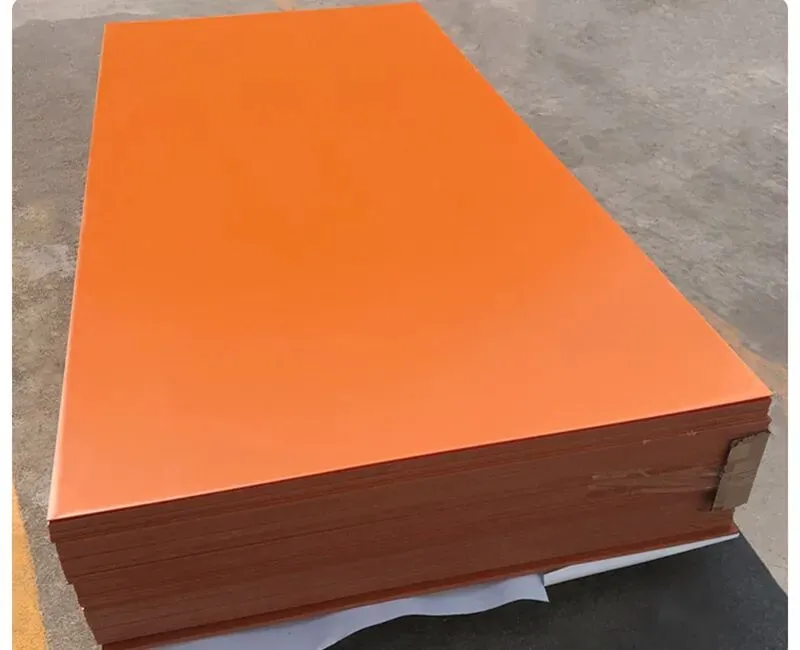
Understanding Bakelite Sheet Material Properties for CNC Applications
To get the best results from modern CNC processes, operators need to know a lot about the properties of Bakelite sheets. Its structure is made up of phenolic resin, which makes a complicated framework that cuts differently than metals or thermoplastics. Successful methods for pinpoint control are built on this basic information.
Chemical Composition and Thermal Characteristics
Bakelite's phenolic resin structure makes a three-dimensional cross-linked polymer network that is very stable at high temperatures up to 300°F (149°C). When grinding, this heat displacement temperature is very important because cutting at too high of a temperature can damage the material and make the dimensions less stable. The thermoset property means that when the material is heated above its glass transition temperature, it goes through permanent chemical changes that make its mechanical and electrical properties worse.
When grinding, thermal resistance limits usually let you cut at normal speeds without using cooling. However, for high-speed tasks, you need to be very careful with the temperature. When the temperature goes above 350°F (175°C), the phenolic glue can start to char, leaving surface flaws and possibly dangerous vapors behind. Knowing these temperature limits helps machinists choose the right cutting settings that combine speed with maintaining the purity of the material.
During long grinding processes, temperature changes have a bigger effect on the security of the dimensions. Phenolic laminates have a value of thermal expansion of 20 to 40 × 10⁻⁶ per degree Celsius. If this is not managed properly, it can lead to big changes in size. When margins of less than ±0.1mm are needed for precision work, this property needs to be taken into account when adjusting the temperature of the surroundings.
Mechanical Properties Affecting Machining Performance
The hardness of Bakelite sheets is usually between 90 and 120 Shore D, which means that long production runs can cause a lot of tool wear. The phenolic resin and fiber support are rough, which speeds up the wear of the cutting edge, especially when high-speed steel tools are used. Because of this hardness trait, it is important to choose the right tools and check them often to keep the dimensions accurate during the cutting process.
The hardest part of precision Bakelite cutting is dealing with brittleness factors. This is because the material has low impact strength, which makes it easy for chips and cracks to spread. Strategies for preventing cracks need to take into account both the direction and amount of the cutting force. Climb milling is often better than standard milling because it reduces the formation of exit burrs. Because it is flimsy, thin-walled parts need support structures to keep them from breaking when they are clamped.
In electrical uses where insulation performance cannot be affected, keeping the dielectric strength during cutting processes is very important. When cutting settings aren't set correctly, mechanical stress can cause microcracks that lower the dielectric strength from the normal 12 kV/mm to levels that could be risky. Because of this worry, the electrical features must be validated after cutting to make sure the part is reliable.
Material Grades and Thickness Variations
The differences in how to machine cotton Bakelite and paper Bakelite come from the way their fibers are structured and how they bond. Cotton-based laminates are usually easier to work with because the fibers are longer and the resin is spread out more evenly. This means that there is less delamination when cutting. Even though paper-based versions are cheaper, they need more active cutting settings and better workholding to get the same surface finishes.
Thickening choices are standard and run from 0.5 mm to 50 mm. For special uses, custom cutting is also possible up to specific dimensions. When cutting thinner sheets (less than 2 mm), shaking and movement can be a problem. To keep the sheet in place, vacuum workholding systems are often needed. It's important to think about stress release in cutting processes for thicker parts (above 25 mm) because they may have changes in internal stress that can cause bending after material is removed.
Different colors of Bakelite sheet can change the features of a material and make it harder to work with, which affects quality control processes. When it comes to metalworking, natural phenolic brown is the most constant. Black and other colored versions may have additions that change the cutting forces or heat behavior. Because of these differences, the cutting factors and checking criteria need to be changed so that the quality standards are the same across all amounts of material.
Advanced CNC Precision Control Techniques for Bakelite
To get precise control when cutting Bakelite sheets, you need to know a lot about how the material behaves and use advanced CNC methods that are made for working with phenolic laminates. These techniques deal with the special issues that thermosetting materials bring up while improving the accuracy of measurements and the quality of the surface. When set up correctly for Bakelite manufacturing needs, modern CNC capabilities allow for accuracy that has never been seen before.
Optimized Tool Selection and Geometry
When routing phenolic laminates, carbide cutting tools work better than high-speed steel options, especially when it comes to durability and maintaining their shape. The harder carbide base keeps cutting edges sharp for longer, which slows down the gradual change in size that comes with tool wear. Polycrystalline diamond (PCD) tools are the best choice for high-volume production because they last a long time and have uniform surface finishes, even though they cost more at first.
The goal of cutting edge shape optimization is to keep material separation clean while generating as little heat as possible. Cutting edges that are sharp and have small rake angles lower cutting forces and keep materials from lifting, which can cause delamination. To keep rubbing and heat buildup from happening, the relief angle is very important. For most Bakelite sheet uses, numbers between 12 and 15 degrees are the best mix between edge strength and cutting efficiency.
When thinking about tool coatings, you should think about more than just titanium nitride. You should also think about diamond-like carbon (DLC) and other low-friction coatings. These high-tech layers lower the temperature needed for cutting while also making it harder for phenolic materials to wear away. The lower friction coefficient helps keep the cutting edges clean by stopping material from building up on them. This keeps the cutting shape constant over long production runs.
Feed Rate and Speed Parameter Optimization
To find the best cutting speeds for different types of Bakelite, RPM estimates must take into account the material's bulk, fiber content, and heat sensitivity. Because they are more thermally stable, cotton-based laminates usually let you go faster on the surface, while paper-based materials need more careful methods. The surface speed should be between 150 and 300 meters per minute, and it should be changed based on the width of the tool and the thickness of the material to avoid heat damage.
Feed rate changes can be made to account for differences in thickness while keeping the chip load per cutting edge constant. To keep vibrations and chatter from happening, thinner sheets need slower feed rates, while thicker parts can handle rougher parameters. In precision uses where surface roughness levels need to stay within tight ranges, the link between feed rate and surface finish is very important.
Limits on the depth of cut protect the purity of the material while increasing output in tasks that take more than one pass. The best surface finishes are usually achieved with cuts that are less than 0.5 mm deep, but thick materials may need more than one pass. To keep cutting forces from getting too high and damaging the object or the turning system, the axial depth of cut and radial contact must be adjusted.
Advanced Cooling and Lubrication Systems
Mist cooling systems are the best way to get rid of heat without the problems that come with flood cooling systems. Since the droplets are so small, heat can be quickly removed from the cutting zone, and there isn't much time for the liquid to touch the material, which could lead to physical instability. Cutting fluids made especially for non-metallic materials offer better cooling without any chemical interaction problems that could damage the electrical qualities.
Strategies that use compressed air to cool work especially well for light cuts and finishing jobs that don't make a lot of heat. High-speed air flows through the machine and efficiently removes chips while cooling the cutting edge. This method gets rid of worries about pollution while keeping the surface dry, which is best for later electrical testing and assembly work.
Workholding and fixturing options need to be able to handle the special needs of working with Bakelite sheets without putting too much stress on them, which could lead to cracks or changes in their shape. Vacuum tables make sure that the holding pressure is the same across big areas of a sheet of paper. This gets rid of point loads that could be too much for the material to handle. During the cutting cycle, custom clamps with soft jaw materials keep their positional accuracy while distributing holding forces.
Workholding and Fixturing Solutions
When working with thin Bakelite sheet, vacuum tables are better than mechanical clamps because they don't cause movement or stress concentration. The spread binding force keeps the material from moving without creating stress points in one place that could lead to cracks. Modern vacuum systems that can handle different zones allow for specific holding patterns that can work with complicated part shapes while still providing enough retention forces.
When clamping bigger parts, it's important to keep in mind that bonded materials have uneven qualities and tend to crack when point loads are applied. Soft-jaw systems with flexible contact surfaces spread tightening forces over bigger areas, which lowers stress concentration while keeping the accuracy of the position. It's important to follow the tightening procedure exactly to avoid caused stresses that could lead to changes in the dimensions after the cutting is done.
Support devices for large format processing solve the problem of keeping huge Bakelite sheet parts flat and stopping them from vibrating. Pneumatic support systems offer flexible backing pressure that tracks the shape of the part while it is being machined, stopping it from bending without getting in the way of the cutting tool. When working close to the edges of a part or on a part with thin walls, these methods become necessary to keep the dimensions accurate.
Quality Control and Inspection Methods
For precise cutting of Bakelite sheets, you need to follow strict quality control measures that ensure both accurate measurements and the protection of the material's properties. Because phenolic laminates are so different, they need special testing and proof methods to make sure that parts will work reliably in important uses. Quality control systems that work well combine watching in real time with checking after the fact to make sure that production standards are always met.
Dimensional Accuracy Verification
When measuring for tight tolerances, it's important to take into account how phenolic materials expand and contract at different temperatures and how sensitive they are to changes in their surroundings. Coordinate measuring machines (CMM) with non-contact optical sensors give accurate measurements without putting any stress on the machine, which could change the results of the measurements. Controlling the temperature and humidity of the measurement area is needed to make sure that conditions stay the same during checking processes.
When parts are tested right after being machined while they are still warm from the cutting, temperature adjustment during inspection becomes very important. Because Bakelite sheets have a percentage of heat expansion, you need to either wait for them to cool down or use math to make sure that your measurements are correct. Modern inspection software can change measures automatically based on the temperature of the part and the qualities of the material that are known.
Using statistical process control lets you see patterns in changes in dimensions and find process drift early on, before parts go beyond their acceptable limits. Control charts that are made just for cutting Bakelite must take into account how the material usually behaves and how it changes. Because phenolic is a different material from metal, the skill numbers for phenolic machining are usually different from those for metal cutting.
Surface Finish Assessment Standards
For industrial uses, roughness standards are very different depending on what they will be used for. For example, electrical insulation parts usually need better ends than mechanical parts. Standard measures of surface roughness might not fully describe the unique texture patterns made by the way fibers are arranged and resin is spread out on machined Bakelite sheet surfaces. Profilometry methods that are more specialized can better record the multiscale surface features that are important for useful performance.
Visual screening standards for edge quality rely on finding delamination and chip-free edges, which are important for the performance of electrical shielding. Inspectors who have been trained to use magnification tools can find tiny problems that could get worse over time or weaken the insulation. Standardizing the lights and viewing points for inspections is needed to make sure that all workers and shifts can find defects in the same way.
There are many ways to find delamination, from eye inspection to advanced ultrasound tools for very important tasks where hidden flaws need to be found. When the lighting is right, surface-level delamination can be seen as fibers rising or resin breaking. To make sure that a component is still whole after subsurface delamination, it may be necessary to use special inspection methods like sound emission tracking during proof loading.
Electrical Property Validation
Testing the dielectric strength of Bakelite sheet parts after they have been machined makes sure that the cutting processes have not damaged their ability to conduct electricity. Standard test methods use a controlled voltage across the width of the component while keeping an eye out for breakdown or too much leaking current. Most of the time, the test voltage values are higher than what is needed for service by safety factors that are right for the criticality of the application.
Insulation resistance testing methods check how hard it is for current to flow through the width of a material and across the sides of a component. These measures can find pollution, moisture absorption, or material degradation that you might not be able to see with your own eyes. To get a good idea of how well a part works, the test settings need to be like the temperature and humidity levels in the real world.
Quality paperwork for approval needs to include checks of both the physical and electrical properties, as well as full tracking back to material lots and processing factors. For aircraft uses, the paperwork systems must meet AS9100 standards, and for car parts, they must meet ISO/TS 16949 standards. Digital record keeping makes it easy to quickly get high-quality data for regulatory compliance checks and customer reports.
Supplier Selection and Procurement Considerations
Choosing the right source of Bakelite sheets and cutting partner has a direct effect on the success of the project and the long-term dependability of the parts. Because precise CNC cutting for phenolic materials is so complicated, providers must have quality systems and proven knowledge that can meet strict industry standards. Understanding review standards and buying strategies is important for making sure that relationships with suppliers go well and that the quality of parts stays high.
Quality Certification Requirements
ISO approval is important for more than just quality control. It also covers specific standards for materials used for electrical protection and precise cutting. Suppliers must show that they follow the rules for quality control set by ISO 9001 and keep special certificates, like UL recognition for electrical parts. To make sure the license covers the right skills, it should only cover CNC cutting processes and not general industrial skills.
Documentation for material traceability lets you connect the performance of a part to the lots of raw materials used and the working conditions. This tracking is very important in aircraft and automobile uses where failed parts need to be thoroughly investigated and fixed. During the production and shipping process, suppliers must keep thorough records that link certificates for Bakelite sheet material to specific made parts.
Verification of a quality control system for Bakelite sheet needs to be done on-site by checking the supplier's skills and quality processes to make sure they meet customer needs. The review should include records of how the operators were trained, the accuracy of the measuring tools, and the paperwork for process control. Implementing statistical process control shows that the provider is dedicated to ongoing growth and proactive quality management over reactive checking methods.
Custom Cutting Services Evaluation
To make sure the project is finished successfully, the criteria for evaluating CNC powers must take into account both the specs of the equipment and the operator's skill level. Accuracy, machine power levels, and the ability to hold work directly affect how precise and productive Bakelite sheet cutting processes can be. The review should look at the computing skills and setting steps that are specific to the needs of phenolic materials.
For large orders, lead times include both the time it takes to get the materials and the time it takes to machine them so that the shipping plan is met. Suppliers who already have ties with raw material sources can offer more stable prices and wait times. When figuring out how much machining can do, it's important to look at both normal shift work and the ability to work extra hours to meet urgent delivery needs.
When the minimum order number affects pricing, it usually works in favor of sellers who can handle smaller lots cost-effectively while still keeping prices low for large orders. Instead of just looking at the prices of the individual parts, the overall cost analysis should take into account setup fees, tooling costs, and the need for packing. Most of the time, long-term relationships are more valuable because they lower the costs of starting up and improve the efficiency of processes over time.
Cost Optimization Strategies
Different sellers offer very different ways to discount large orders. Some offer flat price cuts, while others offer step-function savings at certain number levels. Once you understand these price systems, you can adjust the number of items you buy to get the best total cost while still keeping a decent amount of stock on hand. When figuring out the best amount to buy, the carrying costs and aging risks should be taken into account.
To keep supplies steady, inventory management involves weighing the costs of holding on to items against the risks of running out of stock and changes in lead times. Suppliers with vendor-managed inventory programs can help customers save money on inventory while still making sure they have the materials they need to meet production plans. When setting up stocking rules and recall points, you need to think about how long Bakelite sheet material lasts and how it should be stored.
The benefits of buying directly from a factory often go beyond lower prices and include expert help, the ability to make changes, and being given priority when materials are in short supply. When you work directly with makers, you can get technical help and support for product creation that you might not be able to get from resellers. Instead of just looking at the original buy price, the review should look at the overall value, which should include expert help.
Conclusion
Advanced CNC cutting of Bakelite sheets with precise control is an important skill for modern manufacturing in industrial, automobile, and electrical fields. When makers use modern cutting techniques correctly, they can get dimensions that were not possible with older methods, while still keeping the electrical and heat qualities that are important for the performance of the part. Manufacturers can get the most out of these flexible phenolic laminate materials in tough situations by knowing the properties of the materials, making the best use of cutting factors, and putting in place the right quality control measures.
FAQ
What are the best cutting speeds for CNC cutting bakelite sheets without damaging them thermally?
Depending on the thickness of the sheet, the width of the tool, and the grade of the material, the best cutting speeds for Bakelite sheets are usually between 3,000 and 6,000 RPM. Because they are more thermally stable, cotton-based laminates can handle a little higher speeds. On the other hand, paper-based materials need to be handled with more care. To keep things from breaking down due to heat, surface speeds should usually stay below 300 meters per minute. However, if you have the right cooling systems in place, you can work at speeds higher than this.
How can I keep fused bakelite sheets from coming apart when I'm cutting them?
To avoid delamination, you need cutting tools that are sharp, have low rake angles, steady feed rates, and enough support for the workpiece while it is being cut. Climb milling usually makes better edges than regular milling because it lowers the exit forces that can separate layers. Using vacuum tables or soft-jaw systems to hold the workpiece correctly spreads the binding forces out evenly and keeps the dimensions accurate while the machine is running.
What amounts of accuracy can be reached when CNC cutting bakelite sheets?
Tolerances of ±0.05mm (±0.002") are usually possible for most Bakelite sheet uses with the right setup, weather controls, and cutting factors. With special tools, temperature correction, and controlled external conditions, it may be possible to get margins as low as ±0.025mm. The range that can be used is based on the shape of the part, the thickness of the material, and the grade of phenolic laminate that is being made.
Partner with J&Q for Superior Bakelite Sheet Machining Solutions
J&Q has been working with insulation materials for more than 20 years and has advanced CNC cutting tools that allow them to make precise Bakelite sheet parts that meet your strictest requirements. Our ISO-certified building has cutting-edge CNC machines that are designed to work with phenolic laminates. These machines can achieve margins as small as ±0.05mm while still keeping perfect surface finishes. As a top provider of Bakelite sheets, we offer a full range of services, from finding the materials you need to delivering the finished parts. Our combined transportation skills help us meet your production plans for on-time delivery. Email our engineering team at info@jhd-material.com to talk about your precision cutting needs and find out how our years of experience can help you get better parts at lower costs.
References
Baekeland, L.H. "The Synthesis, Constitution, and Uses of Bakelite." Industrial & Engineering Chemistry Research, Vol. 1, No. 3, 1909.
Society of Plastics Engineers. "Machining Guidelines for Thermosetting Plastics: A Comprehensive Technical Manual." SPE Technical Publications, 2018.
American Society for Testing and Materials. "Standard Test Methods for Electrical Insulating Materials: ASTM D149-09 Dielectric Breakdown Testing." ASTM International Standards, 2019.
Manufacturing Engineering Research Institute. "Advanced CNC Techniques for Composite Materials: Precision Control in Industrial Applications." Journal of Manufacturing Technology, Vol. 45, No. 7, 2020.
International Organization for Standardization. "Quality Management Systems for Electrical Insulation Manufacturing: ISO 9001:2015 Implementation Guidelines." ISO Technical Standards, 2021.
National Institute of Standards and Technology. "Thermal and Mechanical Properties of Phenolic Laminates: Engineering Data for Industrial Applications." NIST Technical Publication 1590, 2019.

Get a complete product list and quotation

J&Q New Composite Materials Company



