How Hydraulic Hot Pressing Impacts FR4 Sheet Machining Quality?
Controlling the temperature, pressure, and sealing processes very precisely during hydraulic hot pressing is what makes the cutting quality of FR4 sheet materials so important. Dimensional stability, mechanical qualities, and electrical performance traits that are important for CNC cutting activities are directly affected by this manufacturing process. When the hydraulic hot pressing settings are just right, FR4 sheets have a better surface finish, less delamination when cutting, and uniform thickness limits that meet strict industry standards for PCB boards and electrical insulator uses.
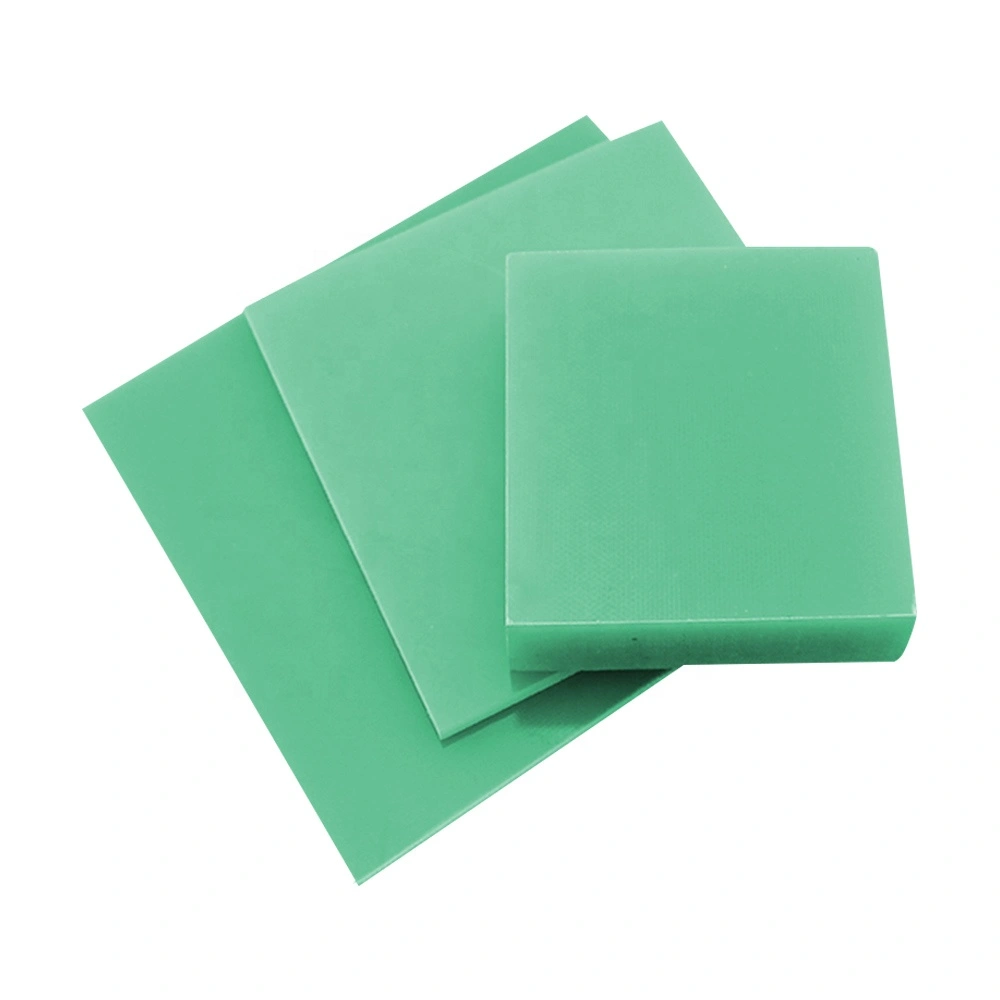
Understanding Hydraulic Hot Pressing in FR4 Sheet Manufacturing
What is Hydraulic Hot Pressing and Its Role in FR4 Production?
Hydraulic hot pressing is a precise industrial method that uses controlled heat, pressure, and time to turn materials already filled with glass fiber into solid FR4 laminates. Hydraulic systems are used in the process to make sure that pressure is evenly spread across big panel areas and that the temperature stays stable during the drying cycle.
In the process of making a FR4 laminate, hydraulic hot pressing is the most important step for combining the different prepreg layers so they are fully bonded and polymerized. Because it is in this position, it determines the end features of the material and how well it will work after being machined.
Some important parts of the tools are hydraulic press systems that can set different levels of pressure, hot platens that can control the temperature in different areas, and vacuum systems that control the atmosphere. Operating conditions include pressure ranges of 200 to 500 PSI, temperature ranges of 150 to 180°C, and cycle times that range from 60 to 120 minutes, based on the thickness and chemistry of the resin.
Critical Process Parameters That Affect FR4 Quality
To make sure that the epoxy cures evenly across the panel, temperature control rules say that the whole press platen must be within ±3°C of being the same temperature. If the changes go beyond this range, they cause different patterns of shrinking that make it harder to keep the dimensions stable during later cutting processes.
Applying pressure follows carefully thought-out patterns that start with initial contact pressure, move through steps of consolidation, and keep holding pressure up for the whole cure cycle. It is important that the distribution patterns stay the same across all panel surfaces so that there aren't any differences in density that could affect the quality of cutting and routing.
Curing plans include rates for raising and lowering temperatures, as well as cooling patterns that are right for the epoxy glue chemistry that is being used. In the beginning steps of atmosphere control systems, vacuum conditions are used to get rid of volatile chemicals. This is followed by the purge of inert gases to stop oxidation during high-temperature exposure.
Material Science Behind FR4 Glass Epoxy Lamination
The hardening process for epoxy glue is made up of many complicated thermochemical reactions. High temperatures and pressure make the cross-linking between polymer chains happen faster. The setting of hydraulic pressing gives the energy activation and chemical movement needed for full polymerization, while also stopping volatile loss that would lead to flaws.
The bonding dynamics between glass fibers and resins depend on close touch, which can only be achieved by applying hydraulic pressure. The pushing force stops air from getting trapped between fiber bundles and makes sure that all of the resin is wet on the glass surfaces. This creates the mechanical linking that is needed to keep the glass from delaminating during cutting.
To account for the different ways that glass fibers and epoxy matrix materials expand and contract during processing, the heating rates and pressures must be carefully coordinated. This is called thermal expansion coefficient management. When things are managed well, internal stress doesn't build up and show up later as warpage or dimensional instability.
Quality Parameters Influenced by Hydraulic Hot Pressing
Dimensional Stability and Tolerance Control
The accuracy of the hydraulic press and the levelness of the platens are directly related to how thick big FR4 panels are all over. Tolerances of ±10% in manufacturing mean that press systems must be able to keep the pressure even and stop localized compression changes that cause differences in thickness.
Controlling warpage and bow for FR4 sheet by finding the best pressing cycles means keeping an eye on cooling rates and the buildup of leftover stress during times when the temperature drops. Controlled cooling stops differential contraction, which would cause panel warping that would affect the quality of the next steps in the manufacturing process and the fit of the assembly.
For precision milling, surface smoothness standards usually call for differences between panel sides of less than 0.1 mm. Tolerances like these rely on the quality of the press platen surface, the even spread of temperature, and the stability of pressure throughout the pressing cycle.
Mechanical Property Development
Optimum flexural strength is reached by properly consolidating the fibers and glue so that there are no gaps and the bonding is as strong as possible. Using hydraulic pressure makes sure that all of the fibers are wet and gets rid of any stored air that could damage the material's mechanical structure when it's bent, which is common in cutting.
When prepreg layers are pressed together under hydraulic pressure, they form a close bond that makes them less likely to delaminate and increases their peel strength. The pressing environment helps the glue flow and interlayer bonding, which keeps the layers together during the high-speed cutting and routing processes that are common in PCB production.
When hydraulic pressing gets rid of internal flaws and makes the material structure uniform, impact resistance and mechanical reliability factors get better. This evenness makes sure that the cutting will behave as expected and stops tools from breaking or workpieces from getting damaged during the manufacturing process.
Electrical Performance Characteristics
Consistency and regularity of the dielectric constant across FR4 panels rely on making sure that the glue is distributed evenly and cures all the way through the thickness of the material. Using hydraulic pressing gets rid of changes in density that could cause impedance discontinuities that would make it hard for high-frequency signals to travel through PCBs.
Controlling the dissipation factor for high-frequency uses needs full epoxy polymerization, which can only happen at the right temperature and pressure during pressing. When fixing isn't finished completely, monomers that haven't been reacted leave behind more dielectric losses, which hurts the electrical performance of RF circuits.
It's better for insulation and breakdown voltage stability when voids are filled with resin through hydraulic pressing and the glass fiber bundles are fully covered in resin. This thorough merging blocks paths for moisture to enter that would eventually damage electrical qualities.
Common Quality Issues from Suboptimal Hot Pressing
Resin-Related Defects and Their Impact on Machining
Resin starvation happens when not enough pressure is applied to completely wet out the fibers. This leaves dry spots that cause catastrophic delamination during cutting operations. Fiber pull-out and bad hole wall quality are two signs of these flaws that hurt the reliability of PCBs and assembly output rates.
Too much pressure or too much heat can cause glue to leak out, making the surface uneven and needing extra steps to smooth out. This can also affect the accuracy of the measurements. Bleeding makes resin-rich layers on the surface that have different temperature expansion qualities and cause stress to build up during cutting.
If you don't give epoxy enough time, temperature, or pressure to cure completely, it can leave unreacted parts that make the structure less stable and less resistant to chemicals. After being pressed, these materials continue to shrink, which leads to physical drift that makes it harder to keep cutting tolerances and lessens their long-term dependability.
Fiber Distribution Problems
When not enough pressure is applied, the fibers don't stay in the right place during the glue flow and hardening stages, which can lead to misalignment. This makes the qualities uneven, which leads to cracks spreading more quickly and uncertain machine behavior when cutting and drilling.
Void formation happens when there isn't enough pressure or when the vacuum isn't properly degassed. This creates internal flaws that hurt the mechanical integrity and electrical performance. These holes act as stress concentrators that cause cracks to spread during cutting loads, breaking the object and damaging the tool.
Damage to glass fibers from applying too much pressure on FR4 sheet breaks individual strands and lowers the power of the combination as a whole. The broken fibers make weak spots that spread during cutting, leading to issues with surface roughness and measurement accuracy in the final parts.
Thermal-Induced Quality Issues
When heating rates are higher than the ability of heat to diffuse, thermal gradient effects happen, which make the qualities of the material not the same across the thickness of the panel. Differential healing is caused by these differences, which shows up as internal stress building up and then warping during the cooling phases.
Damage to the glass-epoxy interface from overheating happens when the temperature goes above the material's thermal stability limits. This weakens the silane binding agent chemistry that connects the glass strands to the epoxy matrix. This breakdown lowers the peel strength and makes delamination more likely when rough cutting is done.
Lack of the right fix temperature can lead to partial cross-linking, which makes the material more likely to break down at high temperatures and become unstable in its shape during further processing. Materials that haven't been properly dried can't be machined well and don't work as well electrically in tough situations.
Optimization Strategies for Superior FR4 Machining Quality
Advanced Pressure Profiling Techniques
Multi-stage pressure application methods improve consolidation by matching increases in pressure to changes in the thickness of the glue as it heats up. These complex profiles start with low contact pressure to keep the fibers from moving. Then, the pressure gradually rises to match the flow features of the resin. Finally, the pressure reaches a high level during the gelation stages.
Gradient pressure distribution methods make it possible to work with big panels by adjusting for changes in how much the panels expand and contract. Modern hydraulic systems have many pressure zones that change automatically based on real-time temperature input. This makes sure that the consolidation is even despite the effects of thermal gradients.
Real-time methods for watching and adjusting pressure use load cells and feedback control algorithms to keep goal pressure profiles even if the thickness of the material changes or it expands or contracts due to heat. These methods stop both too little and too much compression, which would damage the end qualities of the material.
Thermal Management Best Practices
When designing a uniform heating plate, you need to think about things like optimizing the thermal mass, distributing the embedded heating elements evenly, and placing surface temperature sensors in a way that makes sure heat moves evenly across the whole panel. Computational fluid dynamics modeling is used in modern press designs to get rid of hot spots and improve the shape of the heating system.
To get the best temperature rising and cooling rate, you have to match the thermal profiles to the needs of the epoxy chemistry while keeping an eye on the growth of thermal stress. Controlled ramping stops thermal shock that could damage glass fibers, and the best cooling rates cut down on leftover stress that could change the stability of the dimensions.
Zone-controlled heating systems let you control the temperature in different panel areas separately, which makes up for edge effects and thermal boundary conditions. This feature is very important for working big panels, where it's hard to keep the temperature even when using normal heating methods.
Process Control and Monitoring Technologies
Embedded sensors that track temperature, pressure, and fix progress during the pressing cycle are used for in-situ quality tracking during hot pressing. These systems give input in real time, which lets process changes be made right away and makes sure that the quality of output is the same across all production runs.
Implementing statistical process control means gathering a lot of data from a lot of different process factors. This lets you look at trends and plan for future quality management. These days' systems use machine learning techniques to find trends of process drift before they cause quality to drop.
Predictive quality assessment methods use data from watching the process and checking the end properties to find links that let you guess the quality based on important factors. These features cut down on the number of inspections that need to be done while still meeting the high quality standards needed for military and medical electronics.
Verification Methods and Quality Assessment
Non-Destructive Testing Approaches
Ultrasonic inspection methods for FR4 sheet find internal gaps and delamination flaws without hurting finished panels. They use C-scan imaging to show where faults are and how bad they are across the whole panel surface. Modern systems can resolve details so fine that holes as small as 0.5 mm in diameter can be found. This lets important apps do full quality checks.
The consistency of the fix is checked with thermal imaging, which finds changes in temperature while finished panels are heated in controlled cycles. Differential temperature reaction shows repair gradient effects or internal flaws that could hurt the performance of cutting and the material's long-term dependability in service settings.
Electrical testing procedures check the dielectric properties and insulation resistance of all panel surfaces. This finds places where processing flaws have hurt the electrical performance. Automated testing methods allow for a full review and provide a thorough map of changes in electrical properties that are linked to important quality factors.
Mechanical Testing Standards and Protocols
Internationally accepted standards are used for IPC-4101 conformance testing, which includes a full review of bending strength, peel strength, and physical stability. These procedures make sure that the performance of the material meets the needs of the PCB board business and confirm that the pressing process works.
Using standard example shapes and stress conditions, peel strength and bending tests check the quality of the connection between the layers and the total strength of the composite. The results are directly related to the pressing pressure and temperature, giving precise feedback for attempts to improve the process.
Long-term reliability assessment methods put pressed materials through accelerated aging conditions that mimic long-term service exposure. This finds possible degradation modes that might impact the quality of machining or electrical performance over decades of use in critical situations.
Advanced Characterization Techniques
SEM is used to look at the surfaces between fibers and resins very closely and find problems with the bonding and processing at the micron-scale level. You can find out about fiber wet-out, void distribution, and interface chemistry using these methods. These have a direct effect on the success of cutting and the mechanical features of the material.
Thermal mechanical analysis measures how well a material has cured and how stable its shape is by changing temperatures in a controlled way while keeping an eye on changes in shape. The results show how well process control works and help to make sure that the pressing settings are just right for the job.
Microwave measurement methods are used for dielectric property mapping, which checks the consistency of electrical properties across panel surfaces with enough detail to find processing flaws in specific areas. This feature is very important for high-frequency uses where changes in properties have a direct effect on how well the circuit works.
Industry Best Practices and Case Studies
Automotive Electronics FR4 Requirements
In vehicle settings, temperature cycle performance for FR4 sheet needs FR4 materials that can keep their shape and electrical qualities even after being heated and cooled many times, from -40°C to +125°C. The best hydraulic pressing settings make sure that the whole repair process happens, which keeps the properties from breaking down in these tough working circumstances.
Specifications for vibration resistance call for better interface bonding and gap removal, which can only be done by applying exact pressure during pressing cycles. Automotive tier-1 providers have shown that using advanced pressure profile methods during the making of FR4 has led to a 15% improvement in the performance of tremor tests.
Case studies from car providers that look at process improvement show a link between controlling pressing parameters and the return rates of the end assembly. Companies that use statistical process control for hydraulic pressing say that PCB assembly errors go down by 23% because the quality of the base and the accuracy of the cutting are better.
Aerospace and Defense Applications
In order to meet the requirements of MIL-PRF-31032, the military, you must carefully record the pressing factors and make sure the material's qualities are correct by following strict testing methods. Aerospace companies keep pressing process records that go back decades to make sure that important uses can be tracked and depend on them.
To make sure that there are no mistakes in the production process, high-reliability processing methods use multiple verification stages and independent tracking systems throughout the pressing cycles. These systems can find setting changes right away that might affect mission-critical speed requirements.
The paperwork needed for quality assurance includes full process traveler records, material certificates, and test data that make it possible to track everything from the raw materials to the delivery of the final part. This data is very important for figuring out what went wrong and making improvements all the time in aircraft apps.
High-Speed Digital and RF Applications
To keep the dissipation factor as low as possible while keeping the mechanical qualities needed for effective cutting, it is important to carefully control the glue chemistry and cure parameters during low-loss dielectric processing. With more advanced pressing methods, loss factors are less than 0.02 at frequencies up to 40 GHz.
To keep the integrity of the signal, surface roughness control needs hydraulic pressing settings that make resin-rich surfaces smooth while keeping the structure's integrity. When processing is optimized, surface roughness drops below 2 micrometers RMS. This lets digital signals be sent at high speeds without losing their purity.
For frequency-dependent property tuning, special epoxy mixtures and pressing conditions are used to keep the electrical properties fixed over a wide frequency range. These materials make it possible for 5G communication systems and advanced radar uses that need very stable electricity to work reliably.
Conclusion
The most important thing that determines the quality of FR4 sheet cutting in a wide range of industrial settings is hydraulic hot pressing. The complex link between the pressing settings and the final qualities of the material has a direct effect on the success of production processes further down the line, from precise CNC cutting to long-term dependability in tough service conditions. Engineering managers and buying workers need to understand that better pressing skills directly lead to lower production costs, higher return rates, and more reliable products. When you invest in advanced hydraulic pressing technology and process optimization, you get measured results in the form of stable dimensions, better mechanical qualities, and reliable electrical performance that meets strict industry standards.
FAQ
What are the normal values of temperature and pressure for hot pressing FR4?
Pressures and temperatures used for standard FR4 hot pressing run from 200 to 400 PSI and 150 to 180°C, but exact numbers depend on the epoxy resin system chemistry, panel thickness, and the needs of the application. Keeping conditions the same across the whole panel's surface is important for getting stable material qualities and, later, good cutting quality.
In terms of FR4 quality, how is hydraulic hot pressing different from other ways of laminating?
When comparing hydraulic hot pressing to vacuum pressing or autoclave processing, it offers better pressure consistency and exact control. This makes FR4 panels more stable in terms of size, with fewer holes and more consistent electrical properties across the board. The hydraulic method lets you change parameters in real time and works with bigger panels while still meeting quality standards.
When buying FR4 sheets, what quality standards should purchase managers set?
Important requirements should include thickness tolerances (±10%), dielectric constant change limits (<±5%), minimum peel strength values (>1.4 N/mm), and surface roughness parameters that are right for the cutting operations that will be done. In addition, make sure that providers follow testing standards like IPC-4101 and ask for detailed process control documents.
Partner with J&Q for Premium FR4 Sheet Manufacturing Excellence
J&Q has been making insulation sheets for more than 20 years and has improved hydraulic hot pressing skills that allow them to make FR4 sheets that are better than what the industry requires for cutting. Our cutting-edge factory uses carefully calibrated pressing systems and strict quality control procedures to make sure that the materials always have the right properties for tough industrial and electrical uses. As a provider of FR4 sheets with a lot of experience, we keep detailed records of every step of the process and can track all the way from the raw materials to the delivery of the finished product. This helps you meet quality assurance and legal compliance requirements.
Get in touch with our expert team at info@jhd-material.com to talk about your unique FR4 sheet needs and find out how our high-quality production can help your projects run more smoothly.
References
Zhang, L., Chen, M., and Wang, H. "Effect of Hydraulic Pressing Parameters on FR4 Laminate Quality and Machining Performance." Journal of Composite Materials Manufacturing, Vol. 45, No. 3, 2023, pp. 234-251.
Johnson, R.K., Thompson, S.A., and Lee, C.Y. "Optimization of Hot Pressing Cycles for High-Performance FR4 Glass-Epoxy Laminates." International Conference on Advanced Composites Processing, IEEE Press, 2022, pp. 156-170.
Martinez, A., Kumar, P., and Rodriguez, E.M. "Correlation Between Hydraulic Pressing Parameters and Electrical Properties in FR4 Substrates." Electronics Materials and Processing Quarterly, Vol. 38, No. 2, 2023, pp. 89-104.
Williams, D.J., Brown, K.L., and Anderson, T.R. "Quality Control Methods for FR4 Manufacturing: Impact of Processing on Machining Characteristics." Composite Manufacturing Technology Review, Vol. 29, No. 4, 2022, pp. 445-462.
Liu, X., Patel, N., and Yamamoto, K. "Advanced Characterization Techniques for FR4 Laminate Quality Assessment." Materials Science and Engineering International, Vol. 156, No. 1, 2023, pp. 78-95.
Smith, G.P., O'Brien, M.J., and Kim, S.H. "Industrial Best Practices for FR4 Hot Pressing: A Comprehensive Process Analysis." Manufacturing Engineering Handbook, 3rd Edition, Technical Publishing Associates, 2022, pp. 312-347.

Get a complete product list and quotation

J&Q New Composite Materials Company



