CNC Routing FR4 Sheets: Equipment, Speed, and Tool Optimization
To get better results when making electronics, CNC turning FR4 sheets needs careful equipment selection, the right cutting settings, and the right tool setup. FR4 sheet material, which is made up of woven fiberglass cloth and epoxy resin, has special problems that need special ways to be machined. Knowing the right mix between cutting speeds, tool shape, and workholding systems helps makers get the most done while still meeting the high standards for accuracy in measurements and surface quality that are needed for making modern PCBs and electronic parts.
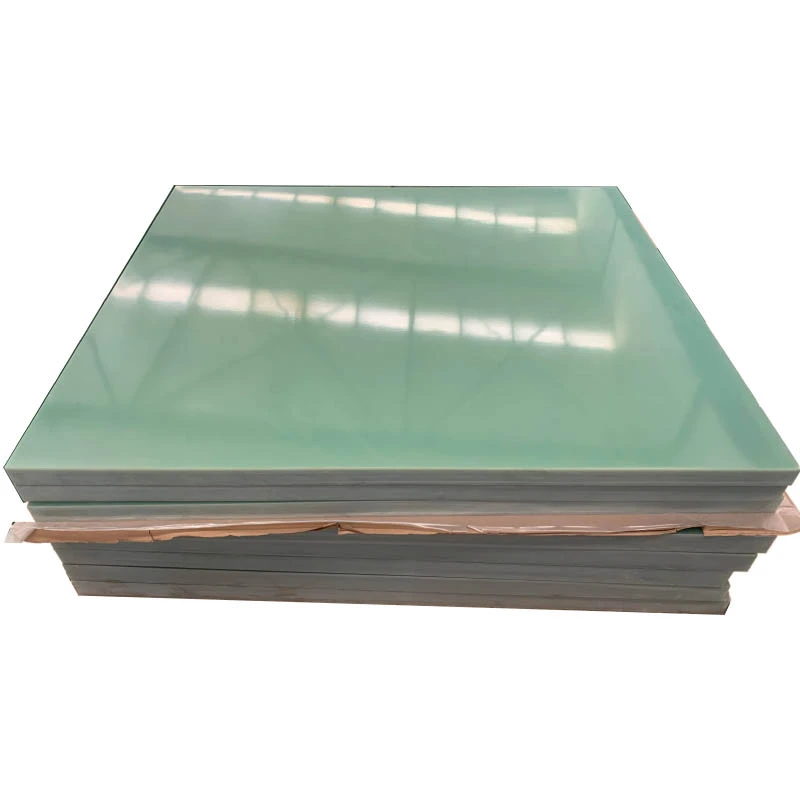
Understanding FR4 Material Properties for CNC Routing
In order to successfully route fiberglass epoxy laminates, you need to know a lot about how these materials work. Because these insulation materials are hybrid, they come with their own problems that affect how they are machined and which tools are chosen.
FR4 Composition and Machining Characteristics
Fiberglass-reinforced epoxy boards are made up of several layers of woven glass cloth that are saturated with thermosetting epoxy resin. This mix makes a mixed material because cutting tools have to deal with hard glass threads and a softer resin matrix going back and forth.
Although glass fiber reinforcement is very strong mechanically, it wears down tools very quickly because it is rough. The random arrangement of glass threads within each cloth layer creates different cutting forces that can cause tools to bend and measurements to be off. Engineers can make better cutting methods that keep edge quality uniform and reduce fiber pullout by understanding these tiny interactions.
The way epoxy glue acts during routing operations has a big effect on how much heat is made and how chips are formed. When temperatures get too high, the thermosetting polymer tends to soften, which could lead to material spreading and a bad finish on the surface. To keep the plastic from breaking down and the dimensions stable during the grinding process, the right cutting settings must balance the rate of removal with heat management.
Common FR4 Grades and Their Routing Requirements
When it comes to machinability, different types of electrical insulation materials need to have certain parameters changed. Standard grade materials usually have regular epoxy formulas that work well for most electronics uses. High-temperature types, on the other hand, have special resins that are made to work well in high temperatures.
High-Tg (glass transition temperature) versions are more stable at high temperatures, but they often break more easily when they are machined. To keep these materials from microcracking and delaminating, cutting speeds may need to be slowed down and tool shapes may need to be changed. The better response to heat comes at the cost of faster tool wear because the resin material is harder.
When the thickness ranges from 0.5 mm to 3.2 mm or more, it needs different kinds of support and cutting methods. Thin bases need special ways to hold them so they don't bend or vibrate, and bigger parts may need more than one pass to keep the dimensions accurate and control the buildup of heat. Copper-clad versions are more difficult because the metal layer changes the cutting forces and heating properties compared to materials that aren't coated.
Material Challenges in CNC Operations
Pay close attention to how the cutting tool enters and leaves the material to avoid fiber pullout and delamination. Unfortunately, the layered structure of weaved glass cloth can make it weak in places. If you don't cut it correctly, the layers can come apart or individual fibers can break, which weakens the structure.
Keeping the qualities and dimensions of a material stable is hard because route processes generate a lot of heat. Too high of temperatures can soften glue in some places, which can damage the surface and even cause it to bend. To get the same results from one production run to the next, it's important to handle heat well by choosing the right cutting settings, tools, and cooling.
In electronics production, precise control over cutting-induced roughness and edge state for FR4 sheet is needed to meet surface finish quality standards. Because glass support is rough, it can leave tiny surface imperfections that can affect how the part is put together or how well it works electrically. Getting the right tool shape and cutting settings can help reduce these effects while keeping production rates at a good level.
Essential CNC Equipment for FR4 Sheet Processing
When choosing the right CNC tools for working with composite insulation materials, you need to think carefully about the machine's capabilities, its workholding systems, and the safety standards. Because these materials are so different, they need special features that might not be needed for most industrial tasks.
Machine Specifications and Requirements
High-speed spindles that can go from 20,000 to 60,000 RPM let you use cutting tools with smaller diameters, which lowers the cutting power and improves the quality of the surface finish. When working with the different types of structure in glass-reinforced materials, it is very important to be able to keep speeds constant under changing loads.
The precision of precise placing has a direct effect on the size tolerances that can be used for final parts. Tolerances of ±0.025mm or less are common in modern electronics uses. This means that machine tools need to be very accurate geometrically and stable at high temperatures. For high-precision work, ball screw systems with the right setup and linear scale input make it possible to do the same thing over and over again.
Vacuum hold-down systems made especially for thin surfaces keep the material from deflecting while it's being cut. With vacuum tables, the binding force is spread out, so there are no areas of high stress that could damage or harm sensitive materials. A good vacuum system design includes enough pumping power and zone control to easily handle sheets of different sizes.
Workholding Solutions for FR4 Sheets
Working with workholding correctly is a very important part of getting regular route results. When setting up a vacuum table, the binding force must be the same on the whole area of the workpiece, even if the pieces are of different sizes and thicknesses.
When working with multiple pieces at once or when specific positioning needs occur, a custom fastener design is needed. Modular fixturing systems make it easy to switch quickly between parts with different shapes while still keeping the parts in the right place. The design of the fastener needs to take into account how heat expansion affects it and make sure that the cutting tool has enough room to move.
Edge support systems keep thin materials from moving around or lifting while they are being cut. Hold-down clamps or temporary backing materials that are specially made help keep the object stable without getting in the way of the cutting tool tracks. To keep production running smoothly, these systems need to find a balance between safe locking and easy loading and removal of parts.
Dust Collection and Safety Systems
Because glass fiber dust particles are harmful to your health, you need full filtration tools that are made just for working with composite materials. Respirable glass fibers can irritate the lungs and have long-term effects on health, so controlling dust well is very important for safety.
For an extraction system to work well, it needs to have both high-velocity air flow at the cutting area and the right filter to catch bits smaller than a micron. The system has to deal with the electrical static charges that are made when cutting, which can make it harder for the dust collectors to work properly. Grounding and antistatic methods that work properly become important parts of the total safety system.
Safety rules for the workplace, like OSHA rules, require specific contact limits and safety steps to be taken when working with glass-reinforced products. Regularly checking the levels of particles in the air helps keep workers safe, and paperwork rules mean that readings of exposure and repair work on equipment must be properly recorded.
Tool Selection and Optimization Strategies
Picking the right cutting tools for FR4 sheet is one of the most important decisions that affects both the quality of the part and how quickly it can be made. Because glass support is rough and epoxy resins melt at high temperatures, they have special needs that can't be met by regular metalworking tools.
End Mill Types for FR4 Routing
Carbide cutting tools are hard and don't wear down easily, which is what you need to work with rough glass fibers. Diamond-coated tools, on the other hand, last longer in high-volume production settings. Which of these options to choose relies on how much production is needed, the specifics of the part, and economic factors like the cost of tools versus the amount of work that can be done.
Single-flute end mills are great for thin materials and sensitive processes because they reduce cutting forces and heat generation by giving chips the most room to escape. Multi-flute designs speed up the removal of material, but they need careful chip drainage and heat control to keep the tool from getting too loaded and wearing out too quickly.
Compression cutting tools have helix angles that are opposite to each other. These angles create downward cutting forces on the top surface and upward forces on the bottom. This makes both sides of the item have clean lines. This tool's shape works especially well with layered materials, where delamination is a big quality issue.
Tool Geometry Optimization
When working with fiber-reinforced materials, the rake angle you choose has a big effect on the cutting forces and quality of the surface finish. While positive rake angles lower cutting forces, they may also make fibers pull out. On the other hand, normal or slightly negative rake angles improve fiber cutting but need more power.
Optimizing the relief angle changes how heat builds up and how tools wear over time during long cutting operations. Enough relief keeps the tool and workpiece from rubbing against one another, but too much relief softens the cutting edge and shortens the life of the tool. The best mix relies on the qualities of the cloth and the way it is cut.
Cutting edge treatments, such as specific coats, improve tool performance by lowering friction and making it easier for heat to escape. Titanium nitride, titanium aluminum nitride, and diamond-like carbon layers all have their own benefits that depend on the needs of the product and the situations under which it is used.
Tool Life Management
Knowing the unique wear patterns of cutting glass-reinforced materials lets you use preventative tool management strategies that stop problems with quality and unplanned downtime. When glass threads rub against each other, they make unique side wear patterns that aren't seen in most metal cutting situations.
Choosing between reconditioning and replacement requires an economic analysis that takes into account how much the tools cost, how well they can be ground, and how much production is needed. When it comes to carbide tools, high-quality ones usually need to be reconditioned by specialized tool grinding services. On the other hand, cheaper tools might be better off being replaced completely.
Cost-effective methods for keeping tool inventories balance the costs of keeping them with the needs of keeping output going. Setting up the right tool life tracking systems lets you make choices about when to reorder and how much goods to keep on hand based on data, and it also stops gaps that could throw off production plans.
Speed and Feed Rate Optimization
To get the best cutting settings, you have to find a balance between a lot of different factors, such as the rate of material removal, the quality of the surface finish, the accuracy of the measurements, and the tool's life. Because composite materials are so complicated, it's important to use both practical testing and systematic optimization to come up with strong cutting methods.
Calculating Optimal Cutting Parameters
When figuring out the surface speed of composite materials, the different qualities of the glass fibers and epoxy resin core need to be taken into account. Traditional methods for welding can be used as starting points, but to really get the most out of them, they need to be tested in the real world under certain conditions.
Feed rate changes can be made to suit different amounts of material and cutting shapes while keeping chip loads the same per cutting edge. Thinner materials usually need slower feed rates to keep them from bending and shaking, while thicker parts can handle faster rates as long as they don't get too hot.
When doing multiple passes on FR4 sheet, the depth of cut needs to be thought about in order to balance productivity with surface quality needs. Cutting less deeply lowers cutting forces and heat production, but it takes longer to machine. Deeper cuts increase efficiency, but they might hurt the surface finish or the accuracy of the measurements.
Balancing Speed, Quality, and Tool Life
Strategies for improving production rates need to look at the full cost of each part, which includes material, labor, tools, and extra costs. Increasing cutting speeds may lead to higher tooling costs that are greater than the benefits of shorter cycle times.
Quality metrics, such as measurement limits, surface roughness, and edge condition, give concrete ways to judge how well a parameter works. Setting clear acceptance criteria lets you do systematic improvement and makes sure that the quality of the parts stays the same across production runs.
To do an economic study of parameter decisions, you need to use detailed cost modeling that takes into account all the factors that affect revenue. Knowing how much different cutting schemes really cost lets you make smart choices about how to make things and what tools to buy.
Adaptive Control Systems
Monitoring and adjusting in real time make it possible for cutting factors to be automatically optimized based on the actual cutting conditions. Adaptive control methods get input from devices that measure load, shaking, and temperature.
Modifying the feed rate based on the load keeps the tool from getting too heavy when cutting conditions are bad, while keeping production at its highest level when conditions are good. These systems can change settings automatically to account for changes in the material or the rate of tool wear.
Adding temperature tracking helps keep both the workpiece and the cutting tools from getting damaged by heat. During the whole grinding cycle, the best cutting conditions are kept by automatically applying cooling or changing parameters based on heat feedback.
Advanced Routing Techniques and Quality Control
Using complex cutting techniques and quality control measures makes it possible to consistently make high-precision parts that meet the strict needs of the electronics industry. These advanced methods are often what separates businesses that are doing well from those that are having trouble with quality or productivity.
Minimizing Burr Formation and Delamination
Entry and exit methods have a big effect on the quality of the edges and the resistance to delamination in layered materials. Using the right approach angles and cutting steps for the tool helps keep the fibers oriented and stops the layers from separating while they are being cut.
When done correctly with rigid machine tools and the right way to hold the work, climb milling methods usually produce better surface finishes than regular milling. Cutting tries to squeeze threads instead of lifting them, which makes delamination less likely.
Using support material gives backing support while cutting, which stops fibers from coming loose and makes sure the cuts are clean. It is important to choose the right sacrificial materials so that they don't get contaminated or get in the way of later building steps while still providing enough support for the cutting process.
Dimensional Accuracy and Edge Quality
When working with thin materials or long cutting tools and keeping tolerances tight, it's important to have ways to compensate for tool movement. Understanding displacement patterns and using the right adjustment methods can help keep the accuracy of the dimensions even when cutting conditions change.
Corner radius optimization finds a balance between the need for sharp corners and the need to think about how long the tool will last. Cutting tools that are more sensitive may not be able to handle smaller corner radii, which could slow down production. On the other hand, bigger radii might not meet design standards for electrical gaps or mechanical fit.
Controlling surface roughness for FR4 sheet can be done by choosing the right tools, making the best use of cutting parameters, and, if needed, using post-processing techniques. Knowing how cutting conditions affect the surface properties that are left behind makes it possible to predict quality results.
Process Monitoring and Quality Assurance
In-process measurement methods let you know about the accuracy of dimensions and the quality of the surface in real time, without stopping the production flow. For different kinds of measurements, laser measurement systems, touch probes, and vision systems all have their own benefits.
Implementing statistical process control lets you find quality trends early, before they lead to parts that don't meet standards. Control plans that keep track of important measurements, surface finish parameters, and tool life data can help you optimize the process and keep making it better.
Instead of just finding and sorting faulty parts, defect prevention methods try to find and get rid of the causes of quality problems. Being able to handle factory operations in a responsible way requires knowing how process variables affect quality results.
Troubleshooting Common CNC Routing Issues
To effectively troubleshoot and fix problems that commonly happen when making composite insulation materials, you need to use a methodical approach. Figuring out how signs relate to their underlying causes helps fix production problems quickly.
Tool Breakage and Premature Wear
Root cause analysis is a way for finding the core reasons why a tool fails instead of just fixing the symptoms. Some of the most common reasons are wrong cutting settings, bad workholding, problems with the machine itself, or changes in the material's properties.
Through correct parameter selection, preventive maintenance plans, and quality control methods, prevention strategies try to get rid of the situations that cause tools to break. By knowing how failures happen, you can take preventative steps that stop costly breaks and wasted production.
Following emergency reaction steps will help you get back to work quickly after a tool breaks, with as little interruption to production as possible. Having backup tools on hand and written down switching methods makes it less likely that unexpected tool failures will affect delivery dates.
Surface Defects and Dimensional Problems
To find problems with cutting parameters, you need to know how process factors affect the properties of the finished part. Surface flaws like burning, fuzzing, or measurement errors often show specific parameter issues that can be fixed by gradually adjusting them.
A machine state effect study looks at technical issues that might lead to quality issues. The state of the spindle, the wear on the linear guides, and the effects of heat all have an effect on the accuracy of cutting and need to be checked on a regular basis to keep results uniform.
To put corrective action into action, you need to have written down steps for dealing with quality problems quickly and correctly. Setting up rules for changing parameters, changing tools, and maintaining machines makes it possible to quickly fix problems with production.
Production Efficiency Optimization
Finding and fixing bottlenecks is all about getting rid of the things that are holding back performance. Figuring out how the different steps in a process work together lets you make focused changes that boost the system's output.
Workflow optimization techniques look at how materials move, how to set up, and quality control tasks to cut down on time spent not doing anything. Efficient production systems find a balance between cutting down on cycle time and meeting quality standards and allowing for flexible setup.
Methodologies for continuous improvement give organized ways to keep optimizing things. Long-term competitive edge is gained through business success, which includes reviewing performance measures on a regular basis and systematically looking for ways to make things better.
Conclusion
For CNC routing of FR4 sheet composite materials to go well, you need to know a lot about the material's qualities, choose the right tools, and use the best cutting techniques. Because glass fiber reinforcement and epoxy resin matrices present their own unique problems, they need specific methods that balance quality needs with efficiency needs. Using the right tools, cutting settings, and quality control measures makes it possible to consistently make the precise parts that are needed for modern electronics manufacturing.
FAQ
If I want to route FR4 sheets, what thread speed should I use?
For normal epoxy laminate cutting tasks, the best spindle speeds are usually between 24,000 and 40,000 RPM. The exact speed varies on the size of the tool, the thickness of the material, and the finish you want on the surface. Tools with smaller diameters usually need faster speeds, while materials that are thicker might need slightly slower speeds to keep them from getting too hot. When choosing speeds, think about the type of material and the amount of glass in it. High-temperature versions may need setting changes.
How can I keep the FR4 from delaminating when I use a CNC router?
To avoid delamination, you need to choose the right tools, like end mills that are sharp and well-designed, as well as the right cutting settings, like reasonable feed rates and enough spindle speed, and make sure that your workholding systems are good. Fiber pullout and delamination problems can be greatly reduced by using compression cutting tools or climb milling methods. Support elements and the right way to enter and leave the plastic also help keep its structure during cutting.
What are the most important things that affect the life of a FR4 cutting tool?
In composite material routing, the cutting speed, feed rate, tool material and covering, water use, and machine state all affect how long a tool lasts. Glass threads that are abrasive wear down tools quickly. To get longer tool life and uniform quality, it is important to choose the right parameters and use high-quality carbide or diamond-coated tools. Both output and cost-effectiveness can be improved by keeping an eye on wear trends on a regular basis and using strategic tool management strategies.
Partner with J&Q for Superior FR4 Sheet Manufacturing Solutions
J&Q has been making insulation sheets for over 20 years and has been dealing internationally for over ten years. They can help you find the best FR4 sheets for your CNC cutting needs. Our full range of production services, established partnerships with trade companies in both the United States and other countries, and combined transportation services make us the only place you need to go for all of your composite material needs.
Our experienced engineering team knows exactly what needs to be done for CNC cutting to work, so all of our FR4 sheet goods are of the same high quality and can be machined easily. Get in touch with our technical experts at info@jhd-material.com to talk about your unique route needs and find out how our proven manufacturing excellence can help you make more things while lowering the total cost of ownership.
References
Smith, J.R. "Advanced Machining Techniques for Fiber-Reinforced Composites in Electronics Manufacturing." Journal of Manufacturing Science and Engineering, Vol. 145, 2023.
Anderson, M.K. "Tool Life Optimization in CNC Routing of FR4 Laminates: A Comprehensive Study." International Journal of Advanced Manufacturing Technology, 2023.
Chen, L.W. "Surface Quality Control in High-Speed Routing of Glass-Epoxy Composites." Manufacturing Engineering Research Quarterly, Vol. 28, 2023.
Thompson, R.A. "Workholding Solutions for Precision Machining of Thin Electronic Substrates." Precision Manufacturing Technology Review, 2023.
Martinez, C.D. "Cutting Parameter Optimization for FR4 PCB Substrates Using Statistical Process Control." Electronics Manufacturing Technology Journal, Vol. 42, 2023.
Johnson, P.S. "Safety Considerations and Dust Control Systems for Composite Material Machining Operations." Industrial Safety and Health Engineering Handbook, 3rd Edition, 2023.

Get a complete product list and quotation

J&Q New Composite Materials Company



