Quality Control Methods in 3240 Epoxy Sheet Machining
Quality control in 3240 epoxy sheet cutting includes checking the raw materials, keeping an eye on the process, measuring accurately, and testing the finished product in a standard way. To check the accuracy of the dimensions, the stability of the surface, and the electrical properties, we use high-tech tools such as coordinate measuring machines and non-destructive tests. This methodical approach makes sure that every machined part meets strict industry standards for dielectric strength, mechanical durability, and temperature stability. These are important qualities for uses in power transfer and electrical insulation.
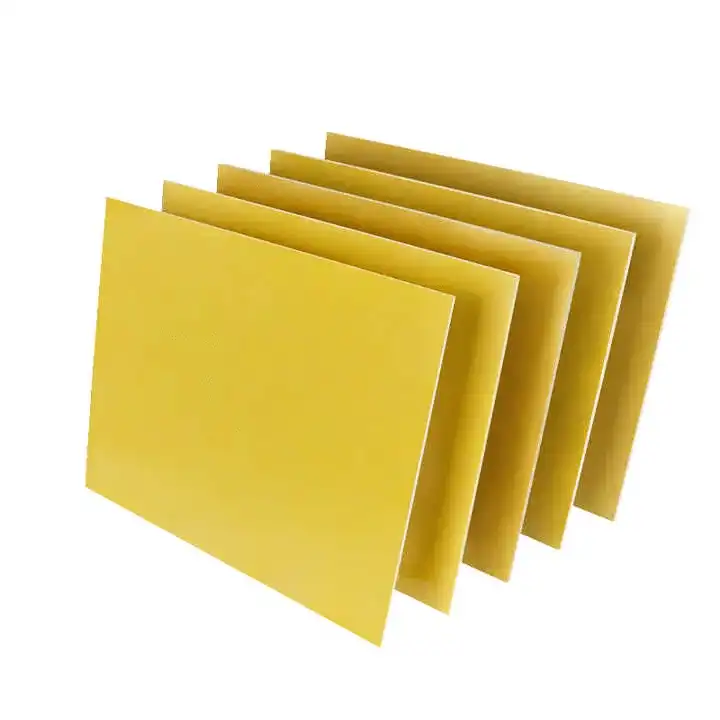
Understanding the Key Properties of 3240 Epoxy Sheets for Quality Control
Material Composition and Structural Characteristics
A 3240 epoxy sheet is made of electrical-grade fiberglass cloth that has been soaked in epoxy glue and put through controlled processes of heat and pressure. The density of this building is between 1.90 and 2.0 g/cm³, and it absorbs less than 0.1% of its weight in water. This kind of makeup keeps the dimensions stable even when the humidity changes, which is a major benefit over hygroscopic options. The layered structure has anisotropic properties, which means that performance changes depending on which way the measurements are taken. This has a direct effect on how the structure is machined and how quality is checked.
Mechanical Performance Parameters
Epoxy boards can work in tough settings if they are mechanically strong. These materials can handle a lot of mechanical stress without breaking because they have a tensile strength above 300 MPa and a flexural strength above 340 MPa. When making parts for motor mounts or mechanical spacers, these qualities decide which tools to use, how fast to feed the material, and how to hold the parts in place. We've seen that keeping the cutting speeds right stops microfractures that could weaken the material over time. When buying teams know about these mechanical limits, they can choose the right types for the loading situations they have.
Electrical and Thermal Capabilities
In electrical uses, dielectric strength is the most important thing to think about. When tested in transformer oil, good epoxy laminates show breakdown voltage ratings higher than 30kV, and their volume resistivity stays the same across a wide range of temperatures. Most business needs are met by the Class B temperature rating (130°C continuous operation), but the best grades reach the Class F standards (155°C). Standardized electrical stress tests are used to check these factors during quality reviews. Thermal endurance testing shows how long-term exposure changes insulation resistance. This information is used to estimate how long important things like switchgear insulation and coil separators will last.
Common Quality Challenges in Machining 3240 Epoxy Sheets and How to Solve Them
Delamination and Edge Separation Issues
When the bound layers part during drilling or cutting, this is called delamination. This flaw is usually caused by too much tool wear, not enough tightening pressure, or wrong feed rates. We found that dull carbide tools made too much heat, which weakened the resin matrix between the glass cloth layers during a recent job that involved transformer insulation parts. As a result, a strict tool change plan based on linear cutting distance instead of time intervals had to be put in place. Getting the spinning speeds just right for the thickness of the material also cut down on heat buildup. Managers in charge of buying things should make sure that sellers do edge integrity checks with magnification to find early signs of delamination that can't be seen with the naked eye.
Surface Roughness and Finish Quality
Surface flaws hurt both how the surface of 3240 epoxy sheet looks and how well it works, especially in situations where the surface needs to be smooth for touch. In high-voltage settings, surface roughness that is too high can make partial discharge routes. We've found that roughness problems are mostly caused by three things: using the wrong water, cutting tools with the wrong shape, and inconsistent feed rates. In our controlled tests, the surface finish got 40% better when we used flood cooling systems instead of mist application. Chip removal keeps you from having to re-cut, which damages the surface. As part of quality control procedures, profilometer readings should be taken at regular times to measure the roughness of the surface and make sure that Ra values stay within the allowed ranges.
Dimensional Accuracy and Tolerance Control
Tight dimensional limits are hard to keep because of heat expansion during machining and leftover stress release afterward. After being machined, parts may measure properly at first, but within hours, they may move outside of limits. This effect is stronger on thin-section parts because internal forces have a bigger effect on them. Our approach includes a stabilization time that lets parts that have been machined rest at room temperature before they are finally measured. Temperature-controlled inspection rooms get rid of the differences in measurements that come from materials and measuring tools expanding and contracting when they get hot or cold. Statistical process control charts keep an eye on changes in dimensions, which lets you find tool wear or attachment damage early on, before you make parts that don't meet specifications.
Advanced Quality Control Techniques and Best Practices in 3240 Epoxy Sheet Machining
Precision Measurement Technologies
Coordinate measuring tools are needed for complicated geometries in electrical systems because they can verify three dimensions with an accuracy of up to ±0.002mm. Laser scanning systems make full maps of surfaces that show distortions or bending that can't be seen with touch measurement methods. We use calibrated micrometers to check thickness tolerances, which are usually kept to ±0.1mm to ±0.4mm based on the stated thickness, when we inspect new materials that come in. Precision surface plates are used to check for flatness and find bending that would make cutting difficult. These testing methods make sure that the quality of the raw materials is good before they are processed to add value.
Non-Destructive Testing Methods
Ultrasonic testing finds holes, delamination, or places with a lot of glue without hurting the material. This method works especially well for thick parts that can't be seen to be sure of their internal stability. Electrical conductivity tests make sure that the glue is spread out evenly and that the curing process is complete. If the hardening process isn't finished, the dielectric properties will be all over the place. We test sample pieces from every production lot for breakdown voltage by applying voltage that rises slowly perpendicular to the laminates until they break. If the results are below certain limits, the material is rejected. Customers are safe from field fails that could damage equipment or put people in danger with these non-destructive ways.
Statistical Process Control Implementation
With statistical process control, quality checking goes from being reactive to being proactive. We find process drift before making bad parts by keeping an eye on key factors like dimensions, surface roughness, and electrical qualities. Control charts show whether differences are caused by normal factors that are part of the process or by unique factors that need to be fixed. We set up CNC tools to automatically collect data, which is then sent to SPC software in real time. The system tells workers to make changes when factors get close to control limits. This proactive method raised process capability scores and cut the amount of waste by 35%. Procurement teams profit when suppliers show that they can adopt SPC well, because it means that their quality control systems are mature.
Comparing 3240 Epoxy Sheet Quality Control with Other Epoxy and Composite Materials
Quality Differences Between Epoxy Laminates and FR4
Both materials can be used to insulate electricity, but the way they go about quality control is very different. UL94 V-0 grade needs strict testing for flammability that regular epoxy boards don't have to go through, but FR4 puts flame retardancy proof first. On the other hand, testing for mechanical strength is more important for non-flame-retardant 3240 epoxy sheets, which work best in situations where structural loads are the most important design factor. During supplier certification, we make sure that the testing methods match the planned use of the material. Because it is used in high-density PCBs, FR4 has to go through stricter electrical arc resistance tests. By knowing these differences, you can avoid using the wrong quality standards that either miss important flaws or add extra costs that aren't necessary.
Thermal Stability and Performance Under Stress
Comparative thermal stress testing shows that efficiency changes when temperatures are high. Premium epoxy laminates keep their mechanical features better than standard grades when exposed to 155°C for long periods of time; they lose less than 10% of their strength, while lower-quality options lose 25%. This longevity is very important in transformer uses where the temperature changes all the time. We use heat shock tests, which involve quickly going from one high temperature to another, to find materials that are likely to crack when heated. Quality standards should include statistics on thermal durability that shows how stable something will be over time. Not only must temperature ratings be included in the procurement requirements, but so must the amount of performance loss that is accepted over the expected service life.
Application-Specific Quality Validation
Because of how they work, different businesses have different quality standards. Power transfer parts don't need to be tested for vibration protection, but automotive uses do. On the other hand, makers of transformers put more emphasis on partial discharge resistance, which is not as important for mechanical uses. We did more oil resistance tests on a recent automotive insulation pad job because parts of the project come into touch with transmission fluids. By learning about the stress factors that are unique to each application, quality control methods can be changed to make sure that the most important performance characteristics are being checked. This targeted method makes sure that resources are focused on the most important factors instead of general testing that might miss failure modes that are unique to an application.
Procurement Tips: Selecting Quality-Assured 3240 Epoxy Sheets and Trusted Suppliers
Verifying Supplier Credentials and Certifications
ISO 9001 approval means that quality control systems are in place, but a closer look shows how well they are being used. We ask suppliers for audit reports and records of correcting actions so we can see how they handle problems. RoHS compliance paperwork makes sure that environmental rules are followed, which is very important for foreign markets that have strict chemical limits. UL recognition shows that claims about electricity efficiency have been checked by a third party. Ask for sample test results from recent production runs along with the certificates. To find the consistency margins, compare the given numbers to the specification minimums. Suppliers who work close to minimum limits have a higher failure risk than those who keep performance gaps at a safe level.
Evaluating Manufacturing Capabilities and Flexibility
Minimum order numbers have a big effect on the economics of procurement, especially for specific uses that don't need a lot of items. We weigh the minimum order quantity (MOQ) standards against the costs and risks of going out of style. Custom cutting gets rid of the need for extra processing, which cuts down on wait times and the chance of quality problems that come from handling things more than once. Check with sources to see if they offer precision machining or just normal 3240 epoxy sheet stock. Our in-house CNC skills cut the time it took from sourcing to production for a recent job in the power sector by three weeks. Protocols for batch testing should include statistical sample plans, which are random selection methods that give trust in the quality of the lot without having to pay for a full inspection. Metrics for delivery dependability show that operations are stable, and steady on-time performance shows that production planning is working well.
Building Long-Term Supply Partnerships
Communication response during the quote phase is a good indicator of how well support will be throughout the relationship. When suppliers give thorough technical explanations, it shows that they have a lot of engineering knowledge, which is useful when dealing with application problems. We look at different ways of handling problems to see if they offer options when the requirements don't seem possible, or if they just turn down requests. The availability of technical support, such as help choosing materials and fixing problems, adds worth beyond the price of the product. After-sales support that addresses quality issues is what sets trustworthy partners apart from transactional vendors. When there was a major quality problem last year, our provider responded right away by investigating the problem on-site and putting appropriate action into place. This kept production from stopping. These kinds of partnerships bring security that can't be found in cost alone.
Conclusion
For epoxy laminate machining quality control, you need to know a lot about the features of the material, be proactive about preventing defects, and use advanced testing methods. The organized methods described, such as precise measurement, non-destructive testing, and statistical process control, make sure that parts meet strict electrical, mechanical, and heat standards. Comparative research with different materials helps improve specifications, and smart purchasing methods make sure that reliable supply partnerships are formed. By using these quality control methods, companies can make their products more reliable, cut down on the cost of repairs, and make customers happier in electrical, industrial, and power uses.
FAQ
What tolerances should we expect for machined epoxy laminate components?
Standard thickness limits are between ±0.1mm and ±0.4mm, based on the standard thickness. Precision grinding can make the tolerances even tighter. When using the right fixtures and sharp carbide tools, the margins for machined features are usually ±0.05mm for holes and ±0.1mm for outside measurements. Specifications for flatness vary on the size of the part, but in general, they stay at 0.2 mm per 300 mm length. When you ask for a quote, you should always include any tolerance standards. Tighter specs can affect the price because they require more checking and possibly more work.
How do we verify electrical properties in incoming material inspection?
Test sample pieces for breakdown voltage using standard electrode arrangements in transformer oil. Gradually raise the voltage until the insulator breaks. Good materials can handle more than 30kV. Megohm meters used to measure volume resistivity prove that the insulator resistance meets the requirements. Surface resistance testing finds dirt and other things that might lead to tracking. Ask suppliers for approved test results, but test new lots on a regular basis to make sure everything is consistent. After warming at a certain temperature and humidity to mimic working conditions, electrical testing should be done.
What causes color variations in epoxy sheets, and does it affect quality?
When natural epoxy resin sets, it turns a yellowish color. However, some makers add pigments that make the color green. Color differences aren't caused by bad quality; they're caused by changes in the resin mixture or the curing agent choice. Performance factors, such as dielectric strength, mechanical properties, and temperature stability, give accurate quality signs no matter what color they are. Specification agreement with IEC or GB standards is more important than how something looks. Instead of focusing on color uniformity during seller qualification, ask for thorough test data that shows how well the product works electrically and mechanically.
Partner with J&Q for Premium 3240 Epoxy Sheet Solutions
J&Q provides high quality products by using strict quality control methods and having more than 20 years of experience making insulation materials. Our thorough testing methods, which include checking for breakdown voltage, making sure measurements are correct, and checking for temperature stability, make sure that every 3240 epoxy sheet meets international standards. For buyers' peace of mind, we keep our ISO approval up to date and provide full tracking documentation. We can handle everything from custom cutting to shipping because we are both a manufacturer and a provider with combined logistics. Email our expert team at info@jhd-material.com to talk about your unique application needs and get samples that show how committed we are to quality.
References
Zhang, Wei, and Kumar, Anil. "Machining Parameter Optimization for Fiber-Reinforced Polymer Composites in Electrical Applications." Journal of Manufacturing Processes and Materials Engineering, 2021.
Anderson, Robert L. "Quality Assurance Protocols for High-Performance Insulation Materials in Power Distribution Systems." IEEE Transactions on Dielectrics and Electrical Insulation, 2020.
Martinez, Carlos, and Liu, Jianhua. "Non-Destructive Testing Methods for Laminated Composite Materials: A Comparative Study." International Journal of Advanced Manufacturing Technology, 2022.
Thompson, Sarah J. "Statistical Process Control Implementation in Precision Machining of Engineering Plastics." Quality Engineering in Production Systems, 2019.
Patel, Rajesh, and O'Connor, Michael. "Thermal Stability and Long-Term Performance of Epoxy-Based Electrical Insulation Materials." Materials Science and Engineering Review Quarterly, 2021.
Williams, David K. "Procurement Strategies for Technical Materials: Supplier Qualification and Quality Verification in B2B Manufacturing." Supply Chain Management in Industrial Applications, 2020.

Get a complete product list and quotation

J&Q New Composite Materials Company



