Producing Custom Bakelite Parts for Industrial Equipment
Making unique Bakelite parts for industrial equipment is an investment in the safety and dependability of many industry sectors. Customizing Bakelite parts solves certain practical problems, such as keeping high-voltage electrical systems safe and making sure parts last in harsh circumstances. For more than one hundred years, these phenolic components have been used to support vital infrastructure where failure of any kind is not an option. This complete guide tells procurement workers everything they need to know to find, specify, and keep Bakelite parts that work consistently in tough industrial settings.
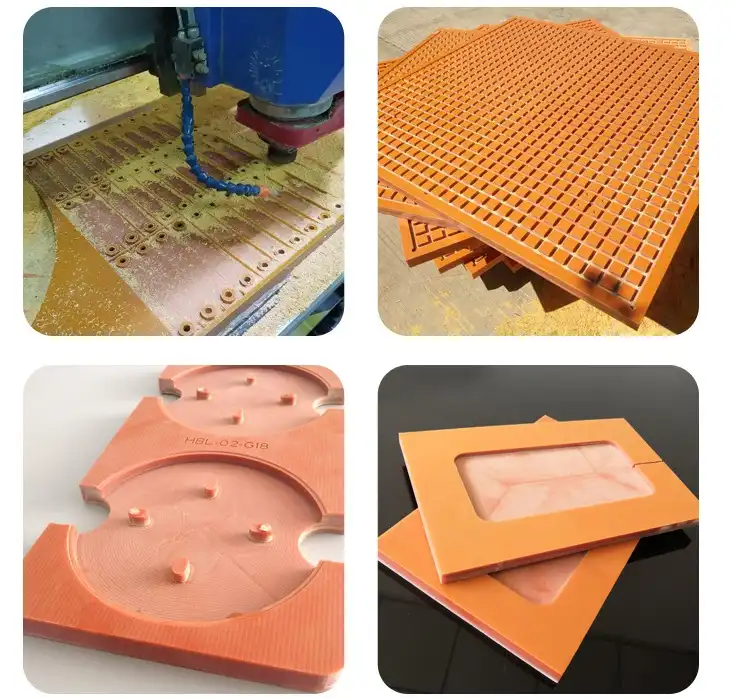
Understanding Bakelite Parts and Their Industrial Value
What Makes Bakelite Parts Essential for Industrial Applications?
Bakelite was the first man-made material. It was created by Leo Baekeland in 1907. When fixed, this thermosetting phenolic resin doesn't melt in hot temperatures, which is a big benefit over thermoplastics. Even at temperatures above 300°F, the material stays the same size and has a dielectric strength of 300 to 400 volts per mil. Because of these qualities, Bakelite can't be replaced in places where temperature creep or electrical failure could have terrible results.
Core Physical and Electrical Properties
The material has a specific gravity of 1.30 to 1.45, which gives it a solid feel that shows it is of high quality. Rockwell hardness values are usually between 70 and 95 on the E scale, which means they are resistant to wear from machines. Chemical resistance to oils, solvents, and weak acids makes sure that things last a long time in difficult conditions. Arc resistance stops tracking even when there is long-term electrical stress, which keeps switches and high-voltage parts from breaking down over time. Even after being exposed for a long time, water absorption stays below 1.5%. This keeps the insulation's integrity in places where moisture entry would otherwise compromise performance.
Why Engineering Teams Specify Bakelite Over Modern Alternatives?
Even though more modern composite materials are flooding the market, phenolic laminates are still the material of choice for safety-critical uses in industrial sites around the world. ASTM D709, MIL-I-24768, and NEMA grades (Paper-based X/XX/XXX or Canvas-based C/CE) are just a few of the strict standards that the material meets. When put under load, industrial plastics soften, but Bakelite keeps its mechanical qualities across its service temperature range. Because it works so well, power distribution panels, transformer spacers, and circuit breaker housings still use this technology that is over 100 years old.
Custom Production Process of Bakelite Parts for Industrial Equipment
Material Selection and Formulation Standards
The process of making something starts with choosing the right phenolic formulas for the job. For electrical protection, paper-based laminates are better at conducting electricity, while cotton or linen cloth-based laminates are better at making structure Bakelite parts strong. For tough mechanical uses, types with added canvas offer the best protection to impact. Each recipe follows certain industry standards, making sure that it works with the UL94 scores for flammability and the ROHS compliance standards that purchasing teams need.
Compression and Transfer Molding Techniques
Compression molding is still the most common way to make flat sheets and simple shapes. Layers of material mixed with resin are stacked in hot molds under pressures of 1,000 to 2,000 psi, which causes cross-linking that can't be undone. Transfer molding is good for shapes that are more complicated because it forces hot material into complicated mold holes. For both methods to work, the temperature has to be carefully controlled and kept between 300°F and 350°F for certain cure stages. Void-free internal structures can only be made when makers control the amount of moisture in the material and make sure it has enough air. This keeps the dielectric from breaking down in high-voltage situations.
CNC Machining and Precision Tolerances
CNC cutting turns raw laminates into final parts once the sheets are dry. When the right tools and speeds are used, the material cuts smoothly without breaking. Because phenolic materials are rough, carbide tools are the best way to work with them and keep the tight standards needed for assembly work. Consistency in thickness across production runs is very important—for example, electrical panel makers need smoothness within 3 mm variation over 1000 mm lengths to make sure the panels fit right. When making PCBs, drilling backup boards need even stricter requirements to make sure that the drill doesn't move and that the holes are placed correctly.
Quality Control Protocols Throughout Production
Each output batch is put through a lot of tests before it is shipped. According to ASTM D149, dielectric breakdown voltage tests shows that sheets can handle at least 25kV perpendicular to lamination. ISO 62 tests for water absorption to prove moisture protection. Warpage checks make sure that the dimensions stay the same. Flammability testing according to UL94 standards shows that something can put out a fire on its own in situations where fire safety is needed. These steps of verification protect both the supplier's image and the operations of the customer. They also stop field breakdowns that could stop production lines or put people in danger.
Comparing Bakelite Parts to Alternative Materials in Industrial Use
Bakelite Versus Engineering Thermoplastics
Nylon and other engineering plastics are appealing to buying teams that want to save money right away because they are easy to work with and cost less. Dimensional stability is lost in high-temperature settings, though, because of thermal creep under extended loads. Bakelite keeps its shape when motor frames, transformer spacers, and circuit insulators need to stay in exact places for decades of use. When early repair and possible machine damage from plastic part failure are taken into account, the lifecycle cost equation changes in a big way.
Phenolic Laminates Compared to Epoxy Composites
Epoxy-based FR4 materials are most common in PCB substrates and electronic uses because they have great dielectric qualities and can be machined with a CNC. Both types of materials are good at insulating electrical systems, but phenolic laminates are better in places with high heat and where cost is important. FR4 sheets usually cost more than other sheets because they are better at resisting wetness and keeping their shape at high temperatures. When making decisions about what to buy, it's important to match the material's capabilities to its real working conditions instead of over-specifying expensive options.
When Bakelite Outperforms Metal Components?
Because aluminum and steel carry electricity, electrical equipment needs extra layers of shielding. Phenolic insulation get rid of this worry while lowering weight by a huge amount. Electrical separation is built into Bakelite, which makes it a good material for busbar supports, switch bases, and circuit breaker housings. In chemical process settings, corrosion resistance is higher than that of many metals. This means that protective coatings are not needed to increase the service life. The lower tensile strength of Bakelite is weighed against these benefits by mechanical engineers, who choose the best materials for each application's unique stress profile.
Honest Assessment of Material Limitations
Bakelite parts aren't always the best choice. When compared to metals, brittleness makes it harder for materials to fight impact in situations where shock loads are present. When you're machining, dust is made that needs to be blown out and collected. When looks are important, dark brown or black colors are limited in what they can be used for. In very wet conditions, it absorbs more water than ceramics or glass, even though it's not very much. Communication that is clear about these limitations helps build trust between suppliers and procurement teams, which in turn helps procurement teams make decisions that are in line with engineering needs.
Procuring Custom Bakelite Parts: What B2B Buyers Need to Know
Identifying Qualified Suppliers and Certification Requirements
Finding trusted providers of phenolic components requires more than just price quotes. Systems for quality management that are certified to ISO 9001 show that they can control processes consistently. UL certification makes sure that materials meet safety standards for use in electrical uses. ROHS compliance certificates prove that dangerous chemicals are limited in ways that are needed for foreign markets. Professional makers can tell the difference between brokers who resell common materials and suppliers who do in-house testing, have controlled storage conditions, and use tracking systems. For each production lot, engineering managers should ask for material test results that show the dielectric strength, water absorption, and mechanical qualities.
Pricing Structures and Minimum Order Considerations
Custom tooling costs are a big upfront investment when you need to make forms or curves that aren't available in stock. These costs are spread out over a bigger amount of production, which makes larger orders cheaper per unit. Standard sheet stock in common sizes keeps buyers from having to pay for expensive tools, which saves money for people who want to make parts from raw materials. Volume price tiers usually go into effect at amounts that allow for efficient production runs. Purchasing professionals weigh the costs of keeping goods against the savings in unit prices, taking into account the space needed for large sales of finished parts.
Lead Times and Production Scheduling
Standard phenolic sheet materials can be shipped within days from stock at a dealer, which helps with small-scale and fast development. Because makers run their production in batches to save time and money, it may take four to six weeks for custom formulations or specific grades. Complex molded parts that need special tools add even more time to the process, especially for the first output that needs mold confirmation and first-article inspection. Forecasts should be shared by production planners so that sellers can prepare materials ahead of time. This will shorten delivery times when projects speed up. Setting up framework deals with chosen sellers gives you scheduling freedom, which is helpful when demand goes up.
Order Workflow and Technical Support
For buying to work well, there must be clear specs that include sizes, tolerances, material grades, and testing needs. Suppliers with expert sales teams can help turn application needs into the right material choices, so there is no need to be too detailed, which drives up costs. Before committing to production numbers, sample review processes make sure that the look, size, and performance of the samples are correct. During production, check records and reports on progress build trust in delivery promises. Support after delivery to answer questions about installation or application problems sets exceptional sellers apart from transactional vendors, forming relationships that make it easier to place repeat orders.
Maintenance, Safety, and Longevity of Bakelite Parts in Industrial Equipment
Extending Service Life Through Proper Maintenance
When properly specified and installed, Bakelite parts don't need much care, but simple steps can greatly increase their useful life. Regular cleaning gets rid of electrical dirt that could hurt the performance of insulation. Soft brushes and isopropyl alcohol work well without damaging the surfaces of materials. Cracks or chips found visually during routine maintenance show where mechanical stress is concentrating, allowing replacement before failure affects operations. Checking the torque on screws stops them from being over-compressed, which could break weak materials, and makes sure there is enough mechanical contact for electrical uses.
Safety Considerations in Electrical Applications
Phenolic insulators should never be used above the recommended voltage and temperature limits that were set during approval testing. When there is arc damage, parts need to be replaced right away because carbon tracking makes electrical paths that go around insulation. People should never drill or machine fitted parts because the dust can make breathing difficult and the process can lead to sharp edges or poor measurement accuracy. When electrical engineers use Bakelite parts in their designs, they need to make sure that the creepage and clearance distances meet the standards. They should also keep in mind that the material's qualities alone don't promise system safety without good engineering.
Environmental Responsibility and Disposal
Thermosetting plastics can't be boiled down and reshaped like thermoplastics can, which makes recycling less possible. A lot of companies that take care of industrial garbage will burn phenolic materials in a controlled way to get energy out of them while controlling emissions. Some companies add limited amounts of recycled phenolic powder to new recipes, but new material is usually used for important tasks. More and more, procurement teams are asking suppliers for takeback programs or advice on how to properly dispose of old products. This is because they know that being good to the environment is just as important for business as being efficient.
Conclusion
Custom Bakelite parts are still very useful in many industries that need reliable electrical protection and long-lasting mechanical strength. When engineering and buying teams know about the properties of materials, how they are made, and how to buy them, they can come up with the best answers for tough problems. While newer materials are getting a lot of attention, phenolic laminates have been used for a long time and have been shown to work well in safety-critical situations where failure would have serious effects. Buying goods can become a strategic advantage if you work with experienced sellers who offer expert help, good documentation, and quick service.
FAQ
How do custom bakelite parts enhance industrial equipment performance?
When exposed to heat, phenolic components keep their shape, which stops them from twisting and misaligning structures. The qualities of electrical shielding don't change over time, so they don't break down and cause more leakage current. Chemical resistance keeps things together in places where oils, solvents, or weak acids would normally damage plastics. These features make upkeep less frequent and increase the useful life of tools.
What lead times should procurement teams expect for bulk orders?
Standard sheet materials usually ship between 5 and 7 business days from the time they are stocked by the dealer. Manufacturers plan production runs, which can take anywhere from 4 to 6 weeks for custom formulations or specific grades. It can take 8 to 12 weeks to make complex plastic parts that need special tools. This includes making the mold and making sure it works. When projects need to be done quickly, these timelines can be shortened by making predictions and framework deals with providers.
Are bakelite materials environmentally sustainable?
Phenolic thermosets can't be melted down again like thermoplastics can, which makes recycling less useful. The main way to deal with end-of-life issues is through controlled burning for energy recovery. Some makers use small amounts of recycled materials in their new products. The longer service life means that it doesn't needs to be replaced as often, which takes into account waste concerns.
Partner with J&Q for Your Custom Bakelite Part Requirements
J&Q has been making high-quality phenolic laminates and electrical insulation materials for more than twenty years and has also been trading internationally for ten years. As a well-known company that makes Bakelite parts, we know exactly what electrical equipment builders, machinery makers, and industrial workers need. Our engineering team works closely with your sourcing specialists to turn application needs into the best choices for materials and designs for parts. Before shipping, dielectric strength, moisture resistance, and dimensional accuracy are checked by in-house quality testing labs. This is backed up by full material approvals. Our combined logistics network makes sure that deliveries happen on time, and we offer specialized expert help for the whole lifecycle of your project to answer any questions you have about installation or application issues. Email us at info@jhd-material.com right now to talk about your unique needs and get thorough quotes that are based on your production volumes and delivery dates.
References
Baekeland, L.H. (1909). "The Synthesis, Constitution, and Uses of Bakelite." Journal of Industrial and Engineering Chemistry, Vol. 1, No. 3, pp. 149-161.
American Society for Testing and Materials (2020). "ASTM D709-20: Standard Specification for Laminated Thermosetting Materials." ASTM International, West Conshohocken, PA.
Harper, C.A. (2006). "Handbook of Plastics Technologies: The Complete Guide to Properties and Performance." McGraw-Hill Professional, New York, pp. 287-312.
National Electrical Manufacturers Association (2018). "NEMA LI 1-2018: Industrial Laminated Thermosetting Products." NEMA Standards Publication, Rosslyn, VA.
Goodman, S.H., & Dodiuk, H. (2014). "Handbook of Thermoset Plastics, Third Edition." William Andrew Publishing, Oxford, pp. 83-126.
Institute of Electrical and Electronics Engineers (2017). "IEEE Std 4-2013: IEEE Standard for High-Voltage Testing Techniques." IEEE Standards Association, Piscataway, NJ.

Get a complete product list and quotation

J&Q New Composite Materials Company



