Prototyping with FR4: From CNC Machining to Final Electrical Component Assembly
FR4 sheet material is the mainstay of modern prototyping for electrical components. It connects the first ideas for designs to fully working systems. This glass-reinforced epoxy laminate has great dielectric strength and can be machined easily. This lets engineers turn raw material into precisely cut insulation parts, PCB supports, and thermal barriers. Procurement teams and technical managers can control production timelines and improve prototype quality by understanding the whole process, from choosing materials to CNC manufacturing and final assembly.
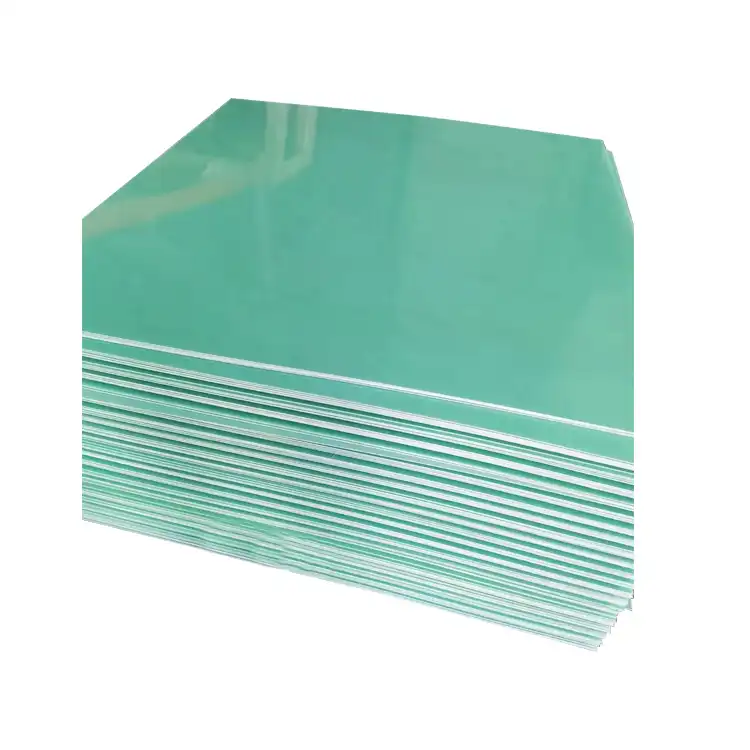
Understanding FR4 Material and Its Properties
Composition and Manufacturing Standards
"FR" stands for "flame retardant," which makes this material different from G-10, which was made before it and wasn't fire-resistant. Continuous filament glass cloth is mixed with brominated epoxy glue to make FR4 sheet. The sheet is then fixed under controlled heat and pressure. This thermosetting process crosses-links molecules, which keeps the shape even when the temperature changes. The material has a flammability rating of UL94 V-0, which means that vertical test specimens will put themselves out on their own within 10 seconds without making flaming drips. This is a very important safety condition for high-density electrical systems.
Core Technical Properties
Electrical engineers depend on FR4 sheet's dielectric strength, which is usually between 20 and 25 kV/mm, to keep power from dropping in motor control panels and small switches. The material keeps its insulation properties even when the humidity changes because it only absorbs 0.10% of water over 24 hours. Its mechanical qualities include a flexural strength of more than 415 MPa, which makes it useful for structural uses in device brackets and machinery spaces where regular plastics would bend when loaded.
Normal FR4 sheet can work all the time at temperatures up to 130°C (Class B insulation grade). By changing the chemistry of the resin, high-Tg versions raise this temperature limit to 170-180°C. This meets the needs of parts under the hood of cars and power distribution equipment that is exposed to high temperatures. When the epoxy matrix starts to soften, the glass transition temperature tells us. This has a direct effect on the tolerances for size changes during thermal stress.
Comparative Material Analysis
Different surfaces come with trade-offs that affect the choice of material. Polyimide laminates can handle higher temperatures (up to 260°C continuously), but they are much more expensive and are more likely to crack when they get wet. Rogers' high-frequency materials keep signals from getting lost in RF uses, but they aren't as strong mechanically as FR4 sheet. Some glass cloth is replaced with paper core layers in CEM-1 to save money, but this lowers the bending strength. Aluminum-backed boards are better at getting rid of heat, but they don't have any through-hole fixing choices.
By knowing these differences, procurement experts can find a balance between performance requirements and price limits. FR4 sheet is still the standard for general-purpose development because it has good electrical insulation, enough mechanical strength, and UL/ROHS compliance at a reasonable price. Electrical makers and industrial machinery builders value these qualities the most.
CNC Machining of FR4 Sheets: Best Practices for Prototyping
Material Preparation and Handling
Standard FR4 sheet widths range from 0.5 mm to 50 mm, and tighter tolerances are available for PCB uses that need them. Before cutting, make sure the material has gotten used to the shop floor temperatures (usually 48 hours at 20–25°C and 40–60% RH) so it doesn't twist from changes in moisture levels. Check surfaces for flaws like pits, bubbles, or resin-filled areas that could weaken the structure after it has been cut. Edge delamination can be avoided by treating the sheets correctly. Store the sheets horizontally with safe interleaving between them, and don't drop the corners onto hard surfaces.
Machining Strategy and Tooling
Because it contains rough glass fibers, it needs to be cut with carbide or diamond-coated tools. Using high-speed steel bits to try to cut FR4 sheet makes the edges dull quickly and not very well. For milling, the best spindle speeds are between 18,000 and 24,000 RPM, and feed rates are changed based on the diameter and complexity of the feature. When you climb mill (down-cut), the cutting forces go into the surface instead of pulling fibers, which makes the edges cleaner.
Common machining challenges include:
- Delamination prevention: To avoid delamination, use sharp tools and make sure chips are properly evacuated. When bits are dull, they produce too much heat, which breaks epoxy and lets glass layers separate. When vacuum systems go through the cut zone again and again, they pick up gritty dust that speeds up tool wear.
- Edge chipping mitigation: To stop edge chipping, use backing boards to support thin parts and the climb milling direction. End mills with three to four flutes spread the cutting load more widely than ones with only two flutes.
- Dimensional accuracy: For accurate measurements, set up the tool lines so that they take into account how the material will curve when it is cut. Due to its hardness, FR4 sheet needs to be fixed in place rigidly; even small movements of the item cause it to become out of spec.
These technical issues have a direct effect on the yield rates of prototypes. Fewer rework steps are needed when CNC operations are done correctly, which speeds up the process from design approval to assembly testing.
Post-Machining Quality Verification
Dimensional checking makes sure that the holes, cavities, and features on the outside are shaped correctly and match the requirements shown on the model. Critical tolerances can be measured with optical comparators or CMM tools. This is especially important for parts that need to be perfectly aligned during component mounting. A surface quality review finds problems like delamination, burn marks, or fiber pull-out that might affect how well the electrical system works.
After cutting, electrical testing confirms the stability of the dielectric. Measurements with a megohmmeter show that the cutting process hasn't made any electrical paths through cracks in the resin or metal bits that are buried in it. Hipot testing uses high voltage between wire patterns and ground planes to find thin insulation that could fail when the temperature changes.
Design and Assembly Considerations for FR4-Based Electrical Components
Substrate Selection and Layer Configuration
When you match the FR4 sheet grade to the needs of the application, you avoid wasteful over-specification and make sure there are enough performance gaps. Simple insulation barriers work best with single-layer designs, while complicated PCB systems with internal power lines can be used with multilayer stackups. Choosing the right thickness strikes a balance between mechanical strength and weight restrictions. Thinner substrates lower the mass of the unit but need more structural support.
In high-power systems, thermal control needs to be carefully thought out. Because standard FR4 sheet has a heat conductivity of 0.3 W/m·K, there needs to be enough copper spreading and convection routes. Designs that need more than 2W/cm² of power density should use metal-core platforms or forced air cooling. Temperature cycle research finds possible differences in the coefficient of thermal expansion (CTE) between FR4 sheet (13–15 ppm/°C) and mounted components. This stops the solder joint from wearing out.
Assembly Process Integration
FR4 sheet parts that have been CNC-machined can be used in standard assembly processes. During a short reflow exposure, soldering temps (usually 260°C at their highest for lead-free alloys) stay within the thermal range of normal FR4 sheet. Fixture design makes sure that parts are lined up exactly right; positional errors have a direct effect on how electrically useful connections and relay sockets are.
Sticky bonding joins FR4 sheet pieces together in places where mechanical connections would make it hard to keep the insulation space. Pressure-sensitive films let you do repairs, while epoxy structural adhesives make structures that last. Using light grinding or plasma treatment to prepare the surface makes the bond stronger by raising the energy of the resin's surface.
Limitations and Mitigation Strategies
Even though the amount of moisture absorbed is small, it builds up over time in wet places. In hot regions or situations where things are condensing, conformal coating or encapsulation saves finished parts. For automotive uses, bake-out processes (4 hours at 125°C) are often required before potting to get rid of any water that has been taken and could cause gaps.
When concrete surfaces are used outside, UV light breaks them down, discoloring and weakening them. Protective coats or house barriers make things last longer in places where they are exposed to direct sunlight. Power sector equipment usually works in covered switchgear, which gets rid of UV issues.
Places with a lot of shaking may need mechanical reinforcements on top of FR4 sheet's natural sturdiness. To stop resonant frequencies, FR4 sheet insulators are often bonded to metal backing plates or bigger substrate grades (3.2 mm vs. 1.6 mm) are asked for in automotive and industrial machines.
Procurement Guide: Sourcing FR4 Materials and Services Globally
Supplier Qualification Criteria
Reliable supply agreements are built on quality methods that have been certified. Certified to ISO 9001 means that process control has been created, and certified to IATF 16949 adds requirements unique to the automotive industry. Independent testing shows that UL recognition for material grades is valid; check that the supplier's UL file number fits the standards in your specification.
Assessment of manufacturing potential is more than just making claims about capacity. Ask for paperwork that shows the steps for inspecting arriving materials, laminating them, and testing them for quality at the end. Suppliers who use statistical process control (SPC) on important variables show that they care about quality consistency over spontaneous sorting.
Verification of environmental compliance guards against problems in the supply chain and fines from the government. RoHS conformance limits the amount of lead, mercury, cadmium, and brominated flame retardants that can be used in products. It is required to sell in the EU market and is becoming more and more common in North America. REACH registration shows that a chemical product is allowed to be used in Europe according to the rules.
Regional Sourcing Considerations
Asian companies make most of the world's FR4 sheet and can offer low prices because they can take advantage of economies of scale and vertical integration. Lead times for normal grades are usually between 3 and 5 weeks, but faster choices are available for an extra fee. Communication clarity and responsiveness to technical help requests vary a lot between suppliers. Set your standards during the qualification process.
North American and European manufacturers put a lot of emphasis on specialized grades, quick prototyping services, and expert support that is specific to the area. The higher price reflects the higher cost of work, but it helps with small orders, custom fabrications, and immediate shipping needs. For local projects, being close cuts down on freight costs and travel time.
Cost optimization and supply consistency are both important in dual-sourcing methods. When you qualify both Asian and local providers, you have options in case of limited capacity or geopolitical problems, and you can still use your competitive edge when negotiating prices.
Cost Structure and Value Analysis
When you buy in bulk, you save money on each unit because you get volume discounts. For example, when you order full production crates instead of cut sheets, you usually save 15% to 25%. Custom manufacturing (pre-cut blocks or CNC services) raises the cost of materials by 30 to 50 percent but gets rid of the need for internal processing costs and the risk of scrap. To figure out the total cost of ownership, you should add up the labor costs for inbound inspections, the costs of keeping goods, and the yield losses that come from cutting corners on material quality.
Premiums for faster delivery run from 20% for one-week acceleration to 50%+ for exports the same week. By planning production so that wait times for purchases are in line with project plans, these extra costs can be avoided, and scheduling flexibility can be kept by keeping buffer stocks of common sizes.
Case Studies and Real-World Applications of FR4 in Prototyping
Automotive Battery Management System
A company that makes parts for electric vehicles needed insulation barriers for lithium-ion battery pack kits. These barriers kept the batteries from touching each other electrically and kept them from getting too hot during charging cycles. The engineering team asked for 2.0 mm high-Tg FR4 sheet with mounting holes and air slots that were cut out with a CNC machine. Through 500 cycles of rapid testing, prototypes proved their thermal performance and confirmed the stability of the material at room temperature (85°C).
CNC machining made it possible to make quick changes to designs. For example, ventilation slot patterns went through three iterations in just two weeks, which sped up approval plans. The machined prototypes went quickly from prototypes to mass production using progressive die stamping, showing that FR4 sheet can be used in a variety of industrial methods. Some of the benefits that were measured were a 40% weight loss compared to ceramic options and a 60% cost savings compared to polyimide substrates.
Industrial Motor Control Panel
A company that makes machinery needed custom insulation spacers for three-phase motor controls that work in a dusty plant. Standard phenolic materials showed surface tracking when they were contaminated, which could lead to arc tracks. The answer used 3.2 mm FR4 sheet with better tracking resistance (CTI 600V), which was CNC-machined to fit the route of the bus bar and the mounting bosses for the components.
Comparative Tracking Index testing according to IEC 60112 was part of the prototype evaluation process. This showed that the prototype worked better in contaminated circumstances. For 50 samples, the finished parts stayed within ±0.1 mm of their original size, which allowed them to be put together automatically without each one having to be fitted individually. The wait time for production went from six weeks for molded phenolic tools to five days for CNC cutting, which helped the product reach the market more quickly.
Consumer Electronics Device Assembly
A company that makes appliances made a new control board that needed a complicated FR4 sheet base shape with built-in mounting features. The non-rectangular shape and built-in standoffs couldn't be made with traditional PCB construction methods. CNC cutting was the answer; within 48 hours of the design being finalized, working samples were made.
The ability for fast iteration made it easy for the mechanical and electrical engineering teams to work together. For example, during fit testing, the locations of mount points moved twice, and the changes were made overnight by updating the tool paths. Before agreeing to injection-molded production tooling, electrical testing confirmed signal integrity and thermal performance. This kept mold changes from being necessary, which would have been expensive. Prototyping paid for itself with a successful first-pass design that sped up the launch of the product by six weeks.
These examples show how carefully choosing the right FR4 sheet material and using CNC cutting skills can speed up the development of prototypes while keeping costs low. Validation gives engineering teams trust before they commit to production, which lowers risk and speeds up time to market.
Conclusion
To make a good prototype of an electrical part out of FR4 sheet material, you need to know about the properties of the substrate, the best ways to machine it, design factors, and smart procurement. The flame-resistant epoxy laminate is strong, doesn't catch fire, and doesn't conduct heat. It can be used in a wide range of situations, from car systems to industrial controls. With the right tools and process settings, CNC machining can turn raw sheets into precise parts while keeping the purity of the material. To build strong supply chains, careful seller selection takes into account things like quality approval, manufacturing capability, and total cost. Companies that understand this whole process—from choosing the materials to putting the final touches on the product—have faster prototype iterations, better success rates on the first try, and easier transitions to mass production.
FAQ
What differentiates FR4 sheet from G-10 laminate?
Both materials are made of glass-epoxy and have similar mechanical qualities. However, FR4 sheet has brominated flame retardants added to it to meet UL94 V-0 standards for self-extinguishing performance. G-10 doesn't have this fire protection, so it will keep burning after being lit. Due to safety rules and insurance requirements, most modern electrical applications mention FR4 sheet. This means that G-10 is mostly no longer needed, except in a few non-electrical mechanical applications.
Can FR4 sheet withstand outdoor environmental exposure?
The epoxy resin system successfully stops moisture absorption (0.10% per ASTM D570), but long-term UV exposure breaks down the surface in a way called "blooming" that looks like white spots. For placements outside, you need UV-resistant coatings or building structures to protect the electronics. Chemical resistance is still very high against most oils, solvents, and weak acids that are used in factories.
What maximum operating temperature does standard FR4 support?
Standard FR4 sheet keeps its structure and electrical features even when it's used nonstop at 130°C (Class B insulation). By changing the chemistry of the epoxy, high-Tg versions make this power go up to 170 to 180°C. For uses above these limits, polyimide bases or special high-temperature laminates should be thought about. The material can handle a short exposure time during soldering (260°C for less than 10 seconds).
Partner with J&Q for Expert FR4 Sheet Solutions
J&Q has been making insulation materials for 20 years and has a fully integrated supply chain that can help you with both development and production. Our technical team knows the complicated requirements that electrical engineers and procurement managers have to deal with every day, such as choosing the best FR4 sheet substrate grades and making sure that shipping plans work with project goals. As a provider of FR4 sheets with a lot of experience, we keep approved quality systems, RoHS-compliant inventory, and a wide range of order sizes, from prototype samples to full production runs. Our streamlined operations make sure that deliveries are always on time across North America, and our low prices help both new companies on a budget and well-known OEM makers. Email our engineering support team at info@jhd-material.com to talk about your unique application needs and get detailed technical advice that fits your needs for putting together electrical components.
References
Harper, C.A. (2006). Electronic Materials and Processes Handbook, Third Edition. McGraw-Hill Professional.
Coombs, C.F. (2008). Printed Circuits Handbook, Sixth Edition. McGraw-Hill Education.
Gilleo, K. (2005). AREA Array Packaging Handbook: Manufacturing and Assembly. McGraw-Hill Professional.
Licari, J.J. & Swanson, D.W. (2011). Adhesives Technology for Electronic Applications: Materials, Processing, Reliability, Second Edition. William Andrew Publishing.
National Electrical Manufacturers Association (2018). NEMA LI 1-1998 (R2018): Industrial Laminated Thermosetting Products. NEMA Standards Publication.
Institute for Printed Circuits (2020). IPC-4101E: Specification for Base Materials for Rigid and Multilayer Printed Boards. IPC International Standards.

Get a complete product list and quotation

J&Q New Composite Materials Company



