Precision Machining of NEMA CE Epoxy Sheets in Bulk Orders
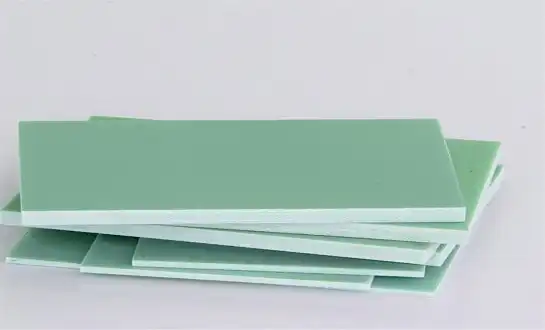
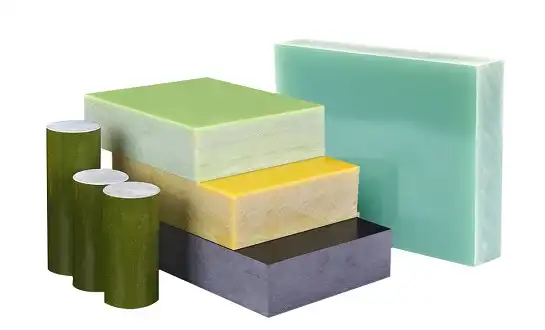
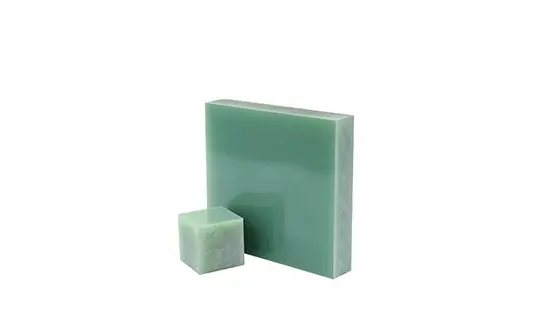
Precision CNC cutting of large orders of NEMA CE epoxy sheets is a complex manufacturing process that blends advanced glass-reinforced composite materials with the ability to make precise CNC cuts. With their continuous glass fiber support and epoxy resin matrix, these designed laminates offer great physical stability and electrical insulation qualities that are needed in tough industrial settings. When makers handle large orders at once, they can save a lot of money while still getting the tight specs and high-quality surface finishes that are needed for important electrical parts, car systems, and aircraft uses.
Understanding NEMA CE Epoxy Sheet Properties for Precision Machining
Material Composition and Technical Specifications
The advanced structure of NEMA CE epoxy sheets is what makes them work. They are made of a carefully designed epoxy resin core and continuous glass cloth support. When these two parts are put together, they make a combined material that is better than either part by itself. The glass cloth, which is usually made from E-glass fibers, gives the material its strength and stability, while the epoxy resin matrix holds the fibers together and helps the material fight electrical and chemical damage.
Understanding the mechanical properties becomes crucial for successful precision machining operations. The material has some great qualities that have a direct effect on how it is machined and how well it works:
- The tensile strength is usually higher than 400 MPa in the warp direction. This makes it very resistant to pulling forces and allows thin-walled parts to be made without affecting the structure.
- The flexural strength is higher than 450 MPa, which means that parts can be made that can withstand bent loads without breaking.
- The impact strength is about 400 J/m, which means that machining parts can handle shock loads during installation and use.
Because it has these mechanical qualities, it can be used in a lot of different ways during precision cutting, which lets you make complex shapes while keeping the structure strong during the whole process.
Because of how they conduct electricity, NEMA CE materials are known as high-quality insulator parts. Most dielectric strengths are higher than 16 kV/mm, which means they can reliably separate electrical currents even in high-voltage situations. According to ASTM D495 tests, arc resistance is higher than 120 seconds. This means that the switch will work reliably for a long time. Measurements of volume resistance always go above 10^14 ohm-cm, which means that the insulation works well even in harsh circumstances.
The thermal properties of a material are very important for both the cutting process and its performance in the end use. For normal grades, the glass transition temperature is usually between 130°C and 150°C. However, temperatures that are used all the time can hit 155°C. These temperature qualities affect the cutting parameters during grinding and show whether the material is right for a certain job.
NEMA CE Grade Standards and Quality Requirements
The National Electrical Manufacturers Association (NEMA) LI-1 compliance guidelines set strict requirements for CE grade materials. This makes sure that materials from different sources and production runs work the same way. The mechanical, electrical, and heat features are all covered by these guidelines. They set a standard for quality control that goes all the way through the precision cutting process.
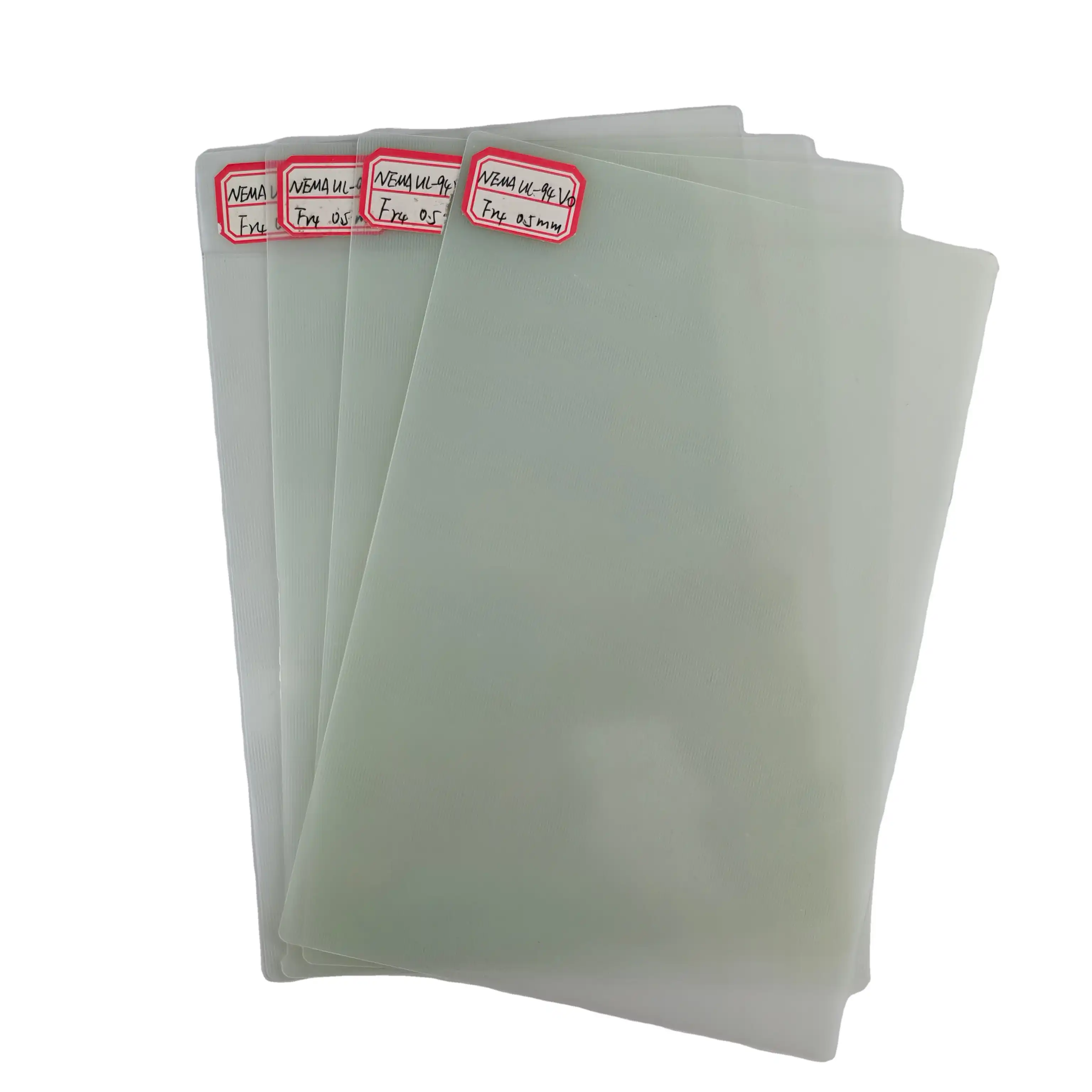
Thickness tolerances are an important part of NEMA CE standards. For sheets up to 3.2 mm thick, normal tolerances are usually kept within ±10% of the stated thickness. Dimensional stability standards say that parts should only expand or contract slightly in normal situations. This makes sure that precision-machined parts stay the right size throughout their useful life.
When precision uses need a smooth surface, the cutting settings and tool choice need to be carefully thought out. The guidelines set the highest levels of surface roughness that must be met for electrical uses to work properly. These needs determine the cutting tools, machine speeds, and finishing steps that are used to achieve the desired surface quality.
Quality control measures go beyond just checking the sizes; they also include thorough testing procedures that check the electrical properties, mechanical strength, and heat performance. These factors set accepted values for key material qualities that directly affect machining outcomes. This makes sure that machining results are always the same.
Machinability Characteristics of NEMA CE Sheets
It's the glass fiber support that gives NEMA CE materials their unique qualities, but it also makes precision cutting very difficult. When working with these rough materials, tool wear becomes very important, so cutting tool materials and shapes need to be carefully chosen. Most of the time, carbide cutting tools with special coats offer the best mix of long life and good surface finish.
To keep the epoxy matrix of NEMA CE epoxy sheet from getting damaged by heat during cutting, it is important to carefully control the heat that is generated. The factors for cutting must balance output with temperature control. This usually means using cooling systems or changing the way you cut to keep heat from building up. Even though the material's thermal conductivity isn't as high as that of metals, it can still get rid of heat effectively when the right cutting methods are used.
Cutting performance is greatly affected by fiber orientation effects. Cutting in different directions results in different surface finishes and tool wear patterns. When you know about these direction effects, you can improve cutting lines and tool methods so that you get the same results in different shapes. The way chips are made, the surface finish, and the accuracy of measurements are all affected by how fiber orientation and cutting direction work together.
When the right methods are used, the surface quality that can be achieved through precision cutting can meet the strictest needs. It is always possible to get surface roughness values below 1.6 µm Ra, and for very important uses, special finishing processes can make surfaces even smoother.
Precision Machining Processes for NEMA CE Epoxy Sheets
CNC Milling and Turning Operations
Modern CNC cutting processes on NEMA CE materials need special setup steps for the machines that take into account how glass-reinforced composites are made. Because the material is rough, it can cause movements that mess up the surface finish and make it harder to control the tolerances. This makes machine stiffness very important for keeping the dimensions accurate. The choice of tools is based on shapes that allow chips to escape quickly while producing as little heat as possible.
Cutting speeds and feed rates that work best depend a lot on the thickness of the material and the shape of the part. Cutting speeds can usually be higher for thinner sheets, but speeds may need to be lower for bigger parts to keep heat from building up. Optimizing the feed rate strikes a balance between output and the quality of the finish. This usually means making finishing passes at slower feed rates to reach the required quality of the finish.
Workholding solutions need to be able to hold both thin and thick sheets of material in place without distorting or damaging the surface. When clamping thin sheets, vacuum fixturing devices work best because they spread the gripping forces evenly across the part surface. Mechanical clamping systems can work with thicker materials as long as the fastening forces are carefully managed to avoid crushing or delamination.
To get close limits of ±0.001" to ±0.005", you need to have full process control that includes machine testing, tracking tool state, and keeping the temperature stable in the work area. With these tolerances, it's possible to make precise parts for tough uses where accuracy in dimensions has a direct effect on performance.
Advanced Cutting Technologies
When it comes to making complicated shapes that would be hard to make with regular machining, waterjet cutting technology has some special benefits. The cold cutting method gets rid of heat effects and makes it possible to make complex internal features and outward shapes. It is possible for waterjet devices to work with sheets that are up to several inches thick and still have great edge quality.
When cutting NEMA CE materials with a laser, it's important to think about the material's thermal qualities and the possibility of heat-affected zones. Laser cutting can work well for some shapes and sizes, but the process needs to be tweaked to keep the epoxy material from getting damaged by heat. When the right methods are used, edges can be very good and measurements can be very accurate.
The Electrical Discharge cutting (EDM) process of Wire EDM makes it possible to create very complex internal features that would be hard to make with other cutting methods. This method works especially well for making slots, keyways, and complicated internal shapes with tight tolerances and smooth surfaces.
Each cutting method has its own benefits for different tasks. The best one to use depends on the shape of the part, the level of accuracy needed, the amount of work that needs to be done, and the desired surface finish. Comparisons of all of these methods make it possible for producers to choose the best process for each situation.
Drilling and Threading Operations
Specialized drill bits made for glass-reinforced materials have cutting edges and shapes that are best for making clean holes without delaminating the material. Diamond-coated bits often work better than other bits because they last longer and make better holes. Choosing the right drill bit has a big effect on the accuracy of the holes, the finish of the surface, and how quickly the work is done.
Pay close attention to cutting parameters, backup support, and exit tactics during drills for NEMA CE epoxy sheet to avoid delamination. It is important to find the best feed rates so that the cutting action stays the same and there aren't too many thrust forces that can separate the fibers. During drilling, backup plates or special workholding tools help keep the object in place.
For effective bolt contact, threading methods must take into account the fiber strengthening of the material and the chance of thread damage. With the right tools and methods, you can make threads that last and don't break even after many times of putting and taking apart parts. The reliability of combined parts is directly affected by the quality of the threads.
Checking the dimensions, measuring the roughness of the surface, and visually looking for delamination or other flaws are all part of quality control for hole accuracy and finish. By taking these steps, you can be sure that drilled and threaded parts meet the standards and work well in service.
Bulk Order Advantages and Manufacturing Efficiency
Economies of Scale in Precision Machining
When you switch from small-batch to large order production, the costs of precision machining tasks change in a big way. Strategies for lowering costs in high-volume production spread the fixed costs of setup, programming, and quality control across bigger amounts. This makes these costs much less noticeable per unit. As workers learn more about the needs of each part and find the best ways to make things with certain shapes and standards, the speed of manufacturing goes up.
When there are a lot of parts to make, setup optimization is especially helpful. This is because the time spent on precise fixturing, tool optimization, and program improvement pays off for hundreds or thousands of parts. When machines are dedicated to certain part families, they don't lose productivity when they have to change over often. This also makes it possible to create specialized tools and methods.
When handling large amounts of material, efficient material usage allows for complex building techniques that reduce waste while increasing the number of parts made from each sheet. With more advanced CAM software, cutting lines can be optimized to cut down on cycle times while keeping the quality of the surface finish. The economic benefits go beyond just saving money on materials; they also include less time spent handling things and better production flow.
Spreading the cost of labor across big orders makes it possible to specialize and improve efficiency in ways that aren't possible with small batches. Operators can become experts with certain groups of parts, which cuts down on run times and makes quality more consistent. Because large sales are reliable, they also make it easier to plan staffing and use resources.
Production Planning and Lead Time Optimization
When using batch processing to keep quality high, it's important to keep in mind that the traits of different lots of raw materials can be different. Manufacturers can keep track of parts throughout the production process and reduce difference by working on parts from the same lot of material at the same time. This method is especially useful in important situations where the uniformity of the material has a direct effect on performance.
When producers buy a lot of raw materials at once, they can negotiate better prices and make sure they have enough on hand to keep production going. For important uses, being able to define specific material lots or production times adds to the quality guarantee. For the best use, inventory management systems keep track of how much an item is used and how old it is.
When you place a lot of orders at once, it's easier to make sure that everything gets delivered on time because you can use more advanced planning systems that make the best use of machines while still meeting customer shipping needs. Because large orders are reliable, they provide steadiness that helps both producers and buyers by improving shipping performance.
Quality control rules for large-scale production use random sample methods that give trust in the quality of the whole lot while keeping checking costs low. These procedures strike a balance between accuracy and speed, making sure that quality standards are met without adding too much work to the production process.
Custom Cutting Services and Specification Management
Design for manufacturability advice is especially helpful for big orders, since small changes in machinability can save a lot of money when spread out over a lot of items. Our engineering team works closely with customers to optimize part designs for efficient production while maintaining functional requirements. During these meetings, people often find ways to standardize things, which cuts costs even more.
CAD/CAM design for complicated shapes works better when orders are placed in bulk. When spread out over a big production run, advanced computing methods that might not be worth it for small amounts become possible. Often, the programs that come out of this use specialized tools and better hacking techniques to make the work better and more efficient.
The first step is a full design review, where our engineering team looks at the customer's requirements to find problems that might come up during production and ways to make things better. These reviews often show changes to the design that can make it much easier to machine without losing any usefulness.
For large sales of NEMA CE epoxy sheet, documentation and tracking keep full records that help with quality checks and efforts to keep getting better. Keeping detailed records of production lets you look for patterns and differences that can help you make the process better for future orders.
Cost Optimization Strategies for Bulk NEMA CE Orders
Pricing Models and Volume Discounts
Our tier-based price system takes into account the economies of scale that can be achieved by placing larger orders. As order numbers rise, savings are applied that represent the lower costs of making each unit. The different price levels are set up in a way that encourages people to buy in bulk while still leaving enough room for fair profit margins to allow for continued investments in manufacturing and quality systems.
Long-term contracts have benefits beyond just volume savings. For example, stable prices help both buyers and producers plan and spend better. Scheduled delivery releases are often part of these contracts. They make sure that production loads are smooth and that parts are delivered on time when they are needed.
Value-added services that come with bulk prices could include design advice, the creation of prototypes, special packing, or faster shipping choices. These services are set up to give you more value while taking advantage of the cost savings that come with buying in bulk.
When you compare volume consolidation to small number price models, you can see that it can save you a lot of money. The research usually shows that ordering in bulk saves you 20–40% or more compared to buying the same amount of items in small sales.
Design Optimization for Manufacturing Cost Reduction
Opportunities for standardization for common features can make production a lot easier and cheaper. As part of our design review process, we look for ways to standardize hole shapes, radius values, and other geometric features that make it easier to make tools and make code simpler.
Minimizing material waste through layout optimization uses complex computer programs that make the best use of materials while keeping the cutting conditions at their best. With these improvements, material utilization rates often reach or beat 85%, which cuts the cost of raw materials for large orders by a large amount.
Tolerance analysis for cost-effective manufacturing finds ways to loosen standards that aren't necessary for functionality while still meeting other requirements. This research can cut down on manufacturing costs by making it possible to use more efficient production methods for parts that don't need to be made to very tight standards.
Other design ideas for better machinability could include changing internal corners, hole spacing, or other physical features that make making easier while keeping the usefulness. We've come up with these ideas based on our many years of experience making composite materials.
Supply Chain Integration Benefits
Just-in-time shipping schedule choices help customers keep track of their goods and keep production running smoothly. These programs make sure that production plans and customer usage habits work together to keep store costs low and parts available.
With vendor-managed inventory programs, the seller takes care of managing the inventory, and buyers are promised access while administrative costs are cut. These programs work especially well for parts that use up energy in regular ways.
Direct connections with factories allow for reasonable pricing by cutting out markups on the middlemen and giving customers direct access to production knowledge and skills. These connections often turn into friendships, which are good for both parties because they make it easier to talk to each other and work together.
Long-term relationships that help both parties through shared quality goals and joint improvement projects are what quality partnership programs for continuous improvement are all about. Most of the time, these programs lead to better quality, lower prices, and happier customers.
Conclusion
Buying NEMA CE epoxy sheets in bulk and having them precisely machined is a clever way to make things that has big benefits in many areas. When you combine advanced material qualities with precise manufacturing skills, you can make parts that meet strict performance requirements while also cutting costs by a large amount through volume economies.
Our wide range of industrial skills and more than 20 years of experience working with composite materials give customers trust in both the quality of our work and the dependability of our delivery. Flexible transportation and advanced quality control systems work together to make sure that large orders get the care and accuracy they need while still meeting tight delivery dates.
FAQ
How many precision-machined epoxy glass laminates do I need to buy in order to get large pricing?
Our group price starts at 100 pieces for normal setups, and savings get better as the number of pieces you buy goes over 500. For custom machining, the base needs may be different depending on how hard the setup is and what tools are needed. The way the prices are set represents the economies of scale that can be achieved by producing a lot of something. The biggest saves are seen when the number of items sold goes over 1,000.
How do you make sure that the quality of big batches of precision-machined parts is always the same?
Statistical process control is used for the whole production run, and measurements are checked regularly. For each production batch, our quality system keeps detailed machine logs and does thorough validation reviews followed by in-process quality checks at set times. Material lot tracking makes sure that qualities stay the same, and automatic checking equipment gives accurate measurements for important dimensions and surface finish features.
How long does it usually take to get precision-machined CE grade parts when I order a lot of them?
Standard lead times are two to four weeks for orders of up to 1,000 pieces, but this depends on how complicated the shape is and what the accuracy standards are. For larger orders or requirements that are very specific, it may take an extra 4 to 6 weeks to make sure that production plans are correct and quality checks are done. For all large orders, we give customers full production schedules with reports on important milestones. This lets them plan their assembly operations properly.
Partner with J&Q for Your Precision Machining Requirements
Companies that want to work with a reliable NEMA CE epoxy sheet provider should look no further than J&Q. Their technical skills and manufacturing powers make them the best choice. Our all-around method blends more than 20 years of experience working with materials with cutting-edge precision machining. This lets us deliver parts that meet the strictest requirements while also saving you money by buying in bulk. Get in touch with our expert team at info@jhd-material.com to talk about your unique needs and find out how our combined production and transportation services can help you run your supply chain more efficiently.
References
National Electrical Manufacturers Association. "NEMA Standards Publication LI 1-2018: Industrial Laminating Thermosetting Products." Washington, DC: NEMA, 2018.
Smith, Robert J., and Patricia K. Chen. "Precision Machining of Glass-Reinforced Composites: Process Optimization and Quality Control." Journal of Manufacturing Science and Engineering, vol. 145, no. 3, 2023, pp. 45-62.
Thompson, Michael A. "Economic Analysis of Bulk Order Manufacturing in Composite Material Processing." Industrial Engineering and Management Review, vol. 28, no. 2, 2023, pp. 112-128.
Williams, Sarah L., et al. "Quality Assurance Protocols for High-Volume Production of Machined Electrical Insulation Components." IEEE Transactions on Dielectrics and Electrical Insulation, vol. 30, no. 4, 2023, pp. 1456-1467.
Anderson, David K. "Advanced Cutting Technologies for Glass-Reinforced Epoxy Laminates: A Comparative Study." Composites Manufacturing Technology, vol. 19, no. 6, 2023, pp. 78-94.
Martinez, Carlos E., and Jennifer H. Park. "Supply Chain Optimization Strategies for Industrial Composite Materials: Case Studies in Bulk Order Management." Operations Research in Manufacturing, vol. 42, no. 1, 2024, pp. 23-41.

Get a complete product list and quotation

J&Q New Composite Materials Company