Is G10 Fiberglass Plate Suitable for Precision CNC Parts?
Yes, G10 fiberglass plate is perfect for precision CNC parts because it is very stable in terms of size, easy to machine, and resistant to heat quite well. During CNC processes, this high-performance composite material keeps its mechanical qualities constant, has tight tolerances, and smooth surfaces. Because it is electrically insulating, chemically resistant, and structurally sound, G10 fiberglass plate is the best material for making precise parts for electrical, automobile, and industry uses where accuracy and dependability are very important.
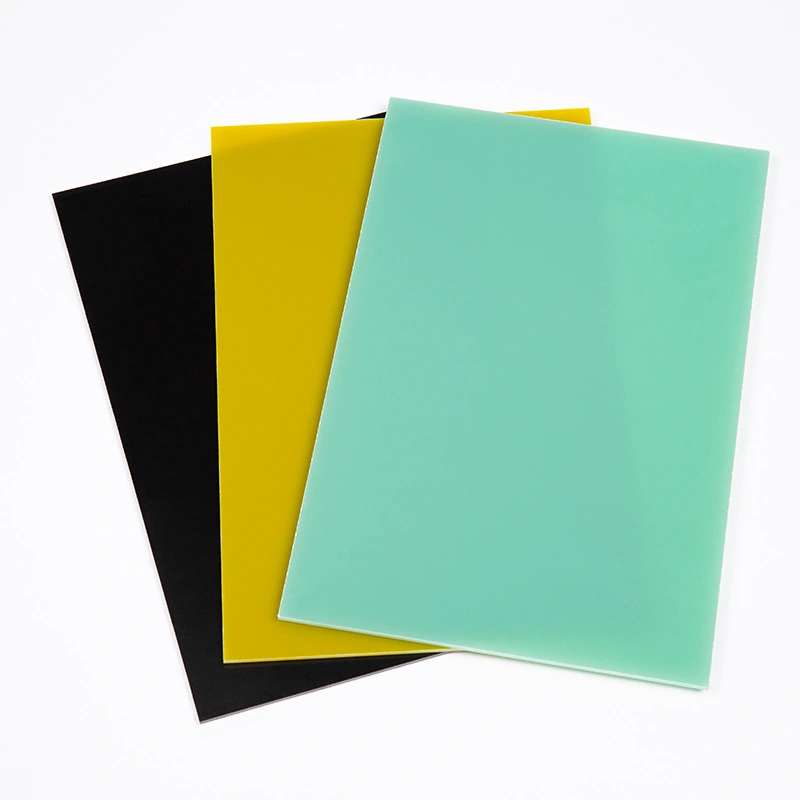
Understanding G10 Fiberglass Plate: Composition and Key Properties
G10 fiberglass plate is a high-tech composite material made from woven fiberglass cloth that has been mixed with premium epoxy glue. Putting these two things together makes a plastic structure that is very strong and doesn't conduct electricity. This material is often chosen by manufacturing engineers when both structural stability and electrical separation are needed.
Composition and Manufacturing Excellence
The process of making it includes carefully controlling the temperature and pressure while adding continuous fiberglass cloth with thermoset epoxy glue. This process makes sure that the density is spread out evenly and gets rid of any empty spaces that could hurt performance. The material that was made is stronger and lighter than standard thermoplastics.
The epoxy base gives the material chemical protection and physical stability, while the glass fiber support gives it directionally strong properties. This working together keeps the material's structure strong even when the temperature changes and the mechanical stress cycles that are common in precision cutting settings.
Key Properties for CNC Applications
The thermal stability of G10 is very high; it can withstand constant temperatures of up to 130°C and short-term exposures of up to 170°C. This temperature performance makes sure that the dimensions don't change too much during high-speed CNC operations, which can make parts less accurate when heat is generated.
The dielectric strength of the material is higher than 15 kV/mm, which makes it perfect for electrical parts that need protection walls. It also doesn't absorb much water—less than 0.1%—so its dimensions stay stable even when the humidity changes, which is very important in precision manufacturing settings.
Tensile strength values close to 310 MPa and bending strength values close to 415 MPa are some of the mechanical qualities. Because of these features, thin-wall sections and complicated shapes can be made without affecting the strength of the structure.
Evaluating G10 Fiberglass Plate for Precision CNC Parts: Performance Analysis
The success of CNC cutting is an important factor for judging how well accurate parts are made. A lot of people have said that G10 is very easy to machine, which directly leads to better part quality and production efficiency.
Machining Characteristics and Surface Quality
During CNC processes, a G10 fiberglass plate consistently forms chips and causes tools to wear out very slowly. The material cuts neatly and doesn't delaminate or pull fibers out like some lower-quality composite materials do. This behavior happens because the epoxy-to-fiber ratio is the same and the glue cures well.
With normal carbide tools, the surface finish quality always gets Ra values below 1.6 micrometers. Because of this performance, most uses don't need extra finishing steps. This cuts down on manufacturing costs and wait times. The uniform structure of the material keeps the surface from having any flaws that could hurt its electrical or mechanical performance.
Compared to clay or some metal alloys, which are rough, this material makes tools last a lot longer. Cutting speeds can reach 300 to 400 surface feet per minute if the right tools are used and the coolant is managed properly. This makes it possible to make fine parts quickly and efficiently.
Dimensional Stability During Processing
The thermal expansion ratios stay low across all working temperature ranges. This means that the dimensions stay accurate even after many cutting processes. The thermal expansion coefficient is about 14 to 16 ppm/°C in the flat direction, which makes it reliable for uses with tight tolerances.
Because the fibers are matched and the drying process is managed, there isn't much residual stress. This feature keeps the part from twisting or distorting while it is being removed, so the geometry stays correct throughout the cutting process.
The low creep qualities of the material keep its shape under long-term mechanical loads, which is important for structural parts in precision systems. Long-term stable tests show that dimensions don't change much over long times of service under normal working conditions.
Comparing G10 Fiberglass Plate with Alternative Materials for Precision CNC Parts
When choosing materials, it's important to look at their performance, cost, and how they will fit into the supply chain. G10 has clear benefits over other materials that are often used for precision CNC uses.
Performance Comparison with FR4 and G11
Although both G10 and FR4 are made of glass-epoxy, G10 is stronger and can handle higher temperatures better. G11 can handle higher temperatures better, but it costs a lot more and is harder to work with. For most precision uses, G10 is the best choice because it hits the best mix between performance and cost.
G10 meets the UL94 V-0 standards for flame resistance without sacrificing its mechanical qualities in a G10 fiberglass plate. This is different from some other materials that give up power to be flame resistant. This compliance makes sure that regulations are followed in a wide range of workplace settings.
Chemical protection qualities are better than those of regular FR4 materials, especially in alkaline settings and industrial solvents. This increased resistance makes parts last longer in harsh working conditions.
Cost-Effectiveness Analysis
For precision CNC uses, here are the main cost benefits of G10:
- Material cost optimization: lower prices than specialized high-temperature plastics while still having better performance qualities
- Machining efficiency: shorter cycle times because the material is easy to machine and doesn't need much tool wear.
- Consistency in quality: Lower refusal rates because cutting behavior can be predicted and dimensions stay the same
- Elimination of a secondary operation: better surface finish quality cuts down on or gets rid of post-machining steps
These economic benefits have a direct effect on how profitable a project is while still meeting quality standards that are important for precision uses. When acceptable material costs are combined with efficient processing, they create strong value offers for engineering teams that are in charge of projects that need to stay within budget.
Another important thing to think about is the stability of the supply line. G10 has a lot of suppliers and standard specs, which makes it easier to buy than specialized designed plastics that have fewer suppliers.
Practical Use Cases and Industry Applications of G10 Fiberglass Plates in CNC Parts
Real-life examples show that G10 can be used in a wide range of industries where accuracy and dependability are still very important. By learning about these uses, tech teams can find ways to make materials work better in their own projects.
Electrical and Electronics Manufacturing
G10 is used to make precision insulators, terminal blocks, and switchboard components by companies that make electrical parts. When you mix the material's great insulating qualities with its CNC accuracy, you can make complicated shapes that can be used in high-voltage situations. Manufacturers of circuit breakers define G10 for arc barriers, where safety performance is directly affected by how accurately the dimensions are met.
Transformer makers use a G10 fiberglass plate to make unique shielding parts because the material is stable at high temperatures and has good electrical qualities. Precision CNC cutting makes sure that parts fit correctly in transformer systems that are very close together and where saving room is very important.
Industrial Machinery Applications
Precision bearing isolators are an area that is growing in which G10's unique properties of being strong and insulating from electricity make it very useful. CNC cutting processes can achieve the tight specs and smooth surface finishes that these parts need.
G10 wear strips and slide plates that have been cut show great toughness in high-load situations. The self-lubricating and wear-resistant qualities of the material make upkeep periods longer while keeping the dimensions accurate over the service life.
G10's ability to dampen vibrations and stay stable at high temperatures makes it useful for motor mounting frames and structural parts. CNC cutting makes it possible to make complicated mounting patterns and exact hole locations that are needed for motors to work properly and connect.
Automotive and Transportation Components
Battery pack insulation barriers are a new use for G10 that meets important safety standards because it is resistant to fire and has good mechanical qualities. Precision cutting lets you make cooling channels with complicated shapes while keeping the structure strong when temperatures change.
Heat screen parts use G10's low thermal transfer and high thermal resistance to keep sensitive electrical parts from getting too hot from the engine. With CNC cutting, fixing features and air ducts can be built into a single part.
How to Source High-Quality G10 Fiberglass Plates for Precision CNC Parts?
The supplier you choose has a huge effect on the quality of the parts, such as a G10 fiberglass plate, and the success of the job. Knowing the most important evaluation factors and the best ways to buy things will help you get materials that always work well in precision uses.
Supplier Qualification and Quality Standards
Quality standards are important for making sure that the materials and processes used are consistent. Look for sources that are certified by both ISO 9001 and material-specific standards like IEC 60893 or NEMA G10. These licenses show that the company follows industry standards and manages quality in a planned way.
Material identification is very important in critical situations where performance is affected by differences between lots. For each production batch, qualified sources give specific material documents that list the mechanical qualities, electrical characteristics, and limits for size.
Testing capabilities distinguish quality suppliers from commodity providers. Advanced providers keep testing labs on site to make sure that the mechanical, electrical, and heat properties are correct. This feature lets you validate custom properties and get help with problems when application-specific needs come up.
Procurement Strategy Development
Sample review programs let you get a good feel for a material before committing to large amounts of output. Instead of specially made display pieces, ask for models that are made from the real materials that will be used. Do milling tests with your exact tools and settings to make sure they work as expected.
To control lead times, you need to know how suppliers schedule their production and how they handle supplies. Good providers keep the right amount of stock on hand for standard widths and give reasonable lead times for special requirements. Set up backup sources to keep the supply chain running smoothly.
Having access to technical support is very helpful when choosing materials and making applications. Throughout the lifetime of a project, suppliers with skilled technical teams can offer advice on cutting, property optimization, and fixing.
Conclusion
It turns out that G10 fiberglass plate is a great choice for precise CNC parts that need to be stable in size, resistant to heat, and easy to machine. It works very well in electrical, mechanical, and heat situations, which makes it perfect for tough jobs in the car, industrial machinery, and electronics industries. When paired with the material's low cost and stable supply chain access, it offers great value for engineering teams looking for the best ways to make accurate parts.
FQAs
In CNC uses, what thicknesses of G10 fiberglass plates are there?
Standard thicknesses run from 0.5 mm to 50 mm, and special widths can be made for certain uses. Common precision CNC widths are 1.5 mm, 3 mm, 6 mm, and 12 mm, which are chosen to balance the need to machine with the need for strength.
How does G10 work when it's being machined at a high speed?
G10 works great in high-speed grinding settings because it keeps its shape and quality of surface at speeds of up to 400 surface feet per minute. Managing coolant correctly and using sharp tools will help you get the best results without any delamination or heat damage.
What are the electrical features of G10 parts that have been machined?
Machined G10 parts still have a high dielectric strength of more than 15 kV/mm perpendicular to the laminations. Volume resistivity values stay above 10^12 ohm-cm, so it can be used for high-voltage electrical tasks that need precisely cut insulation walls.
Can G10 fiberglass plates be changed to fit the needs of a certain CNC machine?
Yes, the qualities of a material can be changed by choosing the glue, the direction of the fibers, and the thickness. Custom solutions are made to fit the needs of each application while still keeping the high levels of machinability needed for precise CNC operations.
Partner with J&Q for Your G10 Fiberglass Plate Requirements
J&Q has been making insulation sheets for more than 20 years and offers full technical support for precise CNC uses. Our large collection of G10 fiberglass plates includes both standard and special sizes that are made to fit your exact cutting needs. We provide regular quality and predictable lead times for your important projects because our processes are fully combined and we have established relationships with our suppliers.
Email our expert team at info@jhd-material.com to talk about your unique application needs and get personalized suggestions for materials. We are a reliable provider of G10 fiberglass plates, and to make sure your precision CNC projects go smoothly, we offer sample evaluation programs, technical documents, and ongoing support.
References
NEMA Standards Publication LI 1-1998: Industrial Laminating Thermosetting Products - Specifications for Glass-Fabric-Base Melamine and Epoxy Laminates
IEC 60893-3-1: Specifications for Industrial Rigid Laminated Sheets Based on Thermosetting Resins for Electrical Purposes
ASTM D709-01: Standard Specification for Laminated Thermosetting Materials for Electronic Applications
UL 94: Standard for Safety of Flammability of Plastic Materials for Parts in Devices and Appliances
ASTM D229-14: Standard Test Methods for Rigid Sheet and Plate Materials Used for Electrical Insulation
IEEE 259-1999: Standard Test Methods for Evaluation of Electrical Insulation Materials

Get a complete product list and quotation

J&Q New Composite Materials Company



