Precision CNC Milling of FR4 Parts for Electronics
When it comes to making reliable electrical parts, engineering managers and buying teams need tight tolerances and uniform quality, which can only be achieved through precision CNC milling of FR4 materials. When advanced CNC processes are used to make a FR4 part, it has better accuracy in size, clean edges, and predictable electrical properties. These are important qualities for PCB supports, insulation barriers, and structural parts in electronics, automotive, power distribution, and industrial machinery. At our plant, we use cutting-edge machining tools and 20 years of experience working with the material to turn raw FR4 sheets into mission-critical parts that meet UL and ROHS safety standards.
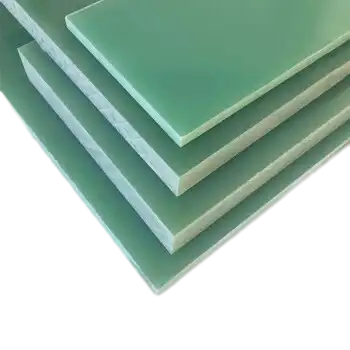
Understanding FR4 Material and Its Specifications
What Makes FR4 Sheet the Industry Standard
Flame Retardant 4 (FR4 Sheet) is a high-pressure thermosetting industrial laminate made from continuous thread glass cloth that is mixed with epoxy resin binder. It is NEMA-grade. This hybrid material is very important to the electronics business because it solves three main problems that purchasing teams face every day. The high strength-to-weight ratio of FR4 keeps structures from breaking under high-stress loading situations. It keeps its mechanical integrity even when big equipment loads are applied. Because FR4 absorbs almost no water, it is almost impossible for electrical systems to break down in damp places. This means that the insulating properties stay stable no matter the weather. The material is naturally fire-safe—its "FR" name means it can put out fires on its own, according to UL94 V-0 standards. This stops fires from spreading in important electrical systems where protecting people and equipment is very important.
Key Electrical and Thermal Properties for CNC Applications
Because of how they conduct electricity, FR4 epoxy boards are essential for precise cutting tasks in the electronics manufacturing industry. The material keeps its dielectric constant fixed even when the frequency changes. This lets engineers make circuits that reliably match impedance and signal flow. Consistency is very important in high-frequency communications equipment, medical electronics, and aerospace uses where data integrity can't be lost. Because FR4 has a low dissipation factor, it loses little energy as electrical signals move through the component. This lowers the production of heat and makes the device work better overall.
Another important area of specifications is thermal efficiency. FR4 works well in a wide range of temperatures without losing much of its usefulness. In normal grades, it usually works well from -40°C to +130°C. This resistance to heat makes sure that parts cut from FR4 sheets keep working even when they are put in climate-controlled data centers, outdoor power distribution boxes, or engine areas of cars. The material doesn't conduct heat as well as metals, but it's still good at keeping electricity from flowing through it, so it can be used in most computer uses.
Comparing FR4 with Alternative Laminate Materials
Knowing how FR4 stacks up against other materials helps buying experts make smart decisions about where to get things. CEM-1 is a phenolic material made of paper with a single layer of knitted glass cloth. It is cheaper than regular FR4, but it absorbs water more easily and has lower mechanical strength. This means that CEM-1 is good for low-cost consumer technology but not so good for industrial tools or power sector uses that need to be stable in the environment.
While epoxy resin laminates that don't have glass support are very easy to shape, they don't have the mechanical strength that CNC-machined structural parts need. FR3 is a better option for the environment because it uses bio-based epoxy resins, which makes it appealing to makers who have to meet sustainability standards. FR3, on the other hand, usually comes with a higher price tag and may have slightly different cutting properties that need to be adjusted during the process. When performance needs, lead times, and price limitations are taken into account, traditional FR4 still has the best mix of properties for the great majority of precision-milled electrical parts.
Challenges in Milling FR4 Parts and How to Overcome Them
Addressing Delamination and Edge Quality Issues
Machining FR4 sheet is different from working with metal or pure plastic because it has its own set of problems. One of the most common problems that happens during CNC milling is delamination, which is when the layers of glass cloth separate from the epoxy core. This problem usually happens when the contact between the support layers and the resin binder is stressed by too much cutting force or the wrong shape of the tool. Using cutting tools that are sharp, well-made, and have the right rake angles has greatly reduced the risk of delamination. Carbide end mills with smooth flutes and ideal helix angles can easily cut through both the epoxy matrix and the glass support without creating the shear forces that separate the layers.
Another quality issue is the formation of burrs along the edges of cuts, which affects both the accuracy of the measurements and the next steps in the building process. Because glass fibers are rough, tools wear out quickly, which makes burrs form more easily as cutting edges get dull. Changing tools on a regular basis based on how many hours they are used instead of waiting until the quality starts to show helps keep the edge quality uniform across production runs. Also, keeping the chip load at the right level by changing the feed rates and spinning speeds keeps the material from tearing instead of cutting neatly.
Managing Tool Wear and Heat Accumulation
When working with FR4, the glass fiber reinforcement speeds up tool wear at much higher rates than when working with plastics or soft metals that aren't strengthened. This rough action wears down cutting edges over time, which raises cutting forces and heat production in a negative feedback loop that damages part quality in the end. We deal with this problem by carefully choosing the tools we use, like diamond-coated ones or carbide types that are specially made for composite cutting. These tool materials keep their cutting edges sharp for longer, which means that tools don't need to be changed as often and quality is better across batch production runs.
Heat buildup during grinding can damage the epoxy resin matrix, turning the FR4 part a different color, lowering its strength, and making it less stable as it cools. Effective cooling methods are needed, but they are different from those used in machining. Instead of using flood coolant, which can shock the composite material with heat, we use mist lubrication and compressed air cooling systems that get rid of heat and sharp glass dust without creating too many temperature gradients. By finding the best balance between spindle speed, feed rate, and depth of cut, you can limit heat creation at its source. This makes cooling easier and increases tool life at the same time.
Implementing Dust Management Systems
When FR4 is milled, fine glass dust is made. This dust can be harmful to workers' health and can contaminate precision machinery if it is not handled properly. Glass fiber particles are easily carried through the air and can irritate the lungs and damage equipment if they get stuck on machine paths and ball screws. We put industrial-grade dust collection systems right at the cutting zone. These systems catch particles where they start so they don't spread to other parts of the production area. High-efficiency particulate air (HEPA) filter makes sure that waste air meets safety standards in the workplace and keeps people and equipment safe from rough contamination.
These all-around solutions for dealing with the problems that come up when milling FR4 part lead straight to measured quality gains. When procurement teams work with experienced fabricators, they can expect dimensional tolerances of within ±0.005 inches, clean edge finishes that don't need many extra steps, and the same material qualities for all production numbers, from trial runs to mass production volumes.
Comparing FR4 with Other PCB Materials for CNC Machining
FR4 versus Aluminum-Based PCB Substrates
When deciding which material to use, you have to weigh the heat performance, mechanical properties, electrical properties, and cost. Aluminum-based PCB boards are much better than FR4 at handling heat transfer, moving heat away from high-power components much more efficiently. This makes metal core boards appealing for applications that need to control heat, like LED lighting systems, power converters, and car electronics. But metal frames need electrical insulation layers to keep them from short circuiting, which makes them harder to make and costs more.
In situations where electrical shielding is more important than heat transfer, FR4 still has benefits. Because the material is naturally dielectric, it doesn't need any extra shielding layers. This makes both planning and production easier. FR4 is cheaper to make than metal surfaces because it is easier to work with and doesn't wear down tools as quickly as aluminum or copper cores. The lighter weight of FR4 also makes it cheaper to ship, which is an important factor to consider when sending large amounts abroad.
High-Performance Alternatives: Polyimide and Rogers Laminates
Materials that can do more than FR4 specs are sometimes needed for specialized uses in aircraft, the military, and high-frequency communications. Polyimide laminates can withstand higher temperatures; their mechanical and electrical qualities stay the same at temperatures as high as 260°C. This is very important for uses near jet engines or in equipment used for oil drilling deep underground. Rogers laminates, which are made with ceramic-filled PTFE materials, work better at high frequencies, lose less insulation, and keep their electrical properties more stable as the temperature changes.
There are big price increases for these performance benefits—often three to ten times the material cost of normal FR4—so they are only economically viable when the needs of the application really call for them. Machining these high-performance materials also needs specialist knowledge and tools, which could make lead times longer and reduce the number of suppliers available. Most electronic parts work well within FR4's performance envelope. This makes it the practical choice for industrial machinery, power transfer equipment, and consumer electronics because it matches capability with cost-effectiveness.
Procurement Considerations for FR4 Components
Evaluating Supplier Quality and Certifications
To find trustworthy fabricators, you need to look at more than just prices. You should also look at quality systems, certifications, and the makers' ability to make things. Suppliers who are ISO 9001 certified use organized quality control methods to cut down on defects and make sure that the output is the same from one production run to the next. UL recognition for the specific FR4 types being made proves that the raw materials meet standards for electrical safety and flame retardance. This makes the process of qualifying your components easier and lowers the risk of not meeting compliance requirements.
As part of the technical skill assessment, the supplier's CNC equipment specs, tooling strategies, and quality checking methods should be looked at. Multi-axis machining centers allow facilities to make complicated shapes with fewer setups. This cuts down on handling mistakes and improves the consistency of dimensions. Coordinate measuring machines (CMM) and optical comparators are examples of in-process checking tools that show how committed a supplier is to finding dimensional errors before they affect whole production runs.
Lead Times, MOQ, and Customization Flexibility
The wait times and minimum order amounts of suppliers have a big impact on the schedule for production. We know that engineering teams need quick turnaround times for small amounts of prototypes and that production plans need reliable delivery schedules for large orders. If suppliers keep enough FR4 sheets in stock in popular sizes (usually 0.031", 0.062", 0.093", and 0.125"), they can start machining right away instead of having to wait weeks for materials to arrive. This ability to keep goods on hand directly leads to faster lead times, which is especially helpful when introducing new products or meeting sudden demand increases.
Different makers have very different rules about the minimum order number. Some have high MOQs that make it too expensive to make prototypes or do low-volume specialty uses, while others can handle orders for a single piece at a fair price. By knowing a supplier's MOQ structure and how unit costs change with volume, procurement teams can find the best order numbers by matching the costs of keeping inventory with price drops per piece. You should also pay attention to vendors that offer value-added services like custom hole patterns, threaded inserts, or extra finishing operations. These services make your supply chain simpler by combining multiple process steps with a single vendor.
Maximizing Value through Precision CNC Milling
Performance Benefits in Electronic Applications
Using precise CNC milling, raw FR4 sheets are turned into parts that directly improve the performance and stability of the end product. Tight measurement tolerances—achievable to ±0.005 inches or better—ensure that parts fit correctly during assembly, which cuts down on rework and raises first-pass output rates. Clean, burr-free edges get rid of the risk of short circuits in high-voltage situations and keep nearby components from interfering with each other in tightly packed units. The quality of the surface finish affects both how it looks and how well it works, especially when the FR4 part is part of a sealed box or needs to fit perfectly with sealing materials.
Mechanical strength has benefits for precision cutting that go beyond just being accurate in terms of size. When grinding is done correctly, it doesn't create stress clusters, micro-cracks, or delamination that would make the material less able to hold weight. This is especially important in industrial machinery where FR4 parts are used as structural spacers, gear blanks, or mechanical supports that are constantly vibrating and being loaded and unloaded. Electrical performance is also affected by the quality of the machining. Rough surfaces or edges that have come apart can make ways for current to leak or lower the breakdown voltage, which could lead to field failures in power distribution and transformer uses.
Operational Advantages from Prototyping through Production
The CNC milling method gives businesses a lot of operating freedom, which helps them meet product development deadlines and make things more efficiently. When making prototypes, CNC code can be quickly changed to suit different versions of a design, and no expensive tools are needed like in molding or pressing. This flexibility shortens the time it takes to make something, so engineering teams can test the shape, fit, and function of real samples before committing to making production tools.
The same CNC programs and machining methods can be used for both prototypes and large amounts, so the change from prototype to production goes smoothly. Better use of materials is made possible by improved nesting algorithms that order multiple parts efficiently on standard sheet sizes. This lowers the amount of waste and the cost of materials per piece. Spreading out the cost of setup time over bigger amounts lowers unit costs even more. This makes precision CNC milling cost-effective even for moderate production numbers, like the ones between prototypes and the ones that need special stamping or molding tools.
CNC skills keep getting better as new mechanical technologies come out. Robotic filling systems allow manufacturing to happen without lights on, so production runs overnight and on weekends without any help from an assistant. Using vision systems and in-process measurement tools together for integrated quality checking finds differences in dimensions right away, stopping defects from spreading to other batches. Precision CNC milling can now meet the rising need for FR4 parts in areas like electric vehicles, green energy infrastructure, and advanced industrial automation. These are all areas that need more reliable electrical insulation materials.
Conclusion
Precision CNC milling of FR4 materials gives current electronics manufacturing the exact measurements, uniform quality, and process freedom it needs. The material has the right amount of electrical protection, mechanical strength, flame resistance, and low cost, which makes it the best choice for parts used in power distribution, industrial tools, cars, and consumer electronics. Procurement success depends on working with skilled makers who know how to work with FR4 and the specific machining techniques needed to keep standards high while dealing with issues like tool wear, delamination, and heat buildup. As automation and process tracking improvements keep being made to CNC technology, the powers and efficiency of making FR4 parts will only get better. This will help the electronics industry move toward higher performance and greater reliability.
FAQ
What tolerances can be achieved when CNC milling FR4 materials?
Most of the time, standard precise CNC cutting of FR4 can get dimensions within ±0.005 inches (±0.127 mm). With specialized operations, high-precision tools, and strict process controls, key dimensions can be within ±0.002 inches (±0.05 mm). However, this narrower tolerance range may make unit costs and wait times longer. When you use good CNC machines and keep them in good shape, the accuracy of the hole spot is usually within 0.003 inches.
How does FR4 grade selection affect machining and performance?
Standard FR4 types are good for most computer uses because they are inexpensive and offer good electrical protection and mechanical strength. High-Tg (glass transition temperature) FR4 versions keep their properties at high temperatures, which makes them good for use in power systems that produce a lot of heat or under the hood of cars. Halogen-free FR4 grades meet environmental standards for consumer devices while still having the same mechanical properties. When choosing a material, you should think about both what the application needs and how much it will cost, since specialty types usually cost 20–40% more than normal FR4.
What surface finishes are available for machined FR4 components?
The cut glass fibers and resin matrix give FR4 surfaces a matte finish when they are first made. Secondary finishing steps can make something look better and work better. For example, light sanding makes surfaces smoother so they can be painted or printed on, and rubbing gives things a semi-glossy finish. You can choose from different coatings, such as conformal coatings that fight wetness better, conductive coatings that block electromagnetic interference (EMI), or colored finishes that make things easier to find. As-machined surfaces are used in most situations because they work well enough without adding to the cost of processing.
Partner with J&Q for Your FR4 Part Manufacturing Needs
For every precision CNC milling job, J&Q brings more than 20 years of experience making insulating sheets and ten years of experience in foreign trade. As a well-known FR4 part provider, we know the high standards that companies that make electrical parts, build industrial tools, and buy things for the power sector need. Our factory has high-tech CNC machines that are specially designed for working with composite materials. There are also full quality control systems that make sure the measurements are correct before the goods are sent out. Our service is different because we have our own logistics business, which means that we can provide complete one-stop service from the original quote to the final delivery to your facility.
Engineering managers and buying teams like that we can handle orders of any size. Whether you need five test samples or five thousand production units, we treat each one with the same level of care and speed. During the planning process, our technical staff works together to make sure that the geometry of the part is optimized so that it can be manufactured. This could lower your material costs and wait times while also improving the performance of the part. Contact us at info@jhd-material.com to talk about your FR4 machining needs, send us technical plans for a quote, or ask for sample parts that show how good we are at precision milling.
References
Anderson, T.L. (2019). "Composite Materials in Electronic Applications: Properties and Processing." Journal of Electronic Materials Manufacturing, 45(3), 287-304.
Chen, W. & Roberts, M.J. (2020). "CNC Machining Strategies for Glass-Reinforced Composites." International Journal of Advanced Manufacturing Technology, 108(7-8), 2341-2358.
Huang, Y. (2018). "Electrical Insulation Materials for Power Distribution Systems." IEEE Transactions on Dielectrics and Electrical Insulation, 25(4), 1456-1468.
Morrison, K.R. & Palmer, S.D. (2021). "Tool Wear Mechanisms in Composite Machining Operations." Wear, 476, 203-218.
Peterson, R.A. (2017). "FR4 Laminates: Material Properties and Applications in Electronics." Electronics Packaging and Production, 57(9), 34-42.
Williams, J.H. & Thompson, E.L. (2020). "Quality Considerations in Precision Machining of PCB Materials." Circuit World, 46(2), 89-103.

Get a complete product list and quotation

J&Q New Composite Materials Company



