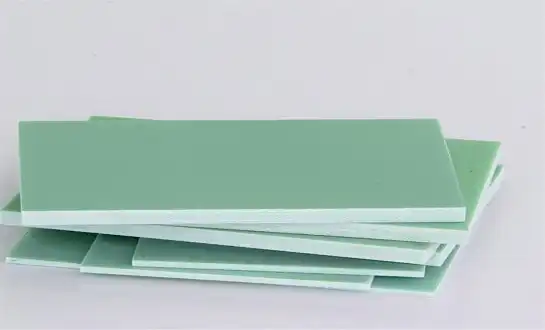
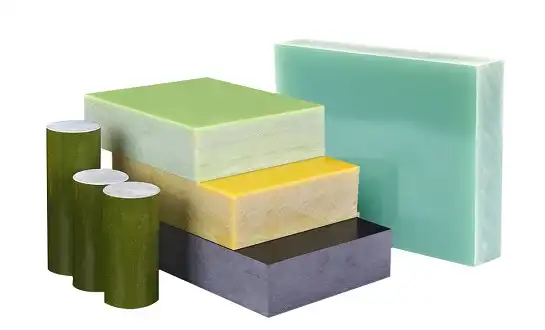
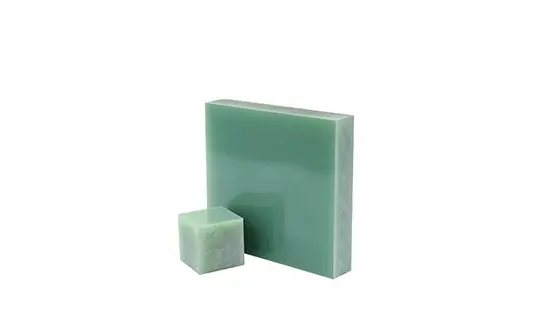
Material Processing Tips on CNC Machining FR4 and G10
To successfully machine FR4 sheet and G10 materials, you need to know how they are put together and use accurate methods. To keep these epoxy-glass laminates from delaminating, cut down on tool wear, and keep standards tight, controlled parameters are needed. The best way to do things is to find a mix between spinning speed, feed rate, tool selection, and heat and dust production. With the right method, these difficult materials can be turned into solid parts that can be used for mechanical tasks, electrical insulation, and PCB substrates. We've spent more than 20 years improving these methods so that producers all over the world can get the same results every time.
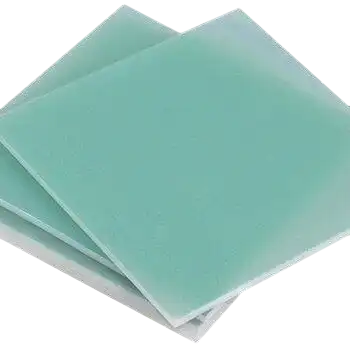
Understanding FR4 and G10 Materials for CNC Machining
Material Composition and Core Differences
FR4 sheet and G10 are both made of knitted fiberglass cloth that is saturated with epoxy resin, but their performance ratings are very different in important ways. Flame-retardant ingredients, usually bromine compounds or non-halogenated options, are used in FR4 sheet to make it meet UL94 V-0 standards for flammability. Because it goes out on its own, it is essential for safety-critical uses in power transfer equipment and consumer electronics. G10 doesn't have these flame retardants, but it is stronger and doesn't absorb water, so it is the best choice for high-stress structure parts in industrial machines.
The glass fiber support in both materials makes an abrasive environment that makes tool wear happen faster during cutting. Knowing about this hybrid nature helps engineering teams plan for problems before they slow down production. The epoxy matrix keeps the shape stable across a wide range of temperatures, but it also makes heat during cutting that can soften the resin if it's not handled properly.
Electrical and Mechanical Properties That Matter
In electrical uses, dielectric strength comes out as a key factor. At normal frequencies, FR4 sheet keeps its dielectric constant between 4.2 and 4.8, which lets PCB designers control the impedance in a reliable way. This stability is very important when making parts for high-frequency circuits and telecommunications equipment that can't have signal integrity affected. The low dissipation factor of the material keeps energy waste to a minimum, which helps power electronics and transformer systems work more efficiently.
The tensile strength and bending qualities of both materials are important to mechanical engineers. Tensile strengths of G10 sheet often reach 380 MPa, which means it has slightly better mechanical performance. This toughness makes it useful for gears, wear pads, and structural spaces where parts are loaded all the time. The uniformity of the thickness tolerance across production runs has a direct effect on the accuracy of the assembly, especially in automated manufacturing settings where changes in dimensions cause costly delays.
Environmental Handling and Safety Protocols
When you machine fiberglass-epoxy composites, you make fine dust that can be harmful to your lungs if you don't have the right ventilation systems. We've seen that using the right ventilation and dust collecting tools can cut down on flying particles by more than 90%. This keeps workers safe and the workplace clean. The dust particles can also build up on machinery, making it less accurate and wearing out moving parts faster than they should.
Keeping an eye on the temperature during processing stops the breakdown of resin, which weakens the qualities of the material. Too much heat buildup, which can happen because of dull tools or fast feed rates, can lead to coloring and microcracking that make electrical insulation less effective. Material safety datasheets list how to handle the material safely. They include suggestions for safety gear and airflow needs that are in line with OSHA rules for working with composite materials.
Challenges in CNC Machining FR4 and G10 and How to Overcome Them
Common Machining Issues and Root Causes
When these laminates are machined, delamination is the most common problem. This happens when the bond between the glass layers and the epoxy matrix breaks down because of mechanical stress. Most of the time, this split is caused by too much cutting force, bad tool design, or not enough support for the workpiece. The ends and corners of the stacked structure are where stress is highest, making them more likely to break. We've found that this type of failure is most likely to happen at entry and exit points during digging activities.
Chipping along cut edges makes measurements less accurate and makes visual flaws that might not be okay for parts that people can see. This effect gets worse when cutting tools are worn out or when feed rates are higher than what the material can handle. Because finished epoxy resin is weak, it doesn't tend to become continuous chips like metals do. Instead, it breaks into pieces, leaving rough surfaces that need extra work.
Because glass strands contain abrasive silicon, tool wear is much faster than when working with regular metals. Cutting edges made of carbide can lose their sharpness after just a few hours of constant use, which can affect both the quality of the surface and the accuracy of the measurements. This pattern of wear shows up as higher cutting forces, higher temperatures, and worsening edge quality, which makes other machine problems worse.
Optimizing Cutting Parameters for Quality Results
To get the best mix between output and surface quality, spindle speed and feed rate combinations need to be carefully calibrated. Higher spinning speeds—usually between 18,000 and 24,000 RPM for smaller diameter tools—make cuts that are smoother because they lower the load on each cutting edge. But too much speed without enough cooling makes contact heat, which softens the epoxy core. We suggest starting with modest settings and making small changes based on how chips form and how good the edges are.
Tool selection is a very important choice that affects the whole process of cutting. While diamond-coated carbide tools don't last as long as untreated ones, they usually last three to five times longer before they need to be replaced. The higher starting cost is worth it because there is less downtime and the standard is more consistent across production runs. By supporting both the entry and exit sides at the same time, compression routers with opposing helix angles push material toward the center and almost completely remove delamination on through-cuts.
Using coolant application does two things: it controls the temperature and gets rid of the chips. Air blast cooling works well for many tasks because it gets rid of waste and stops heat from building up. Mist coolant systems offer better cooling for tough jobs, but they require extra care when it comes to how well the fluids work with epoxy resins. It is important for dust extraction to run all the time and have enough wind to catch small particles as they are being made, before they can fly through the air or settle on machinery.
Case Study: Improving Dimensional Accuracy
A company that makes power tools came to us because they were having trouble with accuracy with insulation walls that were machined from FR4 sheet. Their old method produced differences in size greater than ±0.15mm, which led to problems with assembly further down the line. Analysis showed that flexural movement during cutting was caused by dull tools, too fast of feed rates, and poor workpiece clamping that let shaking happen.
We took a number of corrective actions that changed the results. The surface finish got much better when feed rates were cut by 30% and spinning speed was raised by 15%. Edge delamination went away totally when compression routers were used. Better workholding with vacuum supports cut down on movement and sound. The combined result cut the difference in dimensions to ±0.05mm, which met their assembly needs and cut the rate of scrap from 12% to less than 2%.
Best Practices for Precision and Efficiency in FR4 and G10 Processing
Machine Setup and Calibration Fundamentals
For precise work to be possible, the whole machine system needs to be rigidity. CNC cutters and mills must have very little movement when cutting, which means they need to be built well and be maintained properly. Dimensional errors and bad surface finish are directly caused by worn linear guides, loose spindle bearings, or not enough support for the column. Regular inspection and testing plans keep production quality from dropping over time.
Besides the structure of the machine, vibration control also includes making sure that tools are balanced and that the workpiece is supported. When spindles aren't adjusted, they create repeated forces that wear down bearings faster and leave chatter marks. When thin pieces of work are machined, their natural frequency may match up with the frequency of the cutting, causing resonance that makes the sound stronger. These problems can be solved by strategically placing support fixings and choosing cutting settings that don't cause resonant frequencies.
Workholding strategies need to take into account that laminates don't have as much compression strength as metals. If the clamping pressure is too high, the material can be crushed, which can cause localized distortion and stress clusters. Vacuum devices spread holding forces out over bigger areas, getting rid of point loads while still providing enough support. Custom soft jaws made from metal or plastic protect the surface of smaller parts from damage while keeping the FR4 sheet in place.
Drilling Techniques for Clean Holes
Standard metal-cutting drills don't work nearly as well as drill bit geometry that is especially made for composites. Brad point bits with center spurs allow for exact placement and less walking when entering. Included angle and web width affect chip evacuation and cutting forces; higher angles lower thrust but may make edge chipping worse. We got the best results when we used 118-degree point angles and modest helix angles, which are a good mix between chip removal and edge support.
Peck drilling cycles make holes better, especially when they are deeper than three times the width. Periodic pullback gets rid of chips stuck in the flutes and lets the machine cool down for a short time so that heat doesn't build up. At weak places in the structure, entry and exit backing plates support the laminate, making it almost impossible for the layers to separate or break. Even though they take longer to set up, these backing materials save money because they cut down on waste and get rid of the need for extra deburring.
Post-Machining Quality Assurance
Deburring gets rid of rough edges and free fibers that make handling dangerous and get in the way of assembly. For small production runs, manual deburring with abrasive pads or brushes is still popular because it gives you more options and doesn't require a lot of money to buy new tools. Automated deburring systems that use abrasive wheels or media rolling can handle higher numbers with more accuracy, but they need more setup time. The method that is chosen must get rid of flaws without rounding off important edges or changing sizes outside of tolerance bands.
Dimensional inspection makes sure that made parts meet the design requirements before they are put together or sent out. Coordinate measuring tools record real lengths compared to their official values, giving detailed information about complicated shapes. Trends are tracked over time by statistical process control, which shows how tools wear out or machines move before parts go beyond their tolerances. This proactive method keeps customers confident in the quality of the supplied goods and stops batches from being rejected.
Surface quality assessment includes visual checks for delamination, burning, or fiber pulling, and if needed, roughness factors are measured. These surface features have an impact on following processes like plating or joining, which makes them important quality traits that go beyond just looks. Setting clear acceptance standards that are in line with functional needs stops arguments and makes sure that parts work as they should in their final uses.
Procurement Considerations: Choosing the Right FR4 and G10 Sheets for Your CNC Projects
Certification and Supplier Evaluation Criteria
Material certifications show that a product meets the requirements set by the industry for electrical, mechanical, and flammability performance. UL recognition makes sure that flame resistance rates are correct, and ROHS compliance makes sure that international rules about dangerous chemicals are followed. It is important for procurement teams to check that material licenses refer to specific test standards, such as IPC-4101 for rigid laminates. This will make sure that the FR4 sheet and G10 sheet materials are consistent with design requirements and prevent costly approval delays.
Supplier reliability goes beyond offering reasonable prices and includes things like quality control systems and expert support. Companies that have ISO 9001 certification use organized ways to keep quality high, which lowers differences between batches. Giving thorough material datasheets with things like dielectric constant across frequency ranges, moisture absorption data, and thermal expansion factors lets engineers make smart choices while the product is being developed.
Material Alternatives and Application Matching
For RF and microwave uses where FR4 sheet dielectric losses are too high, Rogers laminates work better at high frequencies. Because they have lower dissipation factors and better dielectric constant limits, they can be used in systems that go up to GHz. Due to their high cost, they can only be used in situations where the improved electrical performance makes the investment worthwhile. Choosing the right material requires careful consideration of both technical needs and budget limitations.
Polyimide-based laminates are better at withstanding high temperatures than FR4 sheet, which can only work continuously at temperatures around 130°C. These materials are often required for use in aerospace and car under-hood uses, even though they are more expensive and harder to machine. By knowing the real working environment, you can avoid over-specifying materials that add cost without adding value.
Pricing Structures and Negotiation Strategies
When you commit to a certain volume, you usually get access to better pricing tiers that have a big effect on the costs of the project. Suppliers give savings that get bigger as the order size goes up. This is because handling costs go down as the production setup is used up. But buying teams have to weigh these saves against the costs of keeping inventory and the risk of materials becoming obsolete, especially for materials like FR4 sheet that don't last long or whose specs change over time.
In addition to the price of raw materials, lead time affects the total cost of ownership. For expedited shipments, there are extra freight costs that can be more than the value of small sales. Accurately planning needs and sharing predictions with suppliers allows for cost-effective standard shipping while keeping enough stock on hand. Minimum order quantities established by manufacturers reflect economic production batch sizes for specific grades and widths. Building ties with distributors who carry standard grades gives you options for smaller orders.
Conclusion
To do CNC cutting of FR4 sheet and G10 materials well, you need to have a good mix of technical understanding and real-world experience. Understanding the features of the material, finding the best cutting settings, and putting in place the right quality controls can turn difficult composites into reliable parts. Buying choices that include more than just price, like working with suppliers and making sure materials are certified, are important for keeping production going and making sure products work well. Environmental concerns and practices of continuous growth set manufacturers up to be successful in markets that are always changing. The methods and tactics described here have been improved over many years of use in the transportation, industry, and electrical sectors around the world.
FAQ
What causes delamination when machining FR4 sheet and how can it be prevented?
Too much cutting force can break the bond between the layers of glass cloth and epoxy resin, causing delamination. This type of failure can be avoided by using sharp tools with the right shape, slowing down the feed rate, and using compression routers that support both sides during through-cuts. Backing plates at the entry and exit points give the FR4 sheet drilling process more support.
How do I select between FR4 and G10 for my specific application?
FR4 sheet is good for things like PCB substrates and power equipment shields that need to be flame-resistant and electrically insulated and have a UL94 V-0 grade. For structural parts in industrial machines where flame retardancy is not important, G10 is the best choice because it is stronger and doesn't absorb water. The right material is chosen by looking at the temperature ranges, electrical needs, and government guidelines for the purpose.
What tool life should I expect when machining these materials?
Tool life depends a lot on the type of material, how it is machined, and the quality of the tool. When used continuously for 4 to 8 hours, uncoated carbide tools usually need to be replaced. Diamond-coated tools can last for 15 to 25 hours. Since cutting conditions have a big effect on wear rates, it's more accurate to check the surface quality and accuracy of the dimensions than to use random time intervals as markers.
Partner With J&Q for Superior FR4 Sheet Machining Solutions
J&Q has been making things for more than 20 years and has been dealing with other countries for more than 10 years. Our expert team knows how to handle the complicated issues that come up when cutting FR4 sheet and G10 materials. They can give you advice that is specific to your needs and helps you get the best results from your production. We have strict quality systems that make sure the features of the materials are the same from batch to batch. Our certifications also meet the UL and ROHS standards that your buyers want. Our combined transportation services make your supply chain easier by letting you get everything you need in one place, from finding materials to shipping them. If you need a dependable provider with technical know-how and quick service, email our team at info@jhd-material.com to talk about how we can help your industrial needs.
References
Coombs, Clyde F. "Printed Circuits Handbook, Seventh Edition." McGraw-Hill Education, 2016.
National Electrical Manufacturers Association. "NEMA LI 1-1998: Industrial Laminating Thermosetting Products." NEMA Standards Publication, 1998.
Kobayashi, Takeshi and Wada, Hiroshi. "Machining of Fiber Reinforced Plastics: Influence of Tool Geometry and Cutting Conditions on Surface Integrity." Journal of Composite Materials, Volume 42, Issue 8, 2008.
IPC Association Connecting Electronics Industries. "IPC-4101: Specification for Base Materials for Rigid and Multilayer Printed Boards." IPC Standards, 2020.
Hocheng, Hong and Tsao, C.C. "Comprehensive Analysis of Delamination in Drilling of Composite Materials with Various Drill Bits." Journal of Materials Processing Technology, Volume 140, 2003.
Underwriters Laboratories. "UL 94: Standard for Safety of Flammability of Plastic Materials for Parts in Devices and Appliances." UL Standards, 2018.

Get a complete product list and quotation

J&Q New Composite Materials Company