Precision CNC Machining of G10 Epoxy Sheets: Achieving Tight Tolerances for Aerospace Parts
To make aircraft parts with sub-millimeter accuracy, you need materials that are both strong mechanically and stable in terms of their size. It is made of continuous thread glass cloth that is saturated with epoxy resin, which makes G10 epoxy sheet stand out as a high-performance thermosetting laminate. Precision CNC machining techniques that take advantage of this material's natural properties—such as its high strength-to-weight ratio and low ability to absorb moisture—allow manufacturers to make important aerospace parts that can work in harsh conditions and keep tolerances of just a few thousandths of an inch.
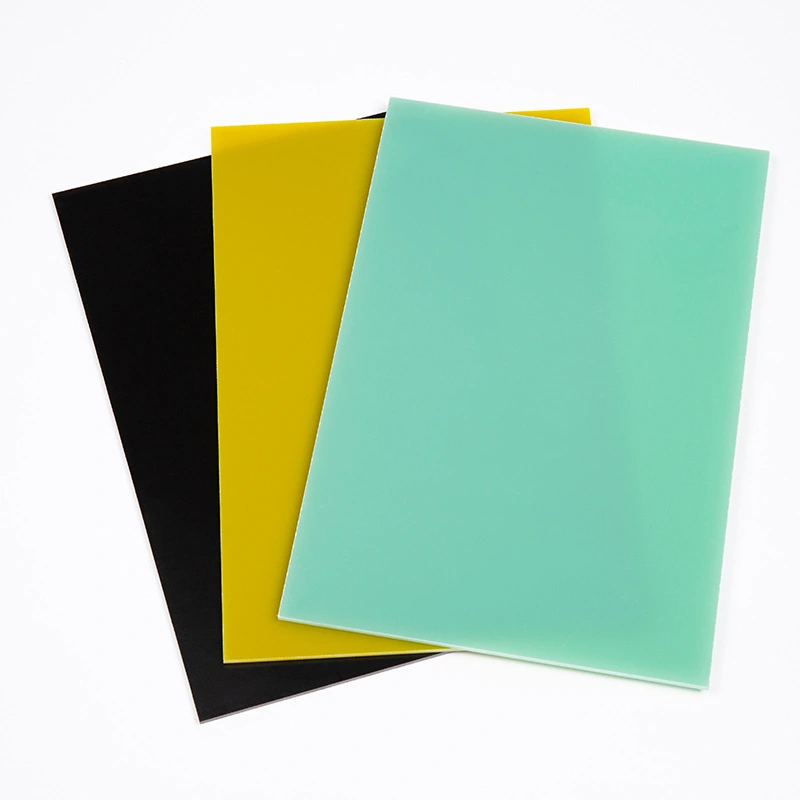
Understanding G10 Epoxy Sheets for Aerospace Applications
Material Composition and Manufacturing Process
G10 epoxy sheets are a complex engineering answer that was made after decades of study into materials used in aircraft. The first step in the manufacturing process is to order multiple layers of woven fiberglass cloth that have been thoroughly saturated with epoxy resin binders. Under controlled conditions with a lot of heat (usually up to 140° Celsius) and compression forces, these layers join together to form a single, uniform structure. This hardening process gets rid of any holes and makes sure that the density is the same throughout the thickness of the material. This sets the stage for reliable cutting results.
G10 epoxy sheet is different from cheaper options because it is made of continuous filaments, which spread the load evenly across the material structure. The braided glass design provides strength in more than one direction, unlike phenolic paper laminates that are weak in certain directions. This quality is very important for aerospace parts that have to deal with complicated stress patterns during flying operations or launch processes.
Key Properties Relevant to Aerospace Engineering
Glass epoxy laminates meet NEMA industrial standards and provide performance standards that are important for aircraft uses. The G10 epoxy sheet tensile strength is up to 40,000 psi and its compression strength is close to 65,000 psi. This makes it useful for structure uses where weight reduction is important. Flexural strengths of about 75,000 psi make sure that parts can withstand bending forces without permanently changing shape.
Another important benefit is that it has good thermal function. These G10 epoxy sheets can work in temperatures as high as 284° Fahrenheit and keep their shape through all the temperature ranges that are found in aircraft settings, from assembly on the ground to flying in the stratosphere. Because the material is resistant to thermal shock, quick changes in temperature don't cause stress fractures, which is a frequent way for less strong materials to break.
Electrical protection qualities make things more useful than just mechanical ones. Because these G10 epoxy sheets have a high dielectric strength and a low loss factor, they can be used for parts that need to be both structurally supported and electrically isolated. More and more, electrical and mechanical functions are being combined into smaller and smaller aerospace systems. This ability to do two things at once is very useful for current designs of airplanes and spacecraft.
Certification and Quality Standards
Aerospace-grade materials go through strict testing steps to make sure that they are consistent from batch to batch and can be tracked. ASTM guidelines set common ways to test G10 epoxy sheet for things like dimensional limits, mechanical properties, and thermal properties. MIL standards include military-specific rules for how well something works in battle or other extreme mission circumstances.
Water absorption is an important property, and high-quality G10 epoxy sheet should show less than 0.11% absorption after being submerged in water for 24 hours. This low water absorption keeps the insulation's shape in damp places and keeps it working well for as long as it's supposed to. When purchasing materials, purchasing managers should check test reports to make sure they meet all the standards and make sure the G10 epoxy sheets meet aircraft quality standards.
Challenges in CNC Machining of G10 Epoxy Sheets
Material Hardness and Tool Wear Considerations
The very high strength of G10 epoxy sheets makes them useful for aircraft uses, but it also makes them harder to machine. Cutting tools wear out faster on materials with hardness values above 110 on the M scale compared to metals or thermoplastics. Glass fibers that are abrasive and mixed in with the resin matrix work like tiny grinding particles to wear down tool tips over time during cutting operations.
The choice of tool has a direct effect on both the quality of the part and the cost of production. Normal high-speed steel cuts get dull quickly, so they need to be replaced more often, which raises the cost of each part. The operating life of carbide tools is longer, but they cost more to buy at first. Diamond-coated cutting tools for G10 epoxy sheet are the best option because they last longer and work better in production settings where many parts need the same specs.
Managing Delamination and Surface Integrity
G10 epoxy sheet resin is brittle, which means it can separate when cutting forces are higher than the material's cohesiveness limits. Too fast of feed rates or the wrong shape of the tool can cause underlying cracking where laminate layers separate, which can weaken the structure in ways that aren't obvious at first glance. When tools break through component surfaces, cutting forces push material layers apart, leaving exit edges especially open to damage.
When used in aerospace, no compromises can be made on the structural strength. G10 epoxy sheet parts that are vibrating, have different pressures, or are mechanically loaded must keep the laminate glue intact for the whole time they are in use. When something delaminates, it forms stress concentration places where cracks can start to spread, which could cause a catastrophic failure. To avoid these flaws, you need to pay close attention to the cutting settings and the design of the toolpath.
Achieving Dimensional Accuracy Under Varying Conditions
In aircraft manufacturing, success is measured in thousandths of an inch by how well the G10 epoxy sheet parts fit together. During machining, changes in temperature cause both the object and the cutting tools to expand, which can change their sizes beyond what is accepted if it is not controlled. Cutting friction creates heat that builds up in materials that don't carry heat well. This causes localized growth that makes it hard to measure accurately and control the size of things.
To keep tolerances within a certain range, the surroundings must be controlled and the G10 epoxy sheet machining process must be watched closely during creation. Temperature-stabilized machining conditions keep workpieces from expanding too much, and real-time measurement verification finds any problems before the processes are finished. A lot of the time, aerospace parts have complicated shapes and many important measurements, requiring quality control procedures that check each standard against engineering drawings.
Techniques to Achieve Tight Tolerances in CNC Machining of G10 Epoxy Sheets
Optimizing Cutting Parameters and Tooling Selection
For precision cutting to work, many factors affecting the quality of the cut and the accuracy of the dimensions must be balanced. Spindle speeds for G10 epoxy sheets need to be carefully adjusted—if they are too slow, the material tears instead of cutting neatly, and if they are too fast, heat builds up and causes the resin to break down. Feed rates also require accuracy, and slower progress usually leads to better surface finishes at the cost of slower production output.
People don't realize how important coolant methods are for keeping G10 epoxy sheet dimensional control. Flood cooling works well for many materials, but mist coolant or air blast methods work better for epoxy laminates because they get rid of chips without adding water, which could change the security of the layers. When choosing a cutting fluid, you should think about how well it works with the material and make sure that chemical reactions don't damage the resin's features.
Manufacturing aircraft parts is getting better thanks to new tooling technologies. Diamond-coated cuts for G10 epoxy sheet keep their sharp edges even after long production runs, so the surface finishes on many parts are the same. Specialized shapes, like compression spiral cutters, lower the risk of delamination by using opposite forces to hold laminate layers together while they are being cut. Investing in high-quality tools pays off by lowering scrap and improving the regularity of the dimensions.
Implementing Quality Control and Inspection Protocols
Before parts go into assembly, G10 epoxy sheet manufacturing needs to go through testing steps that make sure the dimensions are correct. Coordinate measuring tools can accurately measure to the micrometer level in complicated three-dimensional shapes by comparing the real measurements to the CAD specs. Surface profilometry measures the quality of the finish, making sure that machined areas have the right roughness for fitting properly with nearby parts.
Electrical property validation of the G10 epoxy sheet goes beyond just measuring dimensions to check the quality of something. Dielectric strength testing shows that insulation properties stay the same after machining, which is useful for aircraft uses where electrical isolation keeps systems from failing. Bond strength testing makes sure that the laminate is intact and finds underlying delamination that can't be seen but is very important for the structure's performance.
Statistical process control methods allow for constant growth by keeping an eye on changes in G10 epoxy sheet dimensions over multiple production runs. When tests show patterns of regular deviation, engineers change the machining settings ahead of time to keep the quality of the output and avoid making scrap. This method is based on data, which lowers variation and boosts trust in the manufacturing capability.
Machine Calibration and Environmental Controls
For precision machining of G10 epoxy sheet to work, the tools must be properly adjusted and kept up to high standards. Axis setting precision, spindle runout, and tool holder concentricity must all be checked regularly on CNC machines. Because the structure of the machine is thermally stable, dimensions don't change as parts warm up during operation. This keeps the machine's positional accuracy throughout production shifts.
Tolerances that can be reached for G10 epoxy sheet are affected by things in the environment. Temperature-controlled industrial places keep workpieces from expanding too much when they get hot, and controlling humidity stops materials from absorbing water, which could change their shape. Vibration isolation keeps sensitive machine tasks safe from outside disturbances that get through building structures, ensuring cutting tools stay on their predetermined paths.
Real-time tracking tools let you know right away if G10 epoxy sheet processes go outside of what is considered normal. Adaptive control technologies change feed rates or cutting levels automatically based on recorded forces. This keeps the best cutting conditions even when the material changes. When making parts for spacecraft, where accuracy in measurements has a direct effect on safety and performance, these advanced skills come in very handy.
Comparing G10 Epoxy Sheets with Other Materials for Aerospace Use
Performance Advantages Over FR4 Laminates
Even though FR4 is made of the same glass-epoxy material, its function is different because of the way it was made. Traditional FR4 has flame-retardant chemicals that contain bromine compounds, making it slightly less strong mechanically than pure G10 epoxy sheets. This trade-off is fine for many electricity uses, but it becomes important when the material needs to work at its best under heavy structural loads.
Another thing that sets them apart is their water resistance. It takes a little less water for G10 epoxy sheet products to absorb it, so they stay more stable in their shape in damp places. This increased resistance is helpful for aerospace applications that need to be mounted outside or work in damp conditions because it stops dimensional creep that could mess up the alignment of the assembly or cause maintenance problems.
Comparing Against Phenolic and Composite Alternatives
Phenolic laminates are cheaper, but they don't work as well in a number of ways that are important for aerospace uses. A lower mechanical strength makes it harder for them to replace G10 epoxy sheet in load-bearing roles, and a higher moisture absorption makes it impossible for precision parts to be stable in terms of size. Because their electrical qualities aren't as good as epoxy-based options, phenolic materials can only be used in less demanding situations.
Carbon fiber composites are stronger and lighter than G10 epoxy sheet, which makes them a good choice for main parts of airplanes where weight saves support higher costs. Because they are hard to machine and cost a lot of money, carbon fiber is only used in situations where efficiency demands it. Many aircraft parts can be made with glass epoxy materials, which work well enough and are much cheaper overall.
Supply Chain and Economic Considerations
When choosing materials, people don't just look at how well they work; they also look at how reliable the G10 epoxy sheet suppliers are and how much they cost. When compared to specialized composites, these laminates have lower supply risk because their supply chains are well-established and there are many qualified makers. Stable prices and known wait times help with planning production, keeping costs low while making sure materials are available.
Custom G10 epoxy sheet sizing lets you get the best deals on goods by cutting down on waste from stock materials that are too big. When a supplier offers cut-to-size services and precise thickness limits, they get rid of the need for extra processing steps. This lowers the total cost of acquisition beyond the price of the raw materials. Volume buying deals lower costs even more, which is especially helpful for aerospace companies that make parts in large amounts.
Procurement Strategies for G10 Epoxy Sheets in Aerospace Manufacturing
Supplier Qualification and Certification Requirements
Aerospace supply chains need G10 epoxy sheet suppliers to be carefully checked out in terms of quality systems, process controls, and paperwork that shows where the goods came from. Suppliers who are qualified keep certifications that show they meet aircraft quality standards, such as AS9100 management systems. Material test reports with performance data specific to each lot make it possible to make sure that the materials given meet the standards before production.
Long-term relationships with approved G10 epoxy sheet sellers have benefits that go beyond individual purchases. Established relationships with suppliers allow for technical collaboration to choose materials and improve processes, using the suppliers' knowledge to solve factory problems. As part of a preferred seller agreement, you may get specialized account support, faster order handling, and special treatment when there are supply shortages.
Balancing Cost, Quality, and Delivery Performance
Instead of just looking at the prices of individual G10 epoxy sheets, good buying plans look at the total cost of ownership. It's often more expensive to use cheaper materials that need more work or produce more waste than to use higher-quality materials that are easier to machine and keep their shape. By reducing the need for repairs and raising first-pass return rates, high-quality materials lower the overall cost of manufacturing.
Dependability in G10 epoxy sheet delivery has a direct effect on how well production works and how well material is managed. Maintaining regional delivery networks and sufficient stock levels by suppliers cuts down on wait times and frees up working capital that would otherwise be used to buy safety stock. When just-in-time supply is coordinated with production plans, cash flow is improved and materials are always available when manufacturing needs to restock.
Technical Support and the Ability to make Changes
Suppliers who give engineering consulting go above and beyond just providing G10 epoxy sheets by helping with the choice of materials and the development of new processes. Technical reps who have worked in the aerospace business know what the needs of applications are and can suggest solutions that will help manufacturers solve their problems. This knowledge is especially helpful when creating new parts or figuring out what's wrong with cutting.
Customization services for G10 epoxy sheet, such as precision thickness grinding, custom sizing, and special standards, cut down on the amount of extra processing that customers have to do in their own facilities. Pre-machined blocks or materials that are close to being in a net shape cut down on waste and speed up production. By judging sellers based on their wide range of skills, buying partners can make sure that they can meet changing manufacturing needs as product lines grow.
Conclusion
Precision CNC machining of glass epoxy laminates lets aircraft companies make parts that meet strict standards for size and performance. Understanding the features of the G10 epoxy sheet, solving cutting problems by choosing the right settings and tools, and putting in place strict quality controls all help to make sure that reliable parts are always made. Strategic relationships with qualified suppliers offer material security, technical support, and a stable supply chain, all of which are important for the success of aircraft manufacturing. As aircraft systems get more complex, the use of advanced materials and precise production methods continues to lead to new ways of designing parts and making them more efficiently.
FAQ
Why are epoxy glass laminates preferred for aerospace CNC machining?
These G10 epoxy sheet materials have a high mechanical strength, good physical stability, and don't absorb much water. Their balanced qualities make it possible to machine with very tight tolerances while keeping the structure's integrity in harsh aerospace situations like high and low temperatures and mechanical stress.
How can buyers verify aerospace-grade material certification?
Ask for G10 epoxy sheet material test records that show performance numbers for each lot, compliance with ASTM or MIL standards, and information on how the materials can be tracked. Suppliers who are qualified provide paperwork that includes readings of the physical properties, details on the thermal performance, and confirmation of the electrical characteristics.
What machining parameters most significantly affect tolerance achievement?
Dimensional precision for the G10 epoxy sheet is based on the spindle speed, feed rate, cutting depth, and choice of tool. It's just as important to use the right coolant and calibrate the machine correctly. Environmental controls that control temperature and humidity keep readings from being affected by thermal expansion.
How do these materials compare cost-wise to alternative aerospace materials?
Most of the time, G10 epoxy sheets are cheaper than carbon fiber composites and work better than phenolic options. Total cost factors like how easy they are to machine, how much they cost in scrap, and how much work goes into making them often make these materials better than choices that seem to be cheaper.
Partner with J&Q for Your Aerospace G10 Epoxy Sheet Requirements
We are your key partner for making aircraft parts because we have been making things for 20 years and know a lot about precision insulation materials. We are experts at making G10 epoxy sheets and can provide approved aerospace-grade materials that meet all the necessary standards. With custom sizing services, precise thickness limits, and choices for buying in bulk, you can make your production more efficient and waste less material.
In addition to providing G10 epoxy sheet for sale, we also offer full support, which includes expert advice, faster logistics through our combined transportation network, and helpful customer service that meets your unique needs. Get in touch with us at info@jhd-material.com to talk about your aerospace machining needs and find out how our one-stop service model can speed up your buying process while ensuring the quality of your materials and the stability of your supply.
References
National Electrical Manufacturers Association. "NEMA LI 1-1998: Industrial Laminating Thermosetting Products." Standards Publication, Rosslyn, Virginia, 1998.
Anderson, K.J., and Mitchell, R.P. "Machining Characteristics of Fiber-Reinforced Polymer Composites for Aerospace Applications." Journal of Manufacturing Science and Engineering, Vol. 134, No. 3, 2012.
Aerospace Industries Association. "Material Qualification Guidelines for Composite Laminates in Aircraft Structures." Technical Report AIA-001-2019, Washington, D.C., 2019.
Thompson, D.C., and Richards, L.M. "Thermal and Mechanical Property Optimization in Glass-Epoxy Laminate Systems." Composites Science and Technology, Vol. 58, No. 9, 1998.
Society of Manufacturing Engineers. "Precision Machining Technology: CNC Applications for Advanced Materials." SME Technical Paper Series, Dearborn, Michigan, 2017.
Miller, J.A. "Quality Assurance Protocols for Aerospace Component Manufacturing: Dimensional Control and Process Validation." Aerospace Engineering Quarterly, Vol. 45, No. 2, 2021.

Get a complete product list and quotation

J&Q New Composite Materials Company



