Optimizing CNC Parameters for Bakelite Sheet Drilling and Turning
Getting the most out of CNC settings for cutting and turning Bakelite sheets changes how precise electrical insulation parts are made. Because it is thermoset, this phenolic laminate material, which is also called SRBP (Synthetic Resin Bonded Paper), needs to be machined in a certain way. When spindle speeds, feed rates, and tool choices are all set up properly, common flaws like chipping and delamination are eliminated, and tool life is increased. When we machine phenolic materials, we've seen that optimizing the parameters directly cuts down on scrap by up to 30% and improves dimensional accuracy to levels below ±0.05mm. These are important metrics for companies that make electrical parts and industrial machinery that need reliable insulation solutions.
Understanding Bakelite Sheets and Their Machining Characteristics
Because of how they are made, phenolic laminates present both possibilities and difficulties when CNC operations are carried out. Knowing about these qualities helps engineering teams choose the best ways to do cutting.
Composition and Structural Properties
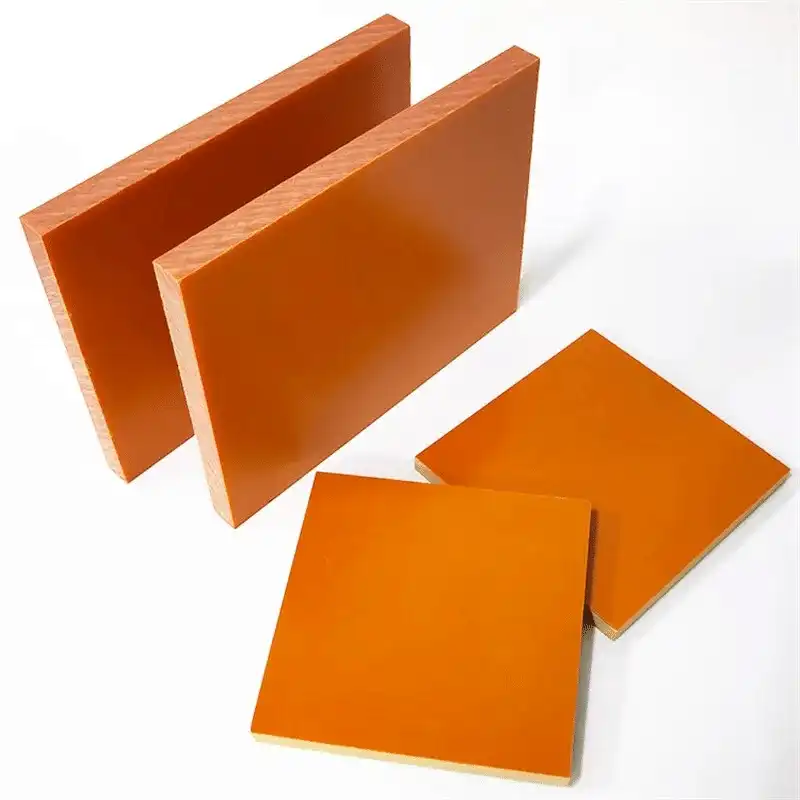
Layers of cellulose paper are mixed with phenol-formaldehyde glue to make bakelite sheets. These sheets are then hardened under heat and pressure to make a rigid thermoset material. The dielectric strength of this building is more than 12 kV/mm, and it can withstand temperatures up to 300°F (149°C). The hardened resin matrix forms a cross-linked molecular structure that can't be melted back down. This is what makes it truly different from thermoplastics.
Standard-grade phenolic laminates have a density of 1.35 to 1.45 g/cm³, which means they are about as strong as some types of wood. This density changes the cutting pressure and the amount of heat that is made during grinding.
Thermal Behavior During Machining
Managing heat is very important when working with phenolic materials because they don't conduct heat well (0.2 to 0.3 W/mK), which causes temperature to build up in certain areas. Bakelite sheets keep their heat at the cutting zone longer than metals that lose heat quickly. Too much heat weakens the resin glue, which changes the shape and surface of the product. High temperatures make materials more fragile, which increases the chance of micro-fractures near holes that have been made or surfaces that have been turned. By choosing the right parameters, you can keep production running smoothly and avoid heat damage.
Comparative Machining Behavior
When compared to FR4 epoxy laminates, phenolic paper-based products are more fragile and don't handle impacts as well. Because of this feature, cutting speeds and feed rates need to be changed to keep the edge from breaking. Rigid plastics like PVC or acetal can be machined in a rough way, but bakelite sheets work better with reasonable settings and sharp cutting edges. Because phenolic composites are rough, they wear down tools faster than pure plastics. For production runs, you need carbide tools because high-speed steel quickly becomes dull when working with big amounts. By knowing how these materials behave in certain ways, procurement teams can make correct budgets for tooling costs and repair processes.
Key CNC Parameters for Drilling Bakelite Sheets
Multiple cutting factors must be carefully coordinated in order to make holes in phenolic laminates that are clean and accurate. Over twenty years of experience in production have shown that there are certain sets of parameters that always lead to better results.
Spindle Speed and Feed Rate Optimization
For making holes in Bakelite sheets that are 3 to 10 mm in diameter, the best spindle speed range is usually between 2,000 and 4,000 RPM. Higher speeds lower the cutting forces per tooth rotation, which makes it less likely that the material will break. When you pair these speeds with feed rates of 50 to 150 mm/min, you get the right mix between output and heat production. Parameters need to be changed for thicker sheets—materials thicker than 15 mm profit from slower feed rates so that heat can escape between cutting flute passes. By keeping an eye on the real quality of the holes, you can fine-tune these settings to work best with different types of material and the environment.
Drill Bit Material and Geometry Selection
When working with phenolic laminates, carbide drill bits with point angles of 118 degrees work best. The normal point angle keeps the point from wandering during the first impact and gives the chip enough room to move. Two-flute designs work well for holes up to 10 mm in diameter, while three-flute designs are more stable in holes that are bigger. High-speed steel can still be used for prototypes or small-scale production, but the edges need to be sharpened often to keep them in good shape. Coating technologies, such as titanium nitride (TiN), make carbide tools last 40 to 60 percent longer by reducing friction and making them more resistant to heat. For stopping exit-side breakout, backing support under the cutting area is very important. Using spare phenolic or wood backing plates to absorb breakthrough forces makes sure that the hole leaves cleanly and without delamination.
Heat Management Strategies
When air blast cooling is directed at the cutting zone, it successfully controls heat buildup without adding wetness that could change the properties of the material. At 60 to 80 PSI, compressed air moves chips around and takes away heat. Some companies use spray systems with special cutting fluids that work well, but dry machining is still the usual method for electrical-grade phenolic materials. Peck drilling cycles are good for thick parts because they lower the bit every so often, which lets heat escape and chips fall away. Cycle depths of 2 to 3 mm before retraction stop chips from packing together and lower cutting temperatures by about 15 to 20°C.
CNC Turning Parameters Tailored for Bakelite Rods and Sheets
When working with Bakelite sheets, turning needs different methods than drilling because the cutting action is constant and the thickness of the material changes.
Speed and Feed Rate Calibration
Surface speeds of 60 to 120 meters per minute (200 to 400 SFM) make the edges of phenolic bars and sheets smooth. Changing this to spindle RPM relies on the width of the workpiece. To reach goal surface speeds, smaller diameters need higher rotational speeds. Feed rates of 0.08 to 0.15 mm per rotation are just right for getting rid of material and finishing the surface. When the diameter of a single piece of work changes, the parameters need to be changed. When turning bigger sizes, lowering the feed rate keeps cutting forces from being too high, which could lead to noise or deflection. As the final measurements get closer, reducing the depth of the cut gradually improves the accuracy of the dimensions and the quality of the surface.
Cutting Tool Selection and Geometry
Carbide plugs with rake angles that are neutral or slightly positive (0 to +5 degrees) keep the edge strong while reducing cutting forces. Positive rake shape lowers the amount of power needed, but it may make edges less durable in rough phenolic materials. Relief angles between 6 and 8 degrees keep the cutting edge from touching and provide enough support. The surface finish is greatly affected by the radius of the tool nose. Larger radii (0.8–1.2mm) make surfaces smoother but also increase the cutting forces in the radial direction. In uses with tight tolerances, smaller circles make it easier to control the sizes. The best mix of wear protection and thermal stability can be found in coated carbide grades made for composite materials. Because phenolic abrasiveness wears down cutting edges over time, tools need to be checked on a regular basis. Setting tool change intervals based on surface video instead of time makes sure that the quality of each output batch is the same.
Machining Environment Considerations
Dry turning is still the usual way to work with electrical-grade materials when cutting fluids would be too messy. Chip re-cutting and surface scratching can be avoided by making sure that air jets are placed correctly so that chips can escape. Dust collection systems catch the small particles that are made when things are turned, which protects both the health of the user and the parts of the machine. Machine shops that control the temperature keep the sizes of the materials stable, which is especially important when working to limits of less than 0.1 mm. Changes in temperature throughout the year can cause parts to expand and contract, which can change their end size if the growth is not controlled during machining.
Practical Case Studies and Performance Validation
Real-world examples show how optimizing CNC parameters can lead to measured changes in production and cost saves for companies that make things.
High-Volume Drilling for Electrical Components
A company that makes equipment that works with 5,000 phenolic insulation panels every month had problem rates of more than 8% because of edge chipping and hole delamination. At first, they used spindle speeds of 1,200 RPM and feed rates of 200 mm/min, which are numbers that come from metal cutting. After looking into it, we suggested raising the spindle speed to 3,200 RPM, lowering the feed rate to 100 mm/min, and setting up peck drilling cycles. The parameter tuning was finished by adding base support and upgrading to carbide drill bits with a TiN coating. The number of mistakes dropped to 1.2% after three production runs, according to the results. The tool life went from 800 holes per bit to 3,200 holes per bit, which cut the cost of tools by 75% and raised output by 18% by cutting down on rework.
Custom Turning for OEM Motor Components
A company that makes industrial motors needed phenolic insulation collars with a surface finish of less than 1.6 Ra. With the values they had before, they got finishes that were an average of 3.2 Ra and had dimensional differences of ±0.15mm, which is not good enough for bearing-interface parts. Changes made to the parameters included slowing down the cutting speed from 150 SFM to 90 SFM, using a two-pass machining approach with finishing cuts at 0.05 mm depth, and moving to carbide inserts with a 0.8 mm nose radius. With these changes, surface finishes stayed below 1.2 Ra and dimensions were controlled to within ±0.03mm. The improved process cut the number of rejections from 12% to less than 2%. This saved about $18,000 a year in wasted materials and helped meet delivery obligations that had previously needed faster shipping.
Procurement Considerations and Supplier Guidance for Bakelite Sheets
To find good Bakelite sheets that can be used for precise CNC cutting, you need to look at more than just prices when comparing different suppliers.
Material Grade Selection and Quality Indicators
Different types of phenolic are used for different things. For example, standard business grades are good for general insulation, while premium electrical grades meet strict insulating requirements. When it comes to machining, sheet accuracy is very important. Thickness errors should not be more than ±5% across the sheet surface. Material approvals, such as UL recognition and ROHS compliance, make sure that the materials can be used in electrical uses. Testing records for dielectric strength, flame protection, and mechanical features show that the material works as it should. Reliable providers keep track of each batch, which lets you connect the results of cutting to specific lots of material. Visual inspection shows quality signs, such as a smooth surface finish, uniform color throughout the length of the sheet, and the lack of holes or delamination. These all point to good manufacturing control. Problems with machining are often linked to look that isn't uniform.
Custom Sizing and Batch Consistency
When suppliers offer unique sheet measurements, less material is wasted and more time is spent on machining. Ordering sheets that are already cut to the exact sizes needed for a job cuts down on rough sized work and increases the rate at which materials are used. With custom thickness choices, engineers can describe exact sizes instead of having to cut down stock that is too big. For production runs that need the same machining settings on multiple sheets, batch uniformity is very important. Suppliers whose adhesive formulations are stable and whose production processes are under control give machines material that works the same way from one order to the next. When you order materials from single production lots for big jobs, you don't have to make as many changes to the parameters.
Supply Chain Reliability and Technical Support
Stable lead times are important for planning production because sellers who keep enough goods on hand keep production from being held up. Long-term supply deals can often get you better prices and make sure you can get materials when demand goes up. Technical help is what sets great providers apart from average ones. Being able to talk to application engineers who know how to deal with cutting problems is helpful for suggesting parameters and fixing problems. Suppliers who know how CNC machines work can offer kinds of materials that are best for certain types of machining.
Conclusion
Optimizing CNC factors for phenolic laminate cutting has a direct effect on how fast and well parts are made and how much it costs to make them. Smart choices about spinning speed, the right tools, and how to handle heat all work together to stop common problems and make tools last longer. The case studies show measurable benefits: regular parameter tuning can lower the number of defects by more than 80% and increase the life of a tool by 300%. To make the implementation work, you need to know how the materials work, choose good raw materials from dependable sources, and keep checking the machining results against the engineering specs. Combining academic knowledge with hands-on experimentation, engineering teams come up with the best ways to do things so that the standard is the same no matter how much they make.
FAQ
What spindle speed works best for drilling phenolic laminates?
For holes with sizes of 3 to 10 mm in standard-thickness phenolic sheets, the best tool speeds are between 2,000 and 4,000 RPM. Higher speeds lower the cutting forces per tooth, which lowers the risk of breaking the material. To keep heat from building up, speed may need to be slowed down for thicker materials or holes with a bigger diameter. To keep cutting conditions equal, you should always change the feed rate along with the spindle speed.
Can water-based coolants be used when machining electrical-grade materials?
For electrical-grade phenolic materials, dry cutting or air blast cooling is still the usual way to keep them from absorbing water, which could damage their dielectric qualities. There are specialized misting devices that use fluids that don't carry electricity, but they need to be carefully chosen. For heat control without contamination risks, most makers like to direct compressed air at the cutting zone.
How does phenolic machining differ from FR4 epoxy laminate processing?
When compared to FR4 glass-epoxy materials, phenolic paper-based laminates are more flimsy, so they need slower feed rates and sharper cutting edges to keep them from breaking. Most of the time, phenolic materials can be machined a little slower than FR4, but because they don't contain glass fibers, they wear down tools less quickly. When drilling, backing support is helpful for both types of materials.
Partner with J&Q for Superior Bakelite Sheet Solutions
Since more than 20 years ago, J&Q has been making precision-grade phenolic laminates that are designed to work with CNC machines. Our electrical-grade Bakelite sheets keep the thickness limits and resin spread that your machine centers need for results that can be repeated. We are a well-known bakelite sheet supplier and have done a lot of business with other countries. Because of this, we understand the technical needs that are influencing your buying choices, such as the need for good dielectric performance and stable dimensions under thermal stress. Our combined logistics services make delivery planning easy, getting rid of the complicated supply chain that throws off production schedules. Engineering support teams help you choose the right materials and make suggestions for cutting parameters that are best for your needs. Please email our expert staff at info@jhd-material.com to talk about your insulation material needs and to request samples that show how consistent our material is for machining.
References
Baekeland, L.H. (1909). "The Synthesis, Constitution, and Uses of Bakelite." Industrial & Engineering Chemistry Research, Vol. 1, pp. 149-161.
Michaeli, W., Greif, H., Kaufmann, H., & Vossebürger, F.J. (2003). "Machining of Thermoset Materials: Process Parameters and Quality Control." Plastics Technology Handbook, 4th Edition, Hanser Publications.
Society of Manufacturing Engineers (2018). "CNC Machining Parameters for Composite Materials." Composites Manufacturing Technical Report Series, SME Publication.
Kobayashi, A. (1999). "Tool Wear Mechanisms in Machining Phenolic Resin Composites." Journal of Materials Processing Technology, Vol. 89-90, pp. 302-308.
Weinert, K. & Kempmann, C. (2004). "Cutting Temperatures and Their Effects on Machining Behavior of Reinforced Plastics." CIRP Annals - Manufacturing Technology, Vol. 53, Issue 1, pp. 65-68.
American Society for Testing and Materials (2020). "ASTM D709-20: Standard Specification for Laminated Thermosetting Materials." ASTM International Standards for Electrical Insulation Materials.

Get a complete product list and quotation

J&Q New Composite Materials Company