Precision CNC Machined FR4 Epoxy Parts for the EV Battery Industry
As the number of electric vehicles on the road in the United States rises, pressure is building on manufacturers to create battery systems that are safe, efficient, and long-lasting. Precision CNC machined FR4 epoxy parts have become important components in this growth because they offer better electrical protection and mechanical stability in battery modules. A flame-resistant fiberglass plate filled with epoxy resin makes up the FR4 epoxy sheet. It has the thermal stability and dielectric strength needed to protect sensitive battery cells while working in harsh circumstances. This coming together of advanced material science and precision manufacturing directly addresses important issues related to managing heat, keeping electrical signals separate, and making sure that current EV battery assemblies are structurally reliable.
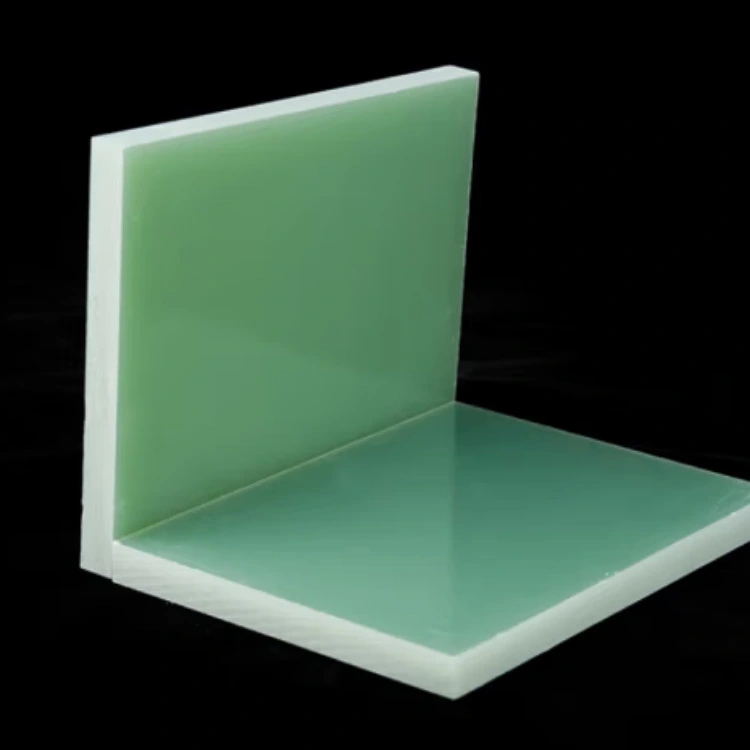
Understanding FR4 Epoxy Sheets and Their Critical Properties for EV Battery Applications
What Makes FR4 the Preferred Insulation Material
FR4 epoxy sheet material is made up of continuous filament glass cloth support that is fully mixed with epoxy resin binder while being heated and pressed under controlled conditions. This method makes a high-pressure thermosetting laminate that meets NEMA LI-1 standards. Each layer joins at the molecular level to make a structure that is all the same. The "FR" designation means that the material meets the UL 94 V-0 flammability grade. This means that it will put out a flame on its own within ten seconds, which is a very important safety trait that sets it apart from other materials that aren't flame-retardant.
To manufacture them, glass fibers are woven into cloth, organosilane binding agents are used to make the resin stick better, and then several prepreg layers are stacked and cured in an autoclave at high temperatures and pressures. This method gets rid of empty spaces and makes sure that thickness limits are always the same, which has a direct effect on how reliable battery insulation walls are.
Temperature Resistance and Dielectric Performance
To work in EV battery settings, materials must be able to keep their shape at temperatures ranging from -40°C to 130°C all the time, with peak resistance up to 180°C during thermal events. FR4 epoxy sheets have glass transition temperatures around 130°C, which is hot enough for most battery uses while still having a dielectric strength of more than 20 kV/mm. This electrical insulation resistance, which stays above 500 MΩ even when it's wet outside, keeps current from leaking between battery cells and grounding structures, preventing short circuits that could cause thermal runaway.
The low coefficient of thermal expansion (about 14 ppm/°C in the Z-axis) keeps the dimensions from changing too much during charge-discharge cycles, which is important for keeping the tight limits needed for battery pack assembly. Even though cells grow a little while they're working, FR4 epoxy parts stay in place and do their job of insulating without creating stress points or holes.
Material Comparison: Why FR4 Outperforms Alternatives
FR4 is better at resisting moisture and being strong than phenolic cotton laminates because it only absorbs 0.01% of water after 24 hours of soaking, while phenolic materials absorb 0.5 to 1.0%. This feature keeps the dimensions from changing and the dielectric from breaking down in damp places or marine settings that are common in automotive environments.
The starting prices of CEM-1 and paper-based composites are lower, but they don't have the temperature rating or mechanical longevity needed for battery safety barriers. Even though aluminum sheets are very good at transferring heat, they need extra layers of insulation and are very heavy, which lowers the efficiency of the vehicle. Pure fiberglass laminates that don't have flame-retardant chemicals are dangerous on fire, so they can't be used in battery applications even though they have good mechanical qualities. FR4 is the best choice for challenging EV battery insulation needs because it balances electrical performance, temperature stability, weight efficiency, and safety compliance.
The Value of Precision CNC Machining for FR4 Epoxy Parts in EV Batteries
Limitations of Traditional Manufacturing Methods
Traditional ways of cutting, like shearing, punching, or waterjet cutting, bring variation that lowers the accuracy of battery assembly. When cutting by hand, the edges are rough and the sizes are off by ±0.5mm to ±1.0mm, which is not acceptable when battery cells need to be placed within ±0.1mm limits. As production runs go on, punch dies wear out over time, causing variations between parts that force quality checkers to reject groups. Delamination along cut sides makes the insulation less stable, which could lead to electrical arcing while the battery is running.
These traditional methods also have trouble with complicated shapes, like curved holes for cell connections, angled slots for heat management channels, or precise mounting holes that line up with assembly tools. Fixing mistakes in measurements by hand takes more time and costs more money, which slows down high-volume battery production lines.
Achieving Tight Tolerances Through CNC Technology
With computer numerical control machining, digital CAD models can be turned straight into real FR4 epoxy sheet parts that can be made over and over again with an accuracy of ±0.05mm for thousands of parts. Multi-axis CNC cutters with carbide tools can cut complicated three-dimensional shapes in a single setup, which gets rid of the alignment mistakes that come with doing things by hand in several steps. Automated tool changes go from roughing to finishing to drilling without any help from a human, keeping the surface finishes below 3.2 Ra and the angles of the edges straight within 0.1° of what is required.
This accuracy directly raises the safety of the battery by making sure that the insulation shields fit snugly against the cell housings, leaving no holes that could let water or dirt in. The mounting holes line up perfectly with the fasteners, which spreads out the mechanical loads evenly and stops stress clusters that could lead to cracking when the car shakes. Engineers can make battery cells with very little space between them, which maximizes energy efficiency while still meeting electrical code requirements for insulation lengths.
Real-World Impact on Battery Assembly Quality
Assembly companies that use CNC machined FR4 epoxy parts say the quality has gotten better. For example, failure rates have gone from 3–5% to below 0.5%, and assembly time has gone down by 15-20% because the parts fit better. Because precision-cut cooling channels guide airflow exactly where thermal modeling suggests greatest heat generation, battery modules have better thermal consistency. Automotive Tier-1 makers have found that using CNC machined insulation spacers extends the cycle life of batteries, as the spacers lower the mechanical stress on the cell casings during charge-discharge expansion cycles.
Accurate measurements also make automatic assembly processes possible. For example, robotic pick-and-place systems need consistent part sizes to be able to place them at speeds of more than 60 units per minute. This improved manufacturing efficiency lowers the cost per kilowatt-hour of making batteries, which helps more people buy EVs.
How to Choose the Right FR4 Epoxy Sheet and CNC Machined Parts Supplier
Essential Material Specifications and Certifications
Purchasing teams should give more weight to suppliers who can show that their materials meet the requirements of the UL 94 V-0 flame rating and the ROHS rules on dangerous substances. Dielectric strength testing documents should show that the breakdown voltage is higher than what is needed for the application, which is usually between 15 and 20 kV/mm for battery insulation barriers. Documentation for mechanical properties must include flexural strength numbers (at least 415 MPa), which show how much weight the battery cell can hold when compressed.
Tolerances for thickness are an important standard that is often missed during the initial buying process. Standard FR4 epoxy sheet for industrial use has a thickness range of ±10%, but for battery applications, precise grades with ±0.1mm tolerances across sheet dimensions are needed. Temperature rating information should list the constant working temperature instead of the short-term peak values, preventing the material from being used incorrectly in temperatures that are too high for it to handle.
Evaluating Supplier Manufacturing Capabilities
When evaluating a provider, it is also important to look at their CNC machining skills, such as the precision of their tools, their quality control methods, and their ability to accommodate customer needs. Ask for proof of when machines are calibrated and what testing tools can do. Coordinate measuring machines that are accurate to within 0.01mm show that the company is dedicated to making high-quality products. Ask about minimum order amounts and wait times for prototypes; suppliers that offer small-batch custom runs show flexibility that is useful during the iteration phases of battery design.
Quality management systems that are approved to ISO 9001 standards guarantee uniform processes, and IATF 16949 certification for the automotive supply chain shows that the company has experience meeting the strict requirements of the industry. Established providers keep records of how produced parts are linked to the lot numbers of raw materials, which is important for fixing problems in the field if batteries fail.
Sample Testing and Supplier Audits
Before placing large orders, procurement managers should ask for sample parts to be made according to the exact design specifications. Send these examples to separate testing facilities to be checked for electrical breakdown voltage, dimensions using coordinate measuring equipment, and rapid aging under temperature cycling to make sure they will be stable in the long term. Check the accuracy of the technical documentation by comparing test results to certifications given by the seller.
Supplier site checks show practical skills that aren't shown in marketing materials. Keep an eye on how the raw materials are stored—climate-controlled stores keep damp out, which breaks down epoxy laminates before they can be machined. Check the state of the CNC equipment and the collection of tools; suppliers who keep special tools for repeat orders can turn around replenishment orders faster. Talk to people who work in quality control about how often samples are taken and how to take appropriate action to figure out if the organization has a quality culture.
Cost and Delivery Considerations: Optimizing Procurement for FR4 Epoxy Sheets and Machined Parts
Price Factors and Long-Term Value Analysis
The price of raw FR4 epoxy sheet changes depending on the markets for epoxy resin, the supply of glass fiber, and the cost of flame-retardant additives. Premium types have higher prices because they have to meet stricter standards. When comparing quotes from different suppliers, look at how the prices are structured, including things like material costs, machining complexity charges, tooling fees for special shapes, and setup costs that are spread out over a number of orders. All-inclusive prices from suppliers make it easier to compare costs and keep you from being surprised by extra costs during production.
The total cost of ownership should be included in the value study, not just the unit price. Higher-quality FR4 epoxy sheet that is more stable in terms of its dimensions cuts down on assembly rework and guarantee claims, which cancels out the higher original material costs. When suppliers buy modern CNC equipment, wait times get shorter, inventory costs go down, and just-in-time manufacturing methods become possible, which makes managing cash flow easier.
Lead Time Management and Order Flexibility
Standard FR4 epoxy sheet stock ships in three to five business days. Custom CNC machining can take an extra five to ten business days, based on the complexity of the part and the number of orders. Suppliers who keep standard sheet thicknesses in stock can get materials to you faster than those who have to buy materials for each job. Make it clear if the lead times given include getting the materials or just assume that they are in stock to avoid plan confusions that cause battery production starts to be delayed.
Different sellers have very different minimum order numbers. Some require full sheets to be bought, while others will accept smaller amounts at higher prices. Set up outline deals for expected yearly volumes while negotiating flexibility for prototype amounts and design changes that happen a lot during the development stages of batteries. Suppliers with vendor-managed inventory systems can keep materials in stock at their sites until they are released by customers on time, keeping supplies going while reducing inventory.
Strategic Sourcing Through Distribution Networks
Distributors that specialize in electrical insulation materials can get FR4 epoxy sheet from various manufacturers with just one buy order. This makes it easier to manage purchases and lowers the cost of shipping. Their expert sales teams often help with application engineering and material selection, which is very helpful for procurement managers who are trying to figure out new material specifications. Regional stores are kept up to date by established distribution networks that offer faster delivery than direct imports, which is very important for dealing with changes in production schedules or sudden rises in demand.
Buying in bulk from approved wholesalers also guarantees quality, since trustworthy distributors check manufacturer certifications and keep track of paperwork for traceability. This extra check by a third party lowers the risk of buying things compared to buying things from unreliable online markets where fake or low-quality goods sometimes show up.
Future Trends and Innovations in FR4 Epoxy Components for the EV Battery Industry
Advanced FR4 Formulations for Next-Generation Batteries
Scientists studying materials are making better FR4 epoxy sheet mixtures with ceramic nanoparticles that make them better at conducting heat while still being electrically insulating. This is to help high-energy-density battery packs deal with heat dissipation problems. Three to five times more thermal conductivity is found in these hybrid materials than in normal FR4 epoxy sheet. This means that smaller insulation walls can be used, which increases the volumetric energy density. Traditional brominated chemicals are being replaced by halogen-free flame retardant systems, which meet stricter environmental rules while still keeping UL 94 V-0 ratings.
Temperature-resistant versions with polyimide resins can work continuously at temperatures up to 180°C, which works with new battery chemistries that need to work at high temperatures to give more power. These high-tech materials are more expensive, but they make it possible to build batteries that weren't possible before because of the materials' thermal boundaries.
CNC Automation and Production Scalability
Adding automation to CNC machining speeds up output by using robotic loading systems, measuring tools automatically, and adaptive machining algorithms that change cutting settings in real time to get the best results. Lights-out manufacturing lets production go on during multiple shifts without any help from an operator. This cuts down on labor costs and improves delivery accuracy. Digital twin models make sure that machine programs work before they are used to cut real materials, which cuts down on the waste of trial and error that comes with introducing new products.
Procurement managers can see at any time through supplier websites how production is going with CNC equipment that is connected to the cloud. This eliminates the need for email questions and replaces them with automatic updates. This openness makes it easier to plan output more accurately and respond quickly to changes in the schedule that could affect when batteries are put together.
Strategic Recommendations for Procurement Teams
Battery manufacturers should build ties with several qualified FR4 epoxy sheet providers to make sure they have a steady supply of materials in case of material shortages or geopolitical problems that affect the supply lines for raw materials. Set up two different sources for important parts while keeping relationships with your main suppliers that reward you for buying in bulk by giving you better prices and more space. Take part in partner business reviews every three months to talk about technology roadmaps, capacity expansions, and quality improvement projects. This will put your company in a better situation to get new ideas early in the development cycle.
Professionals in procurement should keep an eye on changes in the industry, such as new solid-state battery technologies that may need completely different insulation material qualities. Participate with providers in joint development projects that make changes to materials to meet new application needs. This will give you a competitive edge by giving you unique solutions that your rivals can't copy.
Conclusion
When modern FR4 epoxy materials and precise CNC machining come together, it makes it possible for next-generation EV battery systems that need to be safer, work better, and be made more efficiently than ever before. Procurement experts can make smart choices that improve battery quality and cut costs by learning about the features of materials, the skills of suppliers, and new technologies. When FR4 epoxy sheet parts are properly defined, they offer technical benefits like better electrical insulation, thermal stability, and mechanical dependability. These benefits directly improve battery safety and longevity.
FAQ
What thickness options are available for FR4 epoxy sheets used in battery applications?
The standard thickness of a FR4 epoxy sheet is between 0.2 mm and 50 mm. Battery insulation parts usually use widths between 1.0 mm and 3.0 mm, which are a good mix between strength and weight. Precision grades keep thickness limits within ±0.1mm, which is important for battery systems that need uniform insulation lengths. For structural uses, like battery module frames that need to be able to hold weight, thicker parts up to 6 mm are used.
How does CNC machining improve FR4 part reliability compared to stamping?
CNC machining gets rid of the edge delamination and microcracking that happen a lot in pressed FR4 parts. These problems can spread during thermal cycles and make the insulation less effective. CNC processes use controlled cutting speeds and tool shapes to make edges that are smooth with little damage below the surface. This keeps the material's dielectric strength throughout the cross-section of the part. This dependability is especially important for safety-certified battery applications.
What lead times should procurement teams expect for custom CNC machined FR4 components?
After the design is approved, prototype numbers usually take ten to fifteen business days, which includes getting the materials and inspecting the first product. Orders for a lot of parts take three to four weeks to make, based on how complicated the part is and how big the order is. For repeat orders, wait times are cut to two weeks by framework agreements with established suppliers who keep their inventory ready.
Partner with J&Q for Your FR4 Epoxy Sheet Requirements
J&Q has been making electrical insulation products for more than 20 years and has also been trading internationally for ten years, helping clients in the energy, automobile, and electrical sectors across North America. We can do CNC machining in-house to make precise FR4 epoxy sheet parts that meet the strict standards of EV battery assemblies. These parts come with a full set of quality certifications, such as UL recognition and ROHS compliance. Our large collection of standard FR4 grades lets us make prototypes quickly and also makes it possible for us to make custom formulas for specific uses. Our combined transportation network makes delivery planning easy, so you don't have to deal with a bunch of different suppliers for things like materials, machining, and freight. Email our technical sales team at info@jhd-material.com to talk about your unique battery insulation needs and to ask for sample parts that show how well we can machine precision parts. As an established FR4 epoxy sheet supplier with experience in the automotive supply chain, we can help you with the production of your EV batteries from the creation of prototypes to mass production.
References
National Electrical Manufacturers Association. (2021). NEMA Standards Publication LI 1-2021: Industrial Laminating Thermosetting Products. Rosslyn, VA: NEMA.
Underwriters Laboratories. (2020). UL 94: Standard for Safety of Flammability of Plastic Materials for Parts in Devices and Appliances. Northbrook, IL: UL LLC.
Society of Automotive Engineers. (2022). SAE J2464: Electric and Hybrid Electric Vehicle Rechargeable Energy Storage System (RESS) Safety and Abuse Testing. Warrendale, PA: SAE International.
American Society for Testing and Materials. (2019). ASTM D3638-20: Standard Test Method for Comparative Tracking Index of Electrical Insulating Materials. West Conshohocken, PA: ASTM International.
Institute of Electrical and Electronics Engineers. (2021). IEEE 1625: Standard for Rechargeable Batteries for Multi-Cell Mobile Computing Devices. Piscataway, NJ: IEEE Standards Association.
International Organization for Standardization. (2020). ISO 6469-3:2021 Electrically Propelled Road Vehicles—Safety Specifications—Part 3: Protection of Persons Against Electric Shock. Geneva, Switzerland: ISO Central Secretariat.

Get a complete product list and quotation

J&Q New Composite Materials Company



