Waterjet vs. CNC Milling: Which is Better for Cutting NEMA CE Sheets?
For making things out of NEMA CE sheets, the choice between waterjet cutting and CNC grinding relies on the job. Waterjet is great for keeping the integrity of materials by cutting them cold without putting them under any temperature stress. This makes it perfect for keeping electrical certification and coating bonding. CNC cutting is faster and more accurate than other methods for making complex shapes and threaded holes. When used correctly, both methods give solid results, but knowing what makes each one better helps buying teams match cutting technology to specific enclosure needs while still meeting compliance standards.
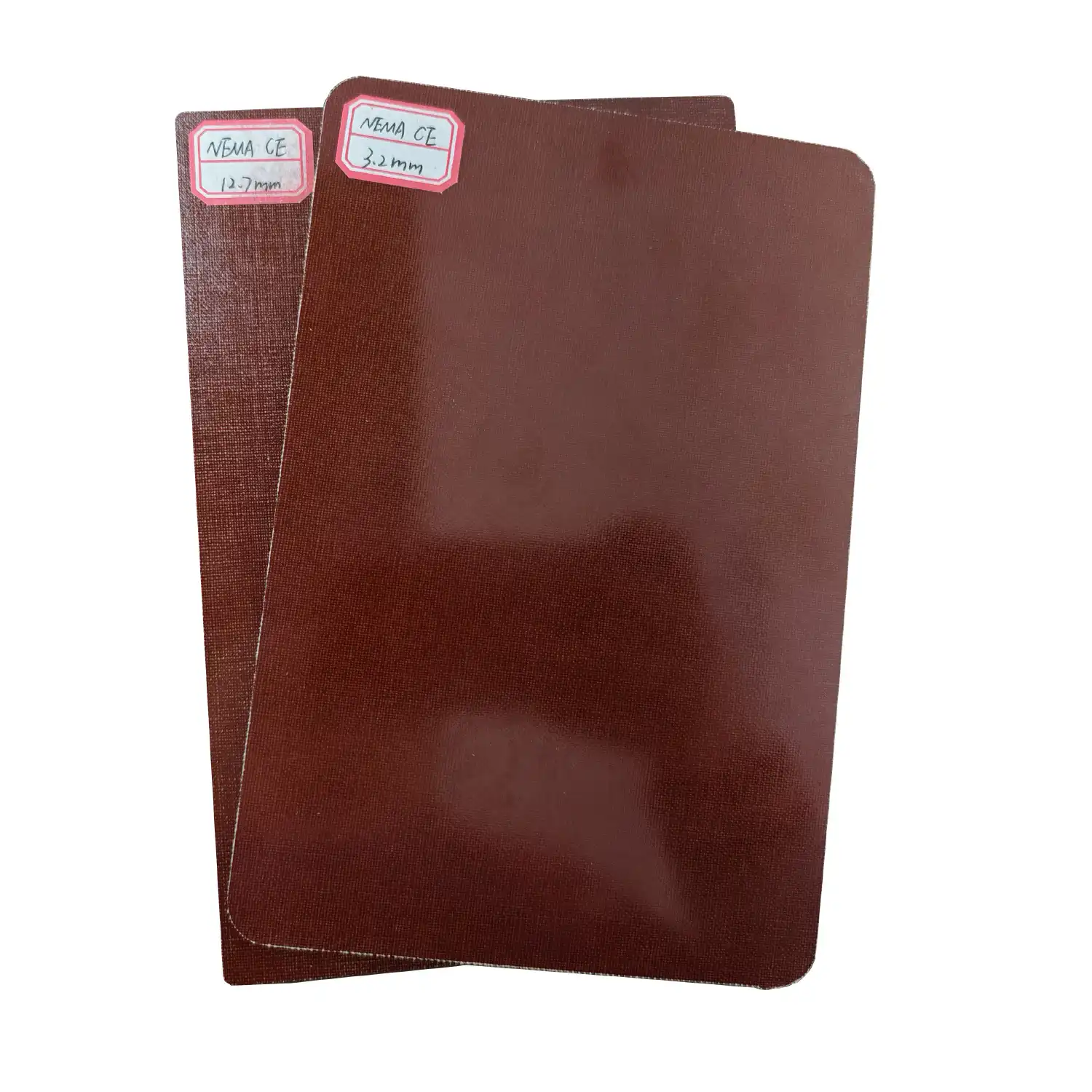
Understanding NEMA CE Sheets and Their Technical Requirements
Material Composition and Performance Characteristics
Under high pressure and heat, NEMA CE sheets join layers of cotton canvas cloth with phenolic resin to make a thermoset laminate with special properties. The phenolic glue provides electrical protection and chemical resistance, while the canvas weave provides excellent resistance to impact and mechanical toughness. This mixed structure makes the material very useful for uses that are subject to both mechanical stress and electrical contact.
These laminates usually keep temperatures around 125°C to 130°C all the time. They are called Class B insulation systems. It has a M scale specific gravity of 100 to 105 and a specific gravity of 1.35 to 1.38. In the long direction, the flexural strength is higher than 15,000 psi, showing strong mechanical performance under load. Dielectric strength changes depending on thickness and moisture content, so it's important to prepare materials and cut them precisely to keep electrical specs.
Critical Cutting Considerations for Certification Compliance
Phenolic cotton laminates are hard to machine in certain ways that affect the validity of the approval. The cotton support takes in water from the air's dampness, which changes how stable the dimensions are while it's being cut and then put together. Too much heat during the manufacturing process turns plastic into carbon, which lowers its mechanical strength and dielectric qualities. The quality of the cut edge determines whether parts get tiny cracks that spread when they are heated and cooled or when they are vibrated.
It's especially important to keep thickness limits tight in switchgear applications where stacked parts need to be precisely spaced for arc barriers and creepage distances. How well secondary coats or glue stick to parts that have been made depends on the quality of the surface finish. Knowing these standards for each material helps you figure out which cutting method will keep the qualities that the certification depends on.
Waterjet Cutting for NEMA CE Sheets – Features and Benefits
The Cold-Cutting Advantage
At pressures of up to 60,000 psi, waterjet devices push abrasive particles through a directed stream. This removes material without making heat. This feature of cold-cutting keeps the phenolic resin from breaking down at high temperatures and keeps leftover stresses from being introduced that could cause bending in later operations. The process keeps the material's qualities up to the edge where it is cut, so the dielectric strength stays the same and there are no heat-affected zones that lower the insulation's performance.
The technology works well with different thicknesses, so it can cut NEMA CE sheets from thin panels to thick structure plates without having to change tools or make changes to the process. It's easy to make complex shapes with tight radius curves because you don't have to do multiple setups or extra finishing steps. This flexibility is especially helpful when making prototypes that need to be changed quickly across different shapes.
Edge Quality and Material Integrity
Cutting parts with a waterjet leaves parts with smooth edges and few burrs, which means less work to remove the burrs and accurate measurements. There are no mechanical cutting forces, so there are no worries about the fabric layers coming apart. This is a typical way for laminates to fail when the wrong tool speeds or feed rates put too much stress on the structure. Clean edges help the parts fit together better and make glued or fixed joints more reliable.
But waterjet cutting brings up new issues that buying teams need to think about. When compared to rotary cutting methods, this process works more slowly, which slows down the production of big batches. The costs of buying and maintaining equipment are still high, which could affect the economy of each unit for high-volume uses. Using abrasives and treating water makes operations more complicated, which smaller fabricators may find hard to handle reliably.
CNC Milling for NEMA CE Sheets – Features and Benefits
Precision and Production Efficiency
In CNC milling, material is removed by mechanical splitting with carbide cutting tools that spin at controlled speeds. This subtractive method is great for uses that need tight tolerances across multiple parts because it is very accurate and repeatable in terms of dimensions. These days, CNC machines can do complicated three-dimensional shapes like counterbores, curved surfaces, and pocket designs that waterjet cutting can't do.
A big benefit is that production is faster, especially for medium to large batches. Once they are set up, CNC mills quickly make similar parts with little help from a user. Tool path optimization cuts down on cycle times without sacrificing quality. This makes production more cost-effective as production numbers rise. The technology works well with automatic systems for moving materials, which helps with lean production processes.
Thermal Management and Tool Selection
When you machine NEMA CE sheets, the cutting edges rub against the material, which makes heat. When the resin material gets too hot, it turns into carbon, which makes the surfaces dark and brittle and weakens their mechanical and electrical qualities. For avoiding heat damage, it is important to use the right cutting settings, such as spindle speed, feed rate, and depth of cut. Carbide tools work much better than high-speed steel ones because they keep their sharp edges, which lowers the cutting forces and heat production.
Phosphoric dust can be harmful to your health and can also damage sensitive electronic parts, so dust collection systems need to be very good at catching it. Tool wear rates depend on how hard and rough the material is, so they need to be checked and replaced regularly to keep the edge quality. Knowing these operational standards helps buyers decide if possible suppliers have the process controls needed to keep quality high across all production runs.
Waterjet vs. CNC Milling – Comparative Analysis for Cutting NEMA CE Sheets
Thermal Impact on Material Properties
The main difference between these methods is how heat is added during the cutting process. The waterjet keeps the material at the same temperature throughout the process, so there is no chance of the resin breaking down or the size changing due to heat expansion. When electrical approval hinges on keeping the original properties of the material to cut edges, this trait becomes very important. When CNC milling, frictional heating happens, which needs to be carefully managed by choosing the right tools and cutting settings so that the material's performance isn't affected.
The temperature neutrality of waterjet is especially useful for tasks that involve covered surfaces. Protective finishes and treatments that prevent rust stay on the cut edge, so there's no need to seal or recoat the edge. After milling, the edges may need to be treated to restore safety, which adds steps and costs to the manufacturing process.
Geometric Capabilities and Production Flexibility
CNC milling works great when parts need more than just outline cutting. Milling processes make it easy to make threaded holes, precise slots, chamfered edges, and surfaces with more than one level. Milling is a geometrically flexible tool that can be used to make switchgear systems with precise alignment features, bus bar fixing holes, and threaded inserts. Waterjet cutting is great for cutting two-dimensional shapes, but it can't make features that need controlled depth or areas that are at an angle.
The amount of production has a big effect on how well an economy can do. Waterjet is worth the money for custom cases, prototypes, and small to medium-sized batches where it is easier to set up and the material is better preserved than faster cutting speeds. When you buy more, CNC cutting becomes more competitive because the costs per unit go down because the setup costs are spread out over more units. Figuring out how you usually place orders helps you match the right technology to your buying needs.
Quality Assurance and Certification Maintenance
Both methods get the exact measurements that electrical covers need, but they do so in different ways. Waterjet cutting gets rid of the factors that affect tool wear, so the quality of the edge stays the same throughout production runs without any changes. To keep quality levels at the start, CNC milling needs to keep an eye on the state of the tools and change them every so often. When setting acceptance standards and sampling rates, dimensional inspection methods need to take these differences into account.
To keep the NEMA CE sheet approval, cutting methods must not violate the material's standards. Suppliers should show proof that their process controls keep the dielectric strength, bending qualities, and physical stability. By asking for material property testing from the cut edges, you can check that the manufacturing methods keep qualities that are important for certification. Instead of just using equipment lists, procurement teams make sure that projects are completed correctly by trying the skills of suppliers.
Making the Right Choice for Your Procurement Needs
Aligning Technology with Application Requirements
Waterjet can protect material qualities and protective coatings without adding thermal stress, which is helpful for transformer makers who put a high priority on thermal protection and arc resistance. The cold-cutting method makes sure that insulation walls keep their full dielectric strength all the way to the edges of components. This is very important for high-voltage situations where a partial discharge could cause equipment failure.
The geometric features of CNC milling are very important for automotive part makers who make battery pack barriers with precise mounting features and heat management holes. The technology makes complicated forms with threaded holes, alignment pins, and multi-level surfaces in a single setup. This makes the building process simpler while keeping the tolerances between parts tight.
CNC milling is used by switchgear makers who need exact assembly alignment, structural support frames with bus bar mounting holes, and cable management features. Integrated machining centers can do all the work without having to be moved around several times, which is helpful for applications that need to do both profile cutting and precision drilling.
Supplier Evaluation Criteria
In addition to the capabilities of the tools, the process documentation, quality systems, and expert help should also be looked at when choosing a seller. Manufacturers who keep their ISO 9001 license show that they use an organized approach to quality management that cuts down on variation and makes shipping more consistent. Material traceability systems that connect certified raw materials to finished parts give electricity certification checks the proof they need.
The ability to work together technically is what sets key partners apart from adequate sellers. When engineers help with design optimization, they look for ways to cut costs by making shapes that are easier to make. Suppliers who know a lot about a material can suggest grade choices that balance performance needs with cost concerns. When problems happen after the sale, after-sales help like fast replacement parts and technical fixing keep production plans safe.
Knowing what causes wait times helps buying teams make good plans. Setting up a waterjet cutter usually takes less time, which could speed up the delivery of prototypes and allow for quick design changes. CNC cutting uses libraries of tools and programs for making repeat parts, which speeds up order delivery after the initial development phase is over.
Conclusion
To choose between waterjet and CNC cutting for making NEMA CE sheets, you need to fit the strengths of each technology to the needs of the application. Waterjet is great for cold-cutting materials while keeping their properties and protected coatings. It's perfect for situations where electricity safety and temperature sensitivity are the most important factors. CNC milling has faster speeds and better physical powers for making parts with complex shapes in large quantities. It's not always the case that one technology works better than the other. The key to success is matching the cutting methods to the project needs, output volumes, and legal requirements. Using experienced suppliers who know about both technologies makes sure that choices about what to buy support quality, keeping certifications up to date, and business efficiency throughout the lifecycle of the product.
FAQ
What factors determine whether waterjet or CNC milling better suits my project?
Technology choice is based on how complicated the application is. Waterjet's cold-cutting and coating retention are useful for parts that only need to be profile-cut while keeping the material's qualities. CNC milling's geometric flexibility is needed for parts that need counterbores, threaded holes, or areas with more than one level. How much you make is important. For example, waterjet is good for special jobs and small runs, while CNC milling costs go down as you make more.
How do cutting methods affect NEMA CE certification compliance?
When used correctly, both systems keep their certification. Thermal harm that could affect dielectric qualities can't happen with waterjet, but the right settings are needed for CNC milling to keep the resin from carbonizing. Edge property testing is one way for suppliers to show that their process controls keep the material's specs. Maintenance of certification relies more on how the process is managed than on the type of tools used.
Can suppliers provide both cutting technologies for different components?
Fabricators who have been in business for a while usually have both skills and can match technology to the needs of the parts in setups. This adaptability makes cost and quality better on complicated projects that need a range of shapes. When you look at different sources, you can save money by combining your searches and working together better on technical issues.
Ready to Source High-Quality NEMA CE Sheet Components?
Over twenty years of specialized knowledge have helped J&Q make precise electrical insulation parts for tough industrial uses. Our integrated production plant has both high-tech waterjet systems and exact CNC milling centers, so we can match the right cutting technology to the needs of your parts. We know that electrical enclosure projects can't risk sacrificing quality. That's why our ISO-certified quality systems and material traceability methods make sure that every part meets the standards of the specifications while still upholding the integrity of the certification.
As a trusted provider to electrical equipment makers around the world and an expert NEMA CE sheet supplier, we offer technical advice during design development, helping engineering teams find the best geometries for manufacturing efficiency without sacrificing performance. Our focused logistics services make foreign shipments easier, cutting down on lead times and making the buying process simpler. Whether you need a few prototypes or a lot of them for production, our expert team is ready to talk with you about the best cutting methods, material grades, and delivery times for your project. Email our engineering team at info@jhd-material.com to talk about how our manufacturing skills can help you with your next electrical casing project by delivering high-quality parts on time.
References
National Electrical Manufacturers Association. (2019). NEMA Standards Publication LI 1-1998 (R2019): Industrial Laminated Thermosetting Products. Rosslyn, VA: National Electrical Manufacturers Association.
Hashish, M. (2018). "Waterjet Machining of Advanced Composites: A Comprehensive Review." Journal of Manufacturing Science and Engineering, 140(8), Article 080801.
Chen, Y., & Wang, Z. (2020). "CNC Milling of Thermoset Composites: Tool Wear, Surface Quality, and Thermal Effects." International Journal of Advanced Manufacturing Technology, 107(5-6), 2153-2167.
American Society for Testing and Materials. (2021). ASTM D709-20: Standard Specification for Laminated Thermosetting Materials. West Conshohocken, PA: ASTM International.
Davim, J. P. (Ed.). (2017). Machining of Polymer Composites. London: Springer International Publishing, pp. 145-178.
Institute of Electrical and Electronics Engineers. (2018). IEEE Std 62.2-2004 (R2018): Guide for Diagnostic Field Testing of Electric Power Apparatus—Electrical Machinery. Piscataway, NJ: IEEE Standards Association.

Get a complete product list and quotation

J&Q New Composite Materials Company



