A Machinist’s Guide to CNC Routing Bakelite Sheets
When it comes to CNC milling, Bakelite sheet is the best insulator for makers because it is both precise and long-lasting. This phenolic resin laminate is made of layers of paper that are bound together with formaldehyde using heat and pressure. It has a dielectric strength of more than 12 kV/mm and stays the same size up to 300°F. Bakelite sheet can be machined into switchgear parts, motor brackets, and PCB fixings that electrical engineers need when failure is not an option. This is in contrast to thermoplastics that soften under spindle heat or fiberglass composites that easily delaminate.
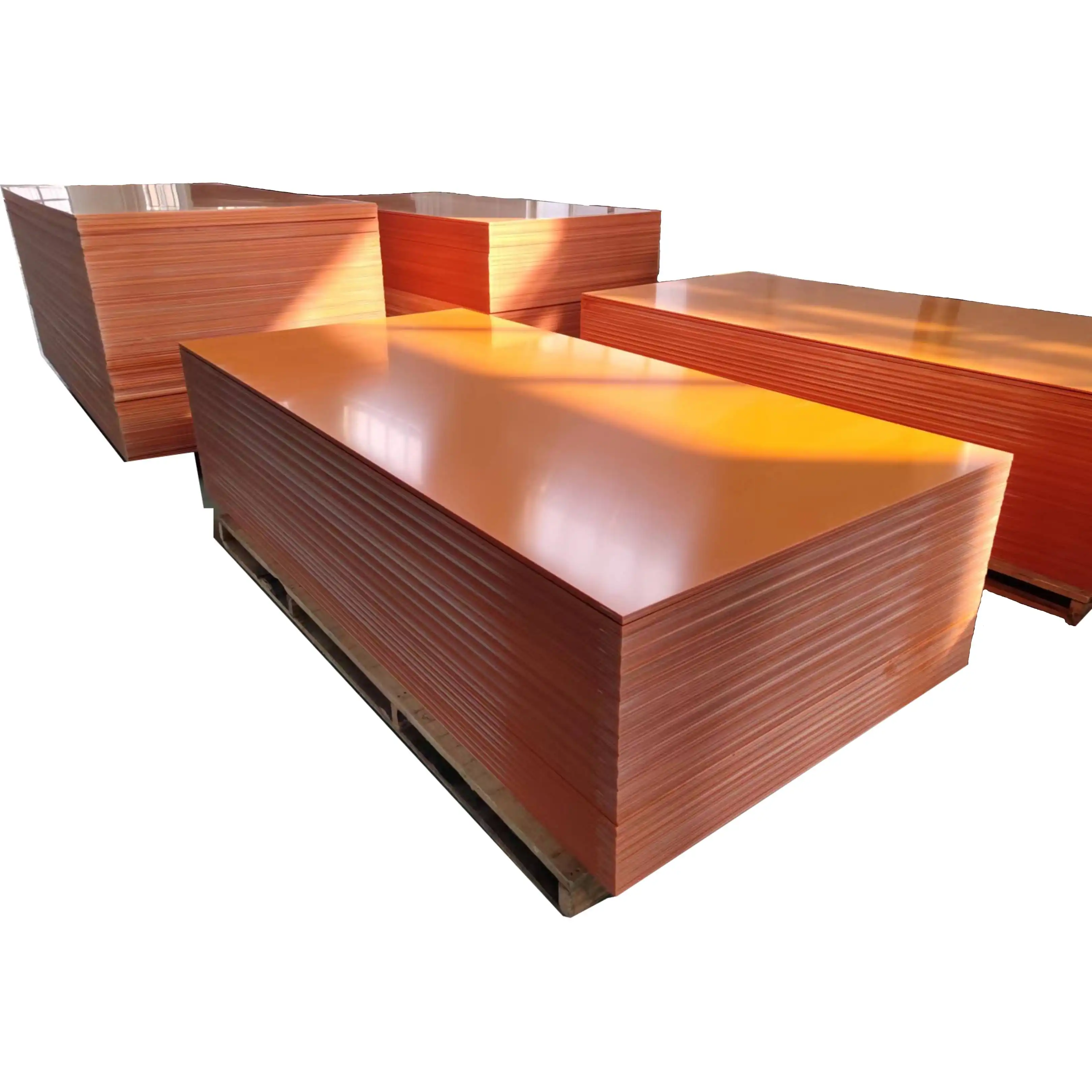
Understanding Bakelite Sheets for CNC Routing
The Chemistry Behind Industrial Performance
Leo Baekeland discovered phenol-formaldehyde condensation in 1907, which led to the creation of Bakelite sheet, the first fully manufactured plastic in the world. The original thermosetting principle is still used in modern industrial laminates: phenolic resin-soaked cellulose layers polymerize under controlled pressure, making cross-linked molecule chains that harden forever. Bakelite sheet is different from melt-processable plastics because it cures permanently, making it resistant to arcs and chemically neutral so that petrochemical solvents can't break it down.
Material Properties That Matter to Machinists
When purchasing materials for CNC processes, managers need to be able to measure how well the materials work. The tensile strength of phenolic laminates is between 25,000 and 35,000 psi, which is high enough for structural spacers in heavy machinery but not so high that they can't be machined without diamond tools. After 24 hours of soaking, the material still absorbs less than 1% moisture, which is important for maintaining dimensional stability on high-humidity factory floors. The material doesn't warp during multi-pass routing because its thermal expansion coefficient is low (3–4 × 10⁻⁵/°C). Its surface resistivity is also high (10²⁰ ohms), which makes it suitable for use as high-voltage isolation walls in transformer assemblies.
Historical Reliability Meets Modern Manufacturing
From Liberty engine starting parts in World War I to battery separators for electric cars today, phenolic laminates have been used across generations because their main benefits—isolation from electricity, resistance to heat, and strength—can't be beat at similar prices. Manufacturers in the car and power distribution industries still use these sheets even though newer materials may break down or expand due to heat. Compliance with MIL-I-24768 standards and UL94 flame ratings ensure regulatory acceptance in all fields where material tracking determines responsibility.
CNC Routing Techniques for Bakelite Sheets
Tooling Selection and Machine Configuration
To do a good job of cutting, you need straight flutes with a carbide tip or compression spiral bits made for rough materials. At spindle speeds of 18,000 to 22,000 RPM, two-flute shapes balance chip evacuation with surface finish. O-flute designs, on the other hand, keep edges from breaking on thin parts less than 2 mm. For sheets less than 5 mm thick, vacuum hold-down systems work better than mechanical clamps because they stop the bending shaking that causes micro-cracking. Before production runs, operators should check that XY accuracy is within ±0.05mm. This is because Bakelite sheet is very hard, which turns mistakes in placement into scrap.
Feed Rates and Thermal Management
For phenolic laminates, these are the most important cutting parameters:
- Feed Rate: 80 to 150 inches per minute, based on the depth of cut. Short passes (0.5 to 1 mm) keep the tools from getting clogged with resin burnishing.
- Coolant Strategy: Using air blast or mist lubrication to get rid of phenolic dust and stay away from water-based fluids that soften paper over time
- Depth Increment: Cutting layers at 40 to 60% of the bit's diameter makes it last longer and keeps the edge straight on complicated shapes.
The output speed and surface quality are both good with these levels. Suppliers of automotive parts that make a lot of different parts at once like how improved parameters cut down on secondary finishing. For example, edges that are flame-polished from proper feeds don't need to be deburred by hand, which costs more in labor.
Troubleshooting Common Routing Challenges
When you keep cutting, heat builds up and shows up as brown spots along the tool lines. This is a sign that the resin is breaking down, which makes the insulation less effective. By slowing down the fall rates by 20 to 30 percent and speeding up the spinning RPM, frictional energy is released before it can damage the material. Instead of straight plunges, ramped lead-ins and circular exit tactics work well for chipping at entry and exit points. When there is dimensional shift between production runs, letting the material acclimate for 48 hours at room temperature can fix any remaining stress in factory-cured laminates.
Comparing Bakelite with Other Materials in CNC Applications
Performance Benchmarking Against Modern Polymers
When engineering managers look at different materials for switchgear insulators or motor component frames, they need more than just marketing claims to help them make their decisions. Phenolic laminates can withstand temperatures of up to 150°C for long periods of time, which is higher than ABS (80°C) and the same as glass-filled nylon, but they cost 30–40% less. In the device production industry, alkaline cleaners can damage polycarbonate. But industrial degreasers and transformer oils can be used on Bakelite sheet for a long time without changing its shape.
Cost-Effectiveness in Volume Production
At corporate sizes, the benefits of buying in bulk become clear. The price of phenolic sheets stays the same across all order sizes because the manufacturing infrastructure is well-established. This is different from custom composites, where the price of resin can change quickly. Companies that make home appliances and make tens of thousands of insulation bands every month like it when the costs of materials are stable and easy to estimate. Standard thicknesses (1.0, 1.5, 2.0, and 3.0 mm) meet common design needs and cut down on special cutting fees that drive up the cost of unusual materials.
Procuring Quality Bakelite Sheets for Industrial Use
Supplier Evaluation Criteria for B2B Buyers
Rather than advertising claims, sourcing choices are based on quality methods that can be checked. When electrical engineers order insulation for power distribution equipment, they make sure that the sellers keep their ISO 9001 certification and that each batch of Bakelite sheets can be tracked, with each sheet being linked to a resin lot number and drying cycle data. Before committing to production numbers, make sure you get test results for the material that show its dielectric breakdown voltage, flexural strength, and flame resistance.
Volume Purchasing Strategies and Lead Times
Framework deals that lock in prices while allowing call-off flexibility are good for industrial machinery makers who plan their yearly needs. Because phenolic laminates can be stored for 36 months or more, they can be kept in stock without worrying about going out of style. Buyers should find out early on what the minimum order quantity is. Some sellers need full sheet multiples, which are usually 1.0 × 1.2 meter panels, while others can cut to size requests for a small fee.
The lead time changes based on the depth and grade. Standard electrical grades are shipped from regional stores within 5 to 10 business days. Custom formulations with better arc protection, on the other hand, may need 4-6 weeks to schedule production. Purchasing managers in charge of just-in-time manufacturing lines like it when suppliers use specialized logistics to make sure regular delivery windows that keep production from stopping.
Best Practices for Integrating Bakelite Sheets in Manufacturing Lines
Storage and Handling Protocols
Environmental controls are needed to keep the qualities of the materials stable from the receiving dock to the machine table. To keep Bakelite sheets from breaking, store them flat on boxes in climate-controlled rooms (20–25°C, 40–60% relative humidity). When you use vertical racking, you run the risk of edge damage and bending stress that shows up as route flaws. Use the first-in, first-out rule to rotate your inventory. Older stock may develop surface rust that dulls tools before they should.
Post-Routing Processing and Quality Verification
Routed parts often need extra work to be done before they can be put together in an assembly. Carbide-tipped bits are used for drilling and tapping at low speeds (1,500 to 2,500 RPM for holes less than 6 mm in diameter), and peck cycles are used to get rid of phenolic dust. Piloted tools keep this rigid material from making too big of holes when countersinking for perfect bolt fitting.
Quality checks should make sure that both the dimensions are correct and the wiring is safe. Coordinate measuring tools make sure that the physical tolerances are correct, and high-pot testing makes sure that the dielectric strength hasn't changed during the machining process. Parts with charred surfaces or embedded contaminants are marked for repair because field failures caused by weakened insulation hurt manufacturers' names.
Finishing processes make things last longer. Light sanding with 320-grit abrasives gets rid of tool marks that can be seen on surfaces, and solvent wiping gets rid of any phenolic dust that is still there before the parts go into clean assembly areas. Bakelite sheet clamps can be attached to housings by heat staking or ultrasonic welding, but mechanical fixing is still the best way to go for reliability.
Conclusion
CNC routing of phenolic laminates uses material science and precise cutting to make insulation parts that are needed for power generation, electric vehicles, and industrial automation. By learning about Bakelite sheet's thermosetting chemistry, choosing the right tools and feed settings, and working with suppliers who care about quality, you can turn raw sheets into arc-resistant barriers and structural insulators that meet UL and MIL standards. These steps make sure that electrical engineers and buying teams find materials that will support the long-term stability of the product while keeping the cost of production low.
FAQ
Can Bakelite sheets withstand high-voltage applications above 10kV?
Medium-voltage switchgear that works at 15–25kV is often insulated with Bakelite sheets when the thickness required allows for enough creepage distance. The voltage class determines the type of material used. For example, thicker cross-sections (6–12 mm) are best for substation equipment, while smaller sizes (1-3 mm) are better for low-voltage control panels. Check that the supplier's test results show the breakdown voltage according to ASTM D149 standards for the needs of your particular application.
How does phenolic compare to FR4 for CNC machining efficiency?
Because they are less rough, phenolic cotton laminates machine 25–40% faster than glass-epoxy FR4. This makes tools last longer and cuts down on cycle times. FR4 has a higher dielectric strength (20+ kV/mm), which is why it is used in multilayer PCBs. Phenolic, on the other hand, is cheaper and better for single-layer structural uses. When mechanical engineers weigh the benefits of electrical performance against the costs of production, they often choose phenolic for parts where the performance gains of FR4 are not enough to justify the higher cost.
What thickness and grade optimize routing precision?
The purpose of the component determines which sheet to use. In order to balance dielectric strength with weight, electrical insulators usually use grades of 1.5 to 3.0 mm. Mechanical spacers, on the other hand, may require 5 to 10 mm for structural stiffness. For gauges that are less than 2 mm thick, compression tools are needed to keep them from bending during routing. Talk to sources about grade formulations. Some use additives to make materials easier to machine, while others focus on flame protection for UL94 V-0 ratings.
Partner with J&Q for Precision-Grade Bakelite Sheet Solutions
J&Q sells industrial-grade phenolic laminates that are designed to work with CNC machines in the electrical, automobile, and machinery production industries. Our 20 years of experience in production and 10 years of partnerships with exporters guarantee stable material quality that meets MIL and UL standards. With integrated transportation that ensures smooth timelines from order to delivery, we support your production plans with quick expert advice and flexible buying based on volume. Learn how working with an experienced Bakelite sheet manufacturer can save you time and money while still meeting the requirements for your applications' electrical performance and size tolerances. Contact our engineering team at info@jhd-material.com to get material test reports and machining samples.
References
Baekeland, L.H. (1909). "The Synthesis, Constitution, and Uses of Bakelite." Journal of Industrial and Engineering Chemistry, 1(3), 149-161.
Harper, C.A. (2006). Handbook of Plastics Technologies: The Complete Guide to Properties and Performance. McGraw-Hill Professional.
Richardson, T. (2003). Industrial Plastics: Theory and Applications. Cengage Learning.
ASTM International (2020). "ASTM D709-19: Standard Specification for Laminated Thermosetting Materials." ASTM Standards.
Mehta, R. & Kumar, S. (2018). "Phenolic Resins: A Century of Progress in Material Science." Polymer Engineering & Science, 58(6), 932-948.
Society of Manufacturing Engineers (2019). CNC Machining Handbook: Advanced Techniques for Composite Materials. SME Publications.

Get a complete product list and quotation

J&Q New Composite Materials Company



