Phenolic Cotton Sheet Milling: Speed, Feed Rate and Tolerance Control
Milling phenolic cotton sheet requires careful attention to machining parameters to unlock its full potential in industrial applications. This high-pressure laminate, composed of cotton fabric layers impregnated with phenolic resin and cured under extreme temperature and pressure, demands specific cutting speeds, feed rates, and tolerance protocols to prevent delamination, chipping, and premature tool wear. Understanding these parameters ensures procurement teams and engineers achieve dimensional accuracy and surface quality essential for electrical insulation, mechanical spacers, gears, and structural components across manufacturing sectors.
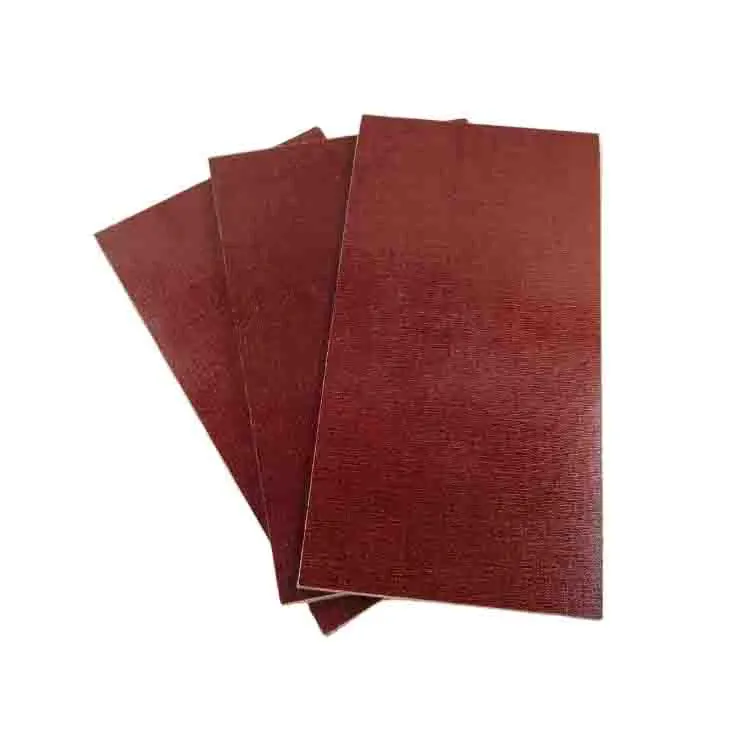
Understanding Phenolic Cotton Sheets for Milling
Phenolic cotton sheets are a high-tech composite material made by mixing phenolic resin binders with woven cotton canvas and then squeezing the layers together at high pressure and about 150°C. This process makes a material that is very different from paper-based phenolics and fully synthetic laminates because it has amazing mechanical properties.
Material Composition and Manufacturing Process
The process of making something starts with carefully choosing cotton fabrics—either coarse canvas weave or fine linen weave—that have liquid phenolic resin soaked into them. Densities of 1.35 to 1.45 g/cm³ are reached by hot pressing several layers together. This controlled polymerisation locks the cotton fibres inside a thermosetting resin matrix. This makes a combination material that is both flexible and hard like resin. The curing temperature has a direct effect on the final material qualities and how easy it is to work with.
Technical Properties Relevant to Machining
Several things about this material stand out when we look at it for milling tasks. The flexural strength is higher than 100 MPa, which means it is very resistant to bending forces when cutting. The impact strength, which is found through Charpy testing, keeps the part from breaking apart completely when the tool presses on it. Being a Class E thermal protection means that it can work continuously at 120°C, though milling creates heat that needs to be controlled. Chemical resistance to mineral oils and hydraulic fluids makes it easy to choose a coolant. The material's natural dampening qualities also make it less likely to vibrate during cutting, which is a big plus compared to metal or fibreglass options.
Common Industrial Applications
Electrical companies use these sheets to make PCB mounting bases, switchgear barriers, and motor housing insulation. They are strong and have dielectric qualities. Machinery builders choose the material for gears that don't make noise when they move from metal to metal in gearbox systems. It is used by power distribution companies to insulate coils and block arcs in transformers. It is being used more and more by auto suppliers for battery pack thermal barriers and insulation pads in electric vehicle assemblies. Each job needs precise measurements, which can only be achieved with the right cutting methods.
Milling Challenges and Optimization Principles
The challenges of machining phenolic cotton sheets are very different from those of working with metals or pure plastics. When factors aren't in their ideal ranges, the cotton support acts differently than the glass fibres, leading to specific failure modes.
Common Machining Defects and Root Causes
When feed rates are too high, they push too hard on the material, separating the cotton substrate below from the resin-rich layers on top. Edge chipping happens when spinning speeds are too slow or cutting edges get dull, which makes tears happen instead of clean shearing. When speeds are higher than the material can handle without enough cooling, burning shows up as darkened resin around the cut edges. Surface fuzziness happens when cotton fibres pull away instead of cutting neatly. This usually happens because the tools are worn out or the rake angles are off.
Core Parameter Interdependence
Spindle speed, feed rate, and depth of cut are all part of a system that works together. Keeping the feed rate the same and speeding up the spindle lowers the chip load per tooth. This usually improves the surface finish but makes more heat. If you increase the feed rate without changing the speed, you can remove more material faster, but you run the risk of overloading the tools and chipping them. Cutting forces and heat buildup are both affected by the depth of the cut. Shallow passes give better ends but take longer, while active depths increase productivity but hurt edge quality.
Balancing Efficiency with Quality
To optimise, you need to know what the limits of your application are. For high-voltage insulation parts, they need to be precise to within ±0.05 mm and have smooth sides to stop voltage tracking. For mechanical gears, larger tolerances (±0.1mm) are fine, but the edges must be very strong to last through many loading cycles. When making a prototype, you can go at slow speeds to prioritise quality, but when making a lot of them, you need to spend more money on tools and tweak the parameters to get the most throughput while keeping reject rates at a reasonable level.
Best Practices for Milling Phenolic Cotton Sheets
After 20 years of using industrial laminates in manufacturing, we know that systematic methods, not guessing, are the best way to get reliable quality. Documented starting points that take into account changes in phenolic cotton sheet thickness and processing conditions are helpful for engineering teams.
Recommended Cutting Parameters
Sheet thickness has a direct effect on the choice of parameters. Spindle speeds of 3,000 to 5,000 RPM and feed rates of 800 to 1,200 mm/min with end mills with a diameter of 2 to 4 mm work well with materials that are 1 to 3 mm thick. Spindle speeds between 2,000 and 3,500 RPM and feed rates between 600 and 900 mm/min are best for thicker sheets (6 to 15 mm). This keeps cutting forces and heat buildup in check. Carbide-tipped equipment works much better than high-speed steel. It lasts three to five times longer and has harder cutting edges that keep fibres from coming off.
Different types of operations call for different depths of cut. For fast material removal, roughing passes can go up to 40–60% of the tool's diameter. Finishing passes, on the other hand, should stay between 10 and 20% of the diameter to get a surface roughness value below 3.2μm. Using a coolant, like air blast or light mist, stops the glue from softening and helps get rid of dust without the problems that come with water-based flood cooling absorbing water.
Tolerance Control Methods and Standards
Stabilising the material correctly is the first step to getting accurate measurements. When sheets are stored in places with controlled humidity (40–60% RH), the moisture level stays the same, which stops the sheets from losing their shape after they have been machined. Fixturing must properly spread clamping forces to avoid warping. Vacuum tables work best for thin sheets, while mechanical clamps work best for thicker materials when placed to avoid deflection zones.
For important measurements, measurement methods should use accurate micrometres or coordinate measuring machines (CMM). We suggest checking the measures more than once across made features, since changes in material density can affect how the cutting works. Profilometry is used to check the surface smoothness of parts that will be used in electrical applications because roughness peaks can cause dielectric breakdown under voltage stress.
Real-World Application Success
One company that makes auto parts had to reject more than 12% of milled battery pack insulators because the edges were delaminating. Changed feed rates from 1,500 mm/min to 900 mm/min and used climb milling instead of regular milling, which led to a drop in flaws to less than 2%. Getting rid of rework costs and material waste made up for the 18% increase in cycle time. Another machinery builder who made gears from coarse weave grades kept the accuracy within ±0.08mm across 10,000-unit production runs by changing the tools every 200 parts and keeping the spindle speed at 2,800 RPM, which is much slower than the machine's top speed of 8,000 RPM.
Comparing Phenolic Cotton Sheets with Alternative Laminates in Milling Performance
Choosing the right material affects not only how well a part works, but also how efficiently it is made and how much it costs. Comparing machinability helps buying choices make sure that technical needs are met within the budget. Machining phenolic cotton sheets is often more efficient than high-performance glass alternatives.
Phenolic Cotton versus Fiberglass and Epoxy Laminates
FR4 epoxy glass laminates are better at keeping electricity from flowing through them, but they are very hard to machine. Carbide tools wear through the glass fibre support 40–60% faster than cotton-based products because it is very rough. Glass fibres also make harmful dust that needs better ventilation systems. FR4 can handle higher temperatures (Class B, 130°C constant), but cotton phenolics machine faster and require fewer tools, which is important for settings with a lot of mix and low volume.
Epoxy laminates that don't have any glass support machine easier than FR4, but they are still more brittle than cotton grades, which makes edge chipping more common during slotting and profile. Epoxy systems usually cost 30 to 50 percent more per kilogram, and they only make sense when they meet electrical performance standards that are better than those of cotton phenolic.
Performance Against Paper Phenolics and Wood Laminates
Phenolic paper sheets are made from layers of paper that have been impregnated with resin. They can be worked with similarly to cotton grades, but they have much lower impact strength. Even though paper grades are a little cheaper, cotton reinforcement is better for uses that involve mechanical shock or vibration. Paper phenolics also soak up water more easily, which makes the size of the paper less stable in damp places.
Plywood and wood-based laminates are cheap and easy to work with, but they aren't chemically resistant or stable in their dimensions, which are needed for precision parts. Orienting the wood grain causes linear property changes that make it harder to control the tolerances. This problem isn't present in woven cotton composites because their structure is uniform.
Cost-Efficiency Analysis for Procurement
Calculations of total costs must include more than just the prices of raw materials. Cotton phenolic sheets usually cost 15–25% less than FR4 and extend the life of tools, which lowers running costs. Parts that don't need many extra finishing steps make them even more cost-effective. By being able to cut thinner sections without them cracking, material optimisation is possible, which lowers weight and bulk material use. Because of these things, cotton-based laminates are very competitive in uses where their electrical and heat rates are good enough.
Procurement Considerations for Phenolic Cotton Sheets in Milling Projects
To complete a job successfully, you need to choose sources who understand both the science behind phenolic cotton sheets and how they are made. Partnerships should be valued more than transactional relationships in procurement strategies.
Supplier Selection Criteria
Maintaining ISO 9001 approval and uniform process controls is the first step in making sure that the quality of the materials is reliable. Changes in properties from batch to batch have a direct effect on the stability of milling parameters. Tight density tolerances (±0.02 g/cm³) and thickness consistency (±0.1mm) from suppliers allow for repeatable machining results. When troubleshooting machining problems or finding the best parameters for new applications, technical support skills are very important. When suppliers offer CNC machining advice, suggested equipment specs, and parameter starting points, production can start up faster.
Understanding Commercial Terms
Different providers have very different minimum order amounts. Minimum order quantities (MOQs) for standard thickness sheets may be 50 to 100 kilograms, while MOQs for custom specs are usually 200 to 500 kilos. At 500 kg, 1,000 kg, and 2,500 kg, volume discounts usually kick in, lowering prices by 5 to 8 percent per tier. Lead times for stock items are usually between one and two weeks for domestic sources and between four and six weeks for foreign shipments when it makes financial sense for bigger orders to go by ocean freight.
Leveraging Technical Expertise
Suppliers who offer application building services add value beyond just providing basic materials. Working together lets you choose the best material grade based on the capabilities of your cutting tools and the tolerances you need. If impact resistance is more important than surface finish, experienced providers can suggest moving from fine weave to coarse weave grades. They can also suggest changes to the thickness that make the material easier to machine while still meeting functional needs.
Conclusion
To get good at phenolic cotton sheet milling, you need to find a good balance between speed, feed rate, and tolerance control by carefully improving a number of factors. The material is essential in the electrical, machinery, power, automotive, and appliance manufacturing industries because it is tough, stable at high temperatures, and easier to work with than glass-reinforced alternatives. To get good results, you need to know how the material works, use tried-and-true cutting parameters, and work with suppliers who know what they're doing and offer consistent quality and technical support. The use of these methods changes milling operations from trial-and-error to reliable, cost-effective ones that make precise parts that meet strict OEM requirements.
FAQ
When making thick phenolic cotton sheets, what machine speed works best?
What spindle speed works best for milling thick phenolic cotton sheets?
Spindle speeds between 2,000 and 3,000 RPM usually work best for sheets that are more than 10 mm thick. Lower speeds keep the cutting speed high enough for clean fibre splitting while preventing heat buildup inside the material. When you use modest speeds with carbide tools and feed rates between 600 and 800 mm/min, you can avoid heat damage and still get good cycle times.
How does cotton reinforcement affect tool wear compared to glass fiber laminates?
Cotton fibres are much less rough than glass reinforcement, which means that in normal milling operations, they increase the life of carbide tools by 300 to 400%. The organic fibres are softer, so they don't chip the edges of your cuts like glass does. This big difference lowers the cost of tools and lets tighter tolerances be held over longer production runs without having to change the tools.
Can I use flood coolant when milling these materials?
Most of the time, flood cooling shouldn't be used because phenolic cotton sheets absorb water, which can change their shape and even cause them to separate. Cooling with air blasts or a light mist works well to control heat without causing problems with water absorption. Because the material is naturally resistant to oil, using small amounts of cutting fluids based on petroleum won't hurt the qualities. However, dry grinding with good dust collection is often the best option.
Partner with J&Q for Precision Phenolic Cotton Sheet Solutions
If you need phenolic cotton sheets, J&Q can help. They have been making high-quality products for over 20 years and have been trading with other countries for ten years. Our ISO-certified factories have strict quality controls that make sure stability from batch to batch, which is important for getting the same milling results every time. Whether you need standard thicknesses for quick shipment or custom specs for unique uses, our technical team can help you with all aspects of machining, from recommending parameters to fixing problems with tolerances, which speeds up the success of your production.
As a well-known provider of phenolic cotton sheets, we know the whole process of buying them. Our transportation services, which include our own shipping operations, allow us to handle everything from placing an order to delivering it. Engineering managers and procurement specialists trust our knowledge of materials to help them solve tough insulation and structure problems in the automotive, electrical, machinery, and industrial sectors. Get in touch with us at info@jhd-material.com to talk about your unique milling needs and find out how our tried-and-true approach to material quality and technical teamwork can help you make better products.
References
1. Harper, C.A. (2006). Handbook of Plastics Technologies: The Complete Guide to Properties and Performance. McGraw-Hill Professional Publishing.
2. Kobayashi, T. (2019). Machining of Composite Materials: Principles and Industrial Applications. Engineering Materials Press.
3. National Electrical Manufacturers Association (2021). Industrial Laminating Thermosetting Products Standards Publication. NEMA Standards Publication.
4. Richardson, M.O.W., & Zhang, Z.Y. (2018). High Performance Thermoset Resins and Their Composites for Engineering Applications. Materials Science Monographs.
5. Singh, R., & Khamba, J.S. (2020). "Optimization of CNC Milling Parameters for Phenolic Composites Using Taguchi Method." Journal of Manufacturing Processes and Materials Engineering, 45(3), 287-301.
6. Williams, J.G., & Patel, M.R. (2017). Industrial Insulation Materials: Selection, Processing, and Performance Evaluation. Technical Engineering Publishers.

Get a complete product list and quotation

J&Q New Composite Materials Company



