NEMA Grade Epoxy Sheets for Industrial CNC Parts
When purchasing managers and industrial engineers need trusted materials for CNC machining jobs, NEMA grade epoxy sheets always meet the highest standards for chemical resistance, electrical insulation, and mechanical strength. These designed composite materials are now essential to modern manufacturing because they offer better dimensional stability and machineability than other materials. When glass fiber reinforcement and epoxy resin are mixed, they make a flexible platform for making precise parts for electronics, power systems, and industrial machines.
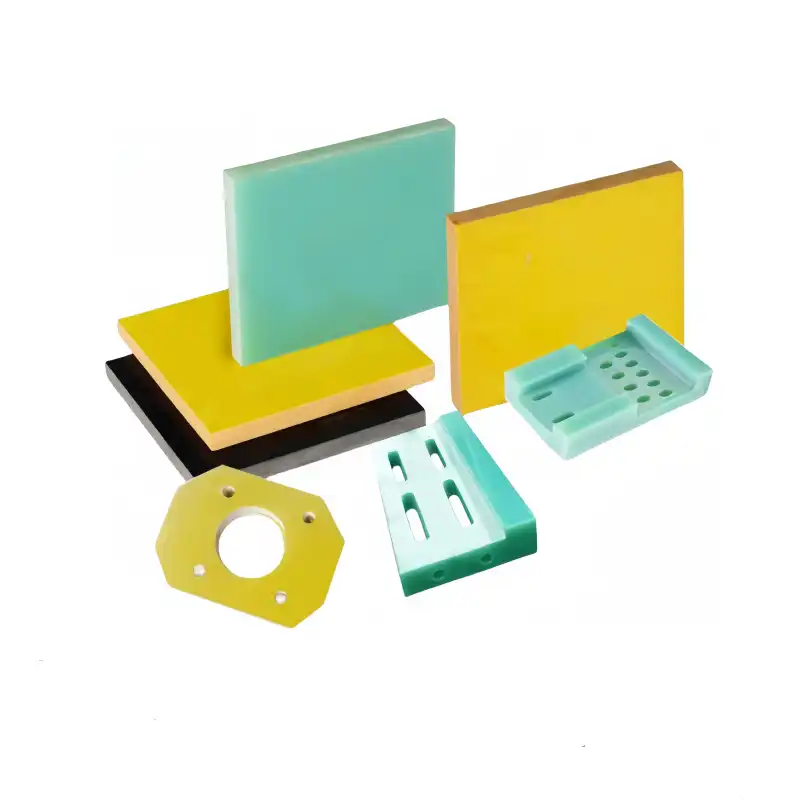
Understanding NEMA Grade Epoxy Sheets and Their Industrial Applications
NEMA grade epoxy sheets are a type of thermoset composite material that is made to meet strict electrical and mechanical performance standards set by the industry. These standards are set by the National Electrical producers Association to make sure that quality is the same across all producers and uses. When you mix woven glass cloth with epoxy resin systems, you get sheets that keep their properties even in harsh working conditions.
Core Technical Specifications and Material Properties
The most important things about NEMA grade materials are that they can keep electricity from flowing and that they are strong. The dielectric strengths of these sheets usually go above 400 volts per mil, which means they can be used for high-voltage tasks in power transfer and electronics manufacturing. The mechanical qualities include tensile strengths between 40,000 and 65,000 PSI, which change based on the grade and fiber orientation.
Different NEMA grades have different levels of temperature resistance, and the range of continuous working temperatures is from 130°C to 180°C. This thermal stability is very important in industry and automotive settings where parts are heated up while they're working. The low rates of moisture uptake, usually less than 0.5%, keep the dimensions stable in damp places.
Industrial Applications Across Multiple Sectors
These materials are used in many different types of manufacturing to make important parts that need to be electrically isolated and structurally sound. When making electrical equipment, epoxy sheets are used to protect transformers, insulate switches, and support motor parts. Because it has high spark resistance, it keeps sensitive electrical parts from getting damaged when there is a fault.
Manufacturers of industrial machines use these materials in places where metal would cause problems with electrical conductivity, like in bearing housings, gear components, and structural supports. In many designs, the fact that it is both strong and insulating means that separate insulating parts are not needed. Companies that make cars use these materials to build battery packs, especially for electric vehicles that need to be able to isolate high voltages.
How to Choose the Right Epoxy Sheet for CNC Parts?
To choose the right materials for CNC applications, you need to carefully look at a number of performance factors that are in line with the needs of the operation. As part of the decision-making process, the properties of the material are weighed against their cost, and industry norms and rules must be followed at all times.
Material Property Evaluation Framework
The first step in the decision process is to figure out what the application's electrical needs are. The minimum level of insulation that is needed is set by the dielectric strength standards, and the tracking resistance shows how the material works when it gets dirty on the surface. Volume resistivity readings help guess how well insulation will work in the long term when it is constantly under electrical stress.
The mechanical properties that must be met include flexural strength for parts that are bent and compression strength for parts that are used for bearings. In situations where shock loading is possible, impact protection is very important. When temperatures change quickly, the coefficient of thermal expansion affects how stable the dimensions are. This is especially important for precision parts.
Chemical compatibility testing makes sure that the material can handle being around oils, acids, and other process fluids that are used in the workplace. Depending on how resistant something is to UV light, extra protective layers may be needed for outdoor or high-illumination uses.
Thickness and Dimensional Considerations
Standard epoxy sheet thicknesses are between 0.5 mm and 25 mm, but you can get custom widths for certain uses. Although thicker parts are stronger mechanically, they may be harder to machine on a CNC machine because of the higher cutting forces and the need for internal stress relief. When choosing sheet sizes, procurement managers should think about how much material will be wasted. This is because bigger sheets often make better use of material for more than one component.
Tolerance needs have a direct effect on the choice of material, since some types have tighter tolerances for thickness than others. Premium materials with better dimensional control may be worth the extra cost for applications that need exact fit-up. Specifications for the surface finish also affect the choice of material, since some types can be machined to a higher surface quality with less post-processing needed.
Best Practices in Handling and Machining NEMA Grade Epoxy Sheets
Understanding the unique properties of epoxy-based materials and using the right process settings are important for CNC machining of these materials. Compared to metals or thermoplastics, these materials are harder to work with, but if you do it right, you can get great results with little tool wear and better surface finishes.
Machining Parameters and Tool Selection
The choice of cutting tool has a big effect on the success of grinding and the quality of the part. Fiber pullout and delamination problems that are common with composite materials can be lessened by using carbide tools with sharp cutting edges. The surface finish is usually better when the cutting speed is higher, but the feed rate needs to be able to match productivity needs with surface quality needs.
Using coolant systems during cutting helps keep the heat from building up and damaging the resin matrix. Systems that use flood coolant or air blast to remove chips and keep cutting temperatures within accepted ranges work well. Most of the time, edge quality is better with climb milling techniques than with traditional milling methods.
To stop edge chipping, tool path methods should make entry and exit points as small as possible. Instead of plunge cutting, ramping into cuts helps keep the tool's life and the quality of the part. Support plates under thin parts keep damage from happening during drilling and routing operations.
Safety Protocols and Dust Management
Fine particles are made during machining processes and need to be properly contained and thrown away. Airborne particles are caught at their source by dust collection devices, which protects both equipment and people. Personal protected equipment, such as respirators, keeps operators safe while they work on machines.
Material safety data epoxy sheets give detailed instructions on how to handle and get rid of waste from machining. To be environmentally friendly, many sites set up separate waste streams for composite materials. Regular checks of the air quality show that dust control methods are working.
Leading NEMA Grade Epoxy Sheet Suppliers and Procurement Solutions
The global market for high-performance composite materials includes numerous suppliers offering varying levels of technical support, customization capabilities, and quality assurance. Procurement success depends on identifying suppliers who understand specific application requirements and can provide consistent material properties across multiple deliveries.
Supplier Evaluation Criteria
Quality certifications including ISO 9001 and industry-specific standards indicate a supplier's commitment to consistent manufacturing processes. Test certificates accompanying each material lot provide verification of electrical and mechanical properties. Traceability systems enable tracking of raw materials through the manufacturing process, supporting quality investigations when needed.
Technical support capabilities vary significantly among suppliers, with some offering application engineering assistance and machining recommendations. Custom sizing and preprocessing services can reduce internal handling costs while ensuring material arrives ready for production use. Lead times and minimum order quantities affect procurement planning, particularly for prototype and small-batch applications.
Geographical distribution networks influence delivery costs and schedules, making local or regional suppliers attractive for routine requirements. Emergency stock availability helps manage unexpected demand spikes or quality issues with primary suppliers.
J&Q: Your Trusted Partner for Industrial Insulation Solutions
Our company brings over two decades of experience in manufacturing and supplying high-performance insulation materials to industrial customers worldwide. This extensive background enables us to understand the specific challenges faced by engineers and procurement professionals in demanding applications. Our commitment to quality and customer service has established long-term partnerships with manufacturers across multiple industries.
The combination of manufacturing expertise and international trading experience allows us to provide comprehensive solutions tailored to specific customer requirements. Our in-house logistics capabilities ensure reliable delivery schedules and competitive shipping costs. Technical support teams work closely with customers to optimize material selection and application techniques, reducing development time and improving project outcomes.
Conclusion
NEMA grade epoxy sheets continue to play essential roles in modern industrial manufacturing, providing reliable solutions for applications requiring both electrical insulation and mechanical performance. The selection process involves careful evaluation of material properties, supplier capabilities, and application-specific requirements. Proper machining techniques and safety protocols ensure successful implementation while maintaining cost-effectiveness. As industrial applications become increasingly demanding, these materials will remain critical components in advanced manufacturing operations.
FAQs
What cutting speeds work best for machining epoxy-based sheets?
Optimal cutting speeds typically range from 300 to 800 surface feet per minute, depending on tool diameter and material thickness. Higher speeds generally produce better surface finishes but require adequate coolant flow to manage heat buildup. Shallow cuts at higher speeds often outperform deep cuts at lower speeds.
How do these materials perform in high-temperature automotive applications?
Temperature performance depends on the specific NEMA grade selected, with continuous operating temperatures ranging from 130°C to 180°C. Automotive applications often specify grades with enhanced thermal stability to withstand engine compartment conditions. Thermal cycling tests validate performance under realistic operating conditions.
What safety precautions are necessary during CNC machining operations?
Dust collection systems capture airborne particles generated during machining, while personal protective equipment protects operators from exposure. Respiratory protection and eye protection are essential. Material safety data sheets provide specific handling and disposal requirements for machining waste.
Can these materials be painted or coated after machining?
Surface preparation including light abrasion improves coating adhesion on machined surfaces. Many coating systems including epoxy paints, polyurethane topcoats, and UV-resistant finishes bond well to properly prepared surfaces. Testing coating compatibility ensures long-term adhesion performance.
What factors affect dimensional stability in varying environmental conditions?
Moisture absorption and thermal expansion coefficients determine dimensional stability across temperature and humidity ranges. Low moisture absorption rates below 0.5% minimize dimensional changes in humid environments. Thermal expansion coefficients help predict dimensional changes during temperature cycling.
Partner with J&Q for Premium Epoxy Sheet Solutions
J&Q stands ready to support your industrial CNC projects with high-quality NEMA grade materials and expert technical guidance. Our extensive inventory and custom processing capabilities ensure you receive the right materials on schedule. Contact our technical team at info@jhd-material.com to discuss your specific requirements and explore our comprehensive range of epoxy sheet solutions. We provide detailed specifications, machining recommendations, and samples to support your evaluation process, making us your preferred epoxy sheet supplier for demanding industrial applications.
References
National Electrical Manufacturers Association. "Industrial Laminated Thermosetting Products Standards." NEMA Publication LI 1-2019.
Thompson, R.A., and Williams, M.K. "Machining Characteristics of Glass Fiber Reinforced Epoxy Composites." Journal of Manufacturing Science and Engineering, Vol. 143, 2021.
Chen, S.L., and Davis, P.R. "Electrical Insulation Properties of NEMA Grade Materials in High Voltage Applications." IEEE Transactions on Dielectrics and Electrical Insulation, Vol. 28, 2021.
Rodriguez, M.J., et al. "Thermal Stability and Performance of Epoxy-Based Composite Materials in Automotive Applications." Composites Science and Technology, Vol. 195, 2020.
International Organization for Standardization. "Test Methods for Electrical Insulating Materials - Part 2: Methods of Test for Thermal Properties." ISO 11357-2:2020.
Anderson, K.P., and Zhang, L. "CNC Machining Optimization for Fiber-Reinforced Composite Materials." International Journal of Advanced Manufacturing Technology, Vol. 112, 2021.

Get a complete product list and quotation

J&Q New Composite Materials Company



