Mastering G10 Sheet CNC Machining: Tool Selection and Speed Optimization for Glass-Epoxy
To get accurate results when cutting G10 sheet materials, you need to do more than just use normal CNC techniques. This high-pressure fiberglass laminate is made up of continuous glass cloth mixed with epoxy resin. It needs special ways to choose the right tools and set the right parameters. The rough glass fibers speed up the wear and tear on the tool, and the epoxy matrix creates heat during cutting, making it hard to get a good surface finish and accurate measurements. When you master these factors, CNC processes go from being based on wasteful trial and error to having predictable, cost-effective production cycles that meet strict requirements for mechanical and electrical performance.
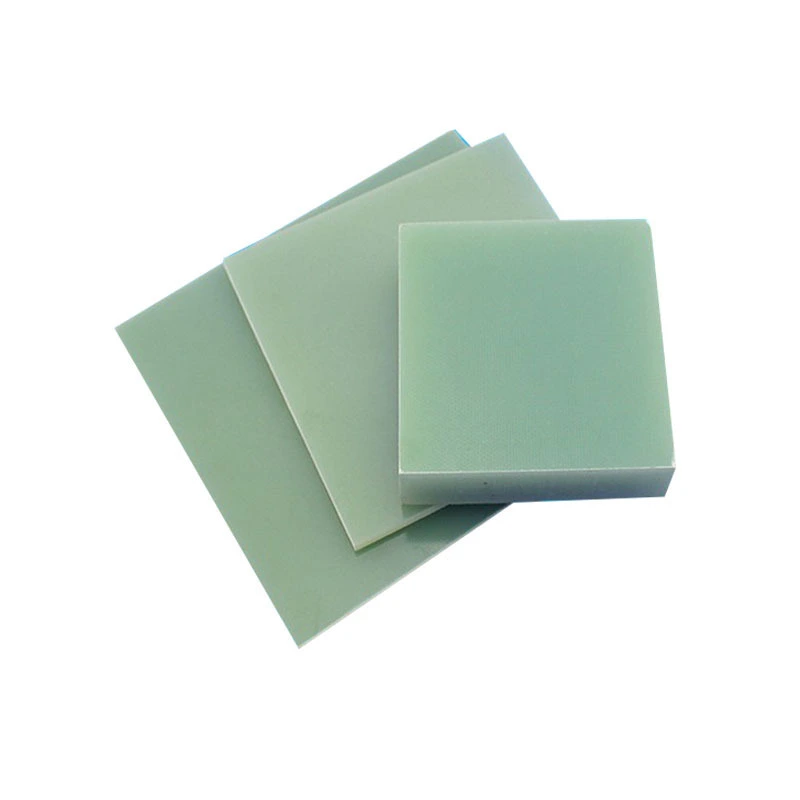
Understanding the Challenges of CNC Machining G10 Sheets
The Composite Structure Problem
Glass-epoxy laminates are made up of woven glass strands that are joined together by a thermosetting resin. This makes the material have very different qualities than metals or plastics that are all the same. When cutting, the cutting edges come across layers of hard and soft material that change over time. The glass threads work like tiny grinding wheels, roughening up the tool surfaces. At the same time, the resin softens from contact heat, which makes edges build up. This mixture explains why standard tools made for aluminum or steel break down quickly when used on mixed materials.
Delamination Risks During Machining
One of the most expensive mistakes in glass-epoxy cutting is layer separation. When drill bits leave the bottom surface or router bits don't touch the edges of the material properly, the mechanical force pulls the layers apart instead of cutting them neatly. Delamination weakens both the structure's stability and the dielectric strength, which are important factors for switchgear parts and PCB support structures. Often, manufacturing engineers don't notice this flaw until after they've finished other tasks. This means that parts have to be thrown away and the plan is pushed back.
Tool Wear Economics
Rapid wear and tear on cutting tools when machining G10 sheet has several direct effects on production costs. Tool changes happen a lot, which breaks up cutting processes and lowers the rate at which equipment is used. Worn tools cause measurement shift, which requires more frequent inspections and better process tracking. Because glass threads are rough, they can cut the life of a carbide tool to a tenth of what the same tool does in aluminum. This means that choosing the right tool and optimizing its parameters are not just nice to do; they are necessary for making money.
Choosing the Right Tools for G10 Sheet CNC Machining
Carbide vs. Diamond-Coated Tooling
Solid carbide cutting tools are the standard for glass-epoxy grinding because they are much more resistant to wear than high-speed steel tools. The cobalt glue in carbide grades makes them tough while still being hard enough to cut fiberglass. Diamond-coated carbide tools work even better because the polycrystalline diamond (PCD) coats make them less likely to scratch and make heat. When cutting fiberglass laminates, tests done in different industrial settings show that diamond-coated end mills last five to eight times longer than uncoated carbide. However, the original cost of the tool goes up by about 200 to 300 percent.
Geometry Considerations for Chip Management
The shape of the flutes directly impacts how well chips are able to escape and how much heat they can remove. Upcut spiral shapes move chips out of the cutting zone, which cuts down on recutting and heat buildup. This makes them good for both through-cutting and pocket milling. Downcut spirals squeeze the top layers as they go in, which keeps the top layer from delaminating. This is helpful in situations where the finish looks good. Compression geometry takes both ways into account at the same time, dealing with delamination on both sides at the same time. This is especially helpful for drilling through thin sheets.
Choosing the right helix angle balances the spread of cutting power with the speed of evacuation. Helix angles that are moderate, between 30 and 40 degrees, give enough chip space without putting too much stress on the axes, which can cause delamination. Tool makers who specialize in composite machining often suggest two-flute designs for glass-epoxy materials, putting chip clearance ahead of metal-cutting norms that prefer higher flute counts.
Real-World Tooling Performance Data
Production sites that make insulation parts for transformer makers say that moving from normal carbide to diamond-coated tooling cut the number of tools needed by 60% and raised the quality of the edges from 125 microinches Ra to 63 microinches Ra. Suppliers of automotive parts that work with battery barrier plates saw a 40% drop in cycle time after using properly described compression cutters. This shows that choosing the right tools can increase efficiency in more ways than just preventing wear.
Speed and Feed Optimization Techniques for G10 Sheet Machining
Spindle Speed Guidelines
When using 6mm diameter tools for cutting G10 sheet glass-epoxy materials, glass-epoxy materials work best at higher spindle speeds than metals of the same thickness. Typical spindle speeds for these materials are between 18,000 and 24,000 RPM. When speeds are raised, the cutting force per fiber contact goes down, but the linear velocity stays high enough to shear resin neatly instead of spreading it out. Lower speeds cause too much heat by keeping the contact time long, which softens the epoxy and makes it easier to load the tool. But speeds above 30,000 RPM can cause frictional warming if they are not paired with fast feed rates that limit rest time.
Feed Rate Calibration
It is suggested that the feed rates be just right for both getting rid of material quickly and getting a good surface finish. Depending on the depth of cut and the width of the tool, most cutting jobs work best at speeds between 2 and 4 meters per minute. When feed rates are too low, the tool rubs against itself instead of cutting, which speeds up wear and damages the finish. Too fast of feed rates stress the cutting edges too much, which leads to chipping and delamination. The best parameters are found by machine workers who try things in a planned way and write down the results for different thicknesses to set accurate baseline settings.
Depth of Cut Strategy
When cutting glass-epoxy laminates, multiple short passes work better than a single deep cut. Keeping the depth to 40–60% of the tool's width per pass controls the amount of heat that is made while keeping the chip size within the tool's ability to evacuate. For through-cutting, it's best to leave 0.2 to 0.5 mm of backing material and then do the final split in a second pass. This keeps the exit-side delamination from happening. When drilling, peck cycles with frequent retractions are used to get rid of glass dust and let heat escape, especially in holes that are deeper than three times the width.
Thermal Management Techniques
When you keep cutting, heat builds up and lowers the quality of both the material and the tool. When air blast cooling is used at the cutting zone, it removes glass dust and keeps the temperature from rising too quickly. This is better than using liquid coolants, which can damage epoxy surfaces. Interrupted cutting tracks that let tools cool down for short periods of time make edges last longer. Infrared temperature sensors are used in some modern facilities to make changes to the parameters when the temperatures get close to the point where resin turns into glass, which is around 130°C.
Integrating Process Monitoring and Quality Control
Tool Condition Monitoring Systems
Sensors that measure spindle current draw, shaking frequency, and sound emission patterns are built into modern CNC controls. These signs show how much tool wear there is before a catastrophic failure happens. As cutting edges wear down and friction builds, more current is drawn. Through changes in the frequency signature, vibration research can find chipping or covering delamination. Using these signs to set up automated tool change routines stops defects from happening when the tools go from being sharp to being too worn out.
Dimensional Verification Protocols
Verifying the thickness limit is still very important for electrical insulation uses because the voltage breakdown strength is directly related to the thickness of the material. For statistical process control to work, you have to measure random samples every 50 to 100 parts and compare the results to specs that are usually accurate to within 0.005 inches for precision parts. Coordinate measuring tools check complicated shapes in three dimensions and catch machining drift before it makes batches that don't meet standards.
Delamination Detection Methods
When looking at the surface with angled lighting, you can see the split of layers that you can't see with straight lighting. Ultrasonic testing finds internal gaps and bad resin-fiber bonding in important situations, like arc shields for power distribution equipment. Cross-section microscope checks the process's ability while the initial parameters are being set. It makes sure that the cutting mechanics produce clean fiber shear failures instead of pulling or tearing failures that could be caused by wrong tools or speeds.
Quality System Integration
Manufacturers of electrical parts for the utility and car industries that use G10 sheet need to have documented process control that shows they always follow the material and size standards. By combining CNC parameter data with inspection results, it is possible to trace back the features of a finished part to the conditions under which it was machined. This paperwork meets the standards of ISO 9001 and provides an analytical base for ongoing improvement projects that aim to cut down on waste and improve cycle times.
Best Practices and Recommendations for Efficient G10 CNC Machining
Preventive Tool Management
Setting plans for replacing tools based on the number of parts made or the amount of time spent cutting stops quality from dropping over time. By keeping an eye on how each tool works, you can find differences in the quality of the coating or the stability of the geometry, which can help you choose a seller. Keeping tool supplies well-organized and labeled correctly helps workers choose the right tools for the job, so they don't make costly mistakes like using all-purpose cutters on rough composite materials.
Dust Collection and Operator Safety
Glass fiber particles made during grinding are dangerous to breathe in and need effective filtering systems. Industrial vacuum systems with HEPA filters collect dust in the air at the cutting zone to keep people and machinery safe. When it comes to control, enclosed machining centers with built-in dust management are better than open-bed cutters. Occupational health rules say that people who work near glass-epoxy machining processes need to wear the right respiratory protection and have their exposure monitored regularly.
Material Handling and Fixturing
Vibration and movement that affect the accuracy of measurements can be avoided with good workholding. Vacuum tables spread the binding force out evenly over thin sheets so that stress doesn't build up in any one place. Support under the exit sides stops delamination caused by bending during through-cutting. Material staging methods stop the absorption of moisture that weakens dimensional stability. Even though G10 sheet has an absorption of water below 0.1%, even a small amount of moisture can make tight-tolerance cutting less accurate.
Strategic Supplier Partnerships
When you buy glass-epoxy laminates from makers with a lot of experience, you can be sure that the material qualities will stay the same, which supports stable machining parameters. Suppliers you can trust give you approved test results that show the mechanical strength, dielectric properties, and thickness limits that meet NEMA standards. Material providers offer technical support that helps solve machining problems and find the best settings for each application, using the knowledge they've gained from working with a wide range of customers.
Workflow optimization includes more than just individual machine tasks. It also includes getting materials, managing tools, checking for quality, and getting rid of waste. Companies that make motor insulation parts, switchgear supports, or battery barriers can stay ahead of the competition by carefully handling each element instead of just focusing on spindle speeds. This all-around method lowers the total cost of production while also making it more reliable, which are results that are much more important than optimizing just a few parameters.
Conclusion
For CNC machining of G10 sheet glass-epoxy laminates to go well, the right tools, precise factors, and thorough process control must all be used. Diamond-coated carbide tools, high spindle speeds with modest feed rates, and shallow depth techniques all work to deal with the roughness of the material and keep it from delaminating. Consistency is kept across production runs by keeping an eye on the state of tools and doing thorough quality checks. These technical parts work together with partnerships with suppliers and safety rules to make industrial operations that are efficient and make money. Companies that learn these basics will be able to compete in fields that need precise-machined composite parts to provide reliable electrical protection and mechanical performance.
FAQ
Why does G10 sheet material wear cutting tools so rapidly?
The constant glass fiber support in the laminate works like a grinding wheel, removing material from the cutting edge with each pass. In contrast to metals, which wear tools mostly through binding and diffusion, glass fibers wear away carbide by direct contact, which is similar to how grinding particles are embedded in metal when it is machined. This explains why aluminum-made tools that aren't covered fail quickly when used on fiberglass materials.
How frequently should cutting tools be replaced during G10 machining?
When to replace tools depends on how they are coated, how they are used, and the quality standards that need to be met. Diamond-coated tools that are used to cut modest amounts of material can usually cut for 8 to 12 hours before they need to be replaced. Uncoated carbide might need to be changed every two to three hours. Monitoring the state of tools based on current draw and vibration is a more accurate way to decide when to replace them than using set plans. This keeps flaws from happening and makes the best use of the tools.
Can standard CNC machines handle glass-epoxy materials effectively?
Standard three-axis CNC cutters and machining machines can handle glass-epoxy materials well if they have the right tools and a way to collect the dust. Dedicated composite machining centers have better dust collection and faster tool speeds, but they are investments that aren't required. Before spending a lot of money on new machines, most makers get great results by improving the settings and tools on the machines they already have.
Partner with J&Q for Superior G10 Sheet Machining Solutions
J&Q has been making precise glass-epoxy laminates for challenging electrical and mechanical uses for more than 20 years. With more than ten years of experience making things and selling them in foreign markets, we can meet your CNC cutting needs with materials that are designed to be easy to machine and work well. We know the problems that companies that make electrical parts, machines, and parts for cars have when they have to work with composite insulators.
Our expert team uses knowledge from a wide range of businesses to give you detailed machining suggestions that are tailored to your needs. Using our own logistics network gives you access to solid supply dates that help you plan your production. As a well-known company that supplies G10 sheets and has strict quality control systems in place, we can offer approved materials that meet NEMA standards and have thickness limits and dielectric properties that can be proven.
Email our engineering support team at info@jhd-material.com to talk about your unique machining problems, get examples of the material, or get personalized technical help. We offer fast advice that covers choosing the right tools, optimizing parameters, and setting up quality control methods that are specific to your production environment.
References
National Electrical Manufacturers Association (NEMA), "Industrial Laminating Thermosetting Products Standards Publication LD 3-2005," Rosslyn, Virginia, 2005.
Davis, J.R., "Handbook of Thermal Spray Technology," ASM International Materials Park, Ohio, 2004.
Teti, R., "Machining of Composite Materials," CIRP Annals - Manufacturing Technology, Volume 51, Issue 2, 2002.
Hocheng, H. and Tsao, C.C., "Comprehensive Analysis of Delamination in Drilling of Composite Materials," Journal of Materials Processing Technology, Volume 140, 2003.
Sheikh-Ahmad, J.Y., "Machining of Polymer Composites," Springer Science & Business Media, New York, 2009.
Koplev, A., Lystrup, A., and Vorm, T., "The Cutting Process, Chips, and Cutting Forces in Machining CFRP," Composites, Volume 14, Issue 4, 1983.

Get a complete product list and quotation

J&Q New Composite Materials Company



