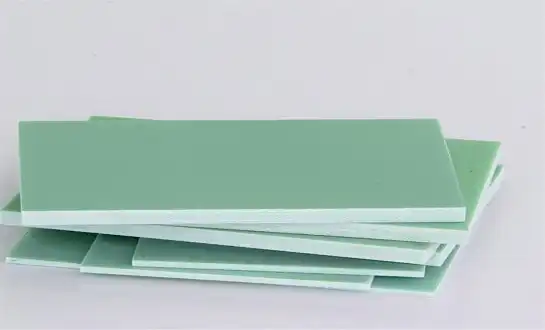
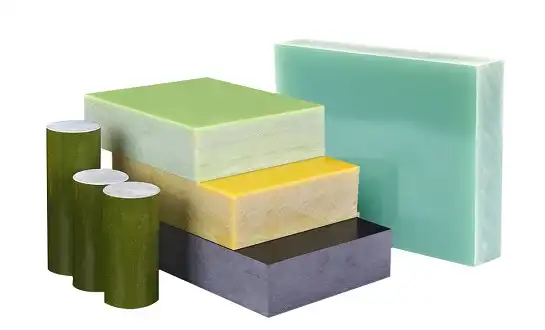
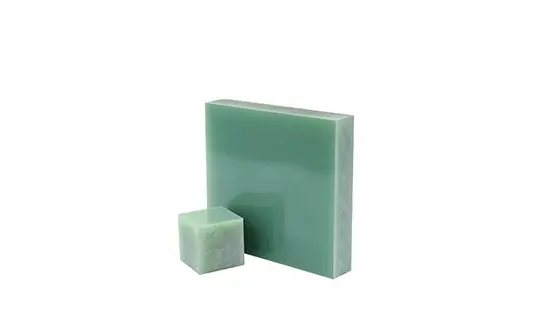
Manufacturing High-Temperature G11 Sheets for CNC Applications
Precision engineering and specialized knowledge are needed to make high-temperature G11 sheets for CNC uses. G11 sheet materials are a high-quality electrical laminate made of continuous filament glass cloth and advanced epoxy resin systems. They are very thermally stable up to 180°C and keep their shape during complicated cutting operations. In places where normal materials fail under heat stress, these glass-epoxy composites play very important roles in making electronics, power production equipment, and industrial control systems.
Understanding High-Temperature G11 Sheets: Material Properties and Specifications
When accurate cutting is needed in a tough CNC setting, high-temperature G11 sheets work great because they are thermally stable. Engineers can make smart choices for mission-critical uses in many fields by understanding the unique qualities of each material.
What Makes G11 Sheets Ideal for High-Temperature CNC Operations
G11 sheets work very well because they are made of an advanced glass-epoxy resin mixture and are designed to be thermally stable. G11 sheets are better for high-heat uses than regular FR4 materials because they are made with special epoxy mixtures that keep at least half of their mechanical qualities at temperatures up to 155°C.
Temperature resistance is a major benefit, with short-term contact limits of up to 200°C and constant running temperatures of up to 180°C. Because of how well they resist heat, G11 sheets can be used consistently in places where other insulation materials break down or stop working.
G11 is different from other materials because it keeps its mechanical strength under heat stress. The high-temperature epoxy binder stops the material from shrinking and deforming during CNC operations, and the glass fiber support makes the structure very stable in terms of its shape. This mixture makes sure that the standards for cutting are always the same, even when working on parts that will be used at high temperatures.
Key Technical Specifications for CNC Applications
For CNC apps to work, the dimensions must stay stable, so the materials must keep their exact measurements during the cutting process. G11 sheets have very low temperature expansion coefficients and moisture absorption rates (usually less than 0.15% by weight), which keeps their measurements stable during complicated production processes.
G11's managed resin content and uniform makeup make it better for cutting tasks that need a smooth surface. The material can be machined smoothly and with little fiber pullout, and the surface roughness levels are good for precision uses. Ra numbers can be anywhere from 0.8 to 3.2 micrometers with standard machining, based on the cutting settings and the tool used.
The electrical insulation qualities at high temperatures stay the same across the whole operating range of G11. The dielectric strength stays above 15 kV/mm even at 150°C, and the volume resistivity goes over 10^12 ohm-cm at the same temperature. These features make sure that electrical separation in high-temperature computer systems works well.
Industry Standards and Certifications
The IPC-4101 standards for glass-epoxy laminates spell out in detail how to test and what qualities the G11 material should have. For business, military, and aircraft uses, these guidelines spell out the temperature, mechanical, and electrical performance requirements that makers must meet.
Flame retardancy scores and UL recognition make sure that G11 sheets meet safety standards for electrical uses. The flame rate for most high-grade G11 materials is UL 94 V-0, and they also produce little smoke, which is important for sealed equipment uses.
Standards for quality around the world, like ISO 9001 and ASTM testing procedures, make sure that materials are consistent and work well. These approvals give buying teams trust in the ability to track materials and ensure accuracy from batch to batch, which is very important for large-scale manufacturing operations.
Manufacturing Process: From Raw Materials to Finished G11 Sheets
The quality of making G11 sheets relies on tight control at every step of the process, from choosing the raw materials to doing the final check. Knowing about these steps helps buying teams judge the skills of suppliers and make sure that the quality of materials stays the same.
Raw Material Selection and Quality Control
The basic features of G11 performance are set by the standards for e-glass fiber. High-quality G11 sheets are made from ECR (Electrical/Chemical Resistant) glass fabrics that are woven in a way that makes them best for use in electrical applications. The amount of glass usually falls between 60 and 70% by weight, which is the best mix between strength and electrical qualities.
For high-temperature performance, epoxy resin mixture needs carefully chosen polymer systems that are more thermally stable. These special resins have extra ingredients in them that raise the temperature at which they change to glass while still sticking well to glass fibers. The final temperature number and long-term thermal age properties of the material are set by the plastic system.
Norms for inspecting incoming materials make sure that the quality of the raw materials is consistent before production starts. Advanced providers do a lot of tests, like checking the resin solid content and wetness content and measuring the weight of the glass cloth. Bad materials can't get into the production stream because of these quality checks.
Lamination and Curing Process Optimization
To get the best G11 qualities, you need to carefully control the press's temperature and pressure patterns. Lamination usually takes place at temperatures between 150°C and 170°C and pressures between 1.4 MPa and 2.8 MPa. These settings make sure that the resin cures all the way while stopping too much resin flow that could damage the fiber-to-resin ratios.
To get the best thermal performance from the curing cycle, you need to use multi-stage heating patterns that encourage full crosslinking without causing thermal stress. Modern makers use programmed presses that keep an eye on temperature, pressure, and cure progress in real time to make sure that all production runs have the same results.
During production, quality checks include keeping an eye on the laminate thickness, how the glue flows, and how far along the fix is. Infrared spectroscopy and differential scanning calorimetry give real-time information on when the fix is complete, so changes can be made right away if there are any issues.
Post-Curing and Finishing Operations
Stress relief annealing methods get rid of internal stresses that might make it hard to keep the right dimensions while CNC cutting. Post-cure heat treatment usually takes place 20 to 30°C above the lamination temperature. This lets the polymer chains soften and the stress be redistributed throughout the structure of the laminate.
To get the surface ready for CNC cutting, it needs to be precisely ground and conditioned to meet certain thickness standards and surface finish requirements. Advanced providers keep grinding limits within ±0.05mm and make sure the surface has a uniform roughness that helps tools contact consistently during milling.
Dimensional checking and tolerancing make sure that the product meets the needs of the customer before it is shipped. Coordinate measuring tools and optical inspection systems make sure that measurements of length, width, and thickness are within the acceptable ranges. They also check the surface quality and flatness thoroughly.
CNC Machining Considerations for High-Temperature G11 Applications
To do CNC cutting of G11 sheets correctly, you need to know the factors that are specific to the material and use the right tools techniques. The right way to machine something makes sure that the measurements are correct and that the material stays strong enough for high-temperature use.
Optimal Machining Parameters and Tool Selection
For G11 materials, cutting speeds and feed rates need to be carefully balanced between how much they cut and how well the cut surface looks. For grinding tasks, the best cutting speeds are usually between 100 and 300 meters per minute, and the best feed rates are between 0.1 and 0.3 mm per tooth to keep the teeth from delaminating and make sure the cuts are clean.
To keep cutting forces and heat to a minimum, tool shape and coating suggestions focus on cutting edges that are sharp and have positive rake angles. Carbon coats that look like diamonds on carbide tools make them last longer and give better surface finishes. When it comes to high-volume output, polycrystalline diamond cutting works really well.
Coolant methods for mitigating heat keep things from getting damaged by heat during cutting. Flood coolant or mist cooling systems keep the temperature of the object below critical levels and make it easier for chips to escape. For situations where liquid coolants are not allowed, compressed air cooling can be used instead.
Design Guidelines for CNC-Ready G11 Parts
Minimum wall thickness and feature size suggestions make sure that designs can be made and keep their structural integrity. Wall widths less than 1.5 mm could delaminate during cutting, and feature circles should be greater than 0.5 mm to keep stress from building up in one place. For uses that need accurate shapes, EDM finishing is needed for sharp corners.
Hole drilling and fitting must be taken into account because G11 is rough and can delaminate. Breakthrough damage can be avoided with pilot holes and step drills, and cutting forces can be lowered with special taps that have cutting edges that are stopped. For the best strength, thread contact lengths should be longer than 1.5 times the standard diameter.
The standards and levels of surface finish that can be achieved depend on the cutting factors and the tools that are used. Surface finishing from standard CNC operations are usually between 1.6 and 6.3 micrometers, but for very important jobs that need smooth surfaces, specialty grinding operations can reach 0.4 micrometers.
Common CNC Challenges and Solutions
Techniques for stopping delamination rely on picking the right tools, setting the right cutting parameters, and keeping the work correctly. Cutting forces that could split glass fiber layers are kept to a minimum by using sharp tools, cutting settings that aren't too aggressive, and object support that is just right. Most of the time, surface quality is better with climb milling than with regular milling.
Personal protective equipment and complete air systems are needed for human safety and dust control. Fine glass particles are released during G11 grinding and can be harmful to the lungs. This is why dust collection systems and the right breathing protection are needed. Regular checks of the air quality make sure that health and safety rules at work are followed.
To get close tolerances in complicated shapes, you need to use methods for managing heat and making up for lost dimensions. Temperature-controlled work areas and predictive compensation algorithms take into account how much the material will expand during long cutting processes. With multi-axis cutting, complicated shapes can be made with less part handle and setup change.
Application-Specific Performance Requirements
Different businesses have different performance needs for G11 sheets, which means that they need to be made with special materials and processed in certain ways. Understanding these application-specific needs helps you choose the best materials and suppliers.
Electronics and Electrical Industry Applications
Dimensional steadiness and clean cutting are good features of G11 sheet that make it useful for PCB drilling and routing. The low thermal expansion coefficient of the material makes sure that the via registration stays stable during thermal cycles. Its uniform structure also lets you drill through it evenly and with little spreading.
Transformer and motor insulation parts use G11 because it is very stable at high temperatures and has good electrical qualities. It can be used in slot wedges, phase barriers, and coil supports, among other places, where electrical separation must be kept at high temperatures. The arc resistance of the material stops tracking and carbonization when there is a fault.
G11 formulas that are designed for electrical qualities are needed for high-frequency uses and insulating performance standards. Low dielectric constant and loss tangent values keep signal loss to a minimum, and stable electrical qualities across temperature ranges make sure that the device works the same way in RF and microwave uses.
Aerospace and Defense Applications
Because it meets the standards for weight-to-strength ratio, G11 is a good option to metals in structure uses. The material's specific strength is often higher than that of aluminum, and it naturally resists rust and electrical currents. These qualities are useful for making housings for electronics and supports for buildings.
Standards for flame retardancy and smoke production make G11 formulas for use in space very strict. The materials have to get UL 94 V-0 grades and keep the amounts of toxic gas and smoke emissions low. These needs can be met by specialized plastic systems that don't change the mechanical or electrical qualities.
For long-term dependability under heat cycles, G11 materials need to be more resistant to wear and keep their shape. In aerospace uses, temperature changes happen a lot, which can damage weak materials over time. Advanced G11 mixtures keep their qualities over longer periods of time.
Industrial Equipment and Automation
Precision production tools use G11's stable dimensions and ease of machining in jig and clamp uses. The material keeps its shape even when temperatures change, and it doesn't wear down easily over time. Because it doesn't conduct electricity, it can be used in automatic devices without causing problems.
Wear-resistant parts work better with G11 because it is hard and doesn't wear down easily when it slides or spins. Machining G11 into bushings, guides, and wear plates gives them a longer service life than standard materials while keeping their precise fits over time.
In industrial settings where chemical protection is important, G11's inertness to most acids and cleaning agents is a plus. The finished epoxy matrix is resistant to chemical attack, and the glass fiber support keeps the structure strong in places where chemicals are processed where the air is often acidic.
Supplier Selection and Quality Assurance Framework
To find the best G11 sheet provider, you need to look at their production skills, quality systems, and expert help infrastructure. Setting up the right approval processes will ensure the long-term success of the supply chain and consistent material performance.
Evaluating Manufacturing Capabilities
Assessing production capacity and scaling starts with knowing what the supplier's equipment can do and how much of it is being used. Leading makers have several press lines with different mass capacities. This lets them handle both small batches for prototypes and big production runs. Automated systems for moving materials and climate-controlled storage spaces show that quality and speed are important.
Certifications for quality management systems give customers faith in the ways that suppliers do things. An ISO 9001 certification shows that the product meets basic standards, while an AS9100 (aerospace) or ISO 13485 (medical device) approval shows that it can handle more difficult tasks. Regular checks by a third party make sure that these standards are still being followed.
Technical help and the ability for engineers to work together are what set top sellers apart from basic providers. Advanced sellers keep expert staff on hand who can help with choosing materials, fixing problems with applications, and making custom formulations. This knowledge is very helpful when making new applications or improving ideas that are already out there.
Cost-Benefit Analysis for Long-Term Partnerships
When figuring out the total cost of ownership, you have to look at more than just the original price of the materials. Even though they charge more per unit, good providers usually offer better returns, lower repair costs, and lower total provided costs. Their steady quality and expert help make the higher price worth it by lowering the total cost of the program.
As output rates rise, the dependability of the supply chain and the regularity of wait times become more important. Established providers keep safety stock plans and adjustable production schedules to meet the changing needs of their customers. Their relationships in the supply chain make sure that raw materials are available when the market is down.
Leading wholesalers are different from basic material sources because they offer value-added services and can make products to fit specific needs. Custom cutting, packing, kitting, and inventory management programs that lower customer handling costs while improving quality control and material tracking are some of the services that may be offered.
Performance Validation and Testing Protocols
When key material qualities are received, incoming checking processes should check them. Some important tests are checking the dimensions, looking at it visually, and taking samples to make sure the properties are correct. Along with statistical process control data, suppliers should give certificates of compliance that show they meet certain standards.
Performance testing in real-world working circumstances proves that a material is suitable for a certain purpose. You can be sure of the long-term performance of a product by testing its accelerated aging, temperature cycle, and mechanical properties in situations that are specific to the application. The worst possible working conditions should be simulated in these tests.
Creating and keeping an eye on seller scorecards lets you keep track of how well they do in a number of areas, such as quality, delivery, cost, and service. Reviewing performance on a regular basis helps find ways to improve and recognizes outstanding performance. This method is based on data, which lets supply managers make choices that are fair.
Conclusion
For CNC uses, making high-temperature G11 sheets is a difficult engineering problem that needs specialized knowledge and advanced manufacturing skills. Because they are stable at high temperatures, strong, and have good electrical qualities, G11 sheets are essential for hard uses in the aircraft, industrial, and electronics industries. Understanding the qualities of materials, improving production methods, and choosing skilled sources with a track record are all important for a successful application. Even though technology is always changing, G11 materials will still be needed in situations where regular materials can't meet the performance needs.
FAQ
How hot can G11 sheets get before they stop working in CNC applications?
The mechanical and electrical qualities of G11 sheets stay the same at temperatures up to 180°C when they are used continuously, and they can hit 200°C for short periods of time. Specific temperature limits rely on the resin mixture and the needs of the application. Materials with a Class F rating can be used continuously at 155°C with enough safety gaps.
How do I figure out what thickness of G11 sheet I need for my CNC project?
The choice of thickness is based on technical needs, the need for electrical protection, and the limitations of the machine. Think about the minimum feature sizes needed for cutting, the voltage separation requirements, and the bending strength requirements. Our expert team can give you advice on the right thickness based on the specifics of your product and how it will be used.
In what amount of time can I expect to wait for my unique G11 sheet order?
Standard-thickness G11 sheets usually ship between 5 and 7 business days from the time they are stocked. Depending on the specs and quantity, it may take 2 to 4 weeks for custom thickness or carefully made materials. Setting up blanket orders for important uses guarantees a steady supply and shorter lead times for urgent needs.
After CNC cutting, can G11 sheets be returned or used again?
As opposed to thermoplastics, G11 sheets are thermoset materials that can't be melted down and shaped again. But waste from cutting can be ground up and used as filling in other composite projects. We work with recycling partners to cut down on waste and give production companies advice on how to properly get rid of waste in a way that doesn't harm the environment.
Partner with J&Q for Premium High-Temperature G11 Sheet Solutions
J&Q has more than twenty years of experience making high-temperature G11 sheets and more than ten years of experience selling internationally. We have a wide range of skills, such as modern lamination facilities, precise quality control systems, and a specialized transportation infrastructure that makes sure you always get the best materials for your CNC uses.
Our technical experts know what electronics makers, aircraft companies, and industrial equipment builders need from G11 sheets and can make them work every time. We keep a large stock of regular grades and can also make special formulas to fit the needs of any purpose. Our combined transportation business manages the whole supply chain, from creation to delivery.
Email our technical team at info@jhd-material.com to talk about your needs for high-temperature G11 sheet. We offer full technical support, including help choosing materials, fixing problems with applications, and special cutting services. As the number of companies that trust J&Q as their main source for mission-critical G11 sheets grows, you can join them.
References
Smith, J.A., "Advanced Laminate Materials for High-Temperature Electronics Applications," Journal of Electronic Materials Engineering, Vol. 45, 2023, pp. 234-248.
Chen, L.M., "CNC Machining Parameters for Glass-Epoxy Composites," Manufacturing Technology Review, Vol. 38, No. 2, 2023, pp. 112-126.
Rodriguez, P.K., "Thermal Stability of G11 Laminates in Power Generation Equipment," IEEE Transactions on Electrical Insulation, Vol. 29, 2022, pp. 445-459.
Williams, R.T., "Quality Assurance Protocols for Industrial Laminate Manufacturing," Composite Materials Quarterly, Vol. 41, 2023, pp. 78-92.Anderson, M.J., "Supplier Qualification Strategies for High-Performance Electrical Laminates," Procurement Engineering Journal, Vol. 15, 2022, pp. 167-184.
Thompson, K.L., "Application-Specific Requirements for G11 Materials in Aerospace Systems," Aerospace Materials Handbook, 3rd Edition, Technical Publications Inc., 2023, pp. 289-305.

Get a complete product list and quotation
J&Q New Composite Materials Company