Lithium Battery Pack 3240 Epoxy Resin for Battery Module Insulation
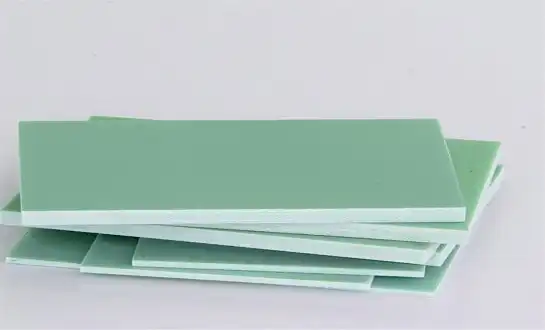
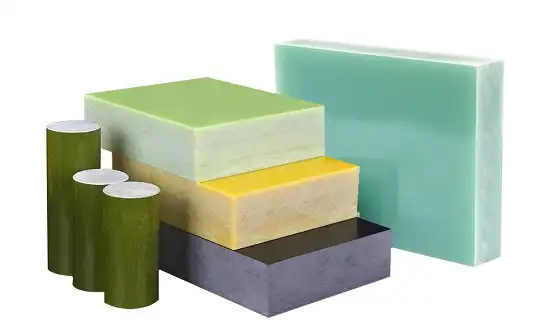
The Lithium Battery Pack 3240 Epoxy Resin is a rigid laminate made of E-glass fabric and epoxy/phenolic resin. The cells, busbars, and terminals are kept separate, which keeps the battery modules cool. It also keeps the structure from shaking. It can handle water, heat, and electrolytes. Before placing an order, buyers should check the dielectric strength, flame rating, thickness tolerance, ability to be machined, and supply capacity. Look at each grade inside the pack. Firms in the US that make batteries and other industrial goods buy JingHong 3240 epoxy sheets from us. These sheets come in sizes ranging from 0.5 mm to 100 mm thick.
Introduction: Why 3240 Epoxy Resin Matters in Lithium Battery Pack Insulation?
Insulation Roles Inside a Battery Module
A lithium battery module has cells, busbars, terminals, wiring, and a battery management system (BMS) inside it. There is a layer of insulation between the live parts to keep them from touching and breaking the circuit. A rigid 3240 sheet can hold a lot of weight because it can be used as a base for mounting, an end plate, or a spacer. The pack has to handle vibrations, water, chemicals, and being heated and cooled many times in electric cars, forklifts, and storage racks that stay in one place. The shape of the insulation and its ability to stop electricity from moving must not be changed by any of these things.
Main Purchasing Criteria for B2B Buyers
People in charge of buying things and people in charge of engineering often compare the same short list. Some of the things it talks about are the dielectric performance, the thermal stability, the flame rating, the accuracy of the measurements, the ability to be machined, the packaging, the documentation, and the supply capacity. For liquid systems, you can also add viscosity, how the material cures, and whether it works with dispensing to that list. Sheets of a wider range of thicknesses can be cut. People often look at price, delivery speed, and peak electrical values when they buy appliances and machinery. This helps the technical and sales teams work together and speeds up the sampling process. Make sure these criteria are clear before you ask for quotes.
Material Selection and the Full Safety Process
A pack can't stay safe just because it's warmed up. How safe something is depends on how well the monitoring, cooling, protection, and space between cells all work together in the enclosure. It is possible to test UL 9540A to see how quickly a fire that gets out of control can spread in battery energy storage systems. Installers can find out how to set up stationary energy storage systems in NFPA 855. In both cases, we look at the system as a whole. Make sure that the insulation material you choose fits with these design and production steps and the place where the sheet will be used, tested, and put together.
What Is 3240 Epoxy Resin for Lithium Battery Packs?
Laminate Sheet Versus Liquid Epoxy
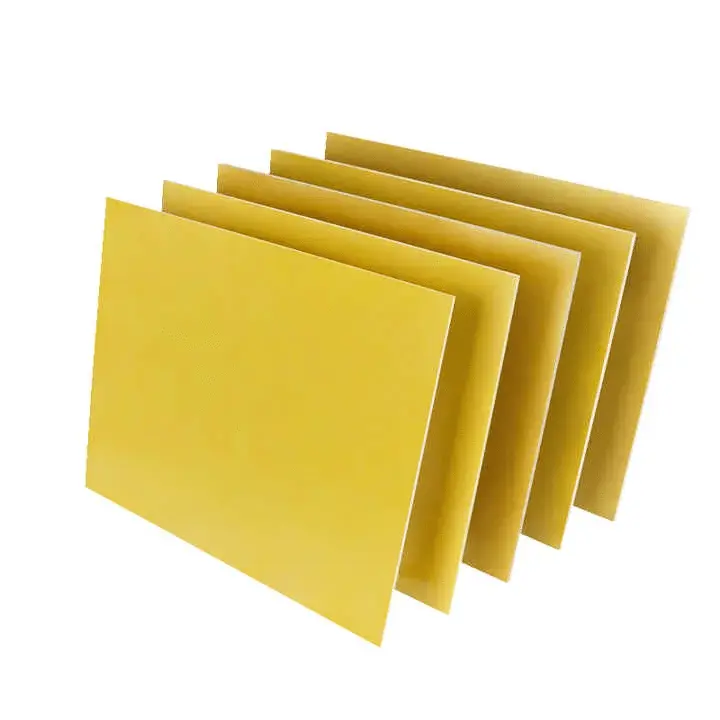
There are two meanings for this word. It is possible to pour or spray liquid epoxy systems on parts to bond or pot them together. We sell a rigid sheet that has already been formed in the 3240 grade. The manufacturers mix epoxy/phenolic resin with alkali-free E-glass woven fabric. They then heat and press the fabric to cure it. The yellow laminate is now flat and all the same thickness. It can be cut and drilled now. You can't be sure that all 3240 products have the same resin content or electrical ratings because each supplier uses a different formula. Always look at test reports side by side.
Main Applications in Battery Modules
Some of the things that 3240 laminate is cut into are cell spacers, structural frames, end plates, insulation boards, and terminal block bases. It stops vibrations from the road in light electric vehicle packs like e-scooters and e-bikes. In stationary storage, thick boards separate the high-voltage rack tiers from the steel racks. The boards' compressive strength lets the modules' weight rest on them. Conductive dust and fluids in the work area can't get to the terminals in AGV and forklift power units because of an epoxy matrix. This job is like liquid potting because it fills in gaps and keeps cells together. This will help you figure out where each thing fits in.
What Epoxy Insulation Does Not Replace?
Safety packs are still important for a Lithium Battery Pack 3240 Epoxy Resin, but epoxy insulation can't do the job by itself. It can't take the place of the right spacing, a strong enclosure, cooling, cell monitoring, or safety systems. Electrodes and nearby cells stay separate on a 3240 sheet, which also helps keep parts in place and doesn't let electrolytes damage it. To stop thermal runaway, there still needs to be a full safety design. As an extra layer of defense, think of the laminate. For each pack, make sure you know what part it plays in the failure analysis. From this point of view, too, people don't get too excited during validation.
3240 Epoxy Resin Properties and Technical Requirements
Electrical Performance
Data about electricity shows if a sheet can separate parts with a lot of voltage. The voltage drops to 15.5 kV/mm in 25# transformer oil at 90 °C, according to our Grade A report. It also has a parallel-layer breakdown voltage of 90.0 kV, a relative permittivity of 4.90 at 50 Hz, and an insulation resistance of 4.1×10²³ Ω after being wet. The Grade B report lists 8.6 MV/m and 2.0×10⁹ ©. Note that these numbers don't match, so write down the grade on your order. IEC 60243-1 talks about how to test the strength of electricity at power frequencies.
Mechanical Strength and Thermal Behavior
Batteries need to be able to handle vibration and clamping loads, so mechanical numbers are important. In Grade A test data, the bending strength is 484 MPa perpendicular to the laminations, the compressive strength is 401 MPa, the tensile strength is 368 MPa, and the impact strength is 59.4 kJ/m². While Grade B is above 140 °C, it bends and has a compressive strength of 438 MPa. At V-0, Grade A can catch fire, and at V-1, Grade B can too. Flames must go out within 10 seconds if the level is V-0 on the UL 94 scale. If the level is V-1, they can go out for up to 30 seconds.
Testing Under Realistic Conditions
Datasheets talk about lab samples, not your pack. In our reports, we use different sample sizes. For example, for Grade A vertical breakdown, we use a 2.09 to 2.11 mm sample. This means that results can be different depending on the thickness. This can be seen in the different samples of water absorption: 39.9 mg for Grade A and 6.0 mg for Grade B. You should test the parts on your own after putting them through humidity, temperature changes, and vibration. Along with ASTM D229.1, it tells you how to test rigid sheets and plates that are used for electrical insulation. You can start with either IEC 60893 or this page. Both of them are good places to start.
3240 Epoxy Resin vs. Alternative Battery Insulation Materials
Silicone and Polyurethane
So it stays soft, doesn't break when you move it, and is easier to take off when you need to fix a module. You need to know how polyurethane reacts to water, heat, and chemicals in your environment because it is flexible and can take a hit. Both harden around parts that are still in place, which means they fill in spaces that a flat sheet can't reach. Neither of them gives the rigid support that a glass-cloth laminate does. If the cells in your design grow and shrink, a flexible compound might work well as a cushion between them. But a 3240 sheet will still hold the frame.
Laminate Sheets and Liquid Epoxy
When epoxy is liquid, it sticks strongly to metals and plastics. When it hardens, it forms a solid mass that can be used to fill gaps and pot things. How well it works depends on how much you mix, how long you let it cure, and how much air you let out. The sheets of laminate are already hard, so all you have to do is cut them and put them together. Each part in a batch is the same thickness, and you can check them all before they are put in the pack. But a sheet can't fit into gaps that are too big or too small. In a lot of designs, sheets and liquid compounds are used together. Spreading and building up are done with sheets, and filling and bonding are done with liquid compounds. Potting compounds that come in liquid form are not for sale; only sheets are.
Rigid or Flexible: Matching the Design
Things that are stiff or bendy can both be used. The load path and the change in temperature should help you decide. Things expand at different rates, and a solid mass can break if it is stuck between two moving parts. It's also important that it works well. A sheet spacer that can be taken off is easier to work with than a potted block when technicians need to change a cell. What you should do depends on how much vibration there is, the temperature at which it works, how you handle repairs, and how much mechanical support you need. These four things should be in your specification, and you should ask each supplier to answer all of them.
How to Choose, Process, and Protect Against Risks?
Selection Steps for Engineers and Buyers
Pick the cell type for a Lithium Battery Pack 3240 Epoxy Resin (cylindrical, prismatic, or pouch), what each part does, and the amount you want to make. Next, make sure that the flame rating, dielectric strength, operating temperature, thickness, and flatness are all right for you. Buying teams care about stable supplies, lead times, and paperwork. Engineers, on the other hand, want to know how well the process fits and how simple it is to machine. Get the safety data, technical data, and a sample. Then test each module on its own. Check that the sheet works in the real product. If it works on a flat surface but not when put together, it still costs you time.
Machining and Assembly Process
This step is done in the factory, where heat and pressure are used for lamination. After delivery, work on your line begins. On the pallet, keep the sheets flat and dry. Glass-cloth laminate makes tools dull, so use sharp tools to cut and drill, and blow out the dust. Clean the parts to get rid of dust, oil, and water before putting them together. Also, check the edges, hole positions, and thickness. If you need to use liquid epoxy near sheet parts, make sure you mix, degas, and cure it according to the directions on the compound's data sheet. Check the module's resistance to insulation and its ability to handle high voltage to finish it off.
Common Risks and How to Avoid Them
When you buy something, don't just look at the price. A lower unit cost might not be worth it if there is extra work to be done, waste, line stops, or problems in the field. When you work with suppliers who can't show test reports, batch records, or sample support, or when you think that two 3240 products are the same, you're taking some other risks. Set rules for incoming inspection on things like thickness, look, and size. You should save a piece from every batch so that you can find issues quickly. Being clear from the start can help you avoid most disagreements later on.
Procurement Guide: Buying 3240 Epoxy Resin for Lithium Battery Packs
What to Include in Your RFQ?
A deep question keeps you from having to email back and forth a lot. Include the type of battery, the cell format, the part's function, the sheet size and thickness, the flame and electrical targets, the operating temperature, the annual volume, the location of delivery, and any other information that is needed. Describe how you pack. You should write down the dates that you meet the requirements because samples, pilot tests, and quality checks usually come before regular orders. If you're in the US, please tell us the address of your warehouse or port so that we can plan how to ship by sea, land, or air.
JingHong Product Details at a Glance
The JingHong 3240 sheets are made of epoxy/phenolic resin and E-glass fabric. That's just how yellow they are. The standard size is 1020 mm by 2020 mm, but it can be as thin as 0.5 mm or as thick as 100 mm. Normal packing is kept safe on a pallet. Every year, it can make up to 43,000 tons of products. You can ship by sea, land, or air, and you can pay by T/T. It takes at least 500 kg to place an order. The company has ISO 9001, ISO 14001, and ISO 45001 certifications.
Why J&Q Adds Value?
For more than 20 years, we've made and sold insulation sheets. For more than 10 years, we've also done business with other countries. Once you place an order with us, we put it at the top of our production list and have our own logistics company handle delivery. You only have to deal with one team from making it to getting it. The quality stays high thanks to our automated workshop, and our export team is here to help with shipping and technology questions. Just tell us what you want, and we'll talk about samples, how to pack them, and a good time for you to get them.
Conclusion
This Lithium Battery Pack 3240 Epoxy Resin is made of rigid E-glass and an epoxy/phenolic laminate. It supports the weight of battery modules and keeps cells, busbars, and terminals separate. People should first decide what they want to use the pack for. They should then use test reports for each grade to match the thickness, dielectric strength, flame rating, and mechanical strength to the design of the pack. Many modules mix silicone, polyurethane, liquid epoxy, and laminate sheets because they all do different things. Safety still depends on distance, enclosure, cooling, and supervision. The temperature, vibration, and humidity that are tested must be the same as they would be in real life. When looking for a good supplier, it's important to look at things like documentation, samples, pilot validation, and steady supply capacity.
FAQ
Can 3240 epoxy replace silicone or polyurethane?
Not all the time. The 3240 sheet can be used as insulation boards, spacers, or frames. It's stiff. Rubber and polyurethane can both bend and fill in gaps. Sort them by how much they shake, how much the temperature changes, and how much repair work they need.
Which documents should I request before ordering?
Do not forget to ask for the safety data sheet, the test reports, the batch records, and instructions on how to store and pack the item. Make sure that the grade, sample size, and test method are correct in each report.
How do I confirm a sheet suits my EV module?
Run tests at the module level after putting it through humidity, temperature changes, and vibration. Bench data doesn't tell you anything about how the sheet will work in your car.
What are the minimum order and payment terms?
You can use T/T to pay, and the least you can order is 500 kg. Things can be sent by air, sea, or land.
Contact J&Q for Lithium Battery Pack 3240 Epoxy Resin Supply
Want to buy Lithium Battery Pack 3240 Epoxy Resin from a company? J&Q sells JingHong sheets that are 0.5 mm to 100 mm thick. We have our own logistics company and can make 43,000 tons of goods every year. Email info@jhd-material.com with the type of cell, the thickness, the volume, and the address where you want the material sent. After that, we'll talk about samples or a quote for a lot of items. Blog.jhd-material.com has more posts.
References
1. UL 94: Tests for Flammability of Plastic Materials for Parts in Devices and Appliances, UL Standards, 2013
2. IEC 60243-1: Electric Strength of Insulating Materials – Test Methods – Part 1: Tests at Power Frequencies, International Electrotechnical Commission, 2013
3. IEC 60893-1: Insulating Materials – Industrial Rigid Laminated Sheets Based on Thermosetting Resins for Electrical Purposes, International Electrotechnical Commission, 2004
4. ASTM D229: Standard Test Methods for Rigid Sheet and Plate Materials Used for Electrical Insulation, ASTM International, 2019
5. UL 9540A: Test Method for Evaluating Thermal Runaway Fire Propagation in Battery Energy Storage Systems, UL Standards, 2019
6. NFPA 855: Standard for the Installation of Stationary Energy Storage Systems, National Fire Protection Association, 2023

Get a complete product list and quotation

J&Q New Composite Materials Company