Is G10 or FR4 Better for CNC Machined Insulation Parts?
Choosing between G10 and FR4 as the material for CNC-machined insulation parts has a big affect on how well they work, how long they last, and how much they cost. After a lot of research into both materials, it was found that G10 sheet is usually better for applications that need mechanical strength and FR4 is better for applications that need electrical safety. G10 is great for high-stress mechanical parts because it is very stable in size and doesn't absorb water. Because it doesn't catch fire and doesn't conduct electricity, FR4 is an important material for devices. The best choice relies on your individual program needs, the surroundings, and your need to follow the rules. There isn't a single option that is always better.
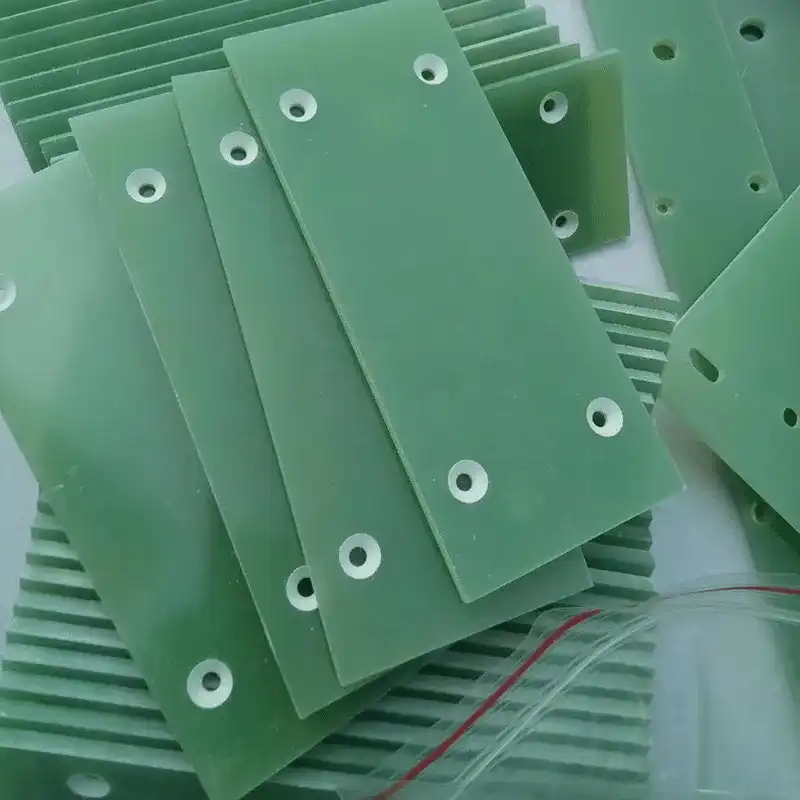
Understanding the Core Differences Between G10 and FR4
Material Composition and Manufacturing Processes
Epoxy fiberglass composites, such as G10 and FR4, have basic structures that are similar, but they are made in very different ways and use very different addition recipes. G10 is an epoxy laminate that is made by keeping the pressure on it while it sets. It is more stable and has better tensile properties. What you get when you make something this way has a very high tensile strength (usually over 65,000 psi) and is very hard to damage mechanically when it's under load.
FR4 uses special chemicals that don't catch fire, mostly halogenated substances, when the resin is being made. These extras keep things safer by making them less likely to catch fire and passing strict rules for power safety. The whole process of making it is based on getting the best electrical protection while also having the right amount of power for computer use.
Mechanical Strength and Electrical Properties Comparison
These materials are very different from each other based on how they work mechanically. G10 sheet can bend more than FR4 sheet; it can reach about 85,000 psi compared to 75,000 psi for FR4. This benefit comes in handy when there need to be high mechanical loads or regular stress cycles.
The electrical features of different materials show off their unique powers. Around 400 to 500 volts per mil, G10 is a very good insulator. FR4 gets around 400 to 450 volts per mil. This property of FR4 to not catch fire is very important for safety in electrical applications where stopping fires is more important than getting the best electrical performance.
Thermal and Environmental Performance
Because of how they respond to heat, these materials are not the same when they are used in hot conditions. G10 can handle temperatures of up to 130°C for long periods of time and up to 180°C for short periods of time. FR4 is stable up to 140°C, but the chemicals that keep it from catching fire might make it less stable over time in hard conditions.
Protecting the earth in different ways for FR4 sheet depends on the object. Not taking in water is very easy for G10. It usually takes in less than 0.1% of its weight in water over 24 hours. The rate at which FR4 takes in water is a little faster, between 0.1% and 0.15% per day. In wet places, this might make it less stable.
Evaluating the Suitability for CNC Machined Insulation Parts
Machinability and Tool Wear Considerations
There are a lot of things about CNC cutting that affect how well and quickly parts are made. When you cut with G10, your tools will last longer because it has a regular density and isn't as rough. It cuts easily and doesn't pull out many fibers, so the edges are smooth enough for fine work. Most tools last 15 to 20 percent longer when cutting G10 than when cutting FR4.
In its own way, FR4 is hard to work with because it is made of resin and glass fiber. Chemicals that put out fires can speed up the wear and tear on tools, especially diamond cutting tools. But if you use the right cutting settings and tools, you can get exact readings and a great surface finish that can be used in computer parts.
Surface Finish Quality and Dimensional Tolerance
When making precision insulator parts, the surface finish needs often determine the material choice. When it's made right, G10's surface roughness is always less than 32 microinches. In other words, it can be used for jobs that need smooth surfaces or for finishing touches after the fact. Because of how stable the material is, the limits stay tight during the whole cutting process.
There are a lot of different choices and tools that can be used to change the quality of the surface finish on FR4. It is possible to get a similar surface, but you need to pay more attention to the feed and cutting speeds. For the edge to stay sharp, you need sharp tools and the right way to cut the material. If you don't, the fibers will break.
Compliance Standards and Regulatory Requirements
When picking products for business use, it's very important to make sure they follow the rules. G10 sheet is made to meet a lot of airplane and military standards, like ASTM D7069 and MIL-I-24768/28. These approvals make sure that performance and quality don't change when things get tough and dependability has to be kept up.
FR4 compliance is mostly about safety standards for energy, such as the UL 94 V-0 flame grade and RoHS compliance for home safety. The material is safe to use on printed circuit boards and meets many electricity safety standards around the world. Buying teams can choose products that follow their company's rules better when they know about these changes in compliance.
Decision Criteria for Procurement Managers and Engineers
Application Environment Assessment
When used for business, the setting has a big impact on how well G10 sheet works and how long they last. Because it doesn't absorb as much water and stays warmer longer, G10 is a good choice for hot places. Because G10 is physically stable and doesn't change when the temperature changes, it can be used in places that need to handle a lot of temperature changes.
It's very important to know how much chemical exposure there is in workplace areas. That's because G10 is much stronger than most industry chemicals, oils, and fluids that are used in making things. Chemicals don't hurt FR4 very often, but strong alkaline solutions or being in contact with some organic acids for a long time may.
Mechanical Load Requirements and Stress Analysis
When using a material for load-bearing purposes, it's important to pay close attention to its properties and how stress is distributed. Because it can bend and stretch a lot, G10 is great for structural insulation parts that need to hold up against heavy mechanical loads. The material is strong enough against wear to make sure it will work consistently in spinning machines that load and unload many times.
G10 is better than other materials because it can handle impact when mechanical shock or shaking happens often. It is more reliable in hard mechanical settings where a broken part could stop the system from working or cause safety worries because the material is tough and doesn't crack and spread.
Supplier Reliability and Quality Consistency
When picking a provider, you should think about things like how reliable their service is, how well they can help you professionally, and how steady their quality is. Stability from batch to batch is ensured by well-known sources with full quality control systems. This is important for planning output and being able to switch out parts. You can fix cutting problems and find the best processing settings for each job with the help of technical support.
Supply chain safety is growing more and more important in today's global business world. If suppliers can find many types of materials and change how much they can make, they can keep materials available even if the market changes or there are problems with shipping.
Total Cost of Ownership Analysis
When you make something, the cost of supplies is only one part of the total cost of ownership. G10 sheet usually costs more than FR4 sheet, but the extra money may be worth it in the long run because it takes less time to machine, tools last longer, and parts last longer in service.
Time spent on cutting FR4 sheet, the number of tools used, and the need for quality control are all part of the process costs. Even though raw materials cost more, finishing costs can be cut because G10 is easier to machine. The lower cost of FR4 may be cancelled out by the fact that it is harder to machine and needs to have its tools replaced more often in high-volume production.
Case Studies: Real-World Applications of G10 and FR4 in CNC Machined Insulation Parts
High-Temperature Industrial Insulation Application
A big company that makes tools for making electricity had trouble with insulation parts breaking down in high-temperature generator uses. The phenolic-based insulation that was already there started to break down after 18 months of constant use at 120°C. The tech team looked at both G10 and FR4 as possible options to make parts last longer and need less upkeep.
Implementing G10 led to huge speed gains across a wide range of working conditions. After 36 months of constant use, the component's physical stability stayed within the acceptable ranges. This is a 100% improvement over the previous materials. Longer service life and fewer repair gaps were made possible by the better temperature stability and moisture resistance.
The cost study showed that even though G10 had a higher starting material cost, the total cost of ownership went down by about 30% because it needed to be replaced less often and had less downtime for upkeep. The higher dependability increased the overall system uptime and lowered the number of unplanned repair events that used to delay production plans.
Consumer Electronics Precision Insulation
A major company that makes electronics for cars needed precise insulation parts for electric vehicle battery management systems. For the job, the materials had to meet safety standards for cars, like being able to fight flames and work well with electricity in a range of weather conditions. The measurements of the parts had to be accurate to within ±0.002 inches, and they had to keep their electrical protection qualities for 15 years.
The FR4 choice worked best for this job because it is very good at keeping flames out and has constant electricity performance. According to the UL 94 V-0 grade, the material met the safety standards for cars and had enough mechanical power for assembly and service. With CNC machining, the minimum standards in dimensions were met reliably across production batches.
Long-term tests proved that FR4's performance stayed stable even when exposed to temperature changes and humidity levels common in vehicle settings. The electrical insulation qualities stayed the same after rapid age tests that were the same as using the material for 15 years. This showed that the material is suitable for use in important car applications where safety and dependability must not be compromised.
Conclusion
When it comes to CNC made insulation parts, the choice between G10 and FR4 is mostly based on the needs of the application, not on which is better in general. G10 is great for physically demanding uses that need high strength, stability in shape, and resistance to moisture. In electrical situations where flame protection and safety compliance are most important, FR4 works best.
When choosing materials, procurement managers should think about the climate, motor loads, electricity needs, and the need to follow rules. G10 sheet is long-lasting and useful in high-stress mechanical uses, and FR4 is important for electrical shielding because it is safe. Knowing these basic differences helps you make smart choices that improve the performance of parts and lower operating costs.
FAQ
Can G10 and FR4 be used in most situations instead of each other?
Most of the time, you can't use G10 or FR4 instead of each other because they work in different ways. The two materials are about the same when it comes to electrical insulation, but G10 is stronger than FR4, so it can't be used to fight flames, and FR4's flame-retardant additives might not work well enough in high-stress situations. Make sure you think about how the material will be used and safety rules before you pick it out.
What effect does water absorbing have on the performance of G10 and FR4?
The way each material responds to water uptake is different. G10 is stronger and only soaks up 0.1% of its weight in water in 24 hours. FR4 needs between 0.1 and 0.15% more water than other materials, which can change its shape and how it conducts electricity. Because G10 absorbs less water, it stays more stable in terms of size and performance in damp places or when it will be exposed to water.
How long does it usually take to get these items, and how many do I need to order?
Normal widths and sizes take between 2 and 4 weeks to get in stock for both G10 and FR4 materials. For unique shapes, it takes an extra 4 to 6 weeks. Minimum order amounts vary by seller and type of cloth, but for most sizes, they are between 10 and 50 sheets. When you buy more, you often get bigger savings, and well-known companies keep popular sizes in stock to cut down on shipping times.
Partner with J&Q for Premium Insulation Materials
J&Q is a reliable company that has been making and selling high-quality insulation products for over 20 years. They make G10 sheets. With relationships with top companies in both the United States and other countries and more than 10 years of experience dealing with other countries, we can provide you with a wide range of services that are tailored to your exact needs. We run our own transportation business and offer a smooth one-stop service from choosing materials to delivering them.
We use quality control methods and our technical know-how to make sure that each batch is of the same high quality. This will help your CNC cutting projects go smoothly. Get in touch with our experts right away at info@jhd-material.com to talk about your specific needs and get personalized material ideas that will help your parts work better and more efficiently.
References
Institute of Electrical and Electronics Engineers. "Standard Test Methods for Electrical Insulating Materials." IEEE Standards Association, 2023.
American Society for Testing and Materials. "Standard Specification for Glass-Fabric-Based Epoxy Resin Laminates." ASTM International, 2022.
National Electrical Manufacturers Association. "Industrial Laminating Thermosetting Products Standards." NEMA Standards Publication, 2023.
International Electrotechnical Commission. "Specifications for Industrial Rigid Laminated Sheets Based on Thermosetting Resins for Electrical Purposes." IEC Technical Committee, 2022.
Society of Plastics Engineers. "Machining Guidelines for Fiber-Reinforced Composite Materials." SPE Technical Publication, 2023.
Underwriters Laboratories. "Standard for Safety of Insulation Systems for Electric Equipment." UL Safety Standards, 2023.

Get a complete product list and quotation

J&Q New Composite Materials Company



