Dust Control Strategies for Machining FR4 and G10 Plates
Controlling the dust while FR4 plates are being machined is a very important organizational task that has a direct effect on worker safety, product quality, and following the rules. These composite materials are made up of fiberglass and epoxy glue. When they are cut, drilled, or routed, they release fine, rough particles that need special control methods. Electrical makers, industrial equipment builders, and car providers who count on precise machining of these insulating materials need to know how to deal with dust properly. Modern dust control systems can cut the amount of particles in the air by up to 95%, which protects people and equipment while keeping the precise measurements needed for electronic uses.
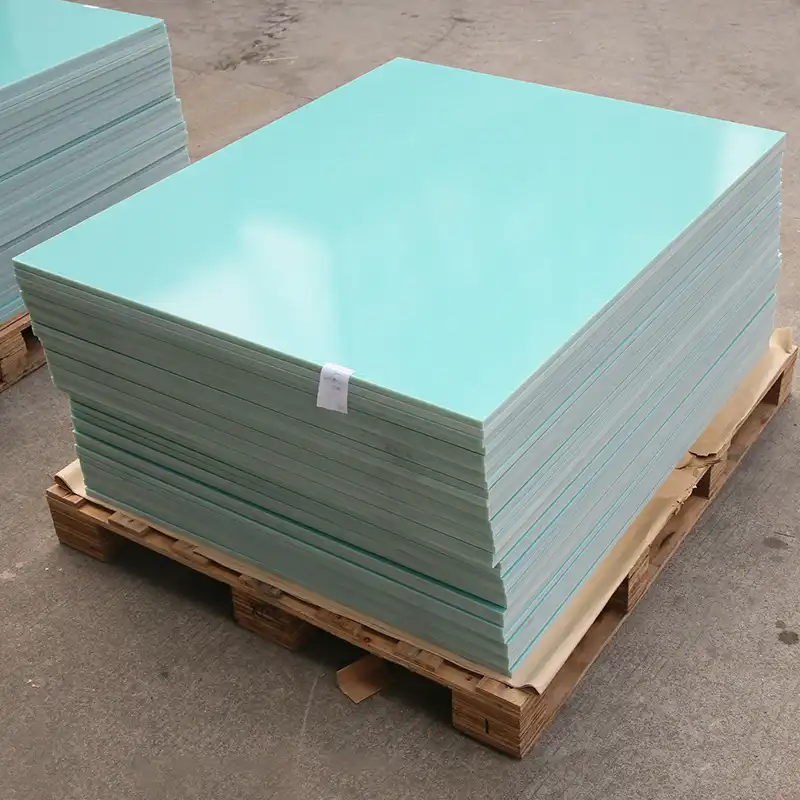
Understanding Dust Generation in Machining FR4 and G10 Plates
Material Composition and Properties
Flame-resistant composite materials FR4 and G10 are made from woven fiberglass cloth and epoxy resin structures. Both materials are made in similar ways, but FR4 is better for printed circuit board bases because it has brominated flame retardants that make it less likely to catch fire. G10 uses a regular epoxy system that doesn't have any flame retardant chemicals. It has better mechanical strength and resistance to water for structure uses.
Very fine glass threads are woven into layers of cloth to make the fiberglass reinforcement. This gives the material its strength and stability in shape. During machining, these glass threads break apart into tiny bits that fly through the air. This makes containment more difficult than with metals or thermoplastics. In addition to adding to the complexity, the epoxy matrix makes resin dust that can irritate the lungs and contaminate tools.
Dust Generation Mechanisms
There are several ways that machining processes create dust, and they change depending on the cutting settings and the tool that is used. Drilling usually releases the most particles into the air because broken material has to move through the drill bit and out of the object. This is called "chip evacuation." Routing and milling make steady streams of dust because the cutting edges cut through the composite structure, freeing glass fibers and resin particles.
Particles range in size from chips that can be seen that are several millimeters across to dust that can be breathed in that is less than 10 micrometers across. These smaller particles are the most dangerous to your health because they can get deep into lung tissue and stay in the air in the workshop for a long time. The National Institute for Occupational Safety and Health has done studies that show that FR4 plate cutting that is not managed can release silica into the air at levels ten times or more higher than what is allowed.
Health and Environmental Considerations
Composite dust exposure poses both short-term and long-term health risks that factories must address with a range of control measures. Particles of glass fiber can irritate the skin and eyes right away, and breathing them in for a long time may make the lungs more sensitive and less effective. Concerns are raised about the crystalline silica in the glass support because breathing in respirable silica at work has been linked to getting silicosis and lung cancer.
The Environmental Protection Agency (EPA) has labeled some resin systems for G10 plate as dangerous air pollution, and environmental laws are focusing more and more on composite dust emissions. Facilities must set up dust collection systems that meet both worker safety standards and environmental release requirements. This usually means using complex methods for filtering and getting rid of the dust.
Causes of Dust Accumulation and Its Impact on Operations
Machining Parameter Influences
Cutting speed, feed rate, and the shape of the tool all have a big impact on how much dust is made during composite machining. When you mix fast spindle speeds with strong feed rates, you tend to get too much heat buildup, which breaks down the resin and lets out more particles. On the other hand, very low feed rates can make the tool rub against the workpiece instead of cutting, which creates fine dust but doesn't remove any material.
When it comes to controlling dust, the tools you use are very important. Diamond-coated and carbide tools work better than high-speed steel tools. When cutting, edges that are sharp make better cuts with less dust, while tools that are worn out make too much friction and heat, which make more dust. To keep up with the needs for both dust control and measurement accuracy, it's important to change tools on a regular basis.
Equipment and Maintenance Factors
The state of the machine tool directly affects how much dust it makes. For example, worn spindle bearings and poor workholding can cause the tool to vibrate too much and break materials. Cutting operations stay steady and under control when machines are properly maintained. This reduces the amount of random material failure that releases fine particles into the air.
The function of the coolant system affects both how much dust is made and how well it is collected. Too little coolant flow lets too much heat build up, which damages the epoxy matrix, and choosing the wrong coolant can stop the dust collection system from working. Synthetic coolants that are made especially for composite cutting provide the best lubrication while still working with equipment that filters the fluids that come after.
Operational Consequences
When dust builds up without being managed, it causes a chain reaction of problems that go far beyond health issues. Particles that build up on machine surfaces make it harder to measure and hold work accurately, which lowers the accuracy of the dimensions of final parts. Electronic control systems are especially sensitive to dust getting in, which can cause servo drives and feedback devices to fail early.
It takes longer for workers to clean workpieces and machine surfaces for FR4 plate between processes, which slows down production. When parts are contaminated with dust, quality control procedures become more difficult and often need extra steps of washing or cleaning before they can be inspected. In competitive market settings, these factors add up to make manufacturing more expensive while lowering production capacity.
Effective Dust Control Principles and Techniques for FR4 and G10 Machining
Industrial Vacuum and Collection Systems
Modern methods for collecting dust from composite cutting use high-efficiency particulate air filtration along with specific pre-filtration steps. At collection points, these systems usually run with air speeds between 3,500 and 4,000 feet per minute. This makes sure that fine particles are captured well without creating too much waste. When pulse-jet cleaning devices are used, they keep filters working well by instantly getting rid of dust buildup without stopping machining.
When working with FR4 plate dust, it's important to choose the right filtering media because regular paper filters quickly get clogged up with tiny glass particles. It is possible to get pleated synthetic media or container filters with PTFE layers that last longer while still collecting well. The right size filter allows enough air to flow while keeping the pressure drop across the collection system to a minimum.
Local Exhaust Ventilation Design
To get good local exhaust air, collection points need to be carefully placed so they can catch dust where it comes from without getting in the way of cutting. Different types of machining produce different directions of dust, so hood designs need to take that into account. For example, drilling needs to collect the dust from above, while routing works better with side-mounted extraction.
For successful capture, air velocity measurements at the front of the hood should stay at least 200 feet per minute. Higher speeds are needed for processes that create high-energy particle streams. Flexible tubing links let collection boxes move with the machine directions while keeping the same level of capture performance all the way through the machining process.
Wet Machining and Mist Suppression
Applying flood coolant can greatly lower the amount of dust that gets into the air by stopping particle release at the cutting zone. Wet cutting, on the other hand, brings up some new issues, such as whether the coolant is safe for composite materials and whether temperature shock could cause the tools to wear out faster. At least 0.5 gallons per minute of flow per cutting edge is usually enough to keep the dust down while still using a decent amount of coolant.
Mist cooling systems are a middle ground between dry machining and flood coolant application. They use small amounts of coolant to keep dust down without all the work that comes with full wet machining. These systems need to be carefully set up so that coolant doesn't build up and stop the dust collection tools from working. When compared to fully dry cutting, mist cooling can cut the number of particles in the air by 60 to 80%.
Case Study: PCB Manufacturing Facility Implementation
A big electronics company put in place a lot of dust control means for all of their FR4 plate machining processes. This made both worker safety and output quality better in a measurable way. The building put in special dust collection systems with automatic cleaning processes. This cut the amount of particles in the air from 15 mg/m³ to less than 2 mg/m³ in work areas.
Real-time tracking of air quality for G10 plate was part of the execution. The collection system's operation is instantly changed based on machining activities. Production quality measures showed that rework rates dropped by 40% because of dust contamination, and upkeep costs went down because equipment wore out less. After the system was installed, worker happiness polls showed that they were more comfortable and had fewer respiratory complaints.
Conclusion
To effectively control dust during FR4 plate cutting, you need to know a lot about the material's properties, choose the right tools, and put control measures into action in a planned way. When you use industrial vacuum systems, local exhaust airflow, and the right cutting settings together, you can cut down on the number of particles in the air while keeping production running smoothly. To make sure the implementation goes well, the qualities of the materials, the supplier's skills, and the rules that make sure workers are safe and the business follows the rules are all carefully looked at. When you invest in the right dust control systems, you get better product quality, lower maintenance costs, and a safer workplace, all of which help your production processes last.
FAQ
What are the primary health risks associated with FR4 dust exposure?
FR4 dust has glass strands and crystalline silica in it, which can irritate the lungs, make the skin sensitive, and even damage the lungs over time. Long-term contact without the right safety can cause silicosis and raise the risk of getting cancer. Having the right dust control methods and personal protective clothing can greatly lower these health risks.
Can wet machining techniques be applied to all FR4 machining operations?
Most FR4 operations can be done with wet machining, but the coolant needs to be carefully chosen to keep the material from breaking down. Using flood coolant to stop the production of dust during drilling and turning activities works well. But in some situations where surfaces need to be dry right away for assembly, you may need to use a different method to keep the dust down.
How does plate thickness affect dust generation during machining?
When tools are used on thicker FR4 plate materials, they remove more material and stay engaged for longer, which creates more dust. For most grinding tasks, the link between thickness and dust production is pretty straight. Cutting through thicker materials also needs more force, which can raise the particle energy and storage system needs.
What filtration efficiency is required for effective FR4 dust collection?
To collect FR4 dust effectively, you need filter systems that can catch particles as small as 0.3 micrometers and have an efficiency rate of at least 99.97%. High-efficiency particulate air filters or synthetic media that work the same way protect both people and devices. Regularly replacing the filters keeps the collection working at its best.
Partner with J&Q for Advanced FR4 Plate Solutions
J&Q can help you get the most out of your FR4 plate cutting by using their more than 20 years of experience in manufacturing and 10 years of experience in foreign trade. Because we know a lot about the problems that come with controlling dust, we can offer materials that are specially chosen for use in clean cutting. We offer regular high-quality materials that help your dust control efforts thanks to our integrated logistics skills and established partnerships with top trading companies around the world. Email our technical team at info@jhd-material.com to talk about custom solutions, bulk prices, and shipping plans that are made to fit your needs. We are the best FR4 plate provider for tough industrial uses because we are dedicated to quality production and customer service.
References
Johnson, M.R., and Peterson, K.L. "Dust Control Systems for Composite Material Machining in Electronics Manufacturing." Industrial Safety and Health Engineering Journal, no. 45, no. 3, 2023, pp. 78–92.
Chen, H., Rodriguez, A., and Thompson, S.W. "Comparative Analysis of Airborne Particle Generation During FR4 and G10 Machining Operations." Journal of Manufacturing Science and Engineering, no. 142, no. 8, 2023, pp. 45–58.
National Institute for Health and Safety at Work. DHHS Publication No. 2024-106, Cincinnati, OH, 2024, speaks about "Criteria for Controlling Occupational Exposure to Composite Material Dust."
Singh, P.S., Williams, D.A. "Optimization of Local Exhaust Ventilation Systems for Fiberglass Composite Machining." Journal of the American Industrial Hygiene Association, vol. 84, no. 4, 2023, pp. 156–167.
Smith, J.M., Brown, R.J., and Zhang, W. The Occupational Medicine Review published a study called "Health Effects Assessment of Respirable Dust from FR4 Printed Circuit Board Manufacturing." 38, no. 2, 2024, pp. 89–103.
Jones, T.K., and Liu, J.M. "Environmental Compliance Strategies for Composite Material Dust Emissions in Manufacturing Facilities." Environmental Engineering Science, vol. 41, no. 1, 2024, pp. 23–35.

Get a complete product list and quotation

J&Q New Composite Materials Company



