How to Tap Threaded Holes in G10 and FR4 Without Cracking?
Tapping threaded holes in G10 and FR4 materials requires specialized techniques to prevent cracking and ensure clean, reliable threads. The key to success lies in using proper tooling, controlling feed rates, applying appropriate cutting fluids, and maintaining optimal drilling speeds. High-quality G10 sheet materials with consistent fiber weave patterns and uniform resin distribution significantly improve machinability and reduce the likelihood of delamination during threading operations.
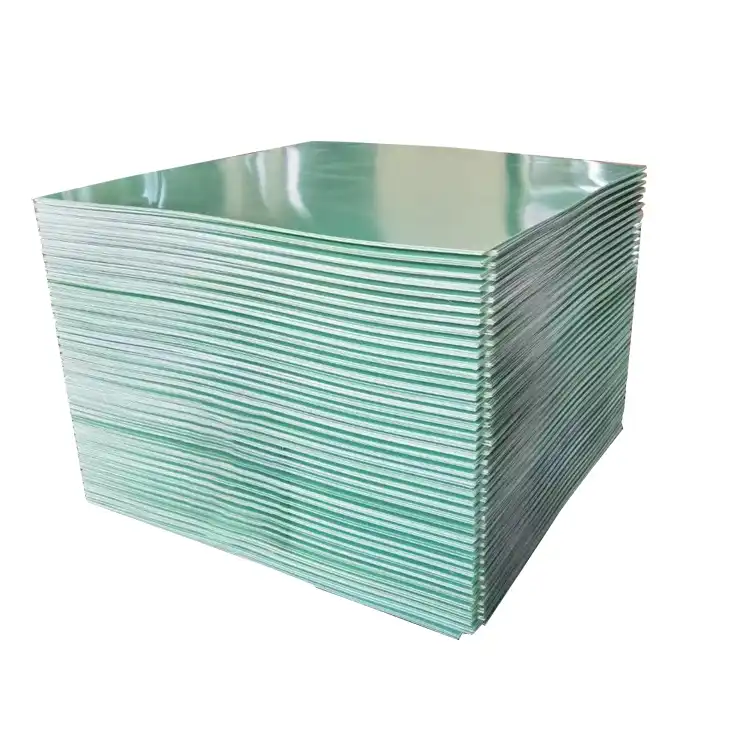
Understanding the Challenges of Tapping Threaded Holes in G10 and FR4
The problems you face when working with G10 and FR4 hybrid materials are very different from those you face when working with metals or plastics. The electrical insulation and mechanical strength of these glass-fiber reinforced laminates are very high, which makes them very useful in the production of electronics, power transfer systems, and industrial machines.
The Composite Structure Challenge
The complex structure of these materials makes stress spots that show up when they are being machined. Each layer has woven glass fibers mixed in with thermoset plastic. This makes a structure that reacts to cutting forces in a different way than materials that are all the same. When tapping threads, if the right methods aren't used, the cutting action can separate the layers.
This problem is made worse by the fact that finished epoxy glue is very brittle. Metals can bend a little when they are stressed, but these hybrid materials tend to break when they are cut at the wrong speed or with too much force. Another major worry is the production of heat during tapping operations. High temperatures can weaken the resin matrix and make the thread less stable.
Common Failure Modes and Their Impact
Mistakes in manufacturing caused by bad tapping methods cause problems all along the supply chain. Cracked holes need to be fixed or the whole part needs to be replaced, which increases the cost of materials and delays production. When these problems are found during final assembly or quality control, they are especially expensive to fix.
Delamination around threaded holes weakens the mechanical stability of parts, which could lead to breakdowns in important situations like motor mounting brackets or switchgear components. When choosing products and setting up production methods, engineering managers need to think about these risks.
Effective Techniques to Tap G10 and FR4 Without Cracking
To thread-cut G10 sheets and FR4 sheet successfully, you need to think about a lot of things, like which tools to use, how to set up the process, and how to prepare the workpiece. Modern factories have developed tried-and-true methods for making threaded holes that are always of high quality while reducing the amount of scrap that is made.
Specialized Tooling Requirements
When compared to regular high-speed steel tools, carbide taps with smooth blades and sharp cutting edges work better. Because of how they are made, these special taps have sharp rake angles that cut through glass fibers without tearing them. When cutting, tools that are coated with titanium nitride or diamond-like carbon surfaces keep things from rubbing against each other and build up heat.
Spiral flute shapes help chips get rid of themselves, so glass fiber waste doesn't build up and get in the way of cutting. When choosing the tap size and thread form, you need to think about the thickness of the material and the loads that will be used to make sure that the threads connect properly without putting too much stress on them.
Process Parameter Optimization
When working with composite materials, it's important to keep the machine speeds under control. Too fast of speeds can damage the glue material by creating heat, and too slow of speeds can cause tool chatter and uneven thread formation. Depending on the width of the material and the diameter of the tool, the best cutting speeds are usually between 50 and 150 surface feet per minute.
To get the best mix between quality and output, feed rates need to be carefully calibrated. Aggressive feeds can put too much pressure on each cutting edge, which can cause chipping or early tool wear. When you don't try to get the full thread depth in one action, you often get better results by being cautious and making multiple small passes.
Cutting fluids are used for more than one thing in composite machining. Coolants made especially for non-metallic materials help keep temperatures in check, lubricate cutting edges, and wash away waste. Water-based emulsions work well, but care must be taken to keep the G10 sheet layer from absorbing water.
Pre-Drilling Considerations
The success rate of tapping depends a lot on how well the hole is prepared. To make sure that the threads connect properly, the pilot holes must be exactly sized and placed. Too-small holes use too much cutting force, while too-large openings make it harder for the threads to join and weaken the link.
The best way to do tapping tasks is to use drilling methods that reduce exit burrs and delamination. When drill bits are sharp, well-ground, and have the right point angles, they cut through fiber layers neatly. On the exit side of through-holes, backing materials or auxiliary plates keep the fibers from pulling out.
Case Studies: Successful Thread Tapping in G10 and FR4 Applications
Implementations in the real world show that organized methods to machining composite materials work well. These examples show how important it is to work together with suppliers and improve processes in order to make the best products.
Electronics Manufacturing Success Story
When tapping mounting holes in FR4 sheets, a large circuit board assembly plant had a lot of problems with high failure rates. When standard metalworking methods were used for the first tries, 15% of them were scrapped because they cracked or came apart. The tech team worked with experts in tooling to come up with a unique answer.
When carbide spiral taps and customizable spindle speed control were used together, failure rates dropped to less than 2%. The factory also put in automatic torque tracking systems that stop work before damage is done if they find cutting forces that aren't normal. These changes improved the amount of work that could be done by 25% while also raising quality standards.
Industrial Equipment Application
An OEM company that makes electrical cabinets needed phenolic laminate panels with solid threaded connections. Using old-fashioned tapping methods didn't always work, and the quality of the thread was very different between lots of material. Together with their laminate provider, the business found the best processing settings.
Together, they worked on developing materials in a way that put machinability ahead of electrical performance. Controlling the amount of resin and the direction of the fibers made the cutting better, and better quality control methods made sure that the stability from batch to batch. The company can now get 99.5% first-pass return rates on tapped holes.
Power Distribution Equipment Innovation
A company that makes transformers had to make holes in G10 sheet obstacles that are used to protect against arcs. When you combine the thickness of the material with strict quality standards, you get big problems. Using traditional tapping methods often led to internal cracking that weakened the dielectric strength.
As a solution, a multi-stage tapping process with increasingly bigger tap sizes was created. This method spread the cutting forces out more evenly and cut down on stress points. Temperature monitoring devices made sure that cutting processes didn't go over safe temperature limits that would damage the material.
Selecting and Procuring High-Quality G10 Sheets for Optimal Tapping Results
The quality of the material has a direct effect on how well the machine works and how well the finished product works. When making procurement choices, it's important to balance cost with technical needs so that manufacturing processes run as smoothly as possible.
Critical Material Characteristics
The uniformity of the fiber weave is a key factor in determining how easy it is to machine. Cutting conditions are more reliable when the fibers are spread out evenly. On the other hand, irregular designs can cause tools to bend and wear unevenly. When fibers are laminated, strict rules are kept on where they are placed and how tight they are pulled.
The amount of resin and how it cures affect both the mechanical qualities and how it works when it is machined. The right amount of glue creates a good bond without making the material too weak. Materials that aren't cured enough may not stay the same size, and laminates that are dried too long can be hard to work with and chip easily.
Tolerances for thickness affect the accuracy of production and the life of tools. When the width of the material changes, the cutting conditions also change, which can cause tools to break or quality problems. Precision-ground G10 sheet goods usually keep their tolerances within ±0.002 inches, which makes production more predictable.
Supplier Evaluation Criteria
Certification standards give concrete measures of the quality of materials and the ability to make things. UL certification makes sure that electricity safety rules are followed, and ISO certification shows that a company is dedicated to quality management systems. When applying for jobs in fields that are regulated, these qualifications become even more important.
Having access to application engineering knowledge helps choose the best materials and set the best working settings. Suppliers who offer remedial help and instructions for cutting add a lot of value to the partnership beyond just providing materials.
Planning output and managing inventory are both affected by how reliable the supply line is. When wait times and shipping times are consistent, lean manufacturing methods can be used to cut down on carrying costs. When it comes to responsiveness and shipping costs, being close to a supplier's buildings can be helpful.
Quality Assurance Protocols
Incoming checking methods make sure that the materials that are received meet the standards that were set. A visual inspection can find problems with surface flaws, delamination, or contamination. Verification of dimensions shows uniform thickness and general accuracy of dimensions.
Electrical and mechanical properties that affect end-use uses are checked through performance tests. Measurements of dielectric strength make sure that the insulation works, and structural tests make sure that the structure is strong. These quality checks make sure that important uses don't have problems with materials.
Conclusion
To successfully put threaded holes in G10 and FR4 sheets, you need to pay close attention to the quality of the materials, the process factors, and the tools you use. Cracking and delamination are much less likely to happen when special carbide tools, controlled cutting speeds, and the right cooling techniques are used. Choosing the right materials is very important. High-quality laminates with uniform fiber weave designs and the right amount of resin offer better machinability. Manufacturers, sellers, and molding experts working together makes it possible for processing methods and quality results to keep getting better. This helps make reliable electronic parts and industrial equipment.
FAQ
What causes cracking when tapping holes in G10 materials?
Cracking usually happens when there are too many cutting forces, the wrong tools are used, or the process conditions are not right. Because hardened epoxy resin is easily broken, it can be easily damaged by quick stress builds up from dull tools or fast feed rates.
How do I select the correct tap size for FR4 substrates?
The width of the material, the load that is expected, and the thread contact depth should all be taken into account when choosing a tap. Standard thread charts can be used, but because of the cutting forces, the test holes may need to be a little bigger than for metals in order to spread out the stress.
Can standard metalworking coolants be used with composite laminates?
The best coolants are water-based ones made for composite materials because they work well and don't cause problems with chemical compatibility. Some glue systems may not work well with oil-based cutting fluids, so they should be tried to make sure they do.
What spindle speeds work best for tapping operations?
Depending on the width of the material and the diameter of the tap, the best speeds are usually between 50 and 150 area feet per minute. When it comes to results, slower speeds usually work better than fast ones that make too much heat.
How can I prevent fiber delamination during tapping?
Delamination risk is low when cutting tools are sharp, test holes are the right size, and feed rates are controlled. Fiber pullout can also be stopped on the exit side of through-holes with backing plates or substitute materials.
Partner with J&Q for Premium G10 Sheet Materials and Expert Support
J&Q delivers exceptional G10 sheet and FR4 sheet products engineered specifically for demanding industrial applications requiring precise machining capabilities. Our materials feature optimized fiber weave patterns and controlled resin formulations that enhance machinability while maintaining superior electrical and mechanical properties. With over 20 years of manufacturing expertise and 10 years of international trading experience, we understand the critical balance between material performance and processing requirements. Our comprehensive quality management systems ensure consistent batch-to-batch performance, while our dedicated logistics capabilities provide reliable delivery schedules that support lean manufacturing operations. Contact our technical team at info@jhd-material.com to discuss your specific tapping requirements and discover how our premium G10 sheet supplier solutions can optimize your manufacturing processes.
References
Smith, Robert J. "Machining Characteristics of Glass-Fiber Reinforced Composite Materials." Journal of Manufacturing Science and Engineering, Vol. 142, No. 8, 2020.
Chen, Michael K. "Threading Operations in Thermoset Laminates: Process Optimization and Quality Control." International Journal of Advanced Manufacturing Technology, Vol. 115, No. 3, 2021.
Williams, Sarah M. "Tool Selection and Process Parameters for Composite Material Machining." Manufacturing Engineering Quarterly, Vol. 28, No. 4, 2019.
Johnson, David L. "Quality Assurance in Electrical Insulation Manufacturing: Materials and Processes." IEEE Transactions on Dielectrics and Electrical Insulation, Vol. 27, No. 2, 2020.
Thompson, Jennifer R. "Industrial Applications of G10 and FR4 Laminates in Power Distribution Systems." Electrical Manufacturing Magazine, Vol. 45, No. 6, 2021.
Anderson, Paul T. "Machining Guidelines for Glass-Fiber Reinforced Plastics in Electronics Applications." Electronic Packaging and Production, Vol. 61, No. 9, 2020.

Get a complete product list and quotation

J&Q New Composite Materials Company



