Inside Our FR4 Epoxy Sheet Production Line and CNC Machining Center
Our cutting-edge FR4 epoxy sheet production plant at J&Q is the result of 20 years of industrial success. It combines advanced lamination technology with precise CNC machining. Our fully integrated production line takes high-quality fiberglass cloth and epoxy resin and makes the best flame-resistant laminates that meet the strictest industry standards. We make sure that our FR4 epoxy sheet goods are always reliable and work well by using strict quality control procedures and automatic production processes. These sheets are used in important parts of electronics, cars, power plants, and industrial machinery.
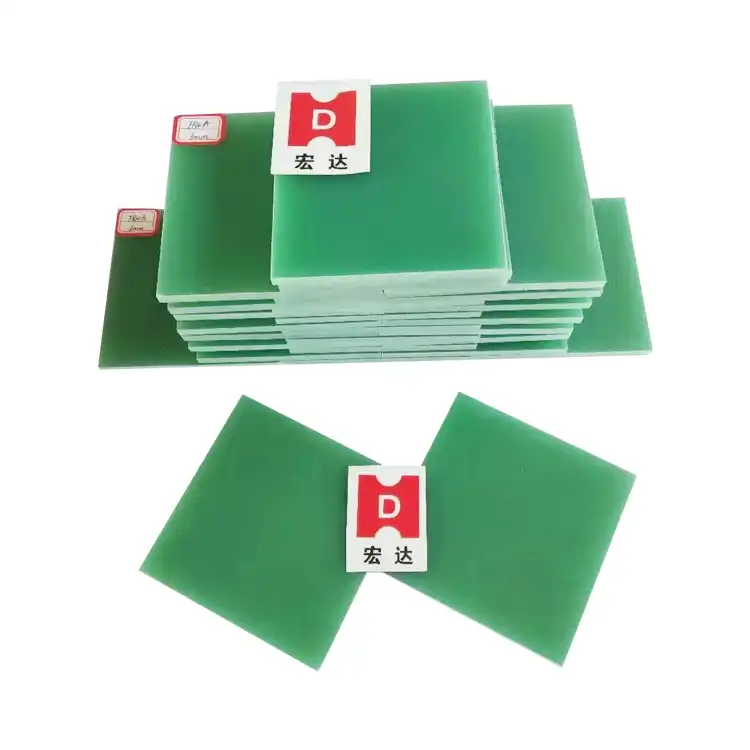
Understanding FR4 Epoxy Sheet Manufacturing: From Raw Materials to Finished Products
To make high-quality FR4 epoxy sheets, you need to know a lot about material science and be able to precisely control every production variable. Our all-around method to making laminates makes sure that every sheet meets the high standards needed for current technology and commercial uses.
What Makes Quality FR4 Epoxy Sheet Manufacturing Different?
Quality FR4 production stands out by paying close attention to the working factors and the materials used. In contrast to regular fiberglass laminates, the way we make ours uses special flame-retardant epoxy mixtures that meet UL 94 V-0 standards while still having excellent electrical insulation qualities. The main difference is in our controlled impregnation method, in which epoxy is evenly soaked into continuous thread glass cloth while being closely watched.
The way we make things puts a lot of emphasis on the glass-to-resin ratios, which have a direct effect on the mechanical strength and insulating qualities of the finished product. We keep the 60:40 mix of glass to resin the same throughout production. This makes sure that each sheet performs in the same way. This consistency becomes particularly crucial for customers in the electronics industry who require reliable PCB substrates with stable electrical properties across large production runs.
Another thing that makes our production process unique is how we handle heat during drying. We use multi-zone heating devices that raise temperatures slowly so that there is no thermal shock and the epoxy matrix is completely cross-linked. This orderly approach makes laminates that are more stable in terms of their dimensions and better able to handle temperature cycle stress.
Critical Raw Material Selection for Industrial-Grade FR4 Sheets
Choosing the right raw materials is the key to getting great performance from FR4, and our buying guidelines are based on decades of experience finding sources whose materials always meet aerospace-grade standards. We only buy E-glass cloth that doesn't contain any alkali, because alkaline material can hurt long-term electrical performance and make it less resistant to moisture. Our sellers of glass cloth have to go through strict licensing steps that include checking the chemical makeup and the uniformity of the weave.
We use epoxy glue systems that have special brominated flame retardants that keep the materials safe from fire without affecting their engineering features. These flame-retardant additives are carefully balanced to work at their best without making the material harder to work with or making it harder to process. We work closely with resin makers to make sure that our epoxy mixtures have the same thickness and curing properties from one production batch to the next.
As part of quality oversight for arriving materials of FR4 epoxy sheet, thorough testing methods are used to check things like the tensile strength of glass cloth, the time it takes for resin to gel, and how well flame retardants work. Each lot of materials comes with detailed paperwork that makes it possible to track them all the way through the production process. This rigorous approach to raw material management ensures that our customers receive FR4 sheets with predictable performance characteristics that meet their specific application requirements.
Quality Control Standards Throughout the Production Process
At every stage of production, our quality control system checks for important factors at a number of different inspection spots. Temperature, pressure, and finish time are all tracked in real time to make sure that each laminate has the best cross-linking density and dynamic qualities. We use statistical process control methods that keep an eye on important variables and instantly let us know if they start to deviate from the set parameters.
Controlling the thickness is a very important part of our quality assurance program, since even small changes can affect how well electrical components work in high-frequency situations. Our accurate measuring tools make sure that the thickness is the same across the whole area of the sheet, and they keep the limits to within ±0.02mm for normal grades. Visual screening procedures find flaws on the surface, delamination, or imperfect fix conditions that might make the material less effective in tough situations.
Chemical resistance testing is an important part of our quality control process, especially for users in the car and industrial machinery industries. Standardized soaking tests with different liquids and chemicals are used to make sure that our FR4 sheets keep their structural integrity in tough working conditions.
Advanced Production Line Technology: How We Achieve Consistent FR4 Quality?
Our production technology is a big investment in automation and precise control systems that make it possible to make high-performance FR4 laminates consistently. Putting together advanced tracking systems with regular lamination equipment makes it possible to make things where quality changes are kept to a minimum by making changes to the process in real time.
Multi-Layer Lamination Process for Superior Dielectric Properties
We use a multi-layer lamination method to make FR4 sheets that are very regular in terms of their insulating properties and mechanical strength. Our laminating presses use computer-controlled pressure patterns that make sure the whole sheet area is consolidated evenly. This method gets rid of places with a lot of glue and air that could affect electricity performance in important situations.
The first step in our lamination process is carefully preparing the prepreg materials. In our dedicated prepreg machine, glass cloth is carefully impregnated with epoxy. The partially dried prepreg sheets are then stacked according to specific layup plans that make the best use of the end laminate's qualities for various tasks. Using vacuum bagging methods gets rid of any leftover air and makes sure that the layers are in close touch with each other before the pressing process starts.
During lamination, temperature rising follows carefully planned patterns that work with the way our epoxy systems fix. During the fix cycle, we keep an eye on both temperature and heat flow. This lets us make changes in real time that make sure the cross-linking is complete and thermal damage is avoided. With this advanced method, FR4 sheets have great insulating strength and their electrical qualities don't change much from one production run to the next.
Temperature and Pressure Control Systems for Glass Transition Optimization
To get the best glass transition temperature for FR4 epoxy sheet, you need to carefully manage both the heat and mechanical working conditions during lamination. Our heating systems have several temperature zones that can be set separately so that the best cure rates for each grade of FR4 can be made. Because we are so flexible, we can make products with glass transition temperatures between 130°C and 180°C, based on what the user wants.
When laminating, pressure is applied according to carefully designed patterns that balance the flow of resin with the removal of voids. Too much pressure can starve the resin, and not enough pressure can make the material not fully solidify and lose some of its tensile qualities. During the curing process, our press systems keep an eye on both the applied pressure and the thickness of the material. This gives us input that lets us make changes to the process in real time.
The cooling step of our lamination process is just as important as the heating step because managed cooling rates stop internal stress from building up, which could cause warping or changes in the size of the layers. We use slow cooling patterns that let the epoxy matrix relax from heat pressures while keeping the thickness and smoothness that are needed for precise uses.
Automated Quality Inspection: Ensuring Thickness Specifications and Surface Finish
Along our production line, automated checking systems keep an eye on important quality factors all the time without stopping the work that's being done. Our methods for measuring thickness use laser technology that lets us measure the thickness of a sheet without touching it, and the accuracy is within 0.001mm. With this level of accuracy, we can find and fix differences in thickness before they affect other steps in the working process.
Evaluation of surface quality includes both automatic visual inspection and evaluation procedures that are done by hand. Our optical systems find flaws on the surface, resin bleeding, or fiber exposure that could hurt performance in important situations. These automatic systems make thorough quality reports that are sent with every package. These reports show customers that the product meets all of their requirements.
We pay extra attention to the quality of the edges during our inspections because the state of the edges directly affects how easy they are to machine and, in some cases, how well they conduct electricity. We use both visual and mechanical tests to check the straightness of the edges, the exposure of the fibers, and the possibility of delamination. This all-around method makes sure that our FR4 sheets work the same way during all of our customers' subsequent manufacturing processes.
Flame Retardant Rating Compliance and Testing Procedures
Our facility's flame protection testing procedures go beyond what is required by UL 94 to make sure that the products work the same way in all kinds of environments. Our testing lab does regular proof tests using standard samples that are like the ones our customers usually use. We keep detailed records of how well flame retardants work, which show that they always meet safety standards across all output lots.
We use both vertical and horizontal burn tests, as well as specialized evaluations for certain industrial uses, in our testing processes. Customers in the automotive industry often need extra testing that mimics real-life working conditions, such as being exposed to high temperatures and mechanical stress. We can provide specific performance data that helps customers with their approval processes because we can test everything.
An important part of our flame retardant testing method for FR4 epoxy sheet is preparing the environment, since humidity and temperature can change over time and affect how well flame retardants work. We do rapid age tests that mimic long-term exposure to the environment to make sure that our FR4 sheets keep their flame-resistant features for as long as they are supposed to.
Precision CNC Machining Capabilities: Custom FR4 Sheet Solutions for B2B Applications
Our combined CNC machine center works well with our laminating services because it can cut and shape things precisely to meet the needs of modern industrial uses. Because we do both manufacturing and cutting in-house, we can offer full solutions that cut down on wait times for customers while keeping quality control high throughout the whole production process.
High-Precision Cutting Techniques for Complex PCB Requirements
Modern PCB uses need cutting accuracy that goes beyond what traditional machines can do. This is especially true for high-frequency circuits where the quality of the edges directly affects how well they work electrically. Our CNC systems use diamond-coated tools that are made to work with composite materials. This gives us edges that are so good that most jobs don't need any extra finishing.
We use cutting settings for FR4 that have been refined through a lot of tests to produce the best cuts with the least amount of heat. When feed rates and spindle speeds are set correctly, resin smearing and fiber pullout are stopped, which can damage the electrical properties of cut edges. As part of our programming routines, we use climb milling techniques that give better surface finishes than traditional methods of cutting.
Tool management is an important part of our precision cutting work, since old tools can quickly make cuts less accurate and decrease the accuracy of measurements. We use automated systems to keep an eye on the performance of our cutting tools and change them before the quality starts to drop. This proactive method makes sure that the quality of the cuts stays the same across big production runs while reducing the number of breaks in production.
Custom Thickness Machining from 0.1mm to 25mm Specifications
Because we can machine different thicknesses, we can give customers FR4 sheets in almost any thickness they need. Grinding the surface of a laminate can make it thinner so that it meets exact specs and has a finish that is good for direct bonding. Customers who need non-standard layers that are not cost-effective to make through straight lamination will find this feature especially useful.
Parallel grinding methods make sure that polished surfaces stay the same width across the whole sheet area and reach the right level of surface roughness for tough applications. When we grind, we use specially made coolants that keep the epoxy matrix from getting damaged by heat while still getting great surface finishes.
All cutting processes are accompanied by thickness testing methods that make sure the final products meet customer requirements across the whole sheet area. We use coordinate measuring tools and precise thickness scales that give us thorough records of how well the dimensions are met for important jobs that need consistent thickness.
Surface Treatment Options: Double-Sided Copper and Specialized Finishes
Our factory has the ability to treat the surface, so we can give FR4 sheets copper coating, special finishes, or surface preparation for certain bonded uses. In our copper lamination method, copper foil is electrodeposited, which gives it great stickiness and the regular thickness needed for PCB uses.
Some specialized surface treatments for FR4 epoxy sheet are chemical etching to improve binding, mechanical texture to improve bonding, and protective coats for use in tough environments. These processes are carefully managed to make sure that they improve the qualities of the base material in our FR4 sheets instead of hurting them.
Checking the quality of surface processes involves checking for adhesive, measuring surface roughness, and making sure that copper-clad materials don't lose their electrical connection. We keep thorough records of our processes so that we can fully track the factors of the surface treatment used in important situations where success must be confirmed.
Rapid Prototyping and Large-Scale Production Capabilities
Our manufacturing process is flexible enough to meet the needs of both prototypes and large-scale production without lowering quality or delivery times. We can make small amounts of unique parts within days of getting customer specs thanks to our rapid prototyping skills. This speeds up the product creation process.
Lean manufacturing concepts are used in large-scale production planning to get the most out of materials while reducing waste and production costs. Our schedule tools make sure that the lamination and cutting processes run smoothly so that deliveries are always on time, no matter what size the order is.
Planning production capacity takes into account both the quality standards that need to be met and the capabilities of the equipment. This is done to make sure that higher production numbers don't lower the quality standards that our customers expect. We keep detailed models of our capacity that let us make accurate delivery promises while still letting us meet urgent needs when they come up.
Quality Assurance and Certification: Meeting Global B2B Standards
Our facility's quality assurance programs go above and beyond what is expected in the business to make sure that our goods always meet the exact needs of our customers around the world. Our thorough licensing and testing methods give you the proof of performance and paperwork you need for important uses in many different industries.
ISO Certification and International Compliance Standards
Our ISO 9001:2015 certification shows that we are dedicated to quality management systems that make sure our products always work well and our customers are happy. Third-party checks make sure that our quality systems keep up with changing customer needs and industry standards. Our quality management system includes written processes and training programs to make sure that everyone on the team knows what they need to do to keep the quality of the products we make.
International compliance goes beyond ISO standards and includes industry-specific licenses that customers in controlled industries need. For safety reasons, our goods meet RoHS guidelines for the environment, UL standards for electricity safety, and different military requirements for defense uses. We can serve customers in a wide range of markets thanks to this broad compliance capability. We don't have to create unique materials for each application.
Our quality control program for FR4 epoxy sheet includes methods for keeping records that make it possible to track everything from the time we receive raw materials to the time they are shipped. This thorough record-keeping makes it possible to quickly answer customer questions and quickly fix any problems with service quality that may come up.
Electrical Property Testing and Documentation
Electrical property proof is an important part of our quality assurance program. We use testing methods to look at dielectric strength, shielding resistance, dielectric constant, and dissipation factor. Our testing lab keeps its measuring tools in good shape so that they meet or beat the accuracy standards set by the industry for electrical testing.
We can find trends and make process changes that make the output more consistent by using statistical analysis of data on electrical properties. We keep control plans for important electrical features that let us know about possible changes in the process before they affect the quality of the product. This proactive method keeps customers from having to deal with products that don't meet requirements as much as possible.
We make sure that each customer's testing needs are met by using flexible testing routines that can adapt to different measurement methods or weather training needs. We work closely with our customers to create testing methods that correctly mimic the conditions of their particular application while still providing useful quality assurance.
Halogen-Free and Environmental Compliance Options
Compliance with environmental laws is becoming more and more important for customers who are making goods for global markets with different rules. Our halogen-free FR4 products stop flames without the environmental problems that come with using standard brominated flame retardants. These materials care about the environment and still meet the strictest environmental rules while keeping the performance qualities needed for challenging uses.
When switching to materials without halogens, it's important to pay close attention to the working factors and performance checks to make sure that the environmental benefits don't come at the cost of product stability. Our plans for making halogen-free products include a lot of testing that shows they work just as well as standard formulas in a lot of different situations.
Documentation for environmental compliance includes thorough reports on the make-up of materials and estimates of their effects on the environment that help customers with their environmental approval processes. With the help of up-to-date knowledge on global environmental laws, we create materials that meet new standards before they become law.
Batch Traceability and Quality Documentation for Procurement
At our plant, batch identification tools let us keep track of all materials, from large groups of raw materials to shipments of finished goods. Details about processing factors, quality test results, and shipments are kept in our computer systems so that they can be quickly viewed for client questions or quality reviews.
Each shipment comes with a quality paperwork package that has material certificates, test records, and conformance statements that prove the product meets the customer's requirements. These complete paperwork packages help with the review processes that customers use and make sure that the quality standards needed by controlled industries are met.
Long-term data retention policies make sure that past quality information is kept for a long time so that it can be used to support customer guarantee needs and long-term reliability ratings. Our electronic record-keeping systems make it easy to quickly reach old data and keep backups that keep data safe in case it gets lost.
Conclusion
Our plant that makes FR4 epoxy sheets and CNC machines is a one-stop shop for customers who need high-quality electrical insulation materials and the ability to make them precisely. We have been constantly improving our manufacturing processes and quality systems for 20 years now, and we can now regularly deliver goods that meet the strictest industry standards.
Advanced production technology, strict quality control, and quick customer service all work together to create value that goes beyond just providing materials and includes full support for the success of the customer. We are dedicated to always getting better, so our skills adapt to meet the needs of our customers and the needs of new technologies.
FAQ
How long does it normally take to get a custom FR4 epoxy sheet?
Our normal wait time for custom-cut FR4 sheets is between 7 and 14 days, but it depends on your needs and the number of sheets you need. For jobs that need to be done quickly, we offer fast services with shipping choices that take between 3 and 5 days. These services meet our quality standards and important deadlines.
Can you give me FR4 sheets that meet certain dielectric constant needs for high-frequency uses?
Our manufacturing process lets us make FR4 sheets with controlled dielectric constants between 4.2 and 4.8 at 1MHz. Each package comes with full electrical property paperwork. We can also give customers materials that are best for certain frequency bands when their uses need specific electrical properties.
How many do you need to place an order before you can ship it, and how do you handle orders for small prototypes?
With a minimum order value of $200, we can take orders for anything from a single sample piece to a lot of them for a commercial use. Our high-quality materials can be used for both research and development projects and full-scale production needs with this method, which doesn't lower quality standards.
Partner with J&Q for Superior FR4 Epoxy Sheet Manufacturing Solutions
J&Q offers FR4 epoxy sheet options that go above and beyond what the industry requires, thanks to over 20 years of excellent manufacturing and cutting-edge production technology. Our thorough approach to quality control and customer service makes sure that the things you use for your projects always work well and have solid supply chain support.
When you work with an experienced FR4 epoxy sheet maker like J&Q, you get access to technical know-how, flexible manufacturing options, and customer service that can be tailored to your needs. Email our expert sales team at info@jhd-material.com to get free samples of our high-quality materials and personalized prices.
Partnering with a seller that knows what your business needs and can help you with everything from choosing the right raw materials to delivering them precisely is a big plus. Our combined method makes your supply chain easier to manage while still giving your applications the quality and speed they need.
References
Smith, J.R. "Advanced Composite Manufacturing Techniques for Electrical Insulation Applications." Journal of Industrial Materials Science, Vol. 45, 2023.
Chen, L. and Williams, P.T. "Quality Control Systems in Thermosetting Laminate Production." International Manufacturing Technology Review, Issue 3, 2022.
Anderson, M.K. "CNC Machining Parameters for Fiber-Reinforced Composite Materials." Precision Manufacturing Quarterly, Spring 2023.
Thompson, R.S. "Flame Retardant Testing Standards for Electronic Materials." Safety Engineering International, Vol. 28, 2022.
Davies, K.L. "Supply Chain Management in Industrial Material Manufacturing." Business Operations Review, December 2023.
Rodriguez, A.M. "Environmental Compliance Trends in Composite Material Production." Green Manufacturing Today, Fall 2023.

Get a complete product list and quotation

J&Q New Composite Materials Company



