How to Select FR4 Fiber Glass Laminate Sheets for Industrial PCB Production?
Before choosing FR4 fiberglass laminate sheets for making industrial PCBs, you should think about what they will be used for. Then match it to the thickness, flame rating, dielectric strength, how it reacts to water, and how easy it is to machine. There should be clear documentation, test data for each grade, and a stable thickness for a Flame Resistance FR4 Fiber Glass Laminate Sheet. Next, make sure you know the minimum order quantity and sheet size, and then use test samples in your own drilling and routing process. It's not just price that you should compare suppliers based on. With this guide, you can get your engineering and purchasing teams to agree on a specification and avoid having to do expensive work over and over again.

Why FR4 Fiberglass Laminate Selection Matters in Industrial PCB Production?
How Material Choice Affects Yield and Safety?
Waxed glass cloth and epoxy resin are bonded together to make FR4. The glass supports the structure and keeps it in shape. Between parts that conduct electricity, the resin keeps heat and flames from spreading. If the grade is right for your process, drilling stays clean, parts stay in shape while soldering, and insulation does what it's supposed to do. When it doesn't, you see cracks, rough hole walls, delamination, warping, or dielectric failure. These mistakes don't happen very often at the quote stage. They show up on the line, and one bad batch can stop a shift. The sheet is only a small line on the list of materials, but it holds a lot of risk.
Bare FR4, Copper-Clad Laminate, Prepreg, and Machined Parts
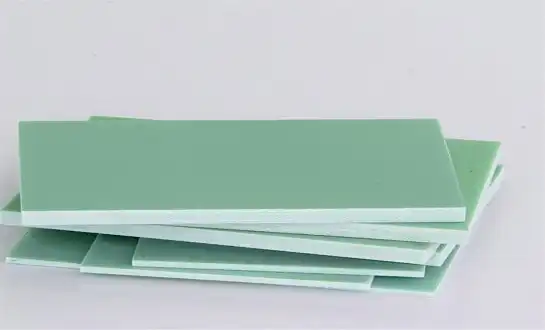
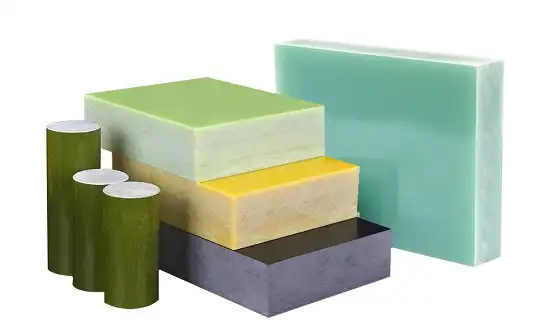
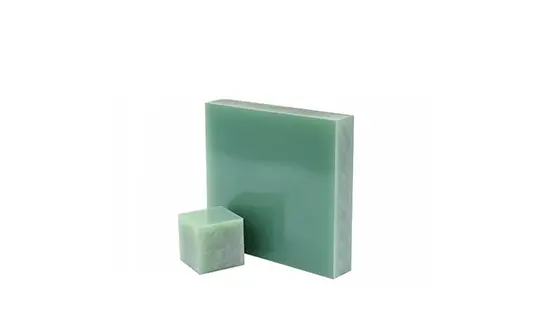
Name the form you need before you ask for quotes. Plates, spacers, brackets, test jigs, and fixtures can be made from bare FR4 sheet, which doesn't have any copper on it. Foil for etched circuits is on copper-clad laminate. Partially cured glass cloth called prepreg holds layers together in multilayer boards. Milled parts are sheets that have already been drilled, routed, or cut to a drawing. Each form has its own set of rules for pricing and specs. When it comes to thickness, Hongda sheets range from 0.3 mm to 100 mm and are made of light green epoxy resin laminates. They can be used for support, fixture, and insulation work. If your process needs copper that has been etched, make sure you know that early on.
The Hidden Cost of Buying on Price Alone
It looks like a low unit price is a good deal until you add up the costs of scrap, tool wear, rework, late deliveries, and requalification. Because glass-reinforced laminates are rough, pressing them unevenly can shorten the life of drill bits and make more of them fail. Because of thickness drift, fixtures have to be changed. An audit by a customer can be held up by a missing test report. The Printed Circuits Handbook and other industry books talk about choosing a laminate as a design step that impacts how the circuit is made and put together. You should compare offers based on the total cost of each good part. That amount includes the cost of a stopped line, freight, and time lost for machining.
Understand the Core Properties of Flame-Resistant FR4 Laminate and Build a Specification
Core Properties to Check on Any FR4 Data Sheet
Start with being resistant to fire. According to UL 94, a V-0 rating means that the flames stop within 10 seconds of each application and that flaming drips do not set the cotton below on fire. The rating only works for the thickness that was tested. Then go over the thermal expansion, water absorption, flexural strength, glass transition temperature (Tg), dielectric constant, dissipation factor, and dielectric strength. Lead-free assembly often gets to about 240–260°C, and a resin that softens too quickly can warp or separate. Ask for information about the grade, the test method, and the thickness of the sample. A V-0 claim that doesn't give you a thickness doesn't tell you much.
What Hongda Test Data Shows
You can use the numbers on our Flame Resistance FR4 Fiber Glass Laminate Sheet to make sure it meets your needs. The strength to bend across laminations is 571 MPa, the strength to compress is 548 MPa, and the strength to pull is 282 MPa. There is a 16.7 kV/mm vertical breakdown voltage and a 100 kV parallel breakdown voltage. The insulation resistance is 2.2×10²³ Ω after it has been soaked. GB/T 2408-2008 says that it has a density of 2.01 g/cm³, a Barcol hardness of 76, and a flammability of V-0. It is 5.40 dB relative to 50 Hz, and the dissipation factor is 7.2×10⁻³. Before you compare, make sure you get the full report because each value comes from a specific sample.
Writing a Specification Your Supplier Can Quote
A clear specification stops substitutions that aren't wanted. Write down the sheet's thickness and any tolerances, as well as its size, flame rating, electrical and thermal goals, and the steps it will be taken through, like CNC drilling, routing, scoring, punching, or laminating. As a rule, Hongda is 1030 mm x 1230 mm. Some custom sizes are 1030 × 2030 mm, 1220 × 2440 mm, 1030 × 1030 mm, and 1030 × 2070 mm. The right sheet size will cut down on waste because it fits your panel layout. Need proof of the exact grade, thickness, and lot? Look for test reports and inspection records. Make a list of any UL, RoHS, or REACH paperwork your customers need, and make sure the supplier can provide it.
Compare FR4 with Alternative Fiberglass and Insulation Materials
FR4 vs. G10
G10 is made of the same glass cloth and epoxy, but it doesn't have any flame-retardant additives, so it doesn't have a flame rating. The "FR" in FR4 stands for "fire-resistant." Because of this, FR4 has mostly replaced G10 in electrical work. The properties of matter and electricity are similar. FR-4 is controlled by the National Electrical Manufacturers Association (NEMA) through its LI 1 standard. For switchgear, motor, and PCB fixture uses, the flame-retardant type is usually best. Before you change any approved material that a drawing says should be G10, make sure you check with the owner of the drawing and compare the two data sheets side by side.
FR4 vs. Phenolic Laminate
You can get phenolic laminates like Bakelite sheets and phenolic cotton sheets for less money, and they work well with machines. If the loads and temperatures are moderate, they can be used on appliance frames, motor brackets, gears, and spacers. In general, epoxy glass laminate is better at keeping its electrical properties and dealing with moisture. This is important for PCB fixtures, switchgear, and battery pack barriers. Follow a simple rule. Check the FR4 first if the part is going to be in a wet, hot, or high-voltage area. Phenolic may be enough for a cheap mechanical part that will be used in a dry environment. We can quote you on either family from J&Q and help you make an honest comparison.
When G11 or High-Tg Grades Come Into Play
G11 is a glass-epoxy grade that can handle higher temperatures than G10 or FR4. It usually has a different resin formulation and costs more. There are also high-Tg FR4 grades for lead-free soldering, multilayer boards, and reflowing more than once. Use numbers to make your choice. Write down the highest and lowest temperatures that your part will be exposed to, and then compare them to the data sheet for each grade. A lot of insulation plates, jigs, and fixtures can be made with standard FR4. Talk to us before you order if your process goes over that range. We'll let you know if our standard sheet works for you.
Use a Selection Process and Quick Decision Guide
Classify the Application and Set Mandatory Requirements
Start with the use case for a Flame Resistance FR4 Fiber Glass Laminate Sheet. Write down the type of part, the voltage it works with, the temperature range, the humidity, the mechanical load, the fire safety rules, and how long you think it will last. Then, sort your needs into those that you have to have and those that you'd like to have. Buyers of electricity and power usually need to know about flame rating, thickness tolerance, and dielectric strength. Teams that work on machinery and cars often add flexural and compressive strength. Costs and delivery times tend to go up when appliance makers make them. By putting needs in this order, quotes can be compared, since each supplier prices the same list. You should also include your expected volume, since the 500 kg minimum order quantity and pallet packing change how you plan your releases.
Qualify Samples and Control Incoming Quality
Never sign off on a piece of paper by itself. Ask for samples that are typical of the whole and put them through real electrical, drilling, routing, and soldering tests. Check for dust, burrs, hole quality, flatness, and edge damage. Once you get approval, make a small pilot batch and then set inspection points for incoming goods. These should include thickness, size, flatness, surface quality, batch number, and packing condition. Keep sheets flat on pallets in a dry place, as wet sheets can make it harder to cut and insulate. Keep track of problems and delivery dates for each shipment. You can use these records to show what needs to be fixed and to negotiate prices when the contract is up for renewal.
Quick Decision Guide by Application
When you don't have much time, use this short guide. Checked FR4 sheets that meet your flame, dielectric, and thickness needs are often enough for standard insulation plates, switch insulation parts, test jigs, and PCB fixtures. Compare Tg values first for fixtures that will be lead-free soldered and heated many times. Check the mechanical strength of gears and wear parts and see how phenolic cotton sheet stacks up against FR4. Check the flame rating and dielectric data for lithium battery pack barriers at the thickness you need. If you want to save money on appliance parts, change the order size and packaging instead of the core specification. These shortcuts narrow down the options, and test results back this up.
Evaluate Suppliers and Avoid Common Buying Mistakes
Build a Supplier Scorecard
They should give you more than just a quote. Rate each applicant based on their experience making things, their ability to test and ensure quality, their product range, their track record of exporting, and how quickly they can answer technical questions. Put in business terms like MOQ, sample policy, payment terms, lead time, and packaging. After that, look at how consistent the repeat orders are. The third shipment is just as important as the first sample. Find out if the supplier can offer custom sizes, sheets that are cut to fit, and parts that have been machined. Engineering, quality, and procurement can all agree on one choice because a weighted score turns their thoughts into numbers.
What J&Q and Hongda Offer?
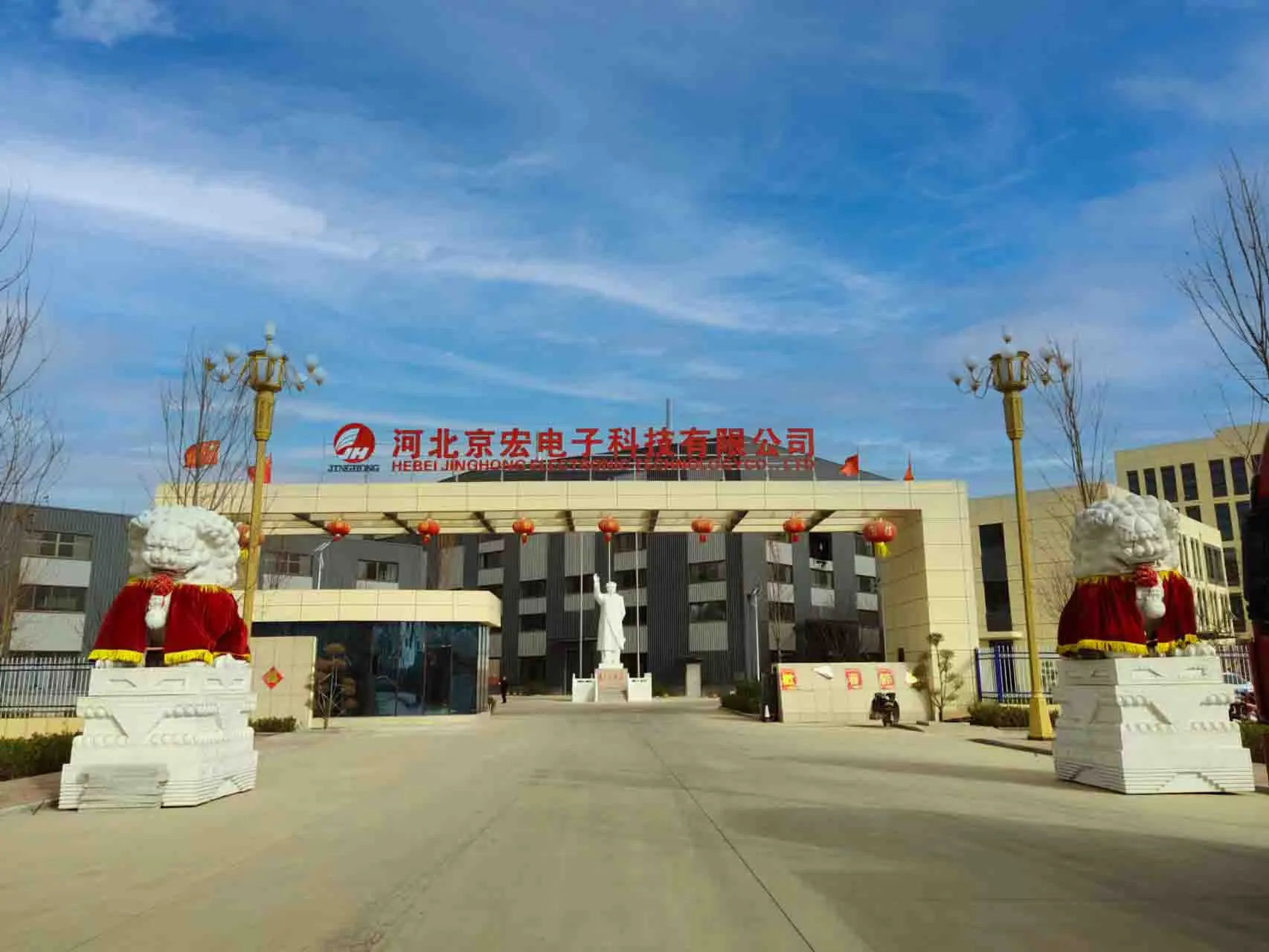
Hebei JingHong Electronic Technology Co., Ltd. has a business called J&Q Insulation Material Co., Ltd. that deals with trade with other countries. Our company has been making and selling insulation sheets for more than 20 years, and we have been doing business with other countries for more than 10 years. Our two factories make a total of 43,000 tons of goods every year, and this Hongda FR4 item makes 13,000 tons every year. A fully automated workshop makes things. Shipping sheets by ocean, land, or air is easy because they come in standard packaging and are protected by pallets. Our own logistics company takes care of delivery. The minimum order quantity is 500 kg, and payment is made by T/T. Orders that come straight from you get made first.
Common Mistakes to Avoid
A lot of the time, buyers make the same few mistakes. They think that all FR4 grades are the same, believe a V-0 claim without checking the thickness, or make their choice based only on the nominal thickness and unit price. Some people don't make samples, keep sheets in damp places, or don't think about how sheet size affects cutting waste. Compare full data sheets that show Tg, resin content, glass cloth style, tolerance, and thermal expansion. Also, get written confirmation of lead times. Add up the cost of scrap, downtime, and late deliveries. A little discipline here would cost a lot more than one lot that is turned down.
Conclusion
When making industrial PCBs, choosing FR4 sheets comes down to fit, evidence, and consistency. If the flame rating, dielectric strength, thickness tolerance, and moisture behavior of the Flame Resistance FR4 Fiber Glass Laminate Sheet are right for the job, it can be used for PCB fixtures, insulation plates, and electrical parts. The chances of delamination, bad machining, and line stops are lower when there is a written specification, a comparison with G10, phenolic laminate, and G11, sample testing, and an incoming inspection. Values like 571 MPa for bending strength and V-0 for flammability can be helpful, but they depend on the sample and the way it was tested. The decision is completed by the supplier's capacity, packaging, and stability for repeat orders. The sheet that fits all of your needs is the best sheet, not the one that costs the least.
FAQ
Is every FR4 sheet rated V-0?
Not at all. Ratings depend on the grade and the thickness that was tested, so get the test report. The GB/T 2408-2008 sheet on our sheet shows that V-0 is flammable.
Can I order custom sizes and thicknesses?
Yes. It can be anywhere from 0.3 mm to 100 mm thick. 1030 mm × 1230 mm is the standard size. Other custom sizes are 1030 mm × 2030, 1220 mm × 2440, 1030 mm × 1030, and 1030 mm × 2070 mm. The minimum order quantity is 500 kg.
How do payment and shipping work?
The payment method is T/T. Our own logistics company ships by sea, land, or air, and protects the pallets.
Does FR4 absorb water?
It doesn't soak up much water. The result of our test on a known sample was 5.3 mg, so use the same method to compare other grades.
Talk to J&Q About Your FR4 Laminate Requirements
Looking for a supplier of Flame Resistance FR4 Fiber Glass Laminate Sheet who knows how to make industrial PCBs? Hongda sheets from 0.3 mm to 100 mm are available at J&Q. There is a 500 kg minimum order quantity, and the company has 20 years of experience in stocking and shipping insulation sheets. Click on blog.jhd-material.com for more information and to get a quote based on your thickness, size, and quantity.
References
1. UL 94: Tests for Flammability of Plastic Materials for Parts in Devices and Appliances, 2013
2. NEMA LI 1: Industrial Laminated Thermosetting Products, 1998
3. IPC-4101E: Specification for Base Materials for Rigid and Multilayer Printed Boards, 2017
4. IEC 60243-1: Electric Strength of Insulating Materials, Test Methods, Tests at Power Frequencies, 2013
5. Printed Circuits Handbook, 7th Edition, 2016
6. Directive 2011/65/EU on the Restriction of Hazardous Substances (RoHS), 2011

Get a complete product list and quotation
J&Q New Composite Materials Company