How to Prevent Edge Chipping When Routing Bakelite Sheets?
To keep the edges of Bakelite sheets from chipping when routing them, you need to use the right tools, set the cutting parameters correctly, and be careful with the material. It's important to use sharp carbide or diamond-coated router bits, keep the spindle speed between 18,000 and 24,000 RPM, and use controlled feed rates that match the density of the material. To get clean, chip-free edges in phenolic laminate applications, it's also important to clamp the workpiece correctly, support the backing during cuts, and keep the tool depth constant.
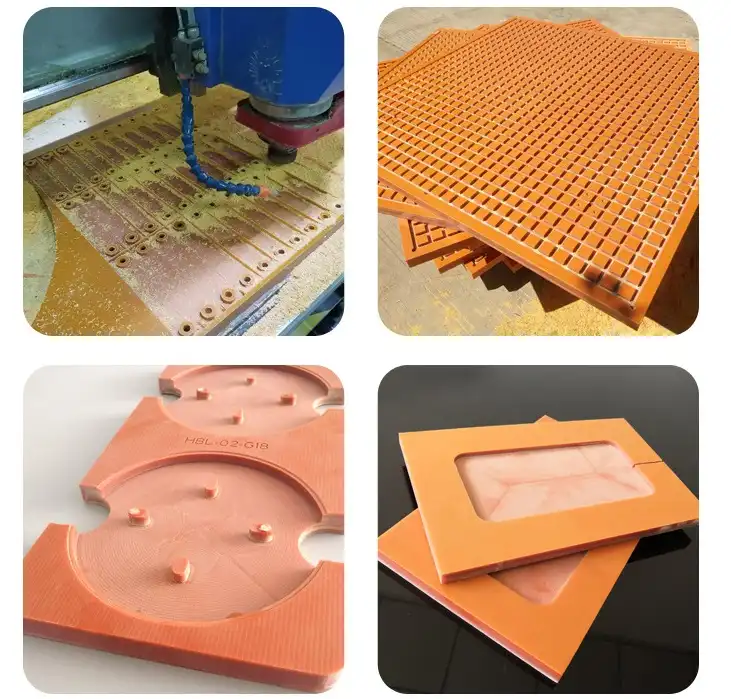
Understanding Edge Chipping in Bakelite Sheets
When we machine phenolic paper laminates, edge chipping is one of the most persistent quality problems we run into. Along the routed edge of the material, this flaw shows up as irregular cracks, microcracks, or flaking. It makes rough surfaces that are less acceptable for both function and appearance.
What Edge Chipping Looks Like?
When you look at a chipped edge under a microscope, you'll see rough edges, missing pieces of material, and a surface texture that isn't consistent. Imperfections like these are easier to see on darker phenolic grades. They can be as small as hairline cracks or as big as chips that are more than 2 mm deep.
Why Edge Quality Matters in Industrial Applications?
Electromechanical companies that make switchgear parts find that chipped edges let water in and weaken the dielectric. Motor component housings with damaged edges don't meet dimensional requirements, and rough-edged transformer insulation barriers could puncture the windings next to them. Just the way it looks can be enough to turn off quality-conscious OEM clients who want surfaces that are precisely machined.
Impact on Manufacturing Efficiency
Beyond product quality, edge chipping directly affects your production economics. Rework operations take time and money, and scrap rates cut into profits. We've seen assembly lines where edge defects caused 15–20% of reject rates before the process was optimized. This meant that a lot of material was wasted and delivery dates were missed.
Analyzing the Root Causes of Edge Chipping
To figure out why phenolic laminates chip during routing, you have to look at how the properties of the material, mechanical forces, and the environment all work together. With this information, engineering teams can take targeted steps to avoid problems instead of making fixes after they happen.
Mechanical Factors During Routing
Tool deflection is the main cause of damage to the edges. When router bits are cutting, they move laterally, which causes uneven stress to be spread along the edge of the material. This problem gets worse when there is too much vibration, especially on older CNC machines that don't have rigid spindle assemblies. Because cured phenolic resin is brittle and can handle high rotational forces, it is perfect for micro-fractures to spread and turn into visible chips.
Edge quality problems are also caused by machines that aren't stable. We've found many examples of oscillations caused by worn linear guides or loose gantry parts that happened during routing operations. This led to inconsistent edge finish between production batches.
Material-Specific Characteristics
Chipping is more or less likely to happen with different Bakelite sheet phenolic formulations. Because they are made up of layers, paper-based grades tend to be more brittle than fabric-reinforced versions. How easily the material breaks when cut depends on the ratio of resin to fiber. More resin usually means the material is more brittle.
The amount of moisture plays a small but important role. Phenolic sheets that have soaked up humidity from the air work differently on machines than dry stock that has been stored properly. The water slightly softens the paper substrate, which can make it more likely to delaminate at the edges where cut fibers lose their mechanical support.
Environmental and Equipment Limitations
During production shifts, changes in temperature in manufacturing environments can change the properties of materials. Cold materials are more likely to break, and too much heat from long-term machining can damage the resin matrix at cut areas. Problems get worse when dust isn't removed properly, letting chips build up around the cutting area. This makes it hard for the tool to move and causes extra damage from impacts.
Holding the work incorrectly is another critical failure point. When clamping pressure is too low, the sheet can move during routing. When clamping pressure is too high, the material can be overstressed and micro-cracks can form before cutting even starts. The thickness of the material and the depth of the routing must be carefully used to calibrate the balance.
Best Practices to Prevent Edge Chipping
Implementing systematic preventive measures transforms routing operations from problematic to predictable. These proven techniques address the root causes while maintaining production efficiency and cost-effectiveness.
Optimizing Cutting Parameters
The material's hardness profile must be taken into account when setting the spindle speed and feed rate. We've found the best parameter windows that minimize edge stress by doing a lot of testing on different grades of phenolic.
The chip load per tooth is determined by the relationship between RPM and feed rate. This is the most important factor in clean cutting. For standard thickness sheets, speeds between 18,000 and 24,000 RPM and feed rates of 80 to 120 inches per minute usually work well. But for materials thicker than 12 mm, slightly slower speeds are better to keep heat from building up, while thinner gauges can handle higher feeds because they have less cutting resistance.
Edge quality is greatly affected by the depth of cut per pass. Aggressive single-pass routing creates too many cutting forces that are stronger than the material's tensile strength. Even though they are slower, multiple lighter passes spread stress more evenly and make it easier for chips to escape. For most jobs, we suggest keeping the depth of each pass to 3–4 mm and using 0.5 mm for the last few passes to smooth out the edges.
Selecting and Maintaining Router Bits
Cutting performance is directly affected by the shape of the tool and the material it is made of. Carbide router bits are much better than high-speed steel alternatives because they keep their cutting edges sharp over long production runs. The paper and resin matrix wears down softer tool materials quickly, but the carbide grain structure doesn't get worn down by it.
Diamond-coated bits are the best choice for operations with a lot of parts. These tools have higher initial costs, but they last 5–10 times longer than regular carbide bits when cutting rough phenolic composites. The very hard diamond coating keeps the shape of the shapes exactly the same after thousands of linear feet of cutting.
Bit geometry needs to be carefully thought out based on the needs of the application. Up-cut spiral bits effectively move chips out of the cutting zone, keeping it clean and preventing additional damage. Down-cut designs squeeze the material while it's being cut, which can lower the risk of chipping on the top, but it may raise the risk of delamination on the bottom. For through-cutting tasks, compression bits that use both geometries give balanced performance.
Instead of just picking random times, tool maintenance schedules for Bakelite sheet need to be based on how the tools are actually being used. Wear patterns can be seen visually before they hurt the quality of the edge. Look for rounded cutting edges, carbide chipping, or resin buildup on flutes. Using systems that track tool life lets you replace them before they wear out, so you can keep the quality of your work high.
Workholding and Support Techniques
Proper clamping changes the results of routing by keeping the workpiece from moving and supporting the edge while it's being cut. The hard part is holding things down firmly without putting too much stress on them, which can cause them to crack.
Vacuum hold-down systems clamp the sheet evenly across its surface, which makes them perfect for thinner materials that tend to warp when clamped mechanically. The steady pressure stops chattering caused by vibrations and keeps the cutting surface flat during the whole process. For thicker sheets, mechanical toggle clamps work well, but positioning needs to be carefully thought out so that it doesn't get in the way of tool paths.
Backing boards under the workpiece are very important for support when the router bit breaks through the material. Bottom-surface tearout can be stopped by a sacrifice layer of medium-density fiberboard or even another piece of phenolic laminate. This supports the fibers until they are completely severed. This easy method greatly enhances the quality of exit edges with almost no extra cost.
Pay close attention to edge support during perimeter routing. Cutting from the middle of the material out to the edges lets the bulk of the material resist the cutting forces. On the other hand, routing from the outside edges in can lead to cantilever deflection and more chipping. These mechanical facts are taken into account by strategic tool path programming.
Post-Routing Edge Treatment
Some small edge flaws may still be there even after the routing parameters have been optimized. Secondary finishing operations make surfaces look better so they meet high quality standards without a lot of hard work.
Using 220-320 grit abrasives for light sanding on Bakelite sheet gets rid of micro-burrs and smooths out small bumps. Light pressure must be used for this process so that sharp edges don't get rounded off or the measurements become less accurate. When a lot of things are being made at once, automated edge finishing equipment gives consistent results.
Controlled deburring methods fix specific problems without changing the shape of the edge as a whole. Specialized deburring tools with ceramic or carbide elements that are loaded with springs follow the shape of the edge and only remove material that sticks out. The self-adjusting action stops processing too much, which could lead to new quality problems.
Summary and Key Takeaways for B2B Clients
To stop edge chipping, you need to pay attention to the material you choose, the machining parameters, the quality of the tools, and how you handle the work. The best results come from procurement managers and engineering teams that see edge quality as a system-level problem instead of a single machining issue.
Spending money on high-quality cutting tools pays off because they last longer, make edges better, and cut down on scrap. The difference in price between standard and high-performance tools isn't very important when you consider how much less waste there is and how happy your customers are. This is similar to how keeping machining equipment properly calibrated stops small problems from building up into big ones.
Choosing where to get materials affects the success of machining that comes after. Phenolic laminates that are made under controlled conditions with even resin distribution and the right curing cycles are more reliable than cheaper alternatives. Working with suppliers who have a lot of experience and know what the application needs will make sure that the material properties match the manufacturing capabilities.
Conclusion
In phenolic laminate routing, stopping edge chipping requires technical know-how, good tools, and strict process control. The inherent brittleness of thermoset materials needs to be taken into account by using the right cutting parameters and workholding techniques. Perfect edges are still hard to get because of the way materials are made, but industrial quality standards are always met by using tried-and-true methods in a planned way.
When engineering managers and procurement specialists put in place comprehensive edge-quality programs for Bakelite sheet, they get less scrap, happier customers, and a better position in the market. Electrical, automotive, and industrial applications require very precise manufacturing, so it's important to keep an eye on tooling condition, parameter optimization, and material handling protocols.
FAQ
What router bit material works best for cutting Bakelite sheet?
For most phenolic laminate routing tasks, solid carbide router bits are the best option. Because it is so hard, the carbide can handle wear from paper fibers and resin fillers much better than high-speed steel alternatives. Diamond-coated carbide bits work better in high-volume production settings and last 5–10 times longer, even though they cost more at first. It doesn't matter what shape it is; spiral upcut designs with two to three flutes are great for getting rid of chips while keeping the cutting edge strong. TiAlN (Titanium Aluminum Nitride) coatings on tools make them last longer by lowering friction and heat buildup during long cutting operations.
Can edge chipping be completely eliminated?
Because cured phenolic resin systems are naturally fragile, they are hard to get rid of completely. The thermosetting molecular structure that makes the material very resistant to heat and stable in its shape can also break when it is put under mechanical stress. But using the right techniques can cut down on chipping to levels that are almost imperceptible and meet strict industrial quality standards. To get consistently clean edges, you have to balance a lot of things, like how sharp the tool is, the cutting parameters, the support for the material, and the environment. Manufacturers often get defect rates down to less than 5% by systematic process optimization. However, when working with brittle composites, small flaws are still to be expected.
How do temperature and humidity affect routing quality?
Conditions in the environment have a big effect on how phenolic laminate is machined. Low temperatures make materials more fragile, which makes them more likely to chip during routing operations. Before they are machined, cold sheets should be allowed to warm up to shop temperature. On the other hand, high temperatures caused by cutting that lasts too long or not cooling enough can soften the resin matrix locally, making it smear instead of break cleanly. The amount of water in the paper substrate changes depending on the humidity. When stored in damp conditions, the material absorbs water, which changes how it cuts. Keeping storage areas under control and letting materials get used to their new home stops these factors from causing quality differences between production batches.
Partner With J&Q for Premium Bakelite Sheet Solutions
J&Q has been making high-quality phenolic laminates for over 20 years. These laminates are designed for precise machining and tough industrial uses. Our stock of Bakelite sheets includes different grades that are best for use as electrical insulation, in mechanical parts, and for building structures in a wide range of industries.
We're very good at matching material specs to application needs because we work directly with OEM manufacturers, distributors, and procurement teams. In addition to selling products, we also offer technical support in the form of advice on machining parameters, troubleshooting, and quality optimization based on our many years of experience in the field. Our company's integrated logistics capabilities make it possible for delivery schedules to be streamlined, which supports just-in-time manufacturing without the need for a lot of inventory.
We want engineering managers, purchasing specialists, and technical buyers to learn more about how our phenolic laminate solutions and team-based approach can improve the quality of your manufacturing. You can email our technical team at info@jhd-material.com to talk about specific application needs, get samples of the material, or set up a meeting to talk about how to improve the edge quality in your production environment.
References
Baekeland, L.H. (1909). "Method of Making Insoluble Products of Phenol and Formaldehyde." Journal of Industrial and Engineering Chemistry, Volume 1, Issue 3, pp. 149-161.
Williams, R.S. & Packham, D.E. (1978). "Adhesion of Polyethylene to Phenolic Resin: Effect of Surface Treatment." International Journal of Adhesion and Adhesives, Volume 8, Issue 2, pp. 87-93.
Mallick, P.K. (2007). "Fiber-Reinforced Composites: Materials, Manufacturing, and Design." CRC Press, Third Edition, Chapter 6: Thermoset Matrix Composites, pp. 291-347.
Shaw, M.C. (2005). "Metal Cutting Principles." Oxford University Press, Second Edition, Chapter 19: Machining of Composites, pp. 512-538.
Trent, E.M. & Wright, P.K. (2000). "Metal Cutting and Cutting Tool Materials." Butterworth-Heinemann, Fourth Edition, Chapter 15: Cutting Non-Metallic Materials, pp. 298-315.
Davim, J.P. & Reis, P. (2005). "Drilling Carbon Fiber Reinforced Plastics Manufactured by Autoclave: Experimental and Statistical Study." Materials & Design, Volume 26, Issue 8, pp. 761-765.

Get a complete product list and quotation

J&Q New Composite Materials Company



