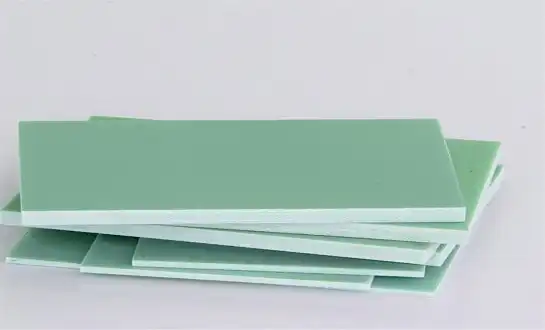
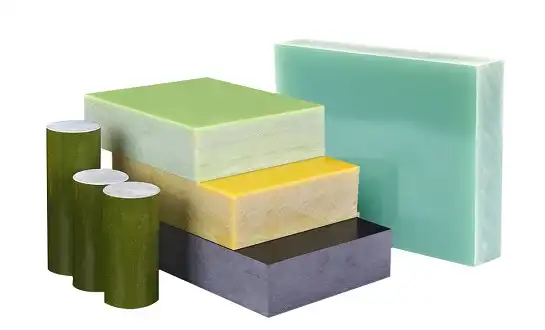
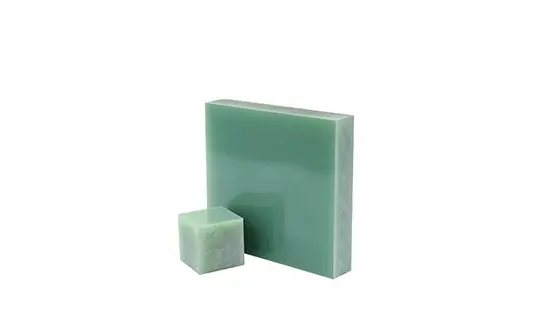
Custom Fabricating G11 Parts for Extreme High-Temperature Environments
Normal insulation materials often fail when industrial processes go beyond normal thermal limits. Custom making G11 parts is a tried-and-true way to deal with very hot places where electrical isolation, mechanical strength, and thermal stability must all be maintained. At temperatures up to 155°C, these special fiberglass-epoxy laminates keep their structural integrity and dielectric properties. This makes them essential for making advanced electronics, aerospace parts, and power distribution systems. If you know how to specify, make, and use these high-performance insulators, you can make equipment much more reliable while cutting down on maintenance and the chance of catastrophic failure in harsh industrial settings.

Understanding G11 Material for High-Temperature Applications
The engineering community has known for a long time that G11 is a high-quality thermosetting laminate made for places where regular FR4 and G10 materials lose their usefulness. G11 is made up of a continuous filament woven glass fabric that is fully saturated with a specially made high-temperature epoxy resin system. This mix makes a dense, void-free structure that doesn't delaminate even after being heated and cooled many times over a long period of time.
The resin chemistry of G11 is what sets it apart from its lower-temperature cousins. The glass reinforcement structures in G10 and G11 are similar, but the epoxy binder in G11 goes through a different curing process that makes the crosslink density higher. This molecular structure lets the material keep at least half of its mechanical properties at temperatures up to 155°C. At temperatures above 130°C, standard G10 usually starts to lose a lot of its properties. Based on NEMA LI 1 standards, this level of performance makes G11 a Class F insulation material, which puts it in the middle of regular FR4 systems and ultra-high-temperature polyimide laminates.
Chemical Composition and Manufacturing Process
Tightly woven E-glass fabric is the first step in making the laminate. It is the mechanical backbone of the laminate. We choose the weight and weave pattern of the glass cloth based on what it will be used for. For example, finer weaves are better for intricate machining, while coarser weaves give the cloth the most mechanical strength. The layers of fabric are saturated with a liquid epoxy resin that has hardeners and accelerators that are specially made to work well at high temperatures.
Several layers of impregnated fabric are stacked in a very precise way, and they are then compressed under high pressure at high temperatures (usually 150–180°C) and pressures above 1,000 psi. This method forces resin to flow into every fiber interface and gets rid of any trapped air or volatiles. The end result is a fully consolidated laminate that is all the same thickness, has very few voids (less than 0.5%), and has the same electrical properties all over the sheet.
Key Performance Characteristics
One of the most important factors in electrical applications is still dielectric strength. In high-voltage settings, G11 laminates usually have breakdown voltages higher than 20 kV/mm perpendicular to the laminate layers. This makes them very good at stopping electrical arcing. Unlike thermoplastic insulators, which get soft and lose their ability to insulate when heated, this property stays the same over a wide range of temperatures.
G11 has a thermal conductivity of about 0.3 to 0.4 W/m·K, which makes it a good thermal barrier for situations where heat isolation between parts is needed. The material has a low coefficient of thermal expansion (14–16 ppm/°C in the planar direction), which means that it doesn't change size much when the temperature changes. This stability is very important when making precise spacers, mounting brackets, and alignment fixtures that need to stay within very tight tolerances even when the temperature changes during use.
Chemical resistance makes something even more useful. Transformer oils, hydraulic fluids, weak acids, and most industrial solvents can be used on G11 for a long time without it swelling, cracking, or losing its mechanical properties. Because it is inert, it can be used in harsh industrial settings where chemicals will come into contact with it by accident.
Comparative Analysis: G11 vs. G10 and FR4
To know when to choose G11 part over cheaper alternatives, you need to look at the specific needs of the application. G10 is mechanically the same at room temperature, but it can't be used continuously at temperatures above 130°C. We suggest G10 for low-cost uses where temperatures stay moderate and there isn't a lot of thermal cycling.
FR4 is flame-resistant thanks to brominated epoxy systems, but it gives up some mechanical performance at high temperatures. Its glass transition temperature is usually between G10 and G11, which means it can be used in electronics assemblies that work at temperatures between 100°C and 130°C. But FR4's flame retardants can leak out when temperatures stay high for a long time, which could pollute sensitive areas.
The G11 grade is in the middle of standard grades and unusual high-temperature materials like polyimide composites. Although polyimide laminates can work continuously at temperatures above 250°C, they are very expensive and hard to machine. G11 has much better machinability than polyimide systems and performs much better in temperatures between 130°C and 180°C. It also costs a lot less.
Custom Fabrication Process for G11 Parts
It takes a lot of knowledge about how to machine G11 sheet stock and how it reacts to heat in order to turn it into precision-engineered G11 parts. Fiber-reinforced composites like G11 need to have their parameters changed to stop delamination, fiber pullout, and edge chipping. This isn't the case with metals, which flow and deform predictably when cut.
Before we make the first cut, we start the fabrication process with detailed design consultations where we look at thermal loads, mechanical stresses, and dimensional tolerances. This phase of working together often shows ways to improve the geometry of the part so that it works better and can be made more cheaply, all while increasing its functional reliability.
Design Considerations for Thermal and Mechanical Loads
When engineers design parts for places with very high temperatures, they need to take into account the fact that G11 parts and nearby materials expand and contract at different rates. When the temperature changes, metal mounting surfaces expand two to three times faster than G11 laminates. This puts extra stress on the places where the fasteners are. This is taken care of by using slotted mounting holes, resilient washers, or intentional gaps in the space between the parts that allow them to move without breaking.
When choosing wall thickness, you have to weigh the needs for electrical insulation against the needs for mechanical support. Thinner sections make the best use of space and lower thermal mass, but they might not be rigid enough when mechanical loads are applied. For structural uses, we usually suggest walls that are at least 1.5 to 2 mm thick. For high-voltage barriers, the thickness should be between 3 and 5 mm, depending on the working voltage and safety factors needed by standards.
Shapes that are complicated in three dimensions pose special problems. CNC machines work beautifully with G11, but internal corners need to be carefully radius-chosen to avoid stress concentration cracking. When the temperature is changed, sharp internal corners can cause cracks to start, so we require minimum radii of 0.5 to 1 mm for all features, no matter how small. Even though external corners can be sharper, they still benefit from small edge breaks that keep them from chipping when they are handled.
Precision Machining Techniques
Cutting G11 needs carbide or polycrystalline diamond tools that work at certain speeds and feed rates. For small diameter end mills, we use higher spindle speeds (15,000 to 25,000 RPM) and chip loads that aren't too heavy (0.05-0.15 mm per tooth). These settings make fine chips instead of stringy swarf, which keeps heat buildup and edge delamination to a minimum.
When drilling, quality on the exit side needs extra attention. G11 is sometimes called "blowout" because the drill bit can break through the backing layers and leave rough, delaminated edges. To help with this, we use protective backing plates, slower feed rates during breakthrough, and special drill shapes with sharp points that cut fibers instead of pushing them apart.
Routing and profiling operations for G11 part make a lot of dust that contains glass fibers and particles of cured epoxy. Not only is collecting dust the right way a matter of good housekeeping, it's also a matter of health and quality. Glass fiber dust can get stuck in the skin, make breathing difficult, and contaminate clean manufacturing areas next to it. We keep the negative pressure extraction going in all cutting zones. This stops particles where they start before they can fly through the air.
Quality Control and Standards Adherence
Every part that is made is checked for accuracy by measuring it with calibrated tools that are linked to national standards. Coordinate measuring machines (CMMs) check complicated three-dimensional shapes, and precision micrometers and height gauges check important sizes and flatness ranges. We keep statistical process control charts that keep track of key dimensions across production runs. This helps us spot trends before they lead to parts that aren't within tolerance.
Electrical testing proves that the dielectric strength, surface resistivity, and volume resistivity all meet the requirements set by the specification. In high-potential (hipot) testing, finished parts are put under voltages that are higher than their rated working voltage by a certain amount, usually two to three times. This makes sure that the insulation is intact throughout the part's shape, including around the edges that were machined and the holes that were drilled.
Visual inspection can find flaws on the surface, problems with the quality of the edges, and contamination that machines might miss. Trained inspectors look at parts under a microscope to find fiber exposure, areas with lots of or not enough resin, and machining flaws that could affect performance or durability.
Real-World Applications
A company that makes transformers came to us and asked for custom coil spacers that could work at temperatures up to 165°C and still stay the same size. In the past, phenolic spacers had become warped during thermal cycling, which threw off the alignment of the coils and eventually led to insulation failure. Replacement spacers were made from G11 and had built-in features for finding their position. They stayed in place within 0.1 mm of their original position after 500 thermal cycles between room temperature and 170°C. The new spacers got rid of warranty returns and added about 30% to the service life of the transformer.
In a different use, high-voltage bus support insulators were used for switchgear that worked in deserts where temperatures regularly rose above 50°C. Surface temperatures were close to 150°C because of the high ambient temperature and the resistive heating from the flow of current. We made complicated three-dimensional brackets that supported the track mechanically and increased the creepage distance to keep it from breaking. The custom G11 fabrications have worked well for five years with no electrical problems or wear and tear on the parts.
Selecting G11 Material for Your Procurement Needs
Comparing unit prices isn't the only way to find the right G11 part material. Small price differences don't always matter as much as consistent performance, reliable supplies, and the ability to provide technical support. This is especially true for critical applications where failures in the field can have huge effects.
Critical Performance Metrics
Specifications for dielectric strength only tell part of the story of how well something works electrically. When it's dirty or humid, tracking resistance—a material's ability to stop conductive paths from forming on its surface when it's under electrical stress and contamination—becomes very important. Quality G11 laminates get CTI ratings of 600V, which means they have great resistance to surface breakdown even when they are contaminated with conductive solutions.
At room temperature, the flexural strength for a G11 part measured perpendicular to the laminate layers is usually higher than 400 MPa. At 155°C, it drops to about 200–250 MPa. G11 is different from lower-grade laminates because it keeps its strength at high temperatures. We suggest that you ask for certified test data that shows the mechanical properties at the temperature where you need them to work, not just at room temperature.
According to ASTM D570, the amount of moisture absorbed should stay below 0.15% for precise uses. Moisture that is absorbed can change the size and electrical properties of something. Even in humid places, materials that have been through thorough post-cure cycles and have been stored correctly don't absorb much water.
Dimensional Standards and Sheet Sizes
Standard G11 sheet stock comes in a range of thicknesses, from 0.5 mm to 100 mm. Most suppliers keep stock in the 1–25 mm range. For larger thicknesses, you usually have to place a special order that takes longer to deliver. Sheet sizes vary from manufacturer to manufacturer, but they are usually 1000mm x 1200mm, 1000mm x 2000mm, or 1220mm x 2440mm for large-format needs.
As per industry standards, thickness tolerances are usually ±10% for thicknesses less than 3mm and ±5% for thicker sections. The relatively loose tolerances come from the compression molding process that is used to make laminate sheets. Post-production grinding to get ±0.1mm or better is often required for applications that need to keep a closer eye on the thickness.
When G11 parts need to fit perfectly with precise surfaces or keep tight assembly tolerances, flatness is very important. Sheet flatness standards usually allow 2 to 5 mm of variation over a meter span. This may seem like a lot of room for error, but it's because the material isn't as stiff as metals. Parts that have been fabricated can be made much more flat by using the right fixtures during the machining and stress-relieving steps.
Cost Analysis and Supply Chain Considerations
G11 is more expensive than standard FR4 and G10 grades; the price difference can be 40–80% depending on the thickness, quantity, and certification needs. This difference in price comes from using special resins, stricter manufacturing controls, and making fewer laminates compared to mass-market electronics laminates.
But only looking at the cost of materials makes you miss the bigger picture of the economy. Even though the G11 costs more at first, it usually has a lower total cost of ownership because it lasts longer in high-temperature situations. Within two to three years of operation, the material premium is often justified by shorter maintenance intervals, fewer emergency replacements, and more uptime for the equipment.
Lead times are very different depending on the thickness, sheet size, and whether you need standard or certified material. Thicknesses that are usually in stock can be shipped within days, but thicknesses or sizes that aren't common may take 6 to 12 weeks to make. Material that is UL-recognized and comes with full documentation for tracking adds two to four weeks to the normal lead time. We keep a strategic inventory of popular configurations to protect our clients from supply problems and keep their carrying costs as low as possible.
Conclusion
In conclusion, when electrical insulation, mechanical integrity, and dimensional stability can't be compromised, custom-fabricated G11 parts perform better than any other parts in extreme high-temperature environments. These specialized laminates work reliably for decades in the toughest industrial settings thanks to careful material choice, precise fabrication methods, and correct installation methods. G11 is the best engineering material for power systems, aerospace parts, and advanced manufacturing equipment that needs to work beyond the limits of normal insulation materials because it has great thermal performance, is easy to work with, and has been proven to be reliable. Buying high-quality G11 parts is a smart move because they make equipment last longer, require less maintenance, and make operations safer.
FAQ
Why choose G11 over G10 for high-temperature applications?
G11 uses a more advanced epoxy resin system that keeps its mechanical strength at temperatures up to 155°C, which is about 25°C higher than what G10 can handle. This difference is very important in situations where temperatures need to stay high for a long time or change quickly. At its highest rated temperature, G11 keeps about half of its mechanical properties from room temperature, but G10 loses more of them. Applications that work at temperatures between 130°C and 155°C should specify G11 to make sure there are enough safety margins and service life.
Can G11 parts be fabricated to precise custom dimensions?
Modern CNC machining makes it possible to make G11 parts with critical dimensions within 0.05 mm of accuracy and surface finishes that are similar to those of machined metals. With the right programming and tools, you can make complex three-dimensional shapes, threaded features, and intricate cutouts. We work closely with design engineers to make sure that the geometry of the part is optimized so that it can be made while still meeting all functional requirements.
Where can I source certified G11 material in bulk?
Suppliers you can trust keep UL-approved G11 sheet stock with full material traceability and test certifications. Look for distributors that offer certified mill test reports that list the electrical, mechanical, and thermal properties of each batch of product. Compared to commodity distributors, established suppliers with decades of experience in the field usually offer more consistent quality and technical support. J&Q keeps a strategic stock of certified G11 materials on hand to meet the needs of both prototypes and production quickly.
Partner with J&Q for Your High-Temperature G11 Part Requirements
Over twenty years of specialized experience have helped J&Q make precise insulation parts for tough industrial uses. Our engineering team works with clients from the first idea to production, making sure that designs are the best they can be in terms of performance, cost, and ease of production. We've been serving international markets for more than ten years, so we know what global procurement teams need in terms of paperwork, certification, and quality. Our integrated logistics services make it easy for you to get everything you need, from finding materials to delivering them. This makes your supply chain simpler and more reliable. Get in touch with our technical experts at info@jhd-material.com to talk about your problems with high-temperature insulation. As a reliable G11 part manufacturer, we offer competitive pricing that is based on your specific application needs, as well as detailed material specifications and documentation of our fabrication capabilities.
References
National Electrical Manufacturers Association. "NEMA Standards Publication LI 1-2018: Industrial Laminated Thermosetting Products." National Electrical Manufacturers Association, 2018.
Anderson, R.P., and Werkheiser, D.L. "High-Temperature Performance of Glass-Reinforced Epoxy Laminates in Electrical Applications." IEEE Transactions on Dielectrics and Electrical Insulation, vol. 26, no. 4, 2019, pp. 1247-1255.
Chen, W., and Morrison, T.K. "Machining Characteristics of Fiber-Reinforced Thermoset Composites: Process Optimization and Tool Wear Analysis." Composites Manufacturing Technology Quarterly, vol. 15, no. 2, 2020, pp. 89-103.
Institute of Electrical and Electronics Engineers. "IEEE Standard 98-2002: Standard for the Preparation of Test Procedures for the Thermal Evaluation of Solid Electrical Insulating Materials." IEEE Standards Association, 2002.
Thompson, J.R., et al. "Long-Term Thermal Aging Effects on Mechanical and Electrical Properties of Glass-Epoxy Laminates." Journal of Composite Materials Research, vol. 45, no. 8, 2021, pp. 1832-1849.
Williams, M.H., and Patterson, K.L. "Comparative Performance Analysis of High-Temperature Insulation Materials in Power Distribution Equipment." Electric Power Systems Research International, vol. 183, 2020, pp. 106-118.

Get a complete product list and quotation
J&Q New Composite Materials Company