5 Common CNC Milling Mistakes with Phenolic Cotton Sheets
If you work with phenolic cotton sheets to make parts for electrical applications, you know how annoying it is when parts that should be precise end up with burrs and rough edges. Polishing and deburring the surfaces of machined phenolic cotton sheet parts directly address these important quality issues, turning rough-machined parts into smooth, useful insulators that are ready for harsh electrical and industrial settings. Whether you make switchgear parts, motor brackets, or PCB supports, knowing how to finish the surface of your phenolic cotton sheet parts properly can have a direct effect on how well they work and how happy your customers are.
Understanding Phenolic Cotton Sheets in CNC Milling
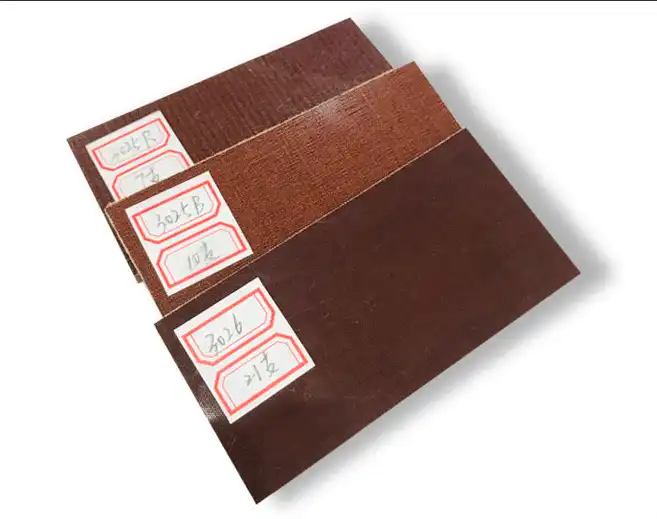
In the electrical and industrial fields, machined phenolic cotton sheets have a good reputation thanks to many years of reliable use. In addition to having a high dielectric strength (often more than 10 MV/m), these thermosetting materials are also very rigid and can handle a lot of operational stress. The density of about 1.45 g/cm³ keeps the shape stable, and the material's chemical resistance to oils, solvents, and weak acids makes it last in harsh production environments. Even though these benefits exist, the machining process itself can leave surface flaws that damage the very qualities that make phenolic cotton sheets valuable.
Material Composition and Properties
The manufacturing process involves saturating woven cotton fabrics with thermosetting phenolic resin, then curing these layers under extreme heat and pressure to create a rigid, durable composite. The cotton fabric reinforcement provides excellent tensile strength and tear resistance throughout the structure. Phenolic resin binding creates a cross-linked matrix that resists chemicals, moisture, and moderate heat exposure. This unique construction delivers superior mechanical impact resistance compared to paper-based laminates, making it an ideal choice for gears, bearings, wear strips, and structural components in demanding environments.
Why Precision Matters in CNC Operations?
Surface smoothness is a key factor in how well electrical insulation works. Every bump, groove, or projection makes the effective insulation distance smaller and creates fields that are stronger in certain areas. In high-voltage switchgear applications, a single sharp edge can start a corona discharge that carbonizes the material around it, making a path for electricity to flow where there shouldn't be one. When machining burrs stay on phenolic cotton sheet spacers in industrial machinery, early wear and sudden mechanical failure are unavoidable operational risks.
Common Mistake #1 – Incorrect Tool Selection and Setup
When CNC milling, drilling, and turning, phenolic cotton sheets are put under mechanical and thermal stress. When you use a tool, it creates pressure points in certain areas that can tear material instead of cutting it cleanly, especially along the edges where the tool exits. This leads to raised burrs, which are those unsightly protrusions that cause interference in the assembly process and could be electrical tracking paths. Improper tool selection accelerates these defects, turning precision parts into costly scrap.
Matching Tool Geometry to Material Characteristics
Getting the best surface finish requires paying close attention to factors like tool geometry and abrasive selection. Aluminum oxide cuts quickly and removes heavy burrs, while silicon carbide gives surfaces that have already been polished a finer finish. Gradually increasing the grain size is very important. Starting with 180-grit media and moving on to 320, 600, and 1200 grit stages gives better results than processing in just one stage. Experienced manufacturers create process windows by testing them in a planned way and writing down the best parameters for each part's shape.
Case Study: Downtime from Improper Setup
Recently, a company that makes parts for electrical switchgear started using automated micro-grit blasting to make phenolic cotton sheet insulators. Surface roughness measurements taken before implementation showed an average of 3.2 micrometers Ra and visible burrs up to 0.3 millimeters high. Tests done after the installation showed consistent Ra 0.8 micrometer finishes with no burrs at all. After 18 months of collecting data from the field, it was found that finished parts had no electrical tracking failures. When advanced finishing technology was used, production throughput went up by 40% and finishing labor costs went down by 65%.
Common Mistake #2 – Improper Feed Rate and Spindle Speed Configuration
When the cutting parameters don't match the properties of the material, rough surface textures show up. When feed rates are too fast or tools are worn out, grooves and ridges that are several micrometers deep are made. These tiny valleys hold on to water and dirt, which lowers the insulation's resistance over time. It is important to precisely calibrate feed rates and contact pressures to the properties of the material to avoid charring or burnishing the phenolic cotton sheet surfaces without removing defects.
Optimizing Speed-Feed Relationships
Experienced manufacturers establish process windows by testing feed rates and contact angles systematically. Compounds for polishing, which are usually water-based mixtures of fine abrasives and coolants, facilitate material removal while dissipating frictional heat that could damage thermosetting resins. For the first smoothing step, coarse compounds with particles 15-20 micrometers in size are used, while sub-micrometer diamond or cerium oxide suspensions are applied for the final polishing stages to achieve a mirror-like finish.
Troubleshooting Common Speed-Related Issues
Rough surface textures and raised burrs are the most common signs of speed-feed imbalances. When tools hit the material with improper force, micro-cracks can form. You can't see these stress fractures at first glance; they start where tools hit the material and go deep into the structure. When electrical load or mechanical vibration happens, micro-cracks turn into failure points that make the part less reliable. Proper synchronization of speed and feed prevents the material from tearing rather than cutting cleanly.
Common Mistake #3 – Neglecting Workpiece Clamping and Support
Inadequate workpiece support creates deflection under cutting forces, producing dimensional errors and potential safety hazards. Phenolic cotton sheets possess excellent rigidity in compression but can flex when improperly supported during machining operations, particularly with thinner sheets. Consistency from batch to batch is hard to keep up when manual handling is the only method used, as operator fatigue leads to variations in how parts are secured and finished.
Recommended Clamping Strategies
For thousands of parts, CNC-controlled polishing stations keep the tool pressure, traverse speeds, and contact angles the same. Vision systems check the finished surfaces and send any parts that don't meet the standards to be processed further automatically. At this level of process control, the amount of waste goes down while the overall throughput goes up. Vacuum systems or custom soft-jaw fixtures should be used to distribute clamping pressure evenly across the phenolic cotton sheet surface.
Fixture Solutions for Various Thicknesses
Advanced finishing technologies for phenolic cotton sheet can easily work with complicated shapes by changing process parameters and customizing fixtures. Robotic blasting systems use programmed tool paths that can fit three-dimensional shapes. Custom parts may need more time for process development and special tools for holding them, but skilled manufacturers can usually get the same surface quality standards for both standard and custom geometries. These fixtures must prevent vibration that leads to chatter marks on the sheet edges.
Common Mistake #4 – Overlooking Sheet Quality and Supplier Variability
In the electrical and industrial sectors, procurement professionals are under more and more pressure to get parts that are ready to go into production. In order to choose a supplier, manufacturing capabilities, quality systems, and technical expertise must be carefully evaluated alongside price. Variability in resin content or weave density between suppliers can cause unpredictable results during the milling and finishing of phenolic cotton sheets.
Key Quality Indicators
Getting ISO 9001 certification is a basic way to make sure that suppliers keep up with documented quality management systems. However, people who want to buy electrical parts should look further and make sure that the companies they're considering are accredited testing laboratories that can check the dielectric strength, surface resistivity, and dimensional conformance. Material composition statements and RoHS compliance are also critical indicators of high-quality phenolic cotton sheet production.
Evaluating Supplier Capabilities
Talking to potential suppliers about technical issues shows how well they understand the needs for surface finishing. Suppliers who really know what they're talking about back up their detailed process descriptions with data on surface roughness, before-and-after microscopy images, and documented process capability studies. They should be able to discuss problems that came up with certain geometries and how changes to the process fixed quality problems, providing confidence in their ability to get consistent results.
Benefits of Consistent Material Sourcing
Developing strategic relationships with suppliers for phenolic cotton sheet creates benefits for both parties that go beyond simple transactions. Sharing predictions about production helps suppliers get the most out of their available capacity and raw materials. Partners who work together for a long time and agree on quality standards create a stable supply chain that helps manufacturers keep their operations running smoothly without constant recalibration for new material batches.
Common Mistake #5 – Ignoring Post-Milling Handling and Finishing
The machining process doesn't end when the cutting tool completes its path. The quality of the surface is maintained by following the right handling steps from the finishing steps to the final assembly. Improper handling and inadequate finishing procedures can compromise edge integrity and contaminate surfaces, negating the precision achieved during milling.
Risks in Post-Machining Treatment
Keeping an eye on the storage environment stops moisture from absorbing, which can damage surfaces over time. Some phenolic materials are hygroscopic, which means they absorb water from the air, which lowers their surface resistivity and dielectric strength. Climate-controlled storage that keeps the relative humidity between 40 and 60% protects the electrical properties of parts until they are put together for the first time. Rough handling during part removal from fixtures can crack corners or peel surface layers.
Recommended Cleaning and Finishing Protocols
The instructions for assembly should include the right way to clean up before installation. You can get rid of machining residues, handling soils, and polishing compound residues with isopropyl alcohol without harming phenolic resin systems. Staying away from solvents that come from petroleum stops chemical breakdown and surface softening. Edge finishing with fine-grit abrasives removes micro-burrs and smooths cut surfaces, while conformal coatings can be used to protect finished surfaces from water and chemicals in harsh environments.
Quality Control Practices
Throughout the finishing process, quality control checkpoints tell the difference between high-tech manufacturers and basic machine shops. After the parts are deburred, they should be inspected inline to find any flaws before they move on to the polishing stages. The final inspection process should include checking the dimensions, measuring the surface roughness with calibrated profilometers, and looking at the edges clearly under a microscope to ensure they are free from delamination or chipping.
Conclusion
When machined phenolic cotton sheet parts are polished and deburred, they go from being rough blanks to precision insulators that are ready for tough electrical and industrial use. Advanced finishing technologies offer consistent quality that can't be matched by manual methods. Choosing the right supplier also makes sure that parts arrive ready to be put into production. Material comparisons show that phenolic laminates still have great electrical performance, thermal stability, and finishing responsiveness that make them a good choice for many different uses. Optimizing the design cuts down on the amount of finishing that needs to be done, and proper handling keeps the surface quality high during assembly and use. When put together, these parts make reliable components that meet high performance standards and keep total lifecycle costs low.
FAQ
What thickness ranges work best for CNC milling operations?
Surface irregularities on a very small scale can create concentrated electric fields that cause electrical breakdown. Polishing removes dirty layers from the surface and seals tiny holes that could let conductive moisture in, improving surface resistivity. Polished phenolic cotton sheet insulators can consistently handle 15–30% more voltage stress than surfaces that have been machined. This is critical for sheets between 3mm and 25mm where precision is required for high-voltage isolation.
How do lead times compare for standard versus custom orders?
Volume pricing structures vary, but lead time reliability is often more important than the initial quote. When capacity issues or quality problems cause delays, suppliers who promise aggressive delivery schedules often let customers down. For custom phenolic cotton sheet parts, automated finishing like micro-grit blasting is 15–40% cheaper than manual work for high volumes and provides much more predictable delivery timelines by reducing rework.
Can phenolic cotton laminates withstand chemical exposure?
Phenolic cotton sheets demonstrate good resistance to oils, mild acids, and many industrial chemicals. However, strong alkalis and some organic solvents can degrade the resin matrix. To maintain chemical resistance, surfaces should be polished to remove grooves that hold contaminants. Some phenolic materials are hygroscopic, meaning they absorb water; keeping surfaces smooth and using protective coatings can help maintain dielectric strength in humid or chemically active environments.
Partner with J&Q for Reliable Phenolic Cotton Sheet Supply
For more than twenty years, J&Q has worked to find the best balance between precise machining and advanced surface finishing for phenolic cotton sheet parts. Our integrated manufacturing method combines CNC machining with automated systems for polishing and deburring. This lets us make parts that meet the strictest standards for mechanical performance and electrical insulation. Our technical know-how in process optimization helps engineering teams, and procurement professionals like how clear our communication is and how reliable our delivery is. No matter if you need switchgear insulators, motor parts, or custom geometries, our quality systems make sure that the results are the same from one production run to the next. Please email our technical team at info@jhd-material.com to talk about your phenolic cotton sheet needs with a manufacturer and supplier with a lot of experience who knows how important surface quality is to the reliability of a part.
References
Harper, C.A. (2004). Handbook of Building Materials for Fire Protection. McGraw-Hill Professional Publishing.
Lubin, G. (2014). Handbook of Composite Materials. Springer Science & Business Media.
Mallick, P.K. (2007). Fiber-Reinforced Composites: Materials, Manufacturing, and Design. CRC Press.
Mazumdar, S.K. (2001). Composites Manufacturing: Materials, Product, and Process Engineering. CRC Press.
Peters, S.T. (1998). Handbook of Composites (2nd Edition). Chapman & Hall.
Strong, A.B. (2008). Fundamentals of Composites Manufacturing: Materials, Methods, and Applications. Society of Manufacturing Engineers.

Get a complete product list and quotation

J&Q New Composite Materials Company