How to Improve Surface Finish in 3240 Epoxy Sheet CNC Machining?
To get a better surface finish when CNC making a 3240 epoxy sheet, you need to pay attention to which cutting tools you use, how the machine settings are set, and how much coolant you use. Because the material is made up of layers of knitted glass fabric and epoxy resin, it needs sharp carbide tools, controlled feed rates of 500 to 1500 mm/min, and ways to keep heat from building up and weakening the resin. By knowing these material-specific needs, engineering teams can get Ra values below 1.6 µm, which meets the strict requirements of electrical insulation uses while cutting down on the costs and downtime of secondary finishing.
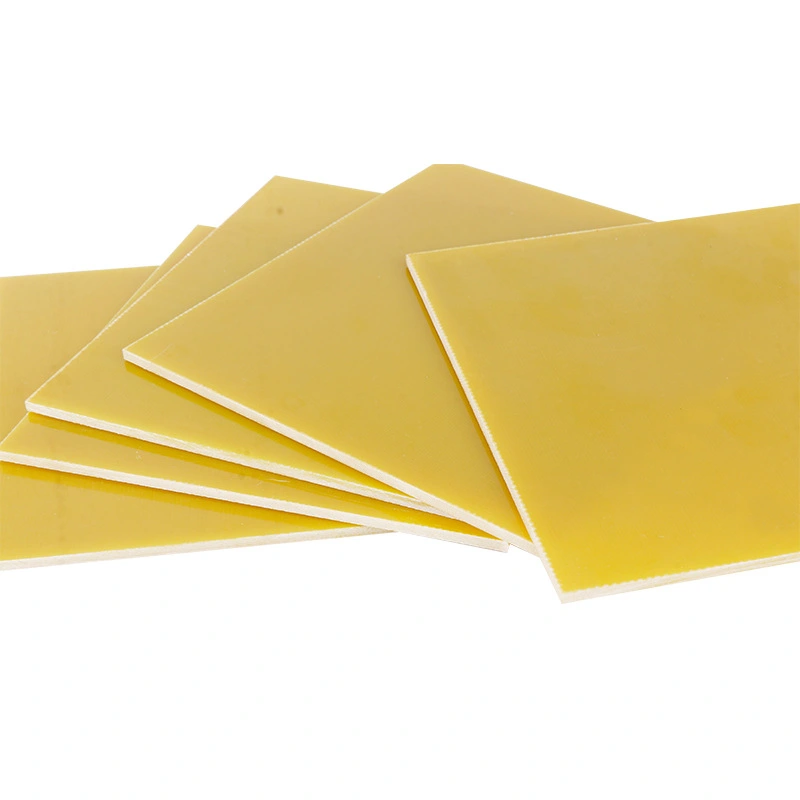
Understanding 3240 Epoxy Sheet and Its Machining Challenges
When compared to working with metals or thermoplastics, epoxy glass laminates are very hard to work with. The makeup has a direct effect on how the cutting tools work with the material while it is being made.
Material Composition and Technical Properties
To make the 3240 epoxy sheet, an epoxy phenolic resin system is mixed with alkali-free knitted glass cloth and then the structure is put through controlled temperature and pressure cycles. The way it's put together makes a stiff laminate with a Class B temperature grade (up to 155°C constant operation), a high dielectric strength of more than 16 kV/mm, and great mechanical qualities, such as a bending strength of 340–380 MPa. The yellow to reddish-brown colour comes from the finished resin matrix that surrounds the glass support.
For normal production, sheets can be made in widths ranging from 0.5 mm to 50 mm. For specialised production, sheets can be made up to 150 mm thick. This ability to change sizes means that it can be used for a wide range of tasks, from making small insulation shields for switches to building big structure parts for transformers. Sheet sizes usually range from 1020 mm to 1220 mm, but special sizes can be made to fit particular production needs.
Common Machining Difficulties
When engineers work on these glass-reinforced laminates, they often run into a number of cutting problems. Delamination is the main problem that happens when cutting forces split the layered layers instead of cutting through the material neatly. Because this flaw affects both the mechanical soundness and the electrical insulation performance, the parts that are affected can't be used in important situations.
The roughness of the glass fibres and the brittleness of the hardened epoxy resin cause surface breaking along the edges of the cuts. The substance doesn't bend or stretch like metals do; instead, it breaks when stress amounts are higher than local strength. Fibre pull-out makes surfaces rough, which traps dirt and lowers insulating performance in places with a lot of power.
Another big problem is that cutting makes a lot of heat. Metals move heat away from the cutting area, but epoxy laminates stop heat from moving. As heat builds up, it softens the resin matrix. This makes the material expand and contract, which can cause spreading, gumming of the cutting edges, and errors in the measurements. Controlling the temperature is necessary to keep limits tight and get smooth surface finishes.
Material Thickness and Fiber Orientation Considerations
When machining, thicker sheets need different methods than when making thin sheets. When you cut deeper, the forces and heat are higher, so you have to slow down the feed rate and make more passes instead of trying to cut through the whole length in one go. As the length of the tool contact grows, vibration control becomes more important, and the part may need special fixings to keep it from moving.
The cutting behaviour of 3240 epoxy sheet is greatly affected by the direction of the fibres in the woven glass cloth. Cutting perpendicular to the weave pattern changes the surface properties compared to cutting straight to the main fibre direction. Skilled machinists change the tool paths and settings based on the main fibre direction to lower the risk of delamination and make sure that all finished sides have the same quality surface.
Key Factors Affecting Surface Finish in CNC Machining of 3240 Epoxy Sheet
To get epoxy glass laminates with mirror-smooth surfaces, you have to carefully control a lot of different process factors. Whether finished parts meet specifications or need expensive repair depends on how tools, parameters, and external factors interact with each other.
Cutting Tool Selection and Geometry
Choosing the right material for the tools is the most important part of cutting. When working with rough glass-reinforced materials, carbide cutting tools work better than high-speed steel ones. Carbide types have better strength and wear resistance, so their cutting edges stay sharp for longer. This directly leads to better surface finishes over longer production runs. Although it costs more up front, diamond-coated carbide casting lasts even longer and is better for high-volume production.
Shape of the tool is just as important as the make-up of the material. When you have sharp cutting edges with positive rake angles, you can neatly cut through glass fibres instead of crushing or breaking them. When you use tools made just for composites, the holes are cleaned to lower friction and stop chip welding. Edge radius needs to be carefully thought out. Edges that are too sharp break easily when they hit hard glass fibres, while edges that are too flat create too much heat and crushing forces.
Optimal Machining Parameters
The spindle speed, feed rate, and depth of cut must be set so that efficiency and surface quality needs are met. Spindle speeds of 6,000 to 12,000 RPM are good for most tasks because they give you enough cutting speed to cleanly break fibres without making too much thermal heat. Higher speeds work best for finishing passes and tools with a smaller width. Lower speeds work best for bigger cutters and removing more material.
Feed speeds are usually between 500 and 1500 mm/min, but they depend on the tool width and cutting depth. By cutting down on touch time, faster feeds lower the amount of heat that builds up per unit length. However, too fast of speeds can damage the cutting edges and cause them to chip. For roughing tasks, the depth of cut rarely goes above 3–5 mm per pass, and for finishing tasks, only 0.5–1 mm is removed to keep cutting forces and heat production to a minimum.
Coolant Application and Chip Management
A good cooling supply system does more than just keep the temperature stable. Glass dust that builds up on cutting edges can be washed away by flood cooling or mist systems. This keeps the surface finish from getting worse and the tool wear faster. Water-soluble coolants make the contact between the tool and the workpiece less frictional. This lowers both the cutting forces and the heat production.
When working with resin laminates, chip removal needs extra care. Instead of continuous metal chips, composite materials make fine dust and short fibre pieces that can get stuck in tools if they are not cleaned properly. When the coolant flow speed is right, it moves waste out of the cutting zone before they get stuck in the weakened resin or get in the way of later tool passes. Compressed air can help clear chips from blind holes or areas in some processes where cooling flow alone is not enough.
Workpiece Preparation and Fixturing
The quality of the surface finish starts before the first cut. As part of properly preparing a project, sheets should be checked for production flaws such as holes or areas with a lot of plastic that machine differently than other sections that are the same. Cleaning surfaces gets rid of dirt and other things that could get in the way of vacuum or clamp fixturing and stop the item from moving during cutting.
The shape of the fixture for 3240 epoxy sheet reduces the amount of shaking and movement that hurts the surface finish. Large, thin sheets need support under the cutting zone so they don't bend when the tool presses on them. Vacuum tables spread the pressing forces evenly across the object so that there are no stress points that could lead to delamination. When mechanical binding is needed, materials with soft jaws protect surfaces and spread loads over enough touch areas.
Step-by-Step CNC Machining Process to Enhance Surface Finish
When you machine epoxy glass laminates in a planned way, you can turn your academic knowledge into consistently good results. Each step in the process builds on the one before it, making the quality better over time.
Pre-Machining Inspection and Machine Preparation
Every production run starts with checking the materials. By measuring the real width of the sheet in several places, differences that need to be fixed in the program can be found. Visual analysis finds flaws on the surface, edge damage from handling, or moisture contamination that changes how the machine works. Before spending time on cutting, making sure that the material meets the requirements by checking its certification.
Calibration of a CNC machine makes sure that the geometry is correct, which has a direct effect on the surface finish. When spindle runout is more than 0.01 mm, tool marks and uneven surface roughness happen. Checking the correctness of axis positioning, especially Z-axis perpendicularity, stops narrowing and makes edges better. Cleanliness of the tool holder affects concentricity; even tiny particles on the taper surfaces cause runout that gets worse at the tool tip.
Strategic Toolpath Planning
Cutting settings and toolpath plan both have an effect on the surface finish. Climb milling, in which the direction of the cutting movement follows the direction of the feed, makes better edges than regular milling. The cutting edge goes into the material with the thickest chip possible and comes out with no chip at all. This cuts fibres neatly instead of pushing against them before engaging.
Instead of diving straight into the material, ramping into it gently lowers shock loads and heat spikes that hurt both tools and workpieces. When making holes, helical interpolation spreads the cutting forces around the tool's edge and provides continuous paths for chip removal. Constant engagement methods keep chip loads the same even when the shape is complicated. This stops changes in cutting force that cause shaking and surface chatter.
Finishing Techniques for Enhanced Smoothness
When uses need a very high-quality surface, secondary processes are often needed. Using increasingly finer grits for abrasive finishing gets rid of machine lines and smooths out the surface. Starting with 220-320 grit sandpaper gets rid of most of the tool marks. Moving up to 400, 600, and maybe even 800 grit gives you a finish that is almost smooth. When you sand parallel to the main fibre direction, scratches are less noticeable.
Fine sandpaper materials can be used to buff parts one more time if they need to be smoothed out for reasons of look or electrical surface tracking resistance. Localised heat buildup that weakens resin and causes smearing can't happen when there is light pressure and constant motion. Epoxy composite sanding wheels should be kept clean so that they don't get dirty from other materials.
Quality Verification Methods
Measuring surface roughness is an objective way to measure finish quality. Portable profilometers find the Ra (arithmetic average roughness) values. Usually, cut surfaces get Ra values between 1.6 and 3.2 µm, and finished surfaces get Ra values below 0.8 µm. By scanning many places on each part, process differences that need to be fixed are found.
Even though it is biased, visual inspection of 3240 epoxy sheet in good lighting is still useful. When you move light across carved surfaces, you can see small flaws that you couldn't see with diffuse lighting. By comparing production parts to approved master samples, workers can see exactly what the quality standards are. Using photography to record surface quality makes quality records that can be tracked and helps with efforts to keep getting better.
Procurement and Supplier Considerations for Quality 3240 Epoxy Sheets
The quality of the material is just as important as the skill of the person doing the cutting. Strategic ties with suppliers lead to reliable performance, which directly improves the economy of manufacturing.
Evaluating Supplier Credentials
Suppliers with a good reputation keep quality systems that are written down and approved to meet industry standards. Getting ISO 9001 approval shows that you are dedicated to using consistent methods and making improvements all the time. Suppliers who work with the electrical industry often have extra certifications that are special to insulation materials. These certifications show that the materials meet safety and performance standards.
Assessing a company's ability to make things goes beyond just giving certifications. Distributors who get their materials from multiple mills are less able to control the consistency of the materials than suppliers who run their own production facilities. When you go to a production facility, you can see how the controls, testing, and inventory management are used, all of which affect the quality of the product that is delivered. Long-term partnerships with well-known manufacturers lower the risks in the supply chain and help everyone work together to improve quality.
Ordering Strategies and Lead Time Management
Cutting standard sheets takes more time and wastes more material than custom sizing. Suppliers with precise cutting tools send sheets that are almost the same size as the finished part. This cuts down on the costs of handling and setting up. Custom thickness options are perfect for applications because they don't have to make the trade-offs that come with standard dimensional increments.
Lead times for 3240 epoxy sheet vary a lot depending on how complicated the specifications are and how many orders are placed. Standard sizes from stock can be shipped within days, but custom materials need to be scheduled for production. Strategic procurement teams weigh the costs of keeping stock against the risks of lead times. They do this by keeping a buffer stock of commonly used specifications and ordering custom materials in line with strict production schedules.
Buying in bulk has cost benefits that go beyond lower unit prices. When shipments are combined, freight costs go down by the same amount. When suppliers have committed volume relationships, they are more likely to stick to delivery dates and offer technical support that is good for both parties. With annual agreements that include scheduled releases, it's easier to plan production and get good prices throughout the contract period.
J&Q: Your Partner in Premium Insulation Materials
Our company brings over two decades of manufacturing knowledge and more than ten years of foreign trade skill to every customer relationship. We understand that material quality forms the basis of successful machining operations—that's why our production processes stress stability and our quality systems ensure compliance with global electrical safety standards.
Working with multiple domestic and foreign selling partners has taught us how buying teams evaluate sellers and what help production engineers require. We've built our service model around these findings, giving expert advice that helps customers pick ideal specs for their apps. Our in-house transportation skills provide combined shipping solutions that ease foreign deals and speed delivery to your location.
Whether your business demands standard sheets for quick production or custom specs needing precision grinding and unique measurements, our team stands ready to support your requirements. We keep sizable inventory positions to support quick-turn needs while giving flexible production schedule for planned requirements. Contact our technical sales team at info@jhd-material.com to discuss your unique machine challenges and discover how working with an experienced 3240 epoxy sheet provider simplifies your buying process and enhances manufacturing outcomes.
Conclusion
Achieving excellent surface finishes on machined 3240 epoxy sheet requires understanding material behavior and applying suitable process controls. Sharp carbide tools, optimal cutting parameters, effective coolant supply, and proper workpiece fixturing work together to create consistently smooth surfaces that meet demanding electrical and mechanical requirements. The material's mix of temperature capability, electrical insulation performance, and machinability explains its broad acceptance across industries from power distribution to car making. Procurement teams who work with experienced suppliers gain access to regular material quality, technical knowledge, and fast service that turns raw materials into competitive production benefits.
FAQ
What machine speeds and feed rates work best for cutting 3240 material?
Optimal values rely on tool width and operation type, but usually spindle speeds between 6,000-12,000 RPM paired with feed rates of 500-1500 mm/min create great results. For finishing passes, faster speeds and slower feeds work best, while for roughing passes, middling speeds and fast feeds are fine. A shallow depth of cut (usually no more than 3 to 5 mm) lowers the cutting forces and heat production that damage the surface quality.
Is it possible to make epoxy laminates without using special composite tools?
Standard carbide tools made for aluminium or other non-ferrous metals usually work well, but they don't last as long as tools made for specific composite shapes. The rough glass fibres make cutting edges dull faster, so tools need to be changed more often. No matter the grade, you need to use sharp tools. Continuing to work with old tools will seriously damage the surface finish and increase the risk of delamination damage.
How does the finish on the surface affect how well electrical shielding works?
The electrical tracking resistance and the amount of contamination are both affected by how rough the surface is. When high voltage is applied, smooth surfaces are better at stopping carbon paths from forming than rough ones. When machining marks are placed perpendicular to the direction of the electric field, they cause stress clusters that might weaken the dielectric. When there are high voltages or tough conditions, it is worth the extra work to get better surface finishes through secondary processes.
Partner with J&Q for Superior Machining Materials
For manufacturing to be at its best, it needs to start with high-quality raw products and quick expert help. J&Q has a lot of production knowledge and a deep understanding of the problems that electrical equipment makers around the world face when they try to machine parts. Because we're committed to material stability, the 3240 epoxy sheet you receive will machine the same way every time, which cuts down on setup time and scrap rates.
In addition to providing high-quality products, we also offer expert advice that helps engineering teams improve processes and resolve production problems. Our combined transportation network makes foreign shipping easier, and our production skills are flexible enough to meet both standard and unique needs. Procurement managers like how clear our communication is, how competitive our prices are, and how reliable our delivery performance is, all of which support lean manufacturing efforts. Email our team at info@jhd-material.com right now to get technical datasheets, talk about your unique application needs, or get a full quote for your next project.
References
Teti, R. (2002). Machining of Composite Materials. CIRP Annals - Manufacturing Technology, 51(2), 611-634.
Sheikh-Ahmad, J. Y. (2009). Machining of Polymer Composites. New York: Springer Science+Business Media.
Davim, J. P., & Reis, P. (2005). Study of delamination in drilling carbon fiber reinforced plastics (CFRP) using design experiments. Composite Structures, 59(4), 481-487.
Hocheng, H., & Tsao, C. C. (2006). Effects of special drill bits on drilling-induced delamination of composite materials. International Journal of Machine Tools and Manufacture, 46(12-13), 1403-1416.
Koplev, A., Lystrup, A., & Vorm, T. (1983). The cutting process, chips, and cutting forces in machining CFRP. Composites, 14(4), 371-376.
Sreejith, P. S., & Ngoi, B. K. A. (2000). Dry machining: Machining of the future. Journal of Materials Processing Technology, 101(1-3), 287-291.

Get a complete product list and quotation

J&Q New Composite Materials Company



