How to Avoid Delamination When CNC Routing FR4 Epoxy Sheets
Avoiding delamination when CNC routing FR4 epoxy sheets requires a careful combination of material selection, optimized machining parameters, and proper handling techniques. The key lies in using carbide or diamond-coated tooling, maintaining appropriate spindle speeds between 18,000-24,000 RPM, controlling feed rates, and applying adequate coolant to dissipate heat. Selecting high-quality FR4 glass epoxy sheets with consistent resin content and proper curing is equally critical to prevent layer separation during machining operations.
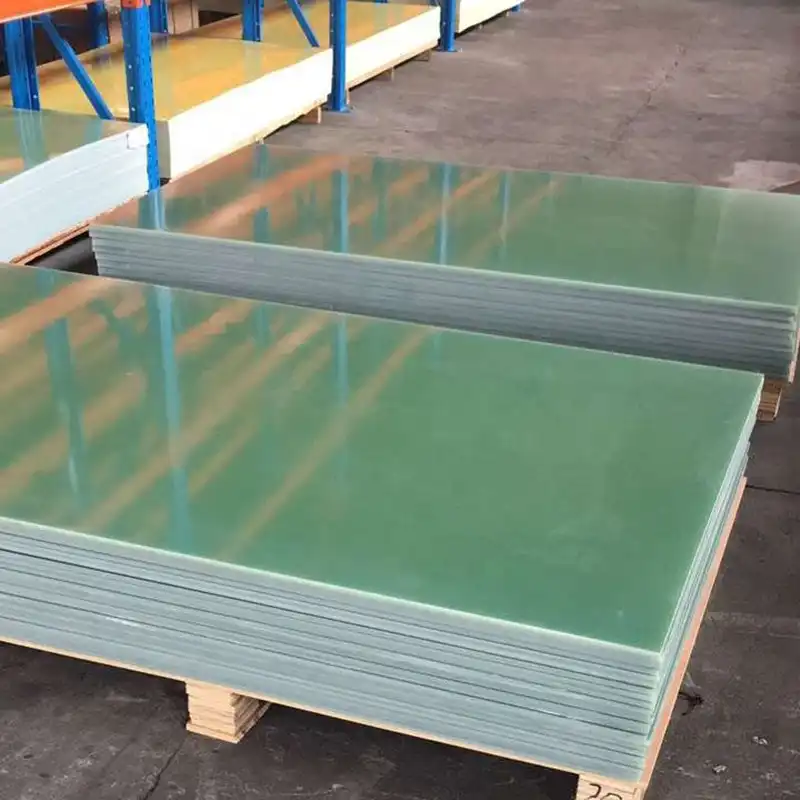
Understanding Delamination in FR4 Epoxy Sheets
What Causes Delamination During Machining
When the fused layers in FR4 epoxy sheets separate during or after CNC cutting operations, this is called delamination. The structure is made up of several layers of woven fiberglass that are joined together by epoxy glue that has hardened. When conditions aren't right, cutting and shaking forces can be stronger than the glue that holds these layers together. During routing, heat is created that briefly softens the epoxy matrix. This lowers the strength of the interlaminar bond just as mechanical stress rises.
Material Structure Vulnerabilities
Because FR4 epoxy sheets are made up of layers, there are weak spots where they can separate. Different parts of the material that are resin-rich and resin-poor react differently to machining pressures. Changes in thickness, even within certain limits, can affect how cutting forces are spread across the cross-section of the material. The quality of the edge after cutting is directly related to how well the epoxy matrix holds the glass fibers in place while the tool is being used. Even though a material meets IEC 60893 standards, it still needs to be handled carefully because the approval only looks at its bulk qualities and not how it works when it is machined.
Contributing Process Factors
Wear on the tools is one of the most underrated causes of delamination. When cutting edges are dull, they don't neatly cut through material; instead, they tear and pull at fibers, causing forces that pull layers apart perpendicular to the layer boundaries. Cutting at the wrong speed causes too much heat, which breaks down the epoxy glue before the tool comes out of the cut. Too fast or too slow of feed rates can cause shock loading, and too slow of rates can let heat build up. Worn-out tools and factors that aren't working at their best make it easy for delamination to start and spread through the thickness of the material.
Key Factors to Prevent Delamination When CNC Routing FR4 Epoxy Sheets
Material Selection and Quality Verification
When you buy quality FR4 epoxy sheets from reputable sellers, you can be sure that the resin content and bonding process are the same throughout the thickness of the laminate. When put under cutting loads, materials that look the same can behave very differently. We confirm that the specific gravity numbers are between 1.85 and 2.10 g/cm³ and that the water absorption is still less than 0.15% after 24 hours of immersion tests. These seemingly small details have a big effect on how the material reacts to cutting forces and heat. High-Tg versions with glass transition temperatures above 170°C offer better thermal stability during rough machining operations, which is especially useful when production plans call for faster material removal rates.
Optimized Tooling Configuration
Here are the most important things to think about when choosing tools that will directly stop delamination:
- Carbide and Diamond Coatings: When working with rough glass-reinforced materials, regular high-speed steel tools wear out very quickly. Carbide tooling makes tools last a lot longer, but diamond-coated bits last the longest and keep their sharp cutting edges the whole time they're being used. Investing in high-quality tools pays off because delamination rates go down and it takes longer between tool changes.
- Tool Geometry Selection: Up-cut spiral bits move chips and heat away from the cut, but if feed rates aren't managed, they can lift the top layers of laminate. Down-cut swirls squeeze the material while it's being cut, which lowers the delamination of the top layer but may lift the bottom layers when they break through. Compression bits use both shapes together to give you the cleanest edges on both sides by using opposite forces to hold the laminate in place while you cut.
- Appropriate Flute Count: Designs with two flutes can effectively remove chips, but they may cause more shaking. Three- and four-flute designs make cuts that are smoother and chatter less, but they need more active chip evacuation through faster spindles or vacuum help systems to keep chips from packing together and heat from building up.
Machining Parameter Optimization
The link between spindle speed and feed rate affects both the quality of the cut and how the heat is managed. Between 18,000 and 24,000 RPM is a good range for surface speed that allows for clean fiber cutting without making too much contact heat. Feed rates are usually between 80 and 120 inches per minute, but they depend on the width of the material and the size of the tool. Each pass's depth of cut shouldn't be more than half of the tool's width; multiple short passes work better than a single deep cut at keeping the material from delaminating. When you use climb milling instead of regular milling, the opening is smoother and the pulling forces that cause layer separation are lower.
Thermal Management Through Coolant Application
Compressed air is good for basic cooling in light-duty situations, but it loses some of its usefulness as the rate of material removal goes up. Mist cooling systems are the best way to get rid of heat while keeping the work area as clean as possible. Flood coolant gives you the most control over the temperature, but you have to be careful to choose a coolant chemistry that works well with epoxy glue and won't damage it or mess up other bonding steps. Temperature tracking during long production runs finds thermal shift before it causes problems with delamination.
Environmental and Setup Controls
Keeping the temperature in the workshop between 20°C and 25°C and the relative humidity around 50% keeps the sizes of the materials stable and stops problems caused by moisture that weaken the bonds between the layers. When sheet fixturing is done right, the tightening pressure is spread out evenly and there are no stress areas that make the material more likely to delamination. Vacuum hold-down systems are great at keeping thin sheets in place without bending or warping them. Oscillations that damage laminate bonds during long cutting operations can be stopped by using machine isolation pads and keeping the spindle bearings in good shape.
Comparison of FR4 Epoxy Sheet with Other Materials Related to Delamination Risks
It's easier to see why FR4 epoxy sheets need specific ways to be machined when you know how different composite and structural materials react to CNC routing. Because of how they are made and how they join, each type of material has a different delamination risk profile.
Glass Epoxy Composites: FR4 vs G10
The glass-fiber reinforcement and epoxy resin structures used in FR4 and G10 are the same, so their mechanical traits and machining qualities are also the same. Flame retardancy is the most important difference. FR4 has brominated chemicals that meet UL 94 V-0 standards, while G10 does not. From the point of view of delamination, this difference doesn't matter much when CNC cutting. Machinists can use the same settings on both materials and get about the same results. The choice between them is based only on the fire safety needs of the end use, not on how they work when machined.
Phenolic Composite Alternatives
When compared to glass-epoxy materials, phenolic cotton cloth laminates and paper-based phenolic sheets delaminate in different ways. Different phenolic glue systems dry at different temperatures and with different cross-link densities. Although cotton-cloth phenolic is easy to cut, it doesn't stay the same size when heated like FR4 epoxy sheets do. Paper-based phenolics are easy to machine, but they don't fight water well, which can make delamination worse in damp places. These materials are good for situations where electrical standards aren't very strict and cost is the main factor in buying choices.
Epoxy Laminate Variations
Different types of support materials in advanced epoxy laminates make them more or less likely to delaminate. The basic steps for processing are the same for all of these variations, but some factors need to be changed depending on the type of fiber and glue used. When making a procurement choice, the needs of the application should be weighed against the difficulty of machining and high prices of materials that come with specialized epoxy composites.
Practical Procurement Tips to Ensure Quality and Reliable FR4 Epoxy Sheets
The choices you make during buying have a direct effect on the success of later machining and the prevention of delamination. To make sure that materials are always the same, engineering managers and technical buying teams need to do more than just compare prices when evaluating sources. Tips on how to buy FR4 epoxy sheets that are of good quality and will last depend on strict supplier vetting.
Supplier Qualification Criteria
For solid CNC machining results, you need providers that have been around for a while and have quality management systems that can be proven. Getting certified to well-known standards shows that you care about process control all the way through the manufacturing process. Traceability systems make it possible to connect specific lots of materials to how well they work when they are machined, which supports efforts to keep getting better. Suppliers who keep thorough technical data sheets with full lists of mechanical, electrical, and heat properties show that they know what their customers want. Long-term relationships with sellers who can help with technology issues create value that goes beyond just getting materials.
Compliance and Certification Verification
Recognizing UL and following RoHS rules are basic standards for materials that are used in electronics and electricity. Verification includes more than just looking at certificates. It also includes making sure that testing paperwork specific to each lot is sent with the materials. Flame resistance must be proven by UL 94 tests that show the product can put out fires on its own within certain time frames. According to ASTM D149, testing the material's dielectric strength proves that it can safely be used in high-voltage situations and that there are no internal flaws that could affect its ability to keep electricity from flowing. These checks make sure that there aren't any differences in the materials that might not show up until there are problems with delamination during production.
Procurement Logistics Optimization
Minimum order amounts affect the cost of keeping inventory, but they need to be weighed against the need for material uniformity. By ordering more from a single production lot, you can be sure that all of the made parts in a production run will behave the same way. Lead time management stops hasty material swaps that add variables that can't be managed. By asking for samples before making large purchases, you can make sure that the cutting parameters work with real production material instead of just using the specifications on the datasheet. Custom size choices cut down on waste and get rid of extra steps in the process that could cause damage during handling and make the material more likely to delaminate.
Case Study: Successful CNC Routing Without Delamination Using FR4 Epoxy Sheets
A company that makes parts for cars called us because they were having trouble with delamination while cutting insulation walls for battery pack systems. Edge delamination found during quality checking caused 12–15% of their current process to be thrown away. For the parts to seal properly in the battery case, they had to meet very specific dimensions and have clean edges. This study focuses on how we achieved successful CNC routing without delamination using FR4 epoxy sheets.
Problem Identification and Analysis
After looking into it, they were using general-purpose tools made for plastics instead of tools made for rough materials. Based on what they knew about working with phenolic materials, the spindle speeds were kept low at 12000 RPM. In order to get the most work done, feed rates went over 150 inches per minute. Aside from the flow of air naturally, no active cooling device was used. Getting the materials meant buying from several sources based on spot prices, which meant that the resin amount and curing quality could vary from batch to batch.
Solution Implementation
We provided high-quality FR4 epoxy sheets with confirmed Tg values above 170°C and clear specs for the resin content. They were told to use diamond-coated compression bits that are made especially for glass-fiber composites. Setting the machining settings to a spinning speed of 20,000 RPM and lowering the feed rates to 100 inches per minute. The depth of cut dropped from 0.080 inches to 0.040 inches per pass, which meant that an extra pass was needed but the shock loading that caused delamination was taken away. A mist cooling system installation kept the temperature stable during every cutting run.
Measurable Outcomes
Within the next production month, scrap rates dropped to 2% to 3%. This was mostly due to problems with unrelated dimensions rather than delamination. A check of the edge quality showed a clean, uniform laminate structure with no layer split that could be seen. In the final tests of the battery pack, the provider of the parts said that the electrical performance was more consistent. Even though the time it took to machine each part went up by about 18%, the total cost of production went down by 23% when scrap was taken into account, rework was avoided, and output was raised. The case showed that paying careful attention to the quality of materials and the improvement of processes has measurable benefits beyond just lowering the cost of materials per unit.
Conclusion
In order to keep FR4 epoxy sheets from delaminating during CNC routing, you need to know how the qualities of the material, the choice of tools, and the machining settings all affect each other. Finding good laminates from dependable sellers who offer stable resin content and correct drying is the first step to success. When you use the right spindle speeds, feed rates, and temperature management along with carbide or diamond-coated compression tools, you can create a stable cutting environment that leads to clean, delamination-free edges. Controlling the environment and using the right fixtures get rid of outside factors that could damage the laminate's structure. The money spent on improving processes pays off in the form of less waste, better product performance, and more efficient production in electrical, industrial, and automobile settings.
FAQ
What thickness of FR4 epoxy sheet minimizes delamination risk during CNC routing?
Delamination isn't caused by the thickness of the material itself; the risk is determined by how the thickness affects the tools and settings. Thinner strips (less than 0.060 inches) need to be carefully fixed in place so that they don't bend while being cut, which can separate the layers. For things thicker than 0.250 inches, you need to make several shallow passes instead of one strong pass. Standard widths of FR4 epoxy sheet between 0.060 and 0.125 inches can usually be machined with little delamination if the right tools and settings are used.
Can water-based coolants safely be used when routing FR4 glass epoxy sheets?
When FR4 epoxy sheets are being machined, water-based coolants can be used. When epoxy resin is fully hardened, it doesn't let water in. In fact, normal FR4 only absorbs less than 0.15% of water after 24 hours of soaking. Strongly alkaline coolants should not be used because they could affect surface sealing during later production steps. When coolant is filtered properly, glass fibers don't build up and clog delivery systems. After cutting, parts are dried in the air to make sure there is no wetness left over before they go to the next step in the process.
How can buyers verify FR4 supplier quality standards before procurement?
Ask for proof of approval, such as UL marks and RoHS compliance statements that are relevant to the grade of material being bought. Ask for scientific data sheets that list all of the product's electrical, mechanical, and thermal qualities along with links to test methods. Independent lab tests on samples prove the dielectric strength according to ASTM D149 and the flame proof according to UL 94 standards. Audits of the supplier's facilities or quality approvals from a third party give you even more trust in the process controls. Referrals from current customers who have used similar materials in similar uses can help you figure out how consistent the materials are and how quick the suppliers are.
Partner with J&Q for Premium FR4 Glass Epoxy Sheets
If you need to buy FR4 epoxy sheet, J&Q can help. They have been making high-quality products for over 20 years and have been trading internationally for 10 years. We are dedicated to quality in more ways than just providing materials. We work with companies that make electrical equipment, industrial tools, power plants, cars, and appliances to make their whole production process more efficient. We have been a seller of FR4 epoxy sheets for a long time, and we make sure that all of our sheets meet strict standards for dielectric strength, flame protection, and dimensional stability. Our in-house logistics company offers true "one-stop service," which takes care of all the operations and makes your supply chain run more smoothly. Our expert team is ready to help you succeed with CNC cutting, whether you need standard sheets or materials cut to the exact size you need. Email us at info@jhd-material.com to get examples, talk about your unique application needs, and find out how our knowledge of materials can help you stop delamination problems in your manufacturing processes.
References
National Electrical Manufacturers Association. "Industrial Laminating Thermosetting Products - NEMA Standards Publication LI 1-2020." National Electrical Manufacturers Association, 2020.
Harper, Charles A. "Handbook of Plastics, Elastomers, and Composites." McGraw-Hill Professional, 5th Edition, 2022.
Institute for Printed Circuits. "IPC-4101E - Specification for Base Materials for Rigid and Multilayer Printed Boards." IPC International Standards, 2021.
American Society for Testing and Materials. "ASTM D149-20 - Standard Test Method for Dielectric Breakdown Voltage and Dielectric Strength of Solid Electrical Insulating Materials." ASTM International, 2020.
Underwriters Laboratories. "UL 94 - Standard for Safety of Flammability of Plastic Materials for Parts in Devices and Appliances." Underwriters Laboratories, 2023.
Society of Manufacturing Engineers. "CNC Machining Handbook: Building, Programming, and Implementation." Society of Manufacturing Engineers Press, 2021.

Get a complete product list and quotation

J&Q New Composite Materials Company



