How Modern Equipment Improves Bakelite Sheet Consistency?
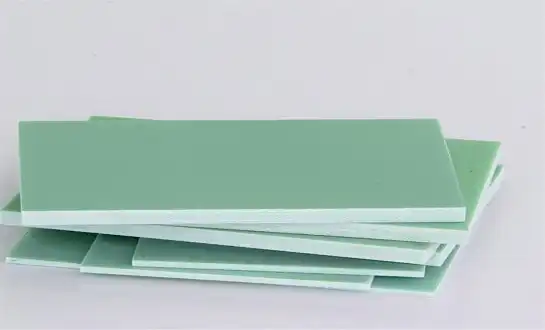
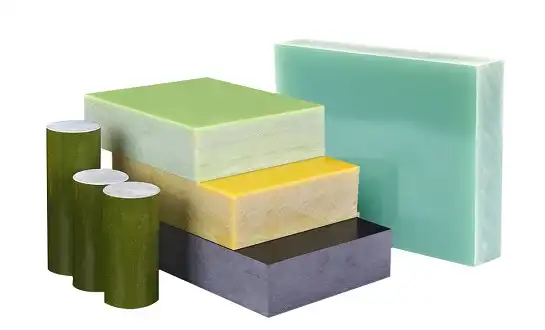
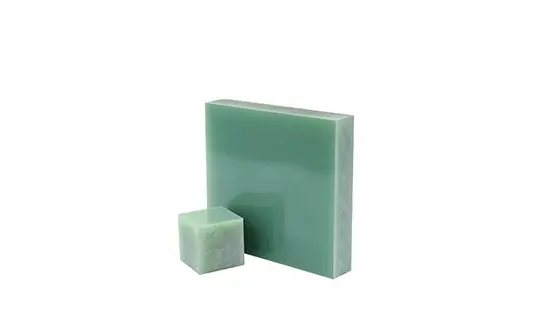
Modern manufacturing equipment has changed the way that phenolic laminates are made so that the quality is the same from one production run to the next. Precision sensors, advanced robotics, and computer-controlled systems now make sure that every Bakelite sheet stays the same thickness, density, and electrical qualities. This gets rid of the differences that used to be a problem with older methods. Electrical engineers who choose insulation materials, procurement managers who negotiate bulk contracts, and original equipment makers (OEMs) who make reliable industrial parts all care a lot about this regularity.
Understanding Bakelite Sheet Consistency Challenges
Root Causes of Variability
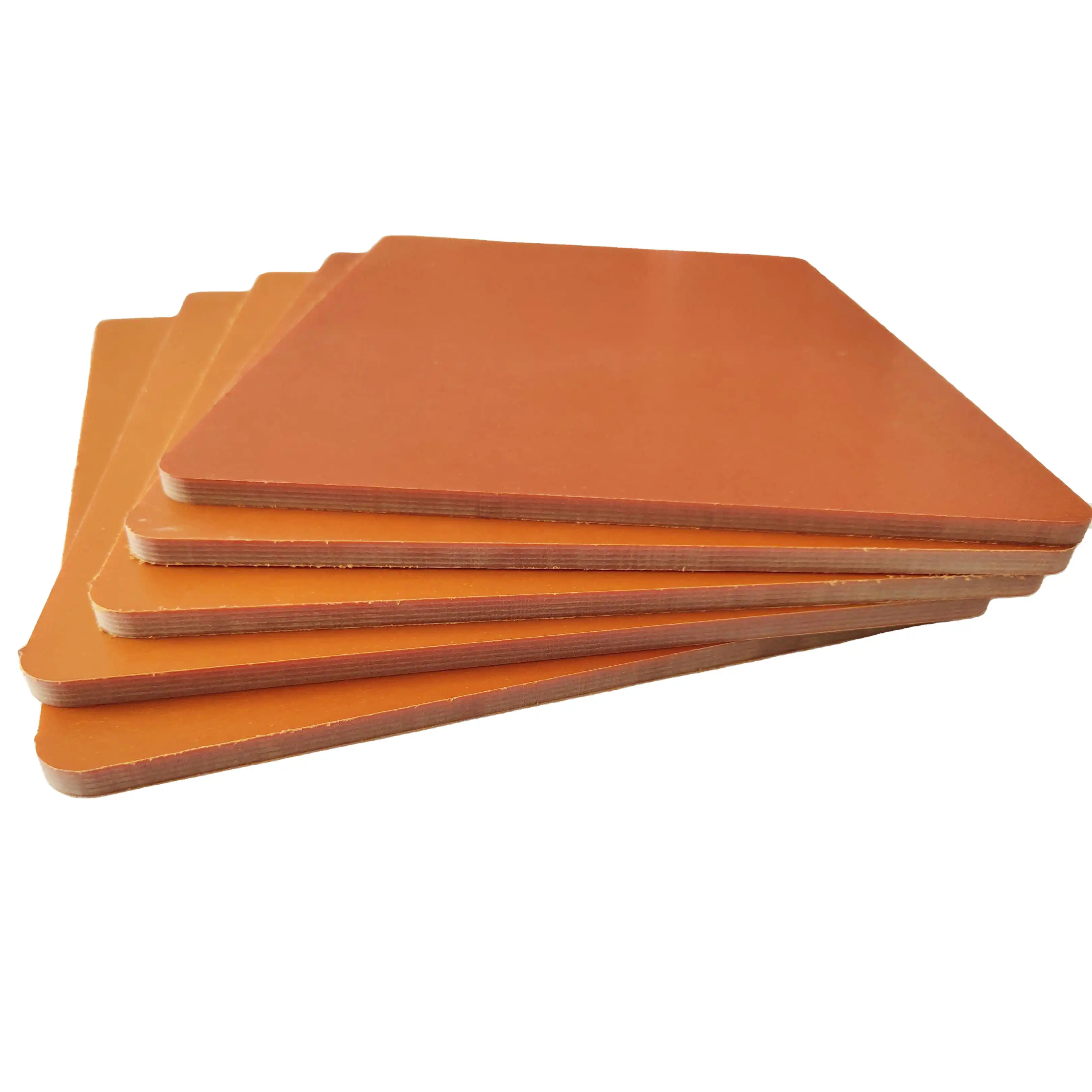
Traditionally, making these thermosetting laminates has been hard for a number of reasons. When the width of different sheet surfaces varies, it makes CNC cutting and assembly more difficult. Texture differences affect how the surface looks and how well it bonds. Changing mechanical and heat qualities make performance less reliable in tough situations.
Most of these differences are caused by problems with mixing and drying the raw materials. To get a uniform resin development, the condensation processes of phenol and formaldehyde need to be carefully managed. When the mixing conditions are changed, some batches get stronger crosslink density while others stay weak. To completely soak paper or cloth support layers, the resin has to go through them all the way. If it only soaks some of them, it leaves weak spots that break when stressed.
Business Impact on Industrial Users
For producers who depend on these products, the effects are big. Higher rejection rates during arriving review waste money on purchases and make it hard to keep to schedules. When new parts need to be found quickly, production delays affect the whole manufacturing process. Costs go up because of problems with supplies, faster shipping, and extra work for quality control.
This kind of uncertainty hurts the efficiency of operations in all kinds of fields. During high-voltage tests, companies that make electrical equipment find insulation fails in Bakelite sheet and have to throw away expensive assemblies. During precise building work, machinery builders run into problems with mismatched dimensions. Auto suppliers have to deal with batch rejects that stop the production lines. Procurement professionals can find suppliers whose quality systems and manufacturing skills eliminate these problems by having a clear understanding of these problems.
Limitations of Traditional Manufacturing Methods
Manual Process Dependencies
A lot of traditional production is done by hand or with only some automation, which means mistakes and inconsistent results are possible. Operators change the resin mixing ratios, impregnation times, and layup processes by hand, which adds variation with each shift change and staff movement. There will always be differences between batches when process factors rest on human opinion instead of automated accuracy.
Old ways of pressing and fixing things have problems with unevenly applying heat and pressure. When hydraulic presses use simple platen heating, the edges stay cool while hot spots form near the heating elements. This difference in temperature makes materials that are cured to different degrees—zones that are fully polymerized and zones that are only partly affected live together. Pressure distribution also changes, with areas in the middle being squeezed more than areas around the edges. This creates differences in density across final sheets.
Reactive Quality Control Limitations
In these systems, quality control is usually reactive and focuses on inspections after production rather than tracking during production. Technicians test the qualities of finished sheets by taking samples. Defects aren't found until the whole production run is over. This delay in finding defects makes a lot of waste because hundreds of sheets are thrown away instead of being fixed during production because of process drift. A basic problem that is clearly solved by modern equipment is the inability to find and fix problems in real time.
How Modern Equipment Transforms Bakelite Sheet Consistency
Automated Mixing and Formulation Control
Modern manufacturing equipment changes the way things are made by handling important tasks in a way that is accurate and repeatable in Bakelite sheet production. The making of phenol-formaldehyde resin is controlled by automated mixing devices that use gravimetric feeding and computer-monitored reaction parameters. These systems keep the right stoichiometric ratios, catalyst amounts, and reaction temperatures all the time. This makes sure that all batches have the same formulas and no contamination happens.
Continuous viscosity tracking and chemical analysis tell the equipment how fast to mix, how long to respond, and how fast to cool. This closed-loop control gets rid of the differences between batches that were a problem with human processes. It gives resin with a uniform molecular weight distribution and crosslink density potential.
Computer-Controlled Pressing and Curing
Modern hydraulic presses combine complex heating and pressure control systems that achieve uniform temperature and pressure spread throughout the curing cycle. Multiple heating areas on the platens react separately to temperature monitors built into the press, keeping the goal temperatures within ±2°C. Multiple pressure sensors give input to hydraulic controls that even out the spread of force, getting rid of the weak spots and changes in density that are common in older equipment.
Computer-controlled curing processes use temperature ramps and hold times that are perfectly timed to finish polymerization. The system changes the cycle settings automatically based on the thickness of the material, the type of reinforcement used, and the properties that are wanted. This makes sure that the sheet has the best properties no matter what the product specs are.
Integrated Inline Quality Control Systems
Integrated inline quality control systems that allow non-destructive, real-time testing and rapid correction actions during production may be the most important step forward. Laser micrometers measure the thickness of sheets all the time at different places on the web and can pick up differences as small as a few microns. During drying, infrared sensors check the temperature spread on the surface to find hot or cold spots that mean the equipment isn't working right. Ultrasonic testing tools check the density inside and look for holes or separations in the material as it comes out of presses.
Using advanced devices and Internet of Things (IoT) technologies makes it easier to collect a lot of data and plan ahead for repair. Statistical process control methods are used by manufacturing execution systems to find small trends in data from hundreds of devices before they make materials that aren't safe. Machine learning models can tell when equipment needs repair based on how it has been working, which cuts down on unplanned downtime. This combination always produces sheets that meet strict industry standards. It also cuts down on trash and makes manufacturing more efficient.
Case Studies: Success Stories from Leading Manufacturers
Enhanced Dimensional Accuracy
Leading producers have shown that investing in new tools makes a measurable difference in the consistency of Bakelite sheet products. Automated pressing technologies have made thickness margins six times better, going from ±0.3mm in traditional operations to ±0.05mm in modern facilities. This makes machining limits and assembly problems much smaller. The improvements in electrical insulation qualities are similar, with over 40% fewer changes in dielectric strength compared to old ways of making things.
These changes directly lead to more stable product performance in all situations. Electrical equipment makers say that parts are lasting longer and there are fewer problems in the field. Without doing any extra work, builders of industrial machines can get better assembly tolerances. Automotive suppliers meet strict quality standards with little extra work for inbound review.
Cost Efficiency Through Waste Reduction
Efforts to optimize lead to big drops in the amount of scrap and wasted materials, which directly help purchase budgets and green goals. When manufacturers use more advanced tools, the amount of scrap they have drops from 12 to 15 percent of the total production number to 3 to 5 percent. This improvement comes from real-time quality tracking that finds process deviations before a lot of material gets to the final review stage, along with the consistency that comes with automated processes.
Positive comments from OEM clients and wholesalers shows that the supply chain is more reliable now that the quality of the products is uniform. Fewer rejections at the door make reception operations run more smoothly and keep inventory gaps to a minimum. Knowing the features of a material ahead of time lets designers make parts that fit together better and weigh less. As comments about quality go down sharply, customer happiness scores go up.
Benefits of Consistent Phenolic Laminates for B2B Procurement
Operational Advantages
Sourcing materials that are constant gives procurement workers and their companies real business benefits. Reliable product quality makes it possible for important industrial parts like electrical insulators, switchgear systems, and car parts to fit together without any problems. This lowers the chance of operational failures that damage equipment and image. When every lot that comes in meets the standards, manufacturers can safely lower the amount of safety stock they keep on hand and make their production schedules more efficient.
When stability gets rid of the need for thorough new quality checks, it makes supply chain management a lot easier. Instead of inspecting every delivery, procurement teams use skip-lot sampling methods. This cuts down on the cost of quality control work while keeping trust in the performance of the materials. Predictable product turnover makes it easier to handle working capital and makes warehouses more efficient.
Financial and Strategic Benefits
Advanced manufacturing often lets suppliers offer affordable prices even though they have to spend a lot of money on tools. Lowering waste lowers the cost of materials, and increasing productivity makes better use of assets. These operational savings give sellers chances to share value with customers through stable pricing and bulk discounts that are good for budgets for buying things.
Better regularity helps build better relationships with suppliers and makes operations more resilient. When supply risk is lower because of predictable quality, long-term deals become more appealing. When engineering teams know that materials will always meet requirements, they make the specs stricter. Buying from makers with modern technology lowers the total cost of ownership of a product while also making it more reliable and competitive.
Conclusion
Automation, precise control, and real-time quality tracking in modern manufacturing tools completely change how Bakelite sheet phenolic laminates are made. When human, variable processes give way to computer-controlled, sensor-integrated systems, the changes in thickness, properties, and quality that used to be common in this business are gone. When purchasing managers focus on suppliers with modern tools, they can get reliable materials that lower the cost of inspections, keep production running smoothly, and improve the performance of the finished product. The business case is strong: higher consistency leads to lower overall costs, a more stable supply chain, and competitive benefits in the making of electronics, industrial goods, cars, and appliances.
FAQ
What Technical Specifications Should Procurement Teams Prioritize?
When purchasing phenolic laminates made with modern equipment, procurement managers should check the thickness tolerance requirements (usually ±0.05mm for advanced production), the stability of the dielectric strength across batches, and the ranges of mechanical property variations. Ask for certificates that show the product meets UL and ROHS standards, as well as statistical process control data that shows capability scores above 1.33. Suppliers who use high-tech tools are happy to give you this paperwork as proof that they can make what you need.
How Does Advanced Manufacturing Affect Lead Times for Bulk Orders?
Higher production rates and fewer quality holds are two ways that modern equipment usually cuts down on wait times. Automated production keeps going without stopping, and there isn't much downtime between batches. Inline quality tracking gets rid of the delays that come with regular operations, which can last for several days for inspections. Most technologically advanced providers can deliver large orders within two to three weeks, while traditional makers need four to six weeks. This lets companies plan their production better and keep less safety stock on hand.
Are Certified Suppliers Using Cutting-Edge Equipment Readily Available?
Over the past ten years, the industry has adopted a lot of new technology as a result of increased competition. Several approved suppliers now run high-tech factories that serve markets in North America. During the buyer qualification process, purchasing teams should ask for tours of the plant or thorough lists of all the equipment to make sure that the level of automation and quality control are correct. Trade publications and industry groups put together lists of makers who have invested in technology and gotten quality certifications.
Partner with J&Q for Premium Phenolic Laminate Solutions
J&Q uses its more than 20 years of manufacturing experience along with cutting-edge production technology to make phenolic laminates that meet the strictest standards for accuracy. Our computer-controlled presses, automatic mixing systems, and thorough inline quality tracking make sure that every Bakelite sheet stays within exact dimensional limits and has known electrical properties. As a well-known provider that works with companies that make electrical equipment, industrial gear, parts for cars, and home appliances, we know how important it is for your production processes that the materials you use are reliable.
Our combined shipping services cover the whole process, from production to delivery, in one place. This makes your supply chain easier and guarantees that large orders arrive on time. Our technical team works closely with procurement managers and engineers to make sure that the best materials are chosen and delivered on time. This is true whether you need paper-reinforced materials for electrical insulation, fabric-reinforced laminates for mechanical applications, or custom specifications for specific uses. Contact our team at info@jhd-material.com to talk about your specific needs and get samples showing the better uniformity of phenolic laminates from an advanced Bakelite sheet supplier. This will let you experience the quality consistency that modern production makes possible.
References
Baekeland, L. H. (1909). "Method of Making Insoluble Products of Phenol and Formaldehyde." Journal of Industrial and Engineering Chemistry, Vol. 1, No. 3, pp. 149-161.
American Chemical Society National Historic Chemical Landmarks. "Bakelite: The World's First Synthetic Plastic." American Chemical Society, Washington, DC.
Institute of Electrical and Electronics Engineers. (2018). "Quality Control Systems for Thermosetting Laminate Manufacturing." IEEE Standards Publication, New York.
Society of Plastics Engineers. (2020). "Advanced Manufacturing Technologies in Phenolic Resin Processing." SPE Technical Papers, Bethel, CT.
National Electrical Manufacturers Association. (2019). "Industrial Laminate Specifications and Testing Methods." NEMA Standards Publication LI 1-2019, Rosslyn, VA.
International Journal of Advanced Manufacturing Technology. (2021). "Automation and Process Control in Thermosetting Composite Production." Springer Nature, Vol. 114, pp. 2847-2863.

Get a complete product list and quotation
J&Q New Composite Materials Company