Producing Custom G10 Insulation Components with CNC Technology
The use of CNC technology to make unique G10 insulation components is a game-changer in the production industry. G10 insulation component manufacturing uses computer numerical control to precisely make parts out of fiberglass-epoxy composite materials that meet strict electrical, mechanical, and thermal requirements. This more advanced way meets the needs of the electrical, industrial, and automobile sectors, which can't be met by standard machining. CNC-cut G10 insulation components offer unmatched accuracy in measurements, less waste, and the ability to be scaled up, which is something that traditional manufacturing just can't do in today's market.
Understanding G10 Insulation Components: Properties and Applications
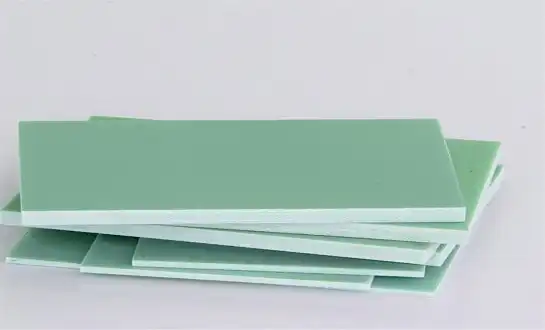
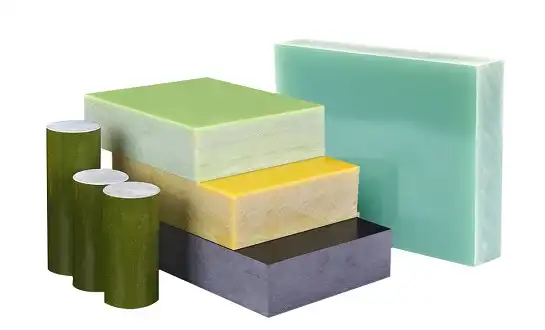
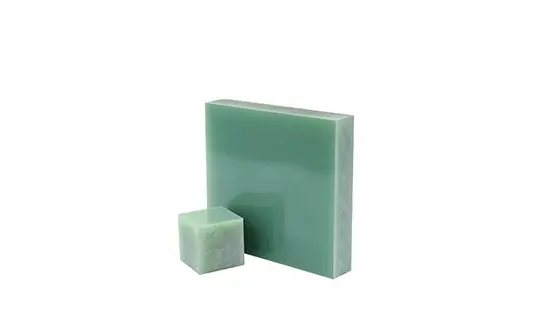
Because of their unique makeup and performance traits, G10 insulation components stand out in harsh industrial settings. These materials are made of layers of knitted fiberglass cloth that are saturated with epoxy resin. They offer a remarkable mix of electrical insulation, mechanical sturdiness, and thermal stability that few other materials can match.
Core Material Properties
It is one of the strongest composite plastics because its structure is made of epoxy glass laminate, which gives it a bending strength of over 45,000 PSI and a tensile strength of about 40,000 PSI. This mechanical strength stops creep and bending even when heavy loads are applied for a long time. This is very important for structural uses in machinery and equipment. After 24 hours of soaking in water, less than 0.1% of the material's weight has been lost. This keeps its shape in damp or humid places where phenolic materials would grow or break down. With a low dissipation factor and a dielectric strength ranging from 400 to 800 volts per mil based on thickness, this material is a reliable electrical insulator even when it's very wet outside.
Thermal and Chemical Resistance
Standard grades can work constantly at around 130°C with Class B insulation ratings, while higher glass transition temperature versions can work at 155°C and higher. In industrial production settings, degradation is stopped by chemical resistance to most solvents, acids, and bases. Because these materials have these qualities, purchasing managers in the power, automobile, and electrical industries always choose fiberglass epoxy laminates for important parts.
Industry Applications
These materials are used by companies that make electronics for PCB support structures, switchgear barriers, and motor G10 insulation component protection. Epoxy laminates are used by machinery makers as mechanical spacers, gears that don't wear out easily, and structural insulation in places where strength and electrical separation are important. They are used by companies that distribute electricity to protect generator coils and stop arcs. They are used by automakers in battery pack dividers and heat-resistant fittings. Because engineers and purchasing teams know these application needs, they can choose parts that work reliably in a range of working situations.
Challenges in Producing Custom G10 Components Using Traditional Methods
The way fiberglass-reinforced composites are made makes it hard to use traditional methods of fabrication. When you combine tough epoxy material and hard glass fibers, it's hard to machine, which raises costs and limits accuracy.
Precision and Tolerance Limitations
When conventional cutting tools come into contact with rough glass threads, they quickly lose their sharpness, making it hard to keep limits tight. It becomes almost impossible to accurately repeat complex geometries with complex features across production runs. Checking the thickness tolerances according to ASTM D 709 standards shows differences that make it hard to set up parts on automatic assembly lines, especially for parts that need to be precise to within 0.005 inches.
Material Waste and Cost Inefficiency
Layout and cuts that are done by hand produce too much waste, which raises the cost of raw materials and lowers the profit margins. When setup times and waste rates get too high, small batch special orders can't be done for economic reasons. Lead times grow as workers deal with manual tasks that take a long time and can't be done again and again.
Safety and Quality Concerns
When you machine something, you make rough glass dust that can irritate your skin and lungs. To get rid of this dust, you need to buy expensive systems with HEPA filters. If you don't use the right flood cooling, burning glue makes harmful fumes and surface flaws. Problems with the stability of the laminate, like internal delamination or gaps, are often not noticed until the laminate fails completely under electrical load or mechanical stress. These problems show why business-to-business markets want more and more modern manufacturing solutions that get around the problems with standard methods.
CNC Technology for G10 Insulation Components: Process and Benefits
Computer numerical control machining changes the way makers make custom fiberglass epoxy parts by making processes that were hard to do before more accurate, efficient, and repeatable.
The CNC Machining Process
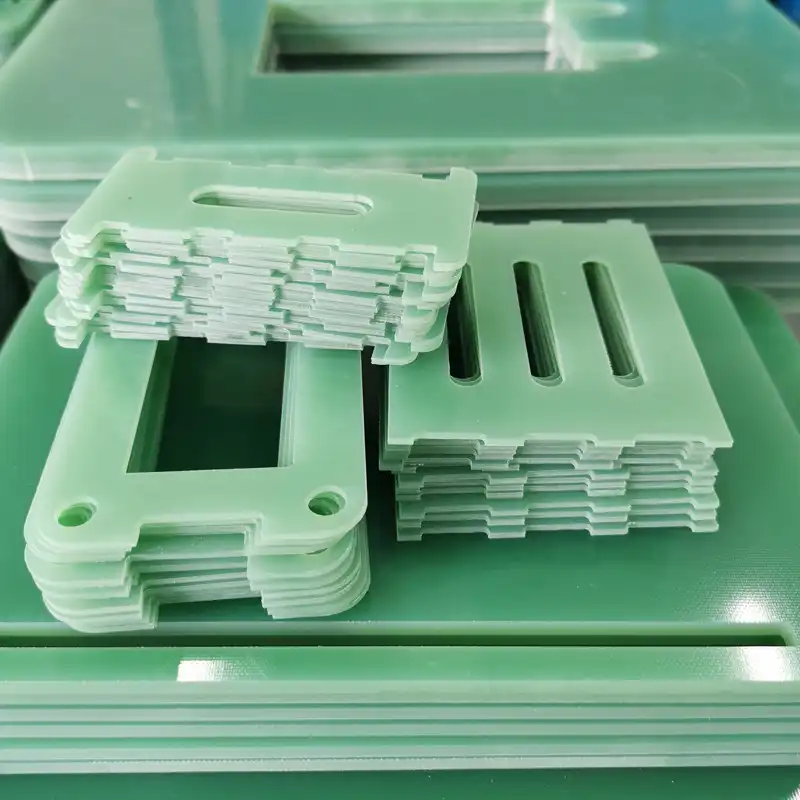
CNC machines have carbide tools that are made to work with composite materials and are designed to use the best feed rates and spinning speeds for glass-reinforced epoxies. Flood cooling devices stop the heat breakdown of resin and stop the production of dangerous dust. With multi-axis capabilities, you can make complicated shapes like pockets, channels, mounting holes, and edges with radiuses that would be hard or impossible to make by hand. Before a part leaves the factory floor, computer-controlled dimensional checking makes sure that it fits within the allowed ranges.
Measurable Performance Advantages
Precision cutting keeps standards to within a thousandth of an inch throughout entire production runs. This stops the measurement drift that happens with other methods. Optimized stacking methods that reduce the amount of waste greatly increase the amount of material that is used. Since automated tool paths get rid of the time needed for human measuring and planning, production speeds go up by a lot. Batch uniformity stops being a goal and becomes the norm, since the same programs make the same parts no matter how skilled the user is.
Scalability and Flexibility Benefits
Because the same CNC programs can handle G10 insulation component production from one piece to thousands, prototyping and production go together without any problems. When you change the design, you only need to update the software; you don't need to buy new fittings or tools. This gives R&D experts working on next-generation goods the freedom to make changes quickly. Because code takes the place of long setup processes, lead times are cut down by a large amount. Manufacturing data shows that CNC-machined parts always perform better than traditionally made parts in terms of both accuracy and quality of the surface finish.
How to Choose the Right Supplier for Custom G10 Insulation Components?
Choosing the right manufacturing partner is what makes or breaks your buying strategy. If you don't, you'll have problems with quality, shipping delays, and lack of support.
Technical Capabilities and Certifications
Check to see if possible providers have quality management systems in place that allow for process control and traceability. More than general CNC machining experience, CNC machining experience that is specific to composite materials is important. This is because epoxy laminates need specific knowledge about tools, speeds, and cooling strategies. The fact that they can do batch tests according to ASTM D 149 standards for dielectric strength proof shows that they care about electrical safety. Investing in ultrasonic testing or cross-section analysis tools to find internal delamination is a sign of a serious quality control effort.
Production Flexibility and Service
When engineering teams are making improved parts, they need to be able to accommodate custom sizes instead of changing designs to standard stock dimensions. Minimum order number rules can change whether small-batch testing is still a good way to make money. Being quick to technical support questions helps solve application problems and questions about specifications throughout the purchase cycle. Clear price systems keep things from being a surprise and make it possible to accurately plan your budget.
J&Q Manufacturing Advantages
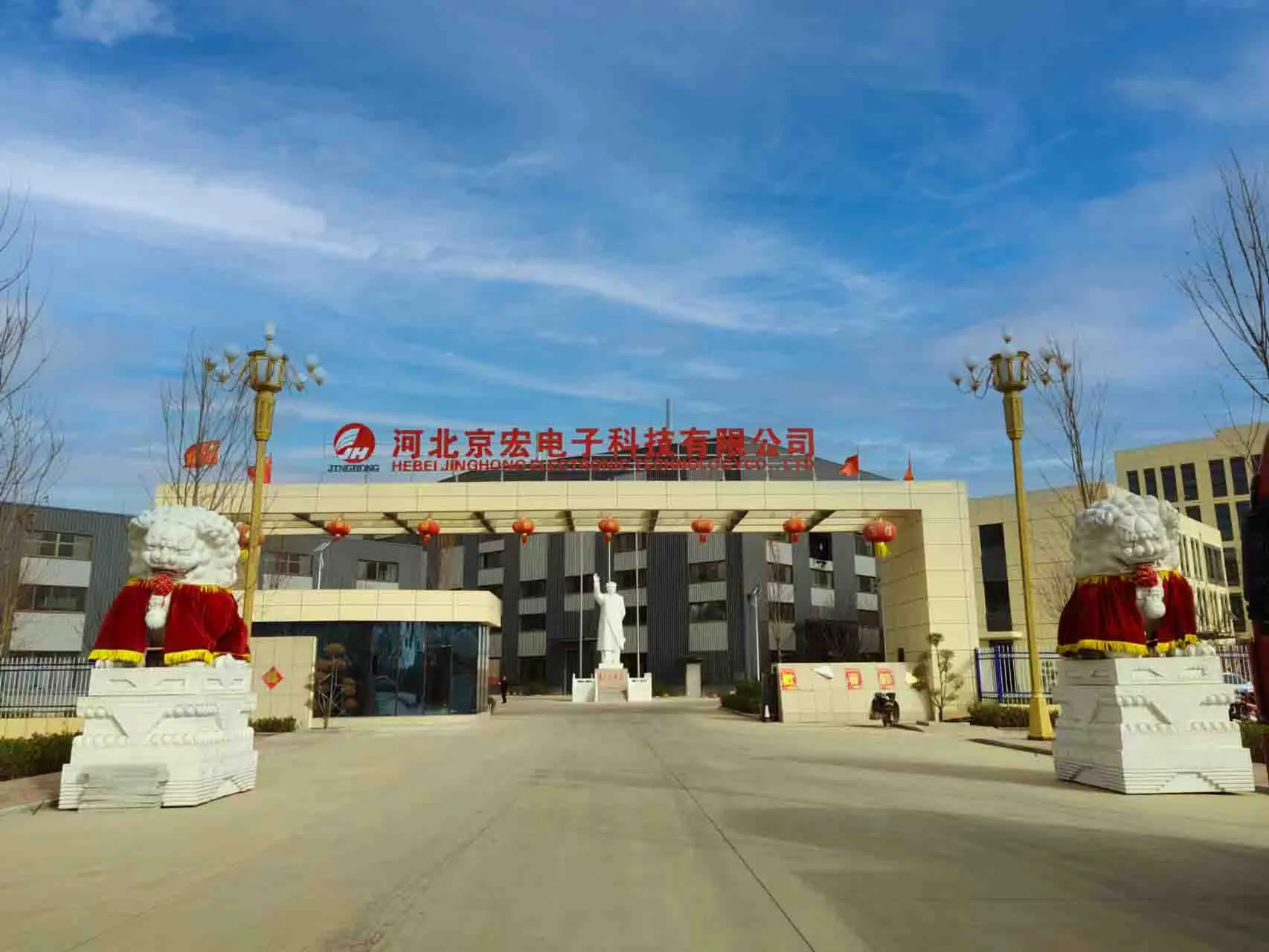
Our business has been making insulation sheets for more than twenty years and has also been trading with other countries for more than ten years. Advanced CNC tools can handle complicated shapes and close standards that are hard for other providers to handle. Partnerships with trade companies in both the United States and other countries show that a company is reliable and provides good service. Our integrated logistics operation offers shipping options that are easy to use and don't require a lot of planning. Our team is a reliable partner for tough projects in the power, automobile, industrial, and electrical fields because we have the technical know-how, production depth, and service infrastructure to do so.
Procurement Best Practices for Bulk and Custom G10 Insulation Components
Strategic buying methods get the best value for money while lowering risk across the whole supply chain.
Cost Structure Understanding
The price changes between normal sheets and custom-cut parts are due to the difficulty of the machining process, the amount of material used, and the need for setup. When production plans allow for consolidated orders, volume price tiers can help lower costs. Comparing suppliers is easier when you ask for specific quotes that break down the prices of materials, labor, and shipping.
Lead Time and Delivery Management
To stick to a production schedule, you need to plan realistic lead times that take into account things like getting the raw materials, waiting in line for cutting, quality control, and shipping between countries. Rush order options give you options for pressing needs, but they usually come with higher prices. Setting safety stock levels for high-consumption parts stops production from stopping because of changes in the supply chain.
Quality and Performance Optimization
Parts that are made to exact specs are easier to put together than parts that need to be changed or reworked in the field. Checking the surface quality for resin starvation, cracking, or foreign inclusions stops problems further down the line. Verification of flatness stops warpage problems that lead to CNC fixturing issues. Long-term relationships with suppliers make it easier to talk about ways to keep making things better, where feedback from manufacturers drives design optimization. The best return on investment is achieved when long-lasting, high-performance parts lower the number of warranty claims and problems in the field while keeping prices fixed.
Conclusion
CNC technology completely changes how companies make custom fiberglass epoxy insulation parts. It offers accuracy, speed, and stability that older methods can't match. Procurement experts can find the best answers for tough problems by knowing the properties of materials, how they can be made, and how to choose a seller. Strategic relationships with experienced makers who offer both technical know-how and quick service give companies an edge over their competitors throughout the lifecycles of their products. G10 insulation components are reliable in electrical, industrial, automobile, and power sector uses because they combine modern machining technology with tried-and-true composite materials.
FAQ
Can G10 materials withstand continuous high-temperature environments?
Under Class B insulation ratings, standard grades can handle constant running at about 130°C. For uses that need to withstand higher temperatures, versions with glass transition temperatures of 155°C or higher should be used for Class F or H standards. This will ensure reliable performance under long-term thermal stress.
Does CNC machining capability include complex geometries?
Yes, multi-axis CNC equipment can make complex shapes with features like internal pockets, precise holes, radiused edges, and compound angles that are hard to make with other methods. Computer-controlled tool paths keep the same level of accuracy across complicated forms. This lets designers come up with new ideas that improve both function and assembly efficiency.
How do CNC-fabricated parts compare cost-wise to traditional manufacturing?
It may look like very simple shapes have higher per-piece costs, but a total cost study shows that they are actually cheaper overall because they have less waste, shorter wait times, better consistency, and no need for extra operations. CNC speed gains and little batch-to-batch variation are especially helpful for high-volume output.
Partner with J&Q for Precision G10 Insulation Component Solutions
J&Q is ready to help you with your planning and purchasing needs by offering expert CNC cutting services that are designed to work with composite insulation materials. With 20 years of experience making things and knowledge of foreign trade, we can make sure that your specifications are met by high-quality parts that are supplied on time. We are a reliable provider of G10 insulation components, and our services include custom sizing, quick technical support, and combined shipping that make your supply chain easier. Email our team at info@jhd-material.com to talk about your application needs, get specific quotes, or set up a free evaluation that shows how committed we are to accuracy and dependability.
References
Smith, R. & Johnson, M. (2021). "Advanced Composite Materials in Electrical Insulation Applications." Journal of Industrial Materials Engineering, 34(2), 145-162.
Thompson, K. (2020). "CNC Machining Optimization for Fiber-Reinforced Polymer Composites." Manufacturing Technology Review, 18(4), 78-94.
Anderson, L., Chen, W., & Davis, P. (2022). "Quality Control Standards for Laminated Insulation Materials in Power Distribution." Electrical Engineering Quarterly, 47(1), 112-128.
Martinez, J. (2019). "Thermal and Mechanical Properties of Epoxy-Glass Laminates Under Industrial Service Conditions." Materials Science International, 25(3), 201-218.
Wilson, T. & Roberts, S. (2023). "Strategic Procurement Practices for Technical Insulation Components in B2B Manufacturing." Supply Chain Management Today, 41(2), 67-83.
Lee, H. & Kumar, A. (2020). "Comparative Analysis of Traditional versus CNC Fabrication Methods for Composite Insulation Parts." Advanced Manufacturing Processes, 29(6), 334-351.

Get a complete product list and quotation
J&Q New Composite Materials Company