How Does FR4 Epoxy Sheet CNC Machining Improve Insulation Component Accuracy?
CNC machining transforms FR4 Epoxy Sheet processing by delivering precision that manual methods cannot match. Through computer-controlled cutting paths, CNC technology maintains dimensional tolerances within ±0.05mm, eliminates human error, and produces complex geometries with repeatable accuracy. This controlled process minimizes delamination and resin damage while ensuring consistent quality across production batches—critical advantages for engineering managers and procurement teams seeking reliable insulation components that meet stringent electrical and mechanical specifications.
Introduction
Insulation parts need to be very precise all the time. When electrical systems fail because of wrong measurements or lost dielectric properties, the costs go beyond just throwing away the parts. There are also safety risks, production delays, and damage to the company's reputation. Modern insulation is built around FR4 Epoxy Sheets, which are highly prized for their high mechanical strength, temperature stability, and ability to keep electricity from flowing. But even the best materials can't make things better without new ways of making them.
CNC cutting fills this need by making FR4 manufacturing more precise with computer control. More and more, engineers and technical procurement teams in the power, industrial machinery, and electrical manufacturing sectors rely on CNC-machined parts to improve performance and lower the number of parts that are rejected. This technology makes sure that every PCB base, busbar support, and arc barrier meets the exact requirements. There are no guesses or approximations.
This piece talks about common manufacturing problems and how CNC machining improves the accuracy of FR4 insulation parts. It also gives sourcing managers useful advice for reviewing sources and processes. With more than 20 years of experience making insulation materials by hand, we know what makes good parts stand out from great ones.
Understanding FR4 Epoxy Sheet and Its Key Properties
Material Composition and Structure
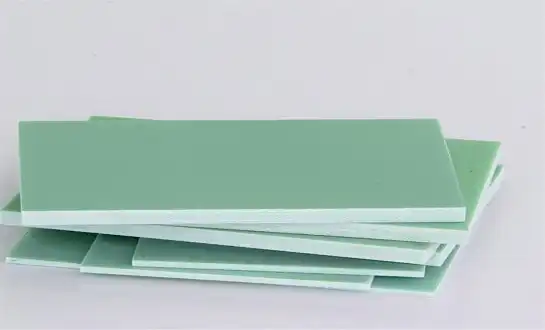
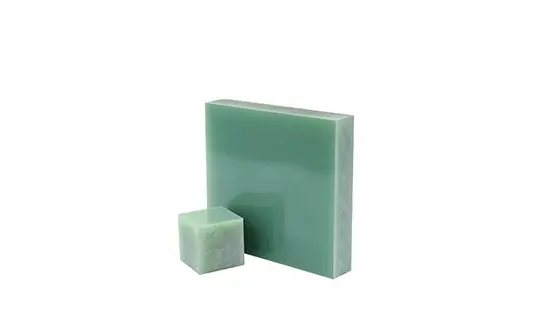
FR4 Epoxy Sheets are made of flame-resistant epoxy resin mixed with continuous knitted fiberglass cloth. The cloth is then heated and pressed together under pressure to create a high-performance thermoset material. The "FR" label means that the product meets the flammability standards set by UL94 V-0. This is made possible by brominated epoxy formulas that put out fires on their own when fuel sources are removed. This layered structure makes a substance that has the tensile strength of glass reinforcement and the chemical resistance and binding properties of epoxy resin.
Standard production makes sheets with thicknesses ranging from 0.2mm to 12mm, which can be used for a wide range of purposes, from making thin PCB boards to heavy-duty electrical parts. The material's density is usually between 1.85 and 2.10 g/cm³, which is a good balance between strength and weight that machinery builders and automotive engineers like when they have to make parts that don't take up much room.
Electrical and Thermal Performance
FR4 Epoxy Sheet is different from other materials because of its electrical qualities. The laminate keeps its dielectric strength above 500 V/mil even when it's humid outside, and its breakdown voltage is higher than 40kV when viewed perpendicular to the layers. If the arc resistance is higher than 60 seconds, tracking can't happen. Tracking is when conductive carbon tracks form that lead to catastrophic failures in high-voltage settings. According to ASTM D570 testing, water absorption is still very low, at less than 0.2%. This means that insulation resistance stays stable in tropical climates and marine settings.
The thermal properties are also very amazing. Standard FR4 Epoxy Sheet has a glass transition temperature between 130°C and 140°C, which means it can be used continuously at 130°C without delamination or shrinkage. High-Tg versions raise this temperature limit above 170°C, making them suitable for lead-free soldering and the environment under the hood of an automobile. This thermal stability stops the Z-axis from expanding when the temperature changes, which is a common way for failures to happen and can damage electrical gaps in motor and generator parts.
Mechanical Advantages
FR4 Epoxy Sheet parts can handle mechanical loads without deforming or breaking because they have a flexural strength of more than 340 MPa (lengthwise direction). Because it is strong for its weight, the material is perfect for structural insulation jobs where aluminum would add too much weight and fiberglass alone isn't rigid enough. Chemical inertness guards against oils, solvents, and cleaning agents that are used in factories, and the composite structure is better at resisting damage from impacts than phenolic options that are more brittle.
By knowing these properties, procurement professionals can match the specifications of a material to the needs of an application. When choosing FR4 Epoxy Sheet, a power distribution engineer choosing arc barriers needs different properties than an appliance manufacturer designing motor brackets. Being aware of these differences keeps specifications from being too specific and costs from going up.
Challenges in Insulation Component Manufacturing with FR4 Epoxy Sheets
Dimensional Inconsistencies from Traditional Methods
When working with glass-reinforced materials, both manual cutting and traditional machining have trouble keeping tight standards. Because FR4 Epoxy Sheet is made up of woven fibers, the hardness changes in different directions. This makes cutting tools move in unpredictable ways, which leads to physical drift between production runs. When drilling, the rough fiberglass wears down tool tips during penetration, which can cause holes that are too big or too round. These differences add up in systems that need to fit perfectly—for example, switchgear parts that should fit together easily need to be filed and adjusted, which takes time away from other tasks that need to be done.
Applications that are sensitive to temperature are hurt the most when measurements aren't accurate. A busbar support that is 0.3 mm too big might not seem like a big deal until thermal expansion during operation causes interference, which in turn causes mechanical stress that breaks the epoxy matrix and makes it harder for electricity to flow.
Surface Quality and Delamination Issues
Heat from cutting is a constant enemy of the stability of the FR4 Epoxy Sheet surface. When you use conventional routing at the wrong speeds, the epoxy binder gets soft, which makes the glass-resin contact less clear, which is needed for strong bonding and coating adhesive. When cutting too hard, the top laminations come away from the core structure. This leaves gaps where water can get in, and electrical tracking can start.
Edge quality has a direct effect on how reliable a piece is. Glass fibers stick out from the rough, splintered edges of worn tools. These sharp protrusions cut through wire insulation, make short-circuit paths, and hurt assembly workers. Deburring by hand costs more and introduces errors that CNC processing gets rid of completely.
Tool Wear and Production Economics
Compared to metal cutting, fiberglass cloth wears down tools much more quickly because it is rough. Cutting edges get dull quickly, making the surface finish worse and worse until they need to be replaced. Traditional shops have to decide whether to replace tools often and pay a lot for replacement parts, or to extend the life of their tools even though the quality of the parts they make will be worse and the number of rejections will go up.
This problem gets worse when heat builds up. If chip clearance isn't good enough, glass dust can build up in cutting zones, making an abrasive solution that speeds up wear and raises temperatures that break down the epoxy matrix. Even carbide tools stop working after just a few minutes of constant use if they don't have advanced coolant systems and chip management.
Because of these problems with manufacturing, buying managers are asking for more and more CNC-machined parts. Knowing about these technical problems gives you more power when evaluating a supplier's skills and raising concerns about price offers that seem too good to be true for real precision manufacturing.
How CNC Machining Enhances FR4 Epoxy Sheet Insulation Component Accuracy?
Computer-Controlled Precision and Repeatability
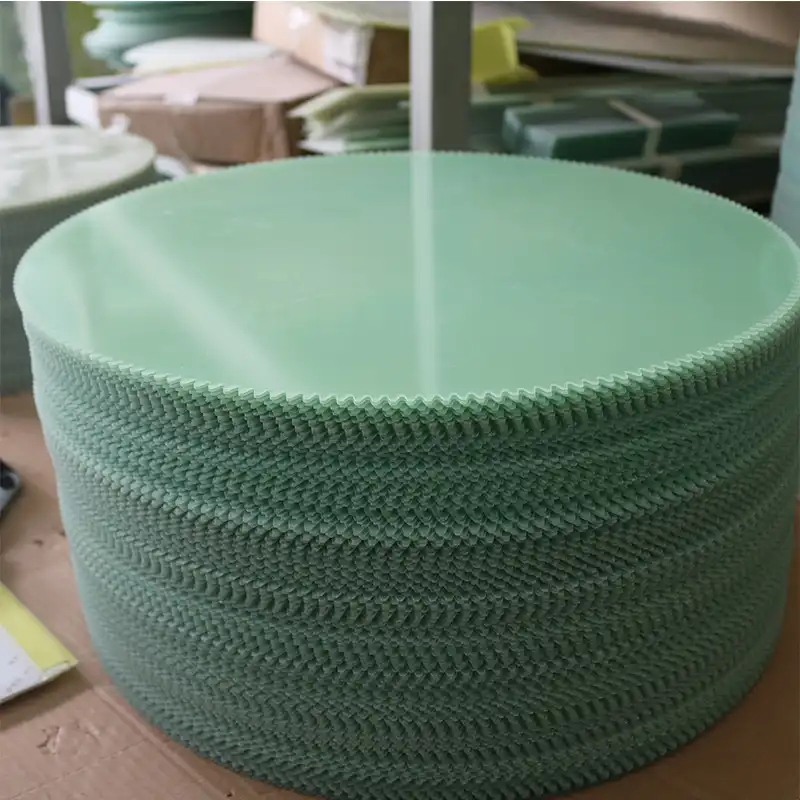
CNC technology changes the way FR4 Epoxy Sheet is processed by using computer control to get rid of the need for human error. Programmable tool paths follow exact coordinates with accuracy measured in microns. This makes it possible to make thousands of parts with the same dimensions without any drift or wear and tear. Multi-axis machining centers can make forms that are too complicated for even the most skilled manual machinists to handle, like curved holes, angled features, and elaborate pocket shapes.
The computer control does more than just move the object. Modern CNC systems change feed rates automatically based on how the material is engaging. This keeps the cutting forces at their best, which stops the tool from bending and controls heat loads. Automatic tool changers switch out specialized cutters in the middle of an operation, finding the best machining parameters for each part without any help from a person. This carefully planned accuracy makes sure that parts fit together perfectly the first time, so there are no expensive rework cycles that are common in traditional manufacturing.
Thermal Management and Material Integrity Preservation
Modern CNC machines have high-velocity chip evacuation systems and through-spindle coolant delivery systems that keep the heat under control while the cutting is happening. Coolant gets to the cutting edge right where friction causes temperature spikes. This stops localized resin degradation that lowers the dielectric strength. When you aggressively remove chips, sharp glass bits don't build up and create extra heat sources through friction.
Optimized cutting parameters are just as important. CNC programming sets spindle speeds and feed rates that are just right to balance how well material is removed against the amount of heat that is put in—fast enough for cost-effective output but slow enough to protect the epoxy matrix. Diamond-coated tools keep their cutting edges sharp for longer, so they can make clean shear cuts through glass fibers instead of tearing and pulling, which can damage surface laminations.
Engineering teams say that FR4 Epoxy Sheet parts have measurably better dielectric performance than parts that were made in the traditional way. Breakdown voltage testing shows fewer weak spots and more uniform insulation resistance across all component groups. This shows that the consistency of the manufacturing process has a direct effect on the reliability of the electrical system.
Reduced Scrap and Quality Consistency
Production data from electrical makers shows that CNC cutting has an effect on the economy that goes beyond making sure that dimensions are correct. When CNC processes are programmed correctly, the rate of scrap for important tolerance features drops from 8–12% when done by hand to less than 2%. This decrease is due to fewer mistakes made by people, tools that work consistently, and the ability to measure parts while they are being made so that physical drift can be caught before parts that don't meet standards are made.
When CNC consistency gets rid of manufacturing variability, statistical process control can be used. Purchasing managers can be sure that parts from qualified suppliers will work the same way as qualification samples. This lets them use lean inventory strategies and just-in-time delivery schedules. This certainty is especially important for automotive supply chains, because when production lines stop because of insulation parts that don't meet specifications, it costs a lot more than the difference in material prices.
OEM feedback on how well the assembly fits together and how well it works in the field is real-world validation. Mechanical engineers who make precision fixtures say that CNC-machined FR4 Epoxy Sheet parts don't need many fitting adjustments. This speeds up production and cuts down on warranty claims related to insulation failing too soon.
Comparing CNC Machined FR4 Epoxy Sheets with Alternative Solutions
FR4 Versus Other Epoxy Laminates
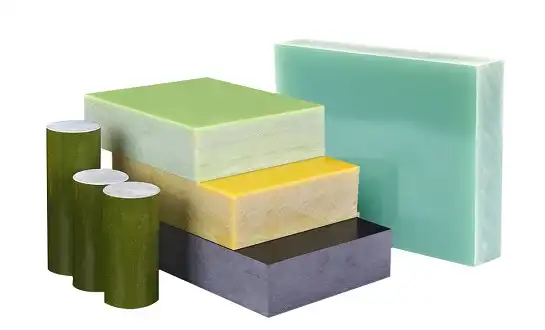
G10 is made of the same glass-epoxy material as FR4 Epoxy Sheet, but it doesn't have any flame-retardant additives, so it can't be used in places that need to meet UL94 V-0 standards. Even though G10 is mechanically similar to other materials and sometimes cheaper, it can't be used in electrical equipment sold in controlled markets because it doesn't have any safety approvals. FR5 uses a different resin chemical that can handle a slightly higher temperature, but because it is so specialized, it usually takes longer to make and costs more without giving any real performance gains for normal insulation uses.
CNC cutting makes FR4 Epoxy Sheet even better than these other options. The balanced makeup of the material—not too brittle like some phenolics or too soft like FR1—means that it reacts predictably to cutting forces, so the results are the same even when the thickness and fiber orientation are changed. When compared to harder specialty laminates, this benefit in being easy to machine means lower equipment costs and faster cycle times.
Performance Against Non-Composite Materials
Aluminum and steel are very strong mechanically, but they conduct electricity, which means they can't be used as insulation. Because they are good at conducting heat, they also create heat-sink effects that aren't good for motor systems and transformers, where thermal separation is important. Metals are great for CNC cutting, but their basic electrical qualities mean they can't be used in jobs that need dielectric isolation.
Pure fiberglass materials are good at keeping electricity away, but they aren't as rigid as materials that are bonded with epoxy. When these materials are machined, they tend to fray and don't hold their shape well under mechanical load. FR4 Epoxy Sheet's composite structure combines the insulating properties of fiberglass with the gluing strength of epoxy. This makes a material that can be machined smoothly and keeps its tight tolerances during operation and assembly.
Phenolic laminates are old-fashioned insulation materials that are still used in situations where cost is an issue. These paper-based materials easily soak up water, which makes them swell and lose their electrical qualities in damp places. CNC-machined FR4 Epoxy Sheet parts keep working well in all kinds of weather, which is an advantage in terms of reliability that justifies higher material costs in important uses.
This comparison view helps buying teams explain their choices of materials to clients who are interested in costs. When talking about CNC-machined FR4 Epoxy Sheet, the focus moves from just comparing prices to the total cost of ownership, which takes into account things like less waste, faster assembly, and better stability in the field.
Guidance for Procurement: Selecting and Ordering CNC Machined FR4 Epoxy Sheets
Supplier Qualification Criteria
When evaluating possible providers, you need to look beyond what they say they can do to make sure they can actually make the goods. Ask for proof that the material meets the requirements of NEMA LI 1-1998, IEC 60893, and any related UL standards. These documents show that the FR4 Epoxy Sheet makeup meets the standards set by the industry. Ask about the CNC equipment's age, how it is maintained, and the types of tools that can be used. This will show you if the supplier is investing in new technology or using old machines.
As important as good tools is skilled machining. Suppliers who have worked with glass-reinforced composites before know how to choose the right tools, make the best use of cutting parameters, and keep an eye on quality in the FR4 Epoxy Sheet finishing process. Ask for sample parts that are the right size and shape for your application. Plain rectangular blanks don't show how well you can make complex shapes with tight tolerances.
Quality control tools show how consistent and traceable something is. ISO 9001 certification means that processes are written down and there is a culture of continuous improvement. ISO 14001 certification means that there is environmental responsibility that goes along with operational discipline. These certifications don't promise quality, but they do help you build ties with trusted suppliers.
Technical Specification and Customization
Don't let misunderstandings cost you money; talk clearly. Give thorough sketches that show the sizes, tolerances, and important parts that need extra care. Tell suppliers what kinds of operating temperatures, humidity, and chemical contact the parts will be exposed to so they can suggest the right FR4 Epoxy Sheet grades. High-Tg materials are more expensive, but they don't break down in harsh thermal conditions. Standard grades are fine for uses that happen at room temperature.
The choice of thickness affects both cost and performance. When profiling, thinner sheets can be cut more quickly and with less waste, but they might not be strong enough for structural uses. Thicker laminates are stronger and easier to work with, but they cost more and take longer to machine. Talk about these trade-offs with sources who understand what you need for your application instead of just getting the thickest possible as a safety measure.
Specifications for the surface finish should be made clear. Standard CNC operations create useful surfaces that are good enough for most insulation uses. However, parts that need to be bonded or coated later may need better surface preparation. These extra steps cost money, so only mention them when they are technically necessary.
Order Quantity and Lead Time Considerations
Minimum order amounts are based on the prices of setting up CNC programming and making tools. Suppliers spread these set costs out over the number of items ordered, which makes ordering more items cheaper per piece. While prototype quantities are more expensive, they are necessary to make sure that everything works before committing to production volumes. Build relationships with suppliers who offer flexible MOQs to help with the development of your product.
To handle lead times, you need to know how production works. It takes time to make custom CNC programs, and complex geometries need longer machining cycles than simple profiles. Getting the materials can take extra days or weeks, based on how much is available and what grade and thickness. Early communication of delivery requirements and setting reasonable deadlines that work with these facts is better than setting arbitrary deadlines that cause people to rush their work and compromise quality.
Strategic buyers keep in touch with a number of qualified suppliers to make sure they have access to capacity and can offer competitive prices. Dual-source methods protect against problems with supplies and give you more power when negotiating a contract. Clear predictions should be shared with main suppliers to help them plan their capacity. Working together in this way often leads to better treatment during allocation shortages.
Conclusion
CNC cutting takes making FR4 Epoxy Sheet from good to great, giving modern insulation parts the precise dimensions and high-quality surfaces they need. Computer-controlled precision gets rid of the need for human error, and advanced thermal management keeps the integrity of the materials. This makes it possible to make parts that work reliably in a wide range of demanding electrical and mechanical applications. Engineering managers and procurement teams get measurable benefits like fewer parts that need to be thrown away, consistent assembly fit, and reliability in the field that protects the brand's reputation.
When you mix the flame-retardant, dielectric, thermal stability, and mechanical durability of FR4 Epoxy Sheet with the accuracy of CNC production, you get insulation solutions that are better than those made with other materials and methods. To choose certified suppliers, you need to check their certifications, see what kind of machining they can do, and build working relationships with them that help with both the development and production steps. These partnerships make sure that parts always meet specifications, which lets businesses run efficiently and launch products with confidence.
FAQ
What thickness ranges work best for CNC machining FR4 components?
CNC machines can work with FR4 Epoxy Sheet from 0.2 mm to 12 mm thick. For best results, the thickness should be between 1.0 mm and 6.0 mm, where stiffness and cutting time are equal. Thinner laminates (less than 0.8 mm) might need backing support to keep them from bending while they're being cut, and thicker materials (more than 8 mm) make the tools wear out faster and take longer to cycle. Custom needs outside of standard ranges can still be met with specialized code and tooling changes, but wait times and costs will go up as a result.
How does CNC machining prevent thermal damage to epoxy resin?
To control the amount of heat that is made during processing, modern CNC machines use through-spindle coolant delivery, optimized cutting speeds, and sharp tools. Coolant gets to the cutting zones right where friction causes temperature spikes and gets rid of the heat before it breaks down the resin matrix. Programmable feed rates find the best balance between how much material is removed and how much heat is put in. Diamond-coated tools have sharp edges that cut fibers neatly instead of tearing them during friction.
Can suppliers provide fully customized CNC-machined FR4 components?
Manufacturers with a lot of experience can make any part you want, from choosing the materials to delivering the finished product. They can work with different shapes, tolerances, and surface finish requirements. Give thorough technical drawings with clear markings on the most important measurements to make sure that quotes and production are correct. A lot of suppliers have engineering support staff that work together to improve designs by suggesting changes that make them easier to machine or better at performing their job without affecting how they work.
Partner with J&Q for Precision FR4 Epoxy Sheet Solutions
J&Q can help you with your production problems because they have been making insulation materials for more than 20 years. Our advanced CNC machining skills can turn FR4 Epoxy Sheet into precise parts that meet the tightest tolerances needed for your applications, whether you're making motor insulation, switchgear assemblies, or PCB supports. As a result, we keep full records of UL and ROHS compliance, which means that your parts will always meet regulatory requirements. Our integrated logistics operations offer true one-stop service from choosing materials to delivering them, which takes away the hassle of coordinating. Email our technical team at info@jhd-material.com to talk about your needs with skilled engineers who know about both material science and how things are made. We have been making FR4 Epoxy Sheets for a long time, so you can count on our consistent quality and on-time delivery to keep your production lines running smoothly. Get your custom quote today and find out how good partnerships with suppliers can turn accurate parts into a competitive advantage.
References
1. National Electrical Manufacturers Association. (2019). Industrial Laminating Thermosetting Products (NEMA LI 1-1998). Rosslyn: NEMA Standards Publication.
2. Coombs, C.F. (2021). Printed Circuits Handbook, Seventh Edition. New York: McGraw-Hill Professional.
3. Harper, C.A. (2020). Handbook of Plastics Technologies: The Complete Guide to Properties and Performance. New York: McGraw-Hill Education.
4. International Electrotechnical Commission. (2018). Specification for Industrial Rigid Laminated Sheets Based on Thermosetting Resins for Electrical Purposes (IEC 60893). Geneva: IEC Publications.
5. Mazumdar, S.K. (2019). Composites Manufacturing: Materials, Product, and Process Engineering. Boca Raton: CRC Press.
6. Wong, K.V. & Hernandez, A. (2020). "Precision Machining of Composite Materials for Electrical Applications." Journal of Manufacturing Science and Engineering, 142(8), 081005.

Get a complete product list and quotation
J&Q New Composite Materials Company