How CNC Milling Machines Improve FR4 Epoxy Resin Sheet Accuracy
CNC milling machines improve FR4 Epoxy Resin Sheet accuracy by turning an approved CAD drawing into controlled, repeatable tool paths. The machine holds the sheet firmly, cuts the profile, and drills holes at the same coordinates every cycle. Part size, hole position, and edge quality therefore vary far less than with manual cutting. Carbide or diamond-coated tools handle the abrasive glass fiber, and programmed speeds and feeds limit heat and chipping. Good results still depend on the right grade, stable workholding, realistic tolerances, and first-article inspection before batch production.
Why Accuracy Matters and Where FR4 Machining Goes Wrong
Why Accuracy Matters for FR4 Parts
FR4 Epoxy Resin Sheet is a woven fiberglass sheet that is glued together with an epoxy resin that doesn't catch fire. They use it to make battery pack parts, test jigs, and spacers because it is stable, hard, and good at keeping heat in. These pros are only useful if the finished part fits. If the hole is not where it should be, the clip could break. The lines might not be able to move as freely if the hole is too big. If there is a rough edge, the assembly line might not stay put. You protect both how the electrical parts work and how well the mechanical parts fit together when you are certain. Because the shapes are so close to being the same, production stays the same from one lot to the next.
Common Machining Problems and Root Causes
FR4 Epoxy Resin Sheet trouble starts with the glass fiber. The fibers quickly dull the cutting edges, and a dull tool will stray off course, leaving behind rough edges and the wrong sizes. The tool might peel, break, or chip if it is not made correctly or is cut in the wrong direction. Being loose with the sheet could make it move or shake while you cut it. When speeds and feeds don't work right, it gets hot. Craft shops need ways to get rid of the fine fiberglass dust that is made when they cut. They also need ways for air to flow and safety gear for the workers. Ask a machine shop how they deal with all of these things when you go there. How true the quote is can be seen in what the answer says about the process.
Why Manual Methods Struggle With Repeat Orders
People who are running the machine decide how to saw, route, and drill based on lines that have been drawn. It's not always the same person who cuts the edge; sometimes it's the same person but a long shift. For one test copy, that might work. Before they can be used on another hundred insulation plates or appliance brackets, teams that put things together have to file down or throw away parts that are too different. It takes time and money to fix or get rid of things. When you route the normal way, you also get burrs that need to be cleaned up more. A lot of the differences between workers aren't there in CNC cutting because the software does everything. It stays close to the same drawing when you place more than one order.
How CNC Milling Machines Improve FR4 Epoxy Resin Sheet Accuracy
Controlled Tool Paths From CAD Data
The first thing CNC cutting needs is a CAD file that can be used. It is turned into tool tracks by CAM software, and the machine moves with the help of servo-driven axes. It always hits the same hole and profile line on the first and fifth parts because the program tells it where to go. Also, one setup can make more than one thing. This makes it less likely for mistakes to happen when a part is clamped again after being moved from one machine to another. The cutting forces don't change because the back-and-forth speed, feed rate, and depth of cut are all fixed. Stable forces keep the edges of glass-reinforced FR4 Epoxy Resin Sheet from breaking.
Features CNC Milling Produces Consistently
A CNC mill does more than just cut lines. It is possible to make countersinks, holes, slots, pockets, mounting patterns, corner curves, and slots all with the same program. It will remember where each one is in relation to the others. Why is that important? The depth of the holes in a circuit barrier or terminal board determines how well they fit and how much room there is for electricity. You can make samples, new parts, and OEM orders that are placed more than once with the saved program. In other words, a part bought today will be the same part bought next year. Drawing standards, like ASME Y14.5, make it easy for buyers to figure out how to fix mistakes in shape and position. This means that both the customer and the shop can understand what the drawing means.
What CNC Cannot Fix on Its Own?
A CNC mill will always do what you tell it to do. It can't fix a bad drawing, a limit that isn't clear, or material that isn't the right grade. It also can't hide a tool that is broken or worn out. This is why it's important that the first piece be okayed. The plan is checked against a test piece that is cut out. Changes are made to the tools, the direction of the cuts, or the way the work is held before the whole batch is made. It is important for engineers to check both the part's width tolerance and the FR4 Epoxy Resin Sheet's width tolerance. This is because the sheet is where all cuts begin. People who buy, create, and supply things talk to each other early on, spend less, and save more time.
From Drawing to Inspection: Process, Accuracy Factors, and Verification
The Step-by-Step CNC Milling Process
There is a set pattern for the right production. The team starts by talking about the model, grade, thickness, standards, and needs for the surface. The shop then chooses a sheet size, makes the CAD/CAM program, sets the datums, and makes plans for either mechanical or vacuum workholding. Then it clamps the blank in place, makes rough cuts to the profile, drills or mills holes, cuts slots and pockets, and finally makes the finishing passes. After being made, the parts are put away so they don't get scratched or wet. They are checked out, cleaned, and charged. Since orders are coming from other countries, it's important to have clear control over changes so that everyone works from the same drawing of the FR4 Epoxy Resin Sheet.
Accuracy Factors Engineers Should Evaluate
The truth isn't always the same as what a machine says it can do. Check how often the tools are changed and how well the machines are set up. Also, look at how much the tools and spindles bend. How flat the FR4 Epoxy Resin Sheet is, how stressed it is inside, and the way the fibers are arranged can also change how well it cuts and how stable it is. The part and the measuring tool can both move when the temperature changes. Because of this, the shop should leave the settings alone when it's not in use. Also, buyers should make sure that the picture clearly shows the requirements for thickness, hole width, symmetry, perpendicularity, and being in the right place. Because they are all different, you should check each one on its own.
Inspection and Verification of Machined Parts
A well-thought-out inspection plan makes sure that the part matches the drawing. As a general rule, a first-article check looks at the size, thickness, hole diameter and location, slot width, form, flatness, and state of the edges. Shops choose laser measuring systems, calipers, micrometers, height gauges, or coordinate measuring tools based on how exact they need to be. They can also ask for reports on sizes, records of production, and information on how the goods are packed. Figure out how often checks will happen before production starts. The sample plan, the size of the order, and the importance of the part should all be taken into account. You can use an ISO 2768 standard as a general rule for both sides if a picture doesn't show all the measurements.
Choosing the Right Material and Supplier
FR4 Compared With Other Insulation Sheets
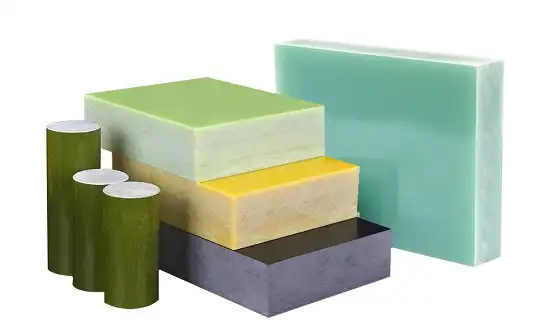
FR4 Epoxy Resin Sheet isn't always the best choice. 3240 epoxy sheet is another thing that is used to make parts that keep electricity safe. Most of the time, bakelite sheet is used because it is cheap, but it is not as strong as other materials and reacts differently to water. Wear parts and gears that have to carry mechanical loads often use phenolic cotton sheet, such as 3026. You can sort the data by working temperature, load, moisture, flame resistance, and dielectric needs, as well as by total cost to land. We need to know this about FR4 Epoxy Resin Sheet because it means it is not flammable (V-0). Always compare your service temperature to the datasheet to make sure they match up.
What to Check in a Supplier
They should take care of both what you buy and how it gets to you. Check out the grade, the different lengths and FR4 Epoxy Resin Sheet sizes, the test results, and the way it is packed. Don't forget to ask about skills and oversight as well. At J&Q, we make 43,000 tons of FR4 Epoxy Resin Sheet, 3240 epoxy, Bakelite, and 3026 phenolic cotton sheets every year. Two factories make them. The place where we make things is fully automated. There are more than 10 years of trade with other countries and more than 20 years of making insulation sheets. We get your order done before other orders that need to be done if you place it with us. We also ship through our own shipping company, so from the time the stuff is made until it gets to you, you only have to deal with one group.
Build a Complete RFQ
It is faster and less likely to go wrong when you use Clear RFQ to get prices. Write down the CAD model, the grade of the material, how thick it is, the size of the FR4 Epoxy Resin Sheet, how many sheets are needed, the annual demand, the inspection criteria, the tolerances that must be met, the sheet's destination, and how it will be packed. Let us know if your business needs any papers, like UL or RoHS papers, so we can make sure we have them before you say yes. Don't just look at the price per sheet when you compare quotes. Also, look at how much it all costs. Add them up to get an idea of how much it costs for things like machining, tools, inspection, freight, duties, lead time, and supply continuity. A low sheet price won't last long if your line is stopped by scrap or late deliveries.
Hongda FR4 Epoxy Resin Sheet: Specifications and Applications
Sizes, Thickness, and Ordering Terms
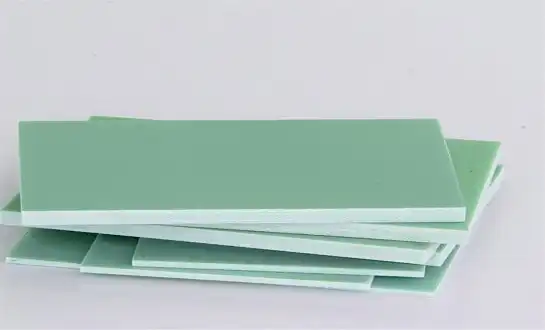
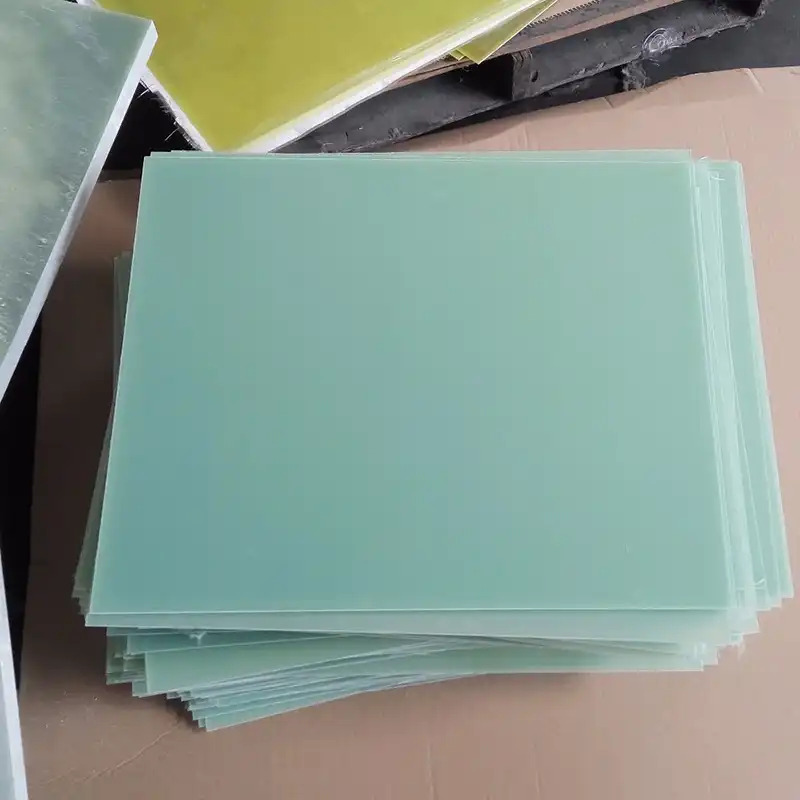
Hongda FR4 Epoxy Resin Sheet can be as thin as 0.3mm or as thick as 100mm. It is a light green color in real life. The size of most sheets is 1030 mm x 1230 mm. That way, your machine shop has more ways to stack parts and get rid of scrap. Custom sizes are 1030mm x 2030mm, 1220mm x 2440mm, 1030mm x 1030mm, and 1030mm x 2070mm. Pallets are used to keep things safe when they are packed normally. We accept T/T as payment, and we can ship by sea, land, or air. To place an order, you need at least 500KG. We can make any big order on the FR4 Epoxy Resin Sheet line because it can make 13,000 tons a year.
Tested Properties That Matter for Machined Parts
As per GB/T 1303.4-2009, the strength to bend is 571 MPa, the strength to squeeze is 548 MPa, and the strength to pull apart is 282 MPa. It hits something with 57.3 kJ/m² of power. For every mm of length, over 100 kV of voltage breaks down. In the vertical direction, 16.7 kV/mm of voltage breaks down. It has an insulation resistance of 2.2*10^13 Ω and a relative permittivity of 5.40 at 50Hz after getting wet. As per GB/T 2408-2008, the FR4 Epoxy Resin Sheet is 2.01 g/cm³ dense, can hold 5.3 mg of water, has a Barcol hardness of 76, and is V-0 flammable. Because the laminate is tough and hard, carbide- or diamond-coated tools work best.
Applications Across Industries
FR4 Epoxy Resin Sheet is cut into PCB test jigs, fixture plates, and insulation plates by people who work in those fields. Power is cut into switch insulation plates, obstacles, and coil supports by people who buy it. Machine builders use it to clean gears and make spacers. It is used to make lithium battery pack parts and heat-resistant nuts by people who sell cars. The sheet is used by appliance makers to make frames for machines that keep heat inside and parts that keep heat from getting to the body. The sheet can also be used to make molds for shoes and clothes. The same model can be used to make the same part again after it has been accepted as a prototype because a CNC program can be used more than once.
Conclusion
CNC milling doesn't let the user choose how to cut FR4 Epoxy Resin Sheet; instead, it uses set tool paths, constant cutting parameters, and the same hole and profile places over and over again. This helps the work be more accurate. Damage to tools, separation, and loose workholding are often brought on by rough glass fiber and poor process control. This means that the results depend on the machine's parts, fittings, and state as much as they depend on the mill itself. You also need a clear model, clear limits, a known sheet thickness, and a look at the first piece to make sure everything is right. When making your choice, see how well FR4 Epoxy Resin Sheet, 3240 epoxy, Bakelite, and phenolic cotton sheet handle heat, load, and flame. You can plan parts that will fit well, keep things warm, and be the same from batch to batch with the help of a quality test.
FAQ
What tolerance can CNC milling hold on FR4 sheet?
The part is round, the FR4 Epoxy Resin Sheet is thick, the tool is in good shape, the work is held, and measurements are taken in a certain way. Have your machinist look over the plan and a sample piece to make sure they are right before making a lot of them.
Can I machine FR4 with standard metalworking tools?
Not for long. Stores don't use steel tools because glass fibers wear them down too fast. Instead, they use tools that are coated in carbide or diamond. This keeps the dirt out.
Does Hongda FR4 come in custom sizes?
It's exactly 1030 mm x 1230 mm in size. To meet your needs, we can make it 1030mm x 2030mm, 1220mm x 2440mm, 1030mm x 1030mm, or 1030mm x 2070mm. It could be anywhere from 0.3mm to 100mm thick.
What should I include in a quote request?
Send the material, its thickness, FR4 Epoxy Resin Sheet size, drawing, amount, tolerances, exact location of the goods, and any paperwork that needs to be sent. You can pay with T/T, and the least you can buy is 500KG.
Request Accurate FR4 Epoxy Resin Sheet From J&Q
Are you ready to make the picture's parts? We've been selling FR4 Epoxy Resin Sheet for more than 20 years and have done business with other countries for over 10 years. We also ship things ourselves, so we can get everything in one place. If you email info@jhd-material.com with your thickness, sheet size, number, and where you want the material sent, our team will get back to you with a realistic plan for the material and shipping. Blog.jhd-material.com has more guides.
References
1. NEMA LI 1, Industrial Laminated Thermosetting Products, National Electrical Manufacturers Association, 1998
2. UL 94, Tests for Flammability of Plastic Materials for Parts in Devices and Appliances, UL Standards, 2013
3. ASME Y14.5, Dimensioning and Tolerancing, American Society of Mechanical Engineers, 2018
4. Machining of Polymer Composites, Springer, 2009
5. Drilling of Fiber Reinforced Plastics: A Review, Journal of Materials Processing Technology, 2007
6. ISO 2768-1, General Tolerances for Linear and Angular Dimensions Without Individual Tolerance Indications, International Organization for Standardization, 1989

Get a complete product list and quotation

J&Q New Composite Materials Company