How CNC Machining Improves Precision in FR4 Epoxy Sheet Fabrication?
CNC cutting changes the way FR4 epoxy sheets are made by providing micron-level accuracy in dimensions and getting rid of edge chipping and delamination that happen a lot when they are processed by hand. When you use automated tool paths, the tolerances stay the same even for large runs. This keeps the dielectric strength and structural stability that electrical and industrial uses need. This computer-controlled accuracy cuts down on waste while allowing for complex shapes. This is important for PCB boards and switchgear insulation, where even small changes can hurt performance and safety.
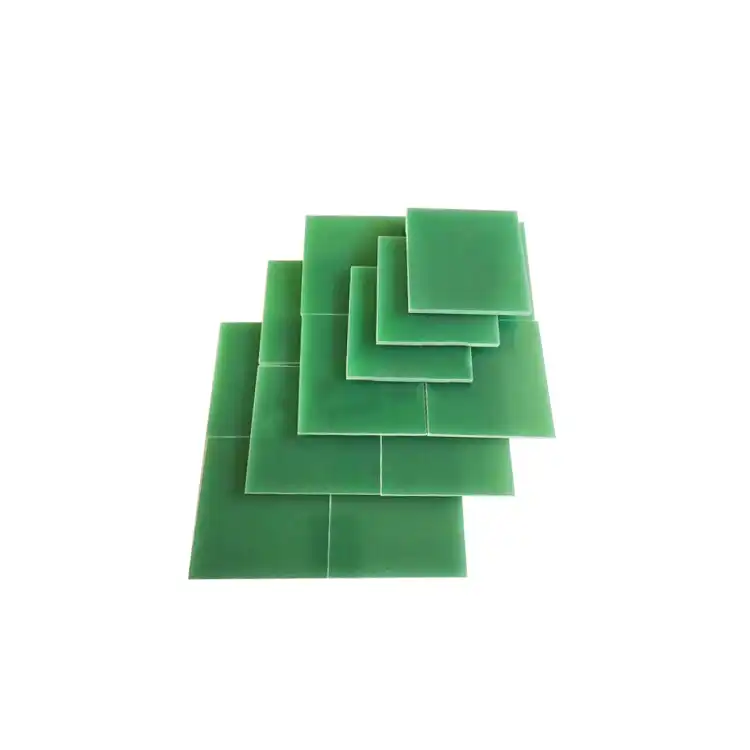
Understanding FR4 Epoxy Sheets and Their Fabrication Challenges
What Makes FR4 Epoxy Sheet Unique
According to NEMA standards, FR4 epoxy sheet is a high-pressure thermosetting laminate made of continuous thread glass cloth strengthened with epoxy resin. The "FR" label means that it is flame retardant and meets the standards set by UL 94 V-0. This is an important safety feature that sets it apart from other options that aren't fire resistant. This glass-reinforced material is stronger than metals for its weight, and it can keep its electrical insulation resistance above 500 MΩ even when it's wet. Standard Glass Transition Temperatures are between 130°C and 140°C, and high-Tg variants can hit 170°C or higher. This makes sure that the glass stays stable during lead-free soldering processes that are popular in modern electronics manufacturing.
Common Fabrication Obstacles
The unique makeup of FR4 epoxy sheet makes it hard to cut and drill with traditional tools. The stacked structure of the material, which is made up of woven glass fibers held together by epoxy glue, makes it easy for standard tools to chip along the edges. When processes are done by hand, thickness standards aren't always met, which leads to surface irregularities that hurt dielectric performance. These flaws are especially annoying in PCB boards, where differences as small as a micron can ruin the integrity of a circuit. Because glass fibers are rough, they also speed up tool wear, which causes dimensions to change over time during production runs. Without exact control, producers have to deal with high rates of scrap, problems during assembly, and the possibility of failures in the field during final use.
Material Properties Affecting Processing
The specific gravity of FR4 epoxy sheet is between 1.85 and 2.10 g/cm³, and it absorbs less than 0.15% water after 24 hours. These properties help it stay stable in its shape, but they require special ways to be machined. Because the material is hard and harsh, it needs tools that are covered in carbide or diamond to stay sharp during long production runs. Because it is made of layers, cutting forces must be carefully managed to keep the layers of glass cloth from coming apart. Chemical resistance to acids and fluids is good for end-use uses but makes it harder to clean up after processing. When buying teams understand these physical and chemical properties, they can see why modern machining technology produces results that can be measured as being better than traditional methods.
Why Precision Matters in FR4 Epoxy Sheet Fabrication for B2B Buyers
Impact on PCB Manufacturing Quality
Accuracy in the dimensions of FR4 epoxy sheets has a direct effect on the usefulness and yield of circuit boards. Tight standards make sure that the copper wrapped sticks properly and that holes for through-hole parts and vias are placed correctly. The quality of the surface finish affects how well the solder mask is applied and how reliably the components are placed during automatic pick-and-place processes. When thickness changes more than what is expected, it becomes hard to control the resistance, which can affect the stability of signals in high-frequency settings. When buying FR4 epoxy sheet for electronics companies, procurement teams need to know that precise cutting isn't just a matter of taste; it's essential for electrical performance and production flow.
Assembly Line Integration Requirements
Modern production relies on automatic systems where parts must work together without needing to be adjusted by hand. FR4 epoxy sheets are all the same thickness, which lets holding pressure stay the same in fittings and wave or reflow soldering behave in a predictable way. Edges that are smooth and don't have any burrs stop things from getting caught in conveyor systems and keep particles from getting into clean rooms. Just-in-time inventory methods are possible because parts can fit together consistently without having to be sorted or go through other steps. Supply chain managers like suppliers who can keep this level of process control, which keeps lines running smoothly and cuts down on the need for extra stock.
Cost Implications of Imprecision
Fabrication mistakes have effects on the whole production economy. Out-of-tolerance parts need to be fixed or thrown away, which adds to the cost of materials and effort. Assembly delays caused by mismatched dimensions throw off production plans. This is especially a problem when working with clients in the power or car sectors who have tight delivery windows. Field failures caused by flaws in the manufacturing process hurt the brand's image and lead to insurance costs that are much higher than the original saves on materials. Investing in precise production methods, even if they come with a small price boost, usually leads to lower overall costs because they get rid of these problems later on. More and more, procurement professionals are judging providers not only by the price per unit, but also by the total cost of ownership, which includes the quality of the work.
How CNC Machining Enhances Precision in FR4 Epoxy Sheet Processing
Micron-Level Dimensional Control
Positioning accuracy of CNC cutters and mills is within ±0.025 mm (±0.001 inch), which is better than what can be achieved by hand. Servo motors that are managed by a computer constantly change the cutting depth and side position to account for small changes in the thickness of the material. This real-time adjustment makes sure that every part fits the CAD specs, even if the raw material FR4 epoxy sheet isn't exactly the same from sheet to sheet. Tool path optimization algorithms figure out the best feed rates and spinning speeds based on the properties of the material. This keeps the machine from using too much force, which can chip the material, or not cutting enough, which can leave burrs.
The technology is great at making complicated shapes like detailed cutouts, precise radiuses, and multi-angle chamfers without the need for extra steps. To fit around busbars or motor windings, electrical insulation parts often need to be a certain shape. CNC cutting makes thousands of copies of these profiles with the same exact dimensions. This repeatability is very important when providing companies that make industrial gear or distribute electricity, since interchangeable parts make upkeep easier and make inventory less complicated.
Preventing Material Degradation
When CNC programming is done right, heat and mechanical stress are kept to a minimum during processing, which protects the electrical and structural qualities of FR4 epoxy sheet. Controlled feed rates and sharp, well-chosen tools keep heat from building up, which can partly fix uncured resin at cut edges and protect the integrity of the material. When the cutter rotates in the same direction as the feed, this is called climb milling. It makes lines that are cleaner and causes less damage to the bottom than regular cutting. Vacuum hold-down systems properly spread clamping force, which stops bending that could cause tiny cracks in the epoxy matrix.
Delamination between layers of glass cloth can happen when threads are cut too roughly during cutting. These process controls stop this from happening. Maintaining the consistency of the laminate makes sure that the dielectric strength stays the same across the component. This is very important for high-voltage shielding uses in switchgear and transformers. This is something that customers in the automotive and transportation industries really care about when they are looking for battery pack barriers. This is because any flaw inside the pack could create thermal runaway paths.
Integrated Quality Assurance
Modern CNC systems have real-time tracking that finds changes in dimensions before they are made into parts that don't fit. In-process measurement probes check the sizes of important features, and if tolerances go too far, they either stop production or set off automatic tool offset changes. CAM software is directly connected to quality management systems and keeps track of the process parameters for each batch to meet the standards for traceability in quality systems that are approved by organizations like ISO 9001 or IATF 16949. This documentation feature helps with buying things in regulated fields where choosing a seller is based on material approval and process proof.
Statistical process control data created by CNC operations allows for ongoing growth by spotting trends before they affect the quality of the parts. This information helps manufacturers who work with customers in the industrial or appliance sectors make the best use of their production plans, combining the need for speed with the need for accuracy. Because of this, wait times are predictable and batch quality is always the same, which are qualities that procurement experts are looking for more and more when they are choosing long-term suppliers.
Comparing CNC Machining to Other Fabrication Techniques for FR4 Sheets
CNC Versus Manual Processing
Cutting by hand with circle saws or routers rests on the skill of the person doing the work, which means that parts and jobs will be different. When working with rigid composite materials, it's hard for even skilled workers to keep margins closer than ±0.5 mm. Longer production runs lower quality because people get tired and can't pay attention for long periods of time. CNC automation gets rid of these differences, so the first part of the FR4 epoxy sheets is processed the same way as the thousandth. This way, workers can focus on adding materials and checking quality instead of making things directly.
Throughput advantages become substantial at moderate volumes. While manual methods might compete on setup time for single samples, CNC systems rapidly amortize programming investment across production quantities. The crossover point typically occurs around 25 to 50 pieces. After that, CNC offers faster cycle times and lower costs per unit. When buying for appliance makers or industrial machinery builders—where automation is needed because of the number but not at the scale of pressing or molding—procurement teams find that CNC is the best economic option.
CNC Against Laser Cutting
Laser devices can handle materials quickly and with little tool wear, but they add thermal effects that can change the properties of FR4 epoxy sheet. When the directed energy wave hits the cut edges of the epoxy resin, it turns into carbonized zones that are weaker in dielectric strength. Heat-affected areas go out a few millimeters from the kerf and could weaken the mechanical qualities by breaking down some of the plastic. Post-processing can get rid of top char, but heat damage below the surface still stays. When you use CNC cutting, these thermal problems don't happen at all, and the edges you get keep the full material standard without needing to be cleaned again.
Laser cutting is great for cutting thin sheets and complicated designs that are hard to get to with mechanical tools. But the laser can't cut through thicker types of FR4 epoxy sheet that are often used for power transfer and structural insulation. CNC cutters can work with sheets that are 0.5 mm thick or 100 mm thick without any problems. This means that buyers can get sheets that meet a variety of requirements from a single manufacturer. The quality of the edge finish from CNC is usually the same as or better than laser cutting, and it doesn't cause the same problems with flame retardancy that thermal processing can.
Waterjet Comparison
Abrasive waterjet cutting gets rid of heat effects and works well with thick materials. The process doesn't make any dust, which is good for controlled factory settings. Waterjet, on the other hand, makes kerfs that are bigger than those made by CNC tools, which limits the minimum size of features and uses more material per part. The water stream can separate laminates that aren't glued well or wick into cut edges if the quality of the materials isn't great. Drying needs to happen before parts can be put together, which adds to the working steps.
CNC cutting gives better edge finishes without adding moisture, which is important when working with materials that will be used right away in electrical assemblies where contamination control is important. For moderately complicated shapes, cost per part usually favors CNC, since waterjet consumables (abrasive media, nozzles) and slower cutting speeds raise running costs. Strategic buyers weigh these trade-offs based on the needs of the application—waterjet for very thick insulation walls, CNC for precise electronic boards and moderately thick structure parts.
Procuring High-Quality FR4 Epoxy Sheets with CNC Precision: What B2B Buyers Should Know
Supplier Qualification Criteria
To choose makers who are qualified to do CNC machining, you need to look at how advanced the equipment is and how mature the process control is. Look for places that use multi-axis CNC cutters that can curve multiple surfaces at once, making sure that even the most complicated shapes stay within the limits that have been set. Quality management system standards, such as ISO 9001, show that there are written steps for validating processes and making them better all the time. Suppliers who work with car or aircraft users often have extra certifications that prove traceability and material compliance for FR4 epoxy sheets. These are useful even if your application doesn't need such strictness, because they are a sign of better operational discipline.
Technical capabilities include knowing how to create CAM systems. Expert providers make sure that the tool paths are optimized for composite materials so that output and edge quality are both good. Ask possible partners how they build fixtures and hold work—proper clamping stops vibration and material movement that can affect the accuracy of measurements. Customers who have used similar products before can give you an idea of how well the company really does in terms of on-time shipping, consistent quality, and meeting your specific needs.
Understanding Pricing and Lead Time Factors
The costs of CNC manufacturing depend on how much material is used, how complicated the work is, and the economics of the batch size. Nesting software arranges parts in the best way to get the most out of a sheet, but complex shapes with small inside radiuses need smaller diameter tools and slower feed rates, which adds to the cycle time. Order amounts affect how setup costs are amortized. The costs of initial scripting and fixture preparation are spread out over the number of parts, which creates economies of scale that help bigger orders. With volume agreements, providers can plan production more efficiently, which often leads to better prices and more reliable delivery windows.
Lead times depend on how busy the shop is and how much stuff is available. Standard FR4 epoxy sheet grades are usually stocked locally, which allows for quick response. However, resin system finding for high-Tg variants or custom thickness needs could take weeks. Setting up blanket purchase deals with planned releases helps sellers keep a buffer stock of the specs you want, which reduces the variability of lead times. This method works especially well for device makers and industrial OEMs that use just-in-time production plans and can use lean inventory strategies.
Building Strategic Partnerships
Long-term ties with suppliers are more valuable than just buying things once. Collaborative partners put in the time and effort to understand your application's needs and will often offer design changes that make it easier to make or lower the cost. Their knowledge of your quality standards and preferred paperwork speeds up the order process and cuts down on the amount of communication that needs to be done. When capacity is limited, established ties help with priority treatment, and when market conditions make it harder to get materials, they give you more power.
Suppliers who handle packaging, customs paperwork, and freight planning as part of their integrated logistics skills make foreign purchasing easier and make sure that materials arrive in the right state. Receiving inspection is easier when you can provide certifications, test reports, and process paperwork that are in line with your quality system's standards. When a supplier's technical skills and prices are equal, procurement professionals are becoming more aware of how these service aspects can set them apart. This makes the partnership method a strategic competitive edge.
Conclusion
CNC cutting has completely changed the way FR4 epoxy sheets are made because it offers accuracy, consistency, and quality control that older methods can't match. The technology solves important problems in the electronics, industrial, power, car, and appliance industries by making it possible to have tighter tolerances, better edge finishes, and stable batch quality, all of which make the final product work better. Partnerships with suppliers that offer approved CNC capabilities give procurement teams strategic benefits because they give them access to scalable solutions that help with both prototype development and mass production. As technical standards get stricter and supply chain dependability becomes more important, CNC precision in FR4 epoxy sheet fabrication is no longer just an option for companies that want to do a good job; it's a must for companies that want to stay competitive.
FAQ
What thickness ranges work best with CNC machining for FR4 sheets?
It is possible for CNC routers to work with FR4 epoxy sheets that are as thin as 0.5 mm, which is used in household electronics, or as thick as 100 mm, which is used for power uses. Vacuum hold-down is needed for thinner materials to keep them from bending, and bigger sheets may need more than one depth pass. Most technology and commercial uses are between 1.6 mm and 25 mm, which is the best range for CNC speed and accuracy.
Does CNC machining affect the flame-retardant properties of FR4?
When done right, CNC cutting keeps flame-retardant properties of FR4 epoxy sheet by preventing thermal breakdown. UL 94 V-0 compliance is not affected by the fact that mechanical cutting doesn't produce as much heat as laser or thermal processes. When you use sharp tools and the right feed rates, you get clean edges that don't get charred or break down in a way that makes them less fire resistant.
How does CNC pricing compare for prototype versus production quantities?
Programming and setting up fixtures make fixed costs that are spread out over the number of parts. Due to setup amortization, prototype runs with 1 to 25 pieces have higher per-unit costs, but the total cost of the job is still fair. When more than 100 pieces are made, the unit price drops by a huge amount because cutting time becomes the main cost driver. Because of these economies of scale, most providers offer tiered prices.
Can CNC accommodate custom geometries for specialized insulation components?
CNC is great at making unique profiles from CAD files without having to buy expensive tools. It can make profiles with complicated cutouts, exact radiuses, and angled edges. This gives you the freedom to make changes to the design quickly and affordably, which you can't do with printing or casting. The technology helps OEMs a lot, especially when they need application-specific forms in small amounts and can't afford to buy expensive specialized tools.
Partner with J&Q for Precision FR4 Epoxy Sheet Solutions
When it comes to making insulation materials, J&Q has more than 20 years of experience and is qualified to use CNC machines to make FR4 epoxy sheet parts that meet your exact needs. Our integrated quality control systems make sure that we meet foreign standards, and our in-house operations make sure that delivery goes smoothly. Our engineering team works together to make sure that the product is easy to make and doesn't cost too much, whether you need a small number of prototypes to make sure the plan works or a lot of them to keep supplies coming in. As a well-known provider of FR4 epoxy sheets to electronics companies, industrial machinery makers, and clients in the power sector around the world, we know how important it is to find the right balance between accuracy, dependability, and price. Get in touch with us at info@jhd-material.com to talk about your needs and find out how our CNC manufacturing services can improve the performance of your supply chain.
References
National Electrical Manufacturers Association (NEMA). (2019). Industrial Laminating Thermosetting Products Standards Publication LI 1-2019. Rosslyn, VA: NEMA.
Institute of Printed Circuits (IPC). (2021). IPC-4101E: Specification for Base Materials for Rigid and Multilayer Printed Boards. Bannockburn, IL: IPC.
Underwriters Laboratories. (2018). UL 94: Standard for Safety of Flammability of Plastic Materials for Parts in Devices and Appliances. Northbrook, IL: UL LLC.
Tummala, R. R., & Rymaszewski, E. J. (2020). Microelectronics Packaging Handbook: Technology Drivers Part III (3rd ed.). New York: Springer Science.
Harper, C. A. (2017). Electronic Materials and Processes Handbook (4th ed.). New York: McGraw-Hill Education.
Coombs, C. F. (2021). Printed Circuits Handbook (7th ed.). New York: McGraw-Hill Professional.

Get a complete product list and quotation

J&Q New Composite Materials Company



