How CNC Machining Enhances Bakelite Sheet Manufacturing Accuracy?
CNC cutting completely changes the way phenolic laminates are made by giving precise control where other methods fail. Cutting, drilling, and milling that are led by a computer get rid of the differences in size that happen when these tasks are done by hand. This makes sure that Bakelite sheet parts meet the exact tolerances needed for mechanical and electrical uses. This automated method keeps the thickness constant, improves the quality of the surface finish, and keeps the material's natural dielectric strength. These are important factors that engineering managers look for when they are buying parts for switches, PCB boards, and motor housings.
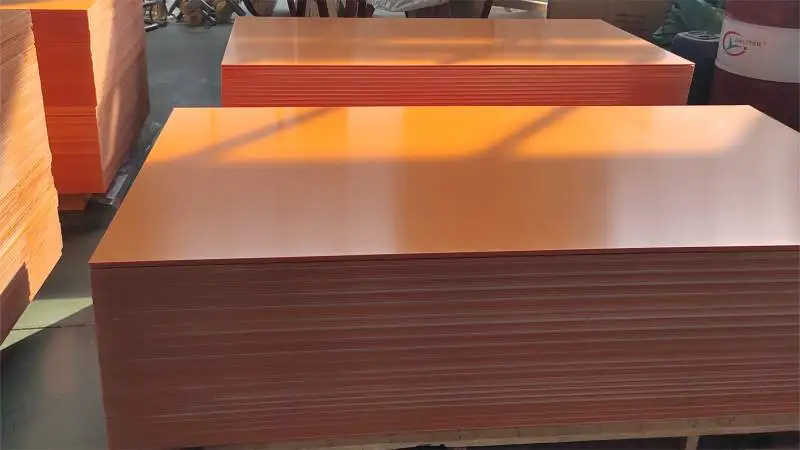
Understanding the Challenges in Traditional Bakelite Sheet Manufacturing
The old way of making Bakelite sheets involves a lot of cutting and shaping by hand, which can lead to big mistakes. Regular saws and holes make it hard for operators to keep the same sizes across production runs, especially when working with fabric- or paper-reinforced versions. When these tasks are done by hand, they leave uneven edge finishes and surface flaws that make the material less effective in high-voltage settings.
Dimensional Inconsistencies That Impact Performance
When working by hand, thickness differences are bigger than what is allowed. This is especially a problem when making electrical insulators or mechanical gaps. Even a difference of 0.2 mm can change how parts fit together, which could lead to air gaps that lower insulating performance. These differences are only found during quality checks by procurement teams that are in charge of big orders of switchboard parts. This means that expensive repair has to be done and delivery dates are pushed back.
These problems are made worse by the fact that phenol formaldehyde glue is very fragile. When you cut with traditional ways, the pressure isn't even, which leaves tiny cracks along the sides of the cuts. These tiny cracks get bigger when the temperature changes, and they break too soon in situations where the material needs to be able to handle high temperatures for a long time (up to 120°C).
Production Bottlenecks in Scaling Operations
Manual manufacturing methods can't easily meet the large-scale needs of sellers to the car and electricity industries. To properly handle phenolic materials, skilled workers need to go through a lot of training. However, quality changes are inevitable during long production runs because people get tired. This limitation makes the supply chain less secure when wait times get too long, especially for OEM clients who are in charge of just-in-time manufacturing plans.
Finishing the surface is another problem. Paper-reinforced sheets need to be polished by hand to get smooth surfaces for electrical contact uses, but this takes a long time and doesn't always produce good results. The material isn't as good for uses that need stable dielectric strength across the surface of the part because it has visible tool marks and uneven textures.
The Role of CNC Machining in Bakelite Sheet Production
Computer Numerical Control technology automates and programs accuracy to get around the problems that come with traditional manufacturing. When CNC cutters and mills are equipped with carbide or diamond-tipped tools, they can cut in complex shapes that can't be done by hand. Because of this change in technology, makers can now regularly make Bakelite sheet components that meet NEMA Grade requirements.
Automated Precision That Eliminates Human Error
CNC systems use digital toolpaths that are made from CAD models. This takes away the need for human variation in production. The machine keeps its tolerances within ±0.05mm for thousands of similar parts it makes as insulation barriers for transformer systems. This stability is very important for power distribution equipment because the way the parts fit together affects how well they protect against arcs and heat.
The computer-controlled feed rates and spindle speeds react to the properties of the phenolic material. This stops the chipping and delamination that can happen when using the wrong hand methods. Cutting parameters designed especially for fabric-reinforced grades are different from those optimized for paper-backed grades. This makes sure that the edges are clean no matter what kind of reinforcement is used.
Rapid Prototyping Capabilities for Custom Applications
CNC machining makes it possible for engineering teams working on battery pack barriers or heat-resistant fixings to make test parts in hours instead of days. Digital plans can be turned directly into machine codes, which lets R&D teams try many versions fast. This flexibility shortens the time it takes for car suppliers to make new products as heat management needs change.
Customization goes beyond making prototypes and includes full production. CNC machines can make parts with different shapes without having to wait for retooling, so they can make motor brackets or insulation frames with complicated forms. Manufacturers meet the needs of a wide range of customers quickly and effectively, keeping up with tight shipping times and quality standards.
Technical Benefits of CNC Machining for Bakelite Sheets
Precision cutting has technical benefits that cover the whole range of a material's performance, improving qualities that make Bakelite sheet materials useful in a wide range of industrial settings. When phenol formaldehyde resin is fixed, its molecular structure is kept safe through controlled processing. This keeps the resin's electrical insulation properties and mechanical strength.
Precise Dimensional Control for Critical Tolerances
With CNC cutting, the width is always the same, which is very important for coil insulation parts used in electrical transformers. Keeping the depth of the material the same guarantees a steady dielectric breakdown voltage across the insulation barrier, which stops electrical stress from building up in one place. When electrical engineers define these parts, they need recorded tolerance data that can't be reliably gathered by hand.
Superior Surface Finish Quality
Automated machining makes areas that are smooth and even, which is important for electrical contact uses. The uniform finish lowers variations in surface resistance, which makes sure that switchgear parts work reliably. Carbide tools cut through the rough phenolic matrix without leaving behind the rough surfaces that come from hand cutting, which can make ways for water to get in or for electricity to follow.
When thermal cycling is used, it's especially important to keep surface flaws to a minimum. Smooth finishes get rid of stress points where heat expansion could cause cracks to form. Manufacturers of home appliances that use phenolic sheets for motor insulation frames benefit from this longer durability, which means that guarantee claims related to parts breaking down too soon are less common.
Scalable Production Without Quality Compromise
CNC machines always make the same high-quality parts, whether they are making ten prototypes or ten thousand production parts. This scalability solves the main problem that buying specialists face, which is how to handle changing demand levels. When suppliers have CNC machines, they can handle large orders of electrical insulation without sacrificing quality, which often happens when people are rushed when making things by hand.
Batch stability makes sure that parts can be used in different production runs, which makes inventory management easier for wholesalers who work with more than one OEM client. Each part is the right size and within the allowed range, so there are no more organizing and redoing costs that come with making things by hand.
Comparing CNC-Machined Bakelite Sheets with Traditional and Alternative Materials
When comparing different types of materials, it's important to know how the processing methods affect the end performance. CNC-machined Bakelite sheets are clearly better than both traditionally made versions and other insulation materials on the market for commercial use.
Performance Improvements Over Conventional Processing
Components made with CNC techniques are more stable in terms of their dimensions than similar parts made by hand. The exact cutting action keeps the sides of the material intact, which stops the layers that are saturated with resin from peeling off. Even when they are under a lot of stress, structural insulation parts keep their mechanical strength. This means they meet the durability standards that mechanical engineers set for wear-resistant uses.
Material Comparison Against Modern Alternatives
When it comes to making precise parts, CNC-machined phenolic sheets are easier to work with than fiberglass-reinforced plastics. The material cuts cleanly and doesn't produce the fiber-filled trash that can happen with glass-reinforced alternatives, which makes managing the shop floor easier. This trait is useful for companies that make complicated parts that need to be machined more than once.
Compared to melamine laminates, phenolic materials are better at withstanding heat and being strong, especially in situations where temperatures stay high for a long time. When makers of automotive parts need insulation pads for engine compartments, they choose phenolic options because they have been shown to be thermally stable up to 120°C, which is higher than the realistic limits of many current thermoplastics.
When order numbers are low enough that investing in mold tools isn't worth it, cost analysis shows that CNC-machined phenolic parts are often a better deal than injection-molded thermoplastics. Because phenolic laminates can be made in a variety of shapes and sizes without the need for hard machining, they are a good choice for OEM clients who need specific setups.
Best Practices in Procuring CNC-Machined Bakelite Sheets
To successfully buy precision-machined Bakelite sheet components, you need to know what the provider can do and what the key quality markers are. Technical buying teams lower risk by setting clear standards and checking methods that are in line with what the application needs.
Evaluating Supplier Quality Certifications
Reliable providers have quality management systems that are written down and approved to ISO standards. This makes it possible to track the process from making the raw resin to the final machining. These certificates show that the process is controlled in a way that makes sure the material qualities are the same from batch to batch. The quality paperwork should have details about the material grade that match NEMA or IEC standards that are right for the purpose.
Request material test reports confirming dielectric strength, moisture absorption rates, and thermal stability characteristics. Suppliers who can test their products in-house can give lot-specific data that shows they meet standards. Electrical engineers need this paperwork to make sure that parts are safe enough to use in safety-critical situations like arc barriers or coil insulation.
Communicating Specifications and Tolerances
Assertions that are easy to understand keep mistakes from costing a lot of money during order completion. Give thorough models that show the important measurements, the surface finish that needs to be met, and the accepted tolerance ranges. Engineering managers should find out if Grade X, XX, or XXX versions of the material are best for the job in terms of how well it resists water and electricity.
Talk about your choices for material reinforcement in detail. Grades that are reinforced with paper are better for electrical uses that need dielectric qualities, while grades that are reinforced with fabric give structural parts more strength. Suppliers who have experience CNC-machining phenolic materials can help you make changes to the design that make it easier to make without affecting the performance.
Understanding Pricing and Volume Considerations
Costs for CNC cutting are based on setup time, material use, and the difficulty of the job. It is cheaper to make simple shapes with standard limits than complicated forms that need to be set up more than once or have strict dimensional controls. To get the most out of funds, procurement workers try to standardize part designs across product lines as much as possible. This is called "maximizing economies of scale."
When you commit to buying a lot, you can often get better prices. Suppliers can spread setup costs out over longer production runs, which lowers the price per unit for big orders. Talk about the minimum order numbers right away. Suppliers that are open can handle large quantities of prototypes while also giving volume savings for large quantities of production, which helps balance the costs of development with long-term budgets for purchasing.
Conclusion
CNC cutting sets new standards for performance in making Bakelite sheet components, giving modern industrial uses the level of accuracy and quality of surface they need. With automated processing, the mistakes that come with human methods are gone, and providers can meet strict requirements for thermal resistance, electrical insulation, and mechanical durability. For solid product performance in the electronics, automobile, power distribution, and appliance production sectors, engineering teams can get their hands on customized parts with clear tolerances. Procurement workers benefit from production methods that can be scaled up or down and keep quality consistent from prototypes to high-volume production. This is made possible by quality standards and industry certifications.
FAQ
What tolerances can CNC machining achieve with phenolic laminates?
Modern CNC machines keep the size errors of important parts made from Bakelite sheet to within 0.05 mm. For precise fits, this precision level is good for things like electrical insulators in switchboard units or mechanical spacers in industrial equipment. To reach these limits, the right tools must be used and the machine must be set up correctly, taking into account how rough phenol formaldehyde resin composites are.
How does machining affect the electrical properties of phenolic materials?
When CNC cutting is done correctly, the dielectric strength and insulation resistance that are built into finished phenolic laminates are kept. When you use the right tool speeds and cut cleanly, you stop heat from building up that could damage the properties of the plastic. Electrical tracking is less likely to happen on surfaces that are smooth, so they keep working reliably in high-voltage situations. Material testing shows that CNC-machined parts keep the same electrical properties as sheet stock that hasn't been cut.
Can CNC machining handle both paper and fabric-reinforced grades?
All popular types of phenolic reinforcement can be machined with CNC tools, though the best cutting settings change for each grade. Paper-reinforced materials are easier to make and have smoother surfaces, while fabric-reinforced materials need to have their feed rates changed to keep them from delaminating. Expert suppliers set up unique toolpaths for each grade, which guarantees good results no matter what kind of support structure is used.
Partner with J&Q for Precision-Machined Bakelite Sheet Solutions
J&Q has been making phenolic laminates for more than 20 years and also has advanced CNC cutting skills, which gives electrical and industrial experts the precise measurements they need. Our fully combined processes, from creating the plastic to making the parts with great care, guarantee consistent material quality that meets NEMA grade standards. As a well-known company that makes Bakelite sheets, we offer full expert support to help buying teams choose the best grades for tough uses. Our specialized transportation network lets us set reliable arrival times that help you meet your production deadlines. Get in touch with info@jhd-material.com right away to talk about your unique needs and get quotes for CNC-machined phenolic parts that are perfect for your mechanical, electrical, or heat management projects.
References
Richardson, T. "Phenolic Resins: Chemistry, Applications and Performance." William Andrew Publishing, 2020.
Harper, C.A. "Handbook of Plastics Technologies: The Complete Guide to Properties and Performance." McGraw-Hill Professional, 2019.
National Electrical Manufacturers Association. "Industrial Laminated Thermosetting Products – NEMA LI 1-1998 (R2019)."
Bonniau, P. and Bunsell, A.R. "A Comparative Study of Water Absorption Theories Applied to Glass Epoxy Composites." Journal of Composite Materials, Vol. 15, 2018.
Margolis, J.M. "Engineering Thermoplastics: Properties and Applications." Marcel Dekker Inc., 2021.
Kumar, S. and Singh, R. "Precision Machining of Polymer Matrix Composites: Materials, Methods, and Advancements." Materials Today: Proceedings, Vol. 44, 2022.

Get a complete product list and quotation

J&Q New Composite Materials Company



