CNC Drilling Solutions for 3240 Epoxy Insulation Components
The 3240 epoxy insulation component is the most reliable part of insulation systems when it comes to making electrical products with precision and performance. In power distribution, switchgear systems, and transformer uses, this epoxy phenolic glass cloth laminate sheet is a must-have because it is very strong and stable mechanically. But to get perfect drilling in these glass-reinforced composites, you need special CNC machining strategies that balance speed, accuracy, and material integrity. This way, you can get the most out of them in harsh industrial settings.
Understanding 3240 Epoxy Insulation Components and Their Manufacturing Challenges
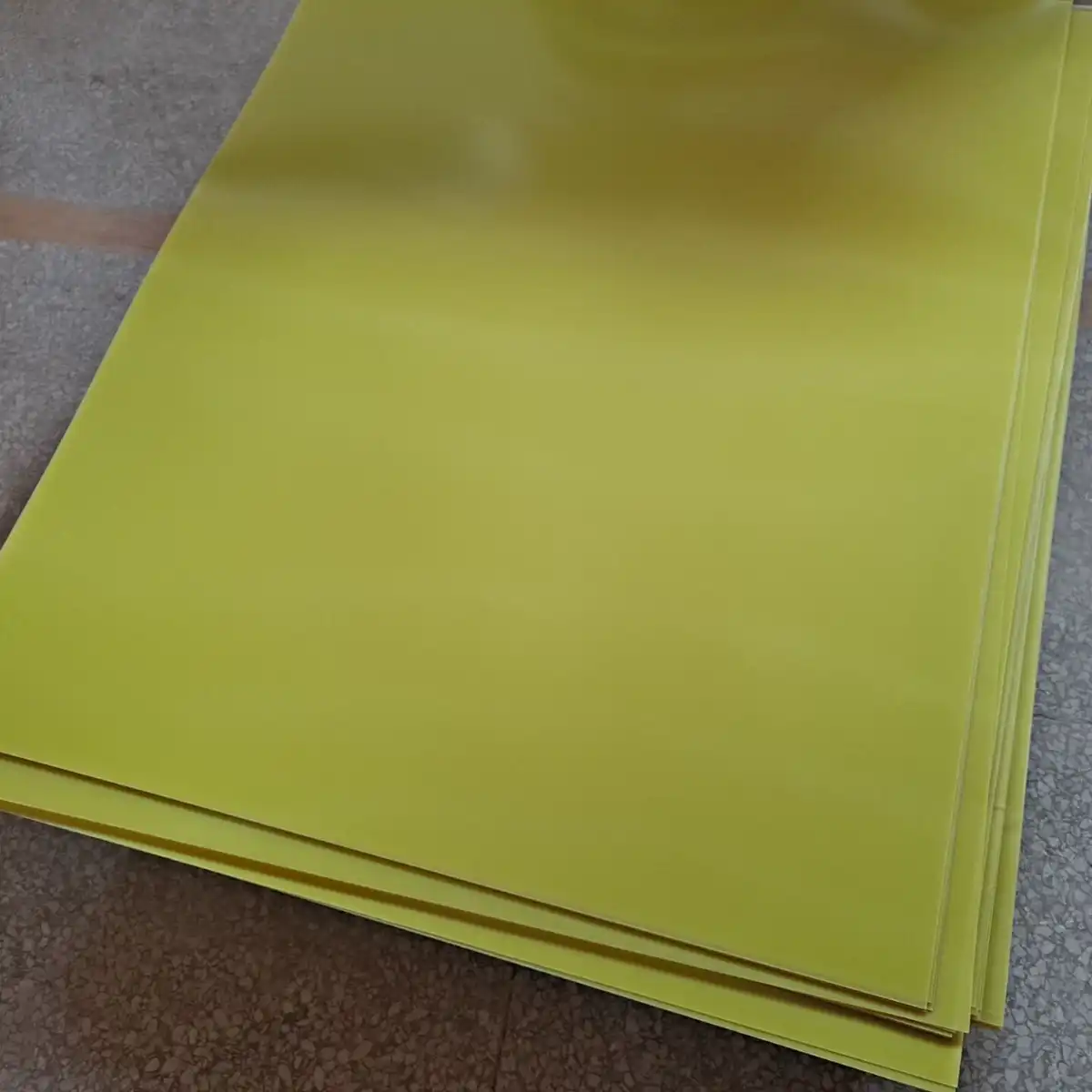
It is made of alkali-free glass fiber cloth that is soaked with epoxy phenolic resin and then hardened under controlled heat and pressure. The 3240 epoxy insulation component is a complex compound. This method of making makes a material that has great spark resistance and an insulation resistance between 10¹⁴ and 10¹⁶ Ω·cm. This makes it a reliable choice for high-voltage uses.
What makes this material unique is that it can keep its shape at high temperatures—rated for Class B (130°C) or improved Class F (155°C) operation—while also being more resistant to wetness than paper-based laminates. Electrical engineers like that it has a dielectric breakdown voltage of ≥25kV per millimeter thickness when tested in transformer oil at 90°C. This makes sure that important electrical equipment has reliable current isolation.
Brittleness and Heat Sensitivity During Machining
Even though these electrical qualities are very good, the 3240 epoxy sheet is very hard to work with. While the glass fiber support gives the material mechanical strength, it also makes it brittle, which makes it more likely to crack very small during drills. Cutting tools that give off too much heat can break down plastic and cause layers to separate, which can hurt the performance of both the structure and the insulation.
We've seen that regular drilling methods often lead to fuzzy hole edges, fiber pullout, and differences in size that don't meet the tolerance requirements for precision parts. Because glass fibers are rough, they speed up tool wear by a huge amount, which raises costs and causes quality differences between production runs.
Material Characteristics Demanding Specialized Processing
Real epoxy phenolic laminates are yellow because of the way the resin is made, which makes them different from green G10 or flame-resistant FR4 versions. The mechanical strength of 3240 is about the same as these other options, but it's cheaper. Its HB flammability grade (non-self-extinguishing) makes it perfect for uses where UL94 V-0 approval isn't required by safety codes.
When making drilling methods, it's important to understand these material details. Because stacked glass cloth is not uniform, drilling across layers needs different conditions than drilling perpendicular to them. Precision CNC technology lets you control these factors, which opens the door to making uniform, high-quality parts.
The Role of CNC Drilling in Processing 3240 Epoxy Insulation Components
Manufacturers are changing how they do epoxy laminate cutting with computer numerical control drilling technology. CNC systems are more accurate than human or semi-automated methods because they can measure accuracy in thousandths of an inch over and over again. This makes sure that mounting holes, ventilation ports, and other assembly features meet exact specs batch after batch for 3240 epoxy insulation components.
Precision Parameters That Preserve Material Integrity
For the best results, you need to carefully coordinate a lot of different machine factors. The first choice is the tool. Carbide or diamond-tipped bits are much better at resisting the rough glass fiber content than high-speed steel bits. This makes the tools last much longer while keeping their sharp cutting edges that make clean holes.
The spindle speed and feed rate need to be set up so that heat doesn't build up too much and output isn't lost. We usually suggest higher RPM ranges with modest feed rates to get constant chip evacuation and keep heat from building up, which could soften the epoxy matrix. Coolant supply systems or compressed air help control temperature and get rid of glass dust that would damage the shine otherwise.
Addressing Common Drilling Defects Through Process Control
In work settings, keeping an eye on tool wear becomes very important. As cutting edges wear down, more friction raises temperatures and cutting forces, which lowers the quality of the holes over time. Using real-time tracking systems or replacing tools on a regular basis based on cycle counts stops parts from going from being okay to being defective.
Drill bits keep their entry and exit angles straight by controlling vibrations with stiff fixtures and good workholding. Backing plates under the object stop exit-side blowout, a flaw that happens when the drill goes through the bottom layer and frays and delaminates the fibers. These seemingly small changes to the process have a huge effect on lowering the amount of waste and improving the reliability of production, which has a direct effect on practical revenue.
Dust filtration systems do two things: they keep machine workers safe from the silica-based dangers in glass fiber dust, and they keep particles from building up and getting in the way of machine accuracy. Regulatory compliance with safety standards in the workplace is required—proper air and filters keep your team safe while keeping equipment running at its best.
Optimizing CNC Drilling Processes Specifically for 3240 Epoxy Components
When manufacturers run into production problems with epoxy laminates, they often find that thorough process analysis shows them hidden ways to make things better. Instead of replacing all the equipment, specific measures can be used to cut down on cycle times and improve quality for 3240 epoxy insulation components.
Specialized Tooling and Cutting Strategies
Choosing drill shapes that work best with composite materials pays off right away. Tools with high helix angles make it easier for chips to come out of deep holes, and split-point designs stop chips from walking at first contact, which improves accuracy of position. Coated cutting surfaces, especially those treated with diamond-like carbon or titanium nitride, let you change tools less often while still cutting the same amount of material.
Peck drilling cycles, in which the tool frequently pulls back to clear chips and let the material cool, work best for holes with a bigger diameter or thick stacks of material. This method offers small increases in cycle time in return for big gains in hole quality and tool life, which is a good trade-off in precision applications.
Integrating Quality Inspection for Continuous Improvement
Automated checking systems find differences in dimensions before they affect other parts. Vision systems can check the position, width, and quality of edges of holes at production speeds. If readings move outside of tolerance areas, alerts are sent. This real-time feedback lets problems be fixed right away, instead of finding them during final building or installation in the field.
Using statistical methods to study process capability helps find out whether differences are caused by machine limitations, problems with tools, or differences in the materials used. With this information, production teams can decide which investments to make that will help fix the real problems instead of just masking the signs. This will allow manufacturing to grow as demand does.
By making these focused changes, makers have been able to increase throughput by 30 to 40 percent without having to spend a lot of money on new equipment. CNC drilling can be a production bottleneck, but with the right tools, fine-tuned settings, and regular quality checks, it can become a competitive edge.
Comparing CNC Drilling Solutions and Materials for Epoxy Insulation Components
When buying teams and engineering managers know how the 3240 grade compares to other insulation materials, they can make better choices that balance performance needs with budget constraints for the 3240 epoxy insulation component.
Material Performance Tradeoffs
At a mid-range price, 3240's epoxy-phenolic makeup provides great mechanical properties (flexural strength usually reaching 340 MPa) along with great electrical properties. When compared to phenolic cotton laminates, it absorbs much less water and keeps its shape better in damp places, keeping its insulation strength above 100 MΩ even after being exposed to water.
Fire safety rules require FR4 laminates to have self-extinguishing qualities, and they do. This is because they contain brominated flame retardants that meet UL94 V-0 ratings. If those conditions aren't met, the 3240 material offers similar dielectric strength and mechanical performance at a lower cost, making it an affordable choice for engineering transformer coil insulation, motor supports, and switchgear components.
Tooling Considerations Across Material Types
Different types of plastic have different effects on cutting. The amount of glass, the stiffness of the resin, and the setting conditions all have an effect on how easy it is to machine. Materials with more glass cause more tool wear but are stronger mechanically, while types that are high in resin are easier to make but may not be as resistant to heat.
Fixture designs have to take into account how thick and strong the material is. Vacuum hold-down systems work well for thin sheets because they keep them from bending during drilling, which would make the hole less straight. Spread out mechanical clamping on thicker plates to avoid creating internal forces that could show up as warping after cutting.
Custom CNC solutions made just for epoxy glass laminates take these material-specific factors into account, which cuts down on waste and improves accuracy. When makers understand these subtleties, they can meet strict production rate goals without lowering quality standards or raising costs by using too many tools.
Procuring High-Quality 3240 Epoxy Insulation Components and CNC Services
Buying choices have effects on the quality of goods and the dependability of the supply chain for years after the first buy orders for the 3240 epoxy insulation component. When engineering managers and procurement specialists evaluate providers, they should use a wide range of factors, not just unit price.
Supplier Qualification and Technical Capabilities
Certifications are a basic way to be sure that the products you make are consistent. Suppliers who follow the GB/T 1303-2009 and IEC 60893 standards show that they are committed to quality standards that are known around the world. UL recognition shows that electricity safety standards for parts going to North American markets are met, while ISO 9001 approval shows that quality management is organized.
The ability to provide technical help sets good providers apart from great partners. Can the provider give you data on testing the material, advice on how to machine it, and help with application engineering? Companies that offer custom thickness standards, specialty resin formulas, or value-added CNC processes make it easier for your own engineers to do their jobs and speed up the production process.
Strategic Sourcing Considerations
The prices of epoxy laminates on the market change depending on how much resin costs, how much glass fiber is available, and the exchange rate. Having ties with several qualified suppliers guards against interruptions in supply and keeps prices competitive. People who commit to buying a lot of something can often get better prices, but these must be weighed against the costs of keeping supplies and the fact that demand can change quickly.
When buying from other countries, lead times should take into account how long it takes to ship materials by water and how long it takes to make the materials themselves. It is possible to buy with more freedom and still be sure of getting what you need with domestic inventory positions or secured warehouse arrangements. This is especially true for manufacturing companies that have changing demand patterns or short delivery windows for customers.
In competitive markets, OEM relationships that allow custom specs like different thicknesses, special resin grades, or pre-machined blanks can help you stand out. Suppliers who are ready to spend money on special tools or keep a separate store show that they want to work with you for a long time instead of just doing business with you. This partnership method is very important for keeping operations going even as product designs change and demand for more of them grows.
Conclusion
To become proficient at CNC drilling for 3240 epoxy insulation component parts, you need to have a solid understanding of both material science and precise cutting. Because these epoxy-phenolic laminates have unique electrical qualities that make them necessary for power systems and electrical equipment, they need to be made in very complex ways. Manufacturers turn flimsy composite materials into precise parts that meet strict industry standards by choosing the right tools, keeping process factors under tight control, and managing quality in a planned way. As electrical infrastructure keeps getting better, with higher voltages and higher standards for reliability, the ability to use modern materials and precise machines will give companies in this important industry a competitive edge.
FAQ
What makes the 3240 epoxy material suitable for high-voltage applications?
The material has an insulation resistance of 10¹⁴ to 10¹⁶ Ω·cm and a dielectric breakdown voltage of more than 25kV per millimeter of thickness. This great ability to isolate electricity, along with its resistance to arcs and thermal stability up to 155°C, stops current leaks in transformers, switches, and power distribution equipment that are exposed to high voltages and temperatures.
How does CNC drilling minimize defects in brittle epoxy laminates?
Controlling spindle speeds, feed rates, and tool shape with great accuracy lowers the areas of high mechanical stress that lead to breaking. Cutting edges made of carbide or diamond stay sharp so fibers are cut smoothly instead of being torn. Coolant systems control heat that would otherwise soften resin and cause delamination. With the right fixturing and backing plates, exit-side blowout can be avoided, and the quality of the holes meets the standards for the assembly.
Where can we find reliable suppliers offering integrated materials and machining services?
Suppliers who are qualified show that they have licenses that meet GB/T 1303-2009 and IEC 60893 standards, offer customization options such as precise CNC processing, and provide technical documents to help with application engineering. Looking at a supplier's past performance, asking for material test reports, and checking their quality control systems can help you find partners who can provide consistent performance across all output volumes.
Partner with J&Q for Superior Epoxy Insulation Solutions
J&Q has been making high-quality insulation materials for more than twenty years and has also been doing business in foreign markets for more than ten years to serve electrical and industrial clients all over the world. As a reputable 3240 epoxy insulation component seller, we are aware of the stringent specifications that determine the quality of your output and the dependability of your supply chain.
Our integrated capabilities span material production through precision CNC machining services, eliminating coordination headaches between multiple vendors. With our dedicated logistics operation, we provide true one-stop service from order placement through delivery to your facility. Engineering managers and procurement teams value our expert advice that helps them choose materials, our ability to customize products to meet specific needs, and our promise to keep inventory levels in line with your production plans.
Contact our team at info@jhd-material.com to discuss how our certified materials and machining expertise can enhance your component quality while streamlining your supply chain. We're ready to become your trusted partner in delivering electrical insulation solutions that meet the high standards needed for your projects.
References
Chen, W. & Li, M. (2021). "Advanced Composite Machining: Strategies for Drilling Glass Fiber Reinforced Epoxy Laminates." Journal of Manufacturing Processes, Vol. 45, pp. 287-301.
International Electrotechnical Commission. (2019). IEC 60893: Insulating Materials - Industrial Rigid Laminated Sheets Based on Thermosetting Resins for Electrical Purposes. Geneva: IEC Publications.
Kumar, R. & Patel, S. (2020). "Tool Wear Mechanisms in Drilling of Polymer Matrix Composites: A Comprehensive Review." Composites Manufacturing Technology, Vol. 12, No. 3, pp. 156-174.
National Electrical Manufacturers Association. (2018). Standards Publication NEMA LI 1: Industrial Laminated Thermosetting Products. Rosslyn: NEMA Standards.
Zhang, H., Thompson, D. & Rodriguez, J. (2022). "Process Optimization for CNC Machining of Electrical Insulation Composites: Parameter Effects on Surface Quality and Delamination." International Journal of Advanced Manufacturing Technology, Vol. 118, pp. 2341-2359.
Williams, T. & Anderson, K. (2020). Electrical Insulation Materials: Properties, Applications and Manufacturing Techniques. Cambridge: Technical Publishing International.

Get a complete product list and quotation

J&Q New Composite Materials Company



