How CNC Machines Improve Efficiency in FR4 Sheet Production?
CNC machines change the way FR4 sheets are made because they offer accuracy, speed, and material optimisation that can't be found with old methods that are done by hand. These computerised systems cut down on waste, improve accuracy to very small levels, and boost throughput, which lets makers meet strict requirements for PCB and insulation components. CNC machining solves important problems in epoxy laminate manufacturing by combining CAD/CAM technology with the ability to route along multiple axes. It also helps the electronics, power distribution, and car industries run more efficiently.
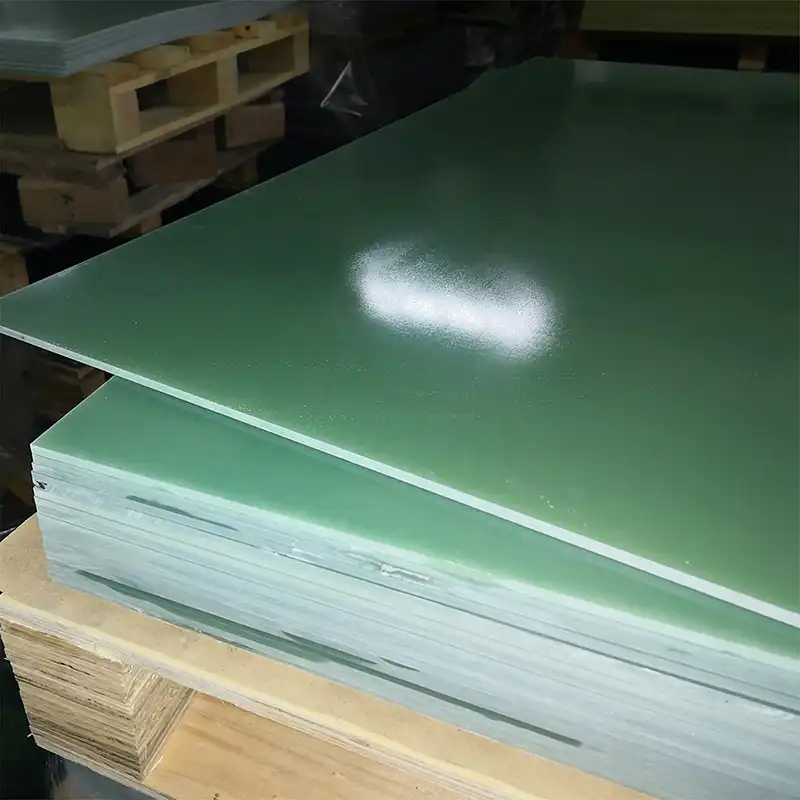
Assessing Current FR4 Sheet Production Performance
For decades, traditional ways of making epoxy boards and fibreglass laminates have ruled the factory floors. However, these methods have flaws that make them less competitive. Even though experienced machinists know how to use manual cutting methods, it can be hard to keep standards the same from batch to batch. We've seen engineering managers have trouble when PCB bases come with size differences that are too big or too small, requiring expensive repair or rejection.
Material waste is another problem that keeps coming up in traditional production. Cutting tools that are used by hand make lines that aren't straight and need large safety gaps, which directly leads to more raw material being used. These errors often show that margins are smaller than expected when buying teams figure out the real costs of production.
Skilled workers slow down production when they have to place each sheet by hand, measure cutting lines, and make adjustments to the equipment between runs. During busy times, like when customers want quick-turn samples or fast orders for switchgear parts, these steps that take a lot of time cause problems. For producers who work with a lot of different industries, like appliance brands and generator makers, these delays affect a lot of different product lines, making it harder to meet delivery dates and keep good customer relationships.
The Hidden Costs of Manual Processing
In addition to the cost of labour, established ways also have costs related to quality control. Each epoxy bond that is made by hand needs to be inspected, documented, and often fixed. Different thicknesses, uneven surface roughness, and edges that aren't finished all the way need more handling steps. These gaps in quality are especially annoying for buyers who want to make sure that the product meets UL or ROHS standards, which don't allow for any doubts about the dimensions.
Another worry is thermal stress that can happen when cutting things by hand. When conventional tools come into touch with something, they produce a lot of heat, which could break down the resin core or separate the fibreglass layers. Even though skilled workers can lower these risks by changing how they do things, the variability adds an element of uncertainty that is hard for procurement specialists to account for in quality agreements.
Identifying Key Bottlenecks Addressed by CNC Machines
Computer numerical control technology solves the problems that slow down standard production settings in a planned way. Precision and consistency are at the heart of effective manufacturing and have a direct effect on how well a product works.
Precision and Repeatability for Consistent Quality
CNC cutters follow preset cutting lines to within microns, making sure that thousands of similar parts all have the same dimensions. This precision is very helpful for electrical insulation jobs where the fit of the parts affects how well the assembly works. CNC cutting can make hole-to-hole specs that are just too tight for hand drilling to be reliable for fitting motor frames or battery pack barriers.
Modern CNC machines processing FR4 sheet have closed-loop feedback systems that keep an eye on the cutting settings and tool position all the time. These systems make sure that the first piece and the thousandth piece in a production run are exactly the same by automatically adjusting for tool wear or changes in material density. This stability is good for mechanical engineers who specify gears or wear-resistant parts because it removes fitting problems during assembly and lowers the number of failures that happen in the field.
Enhanced Production Speed and Scalability
CNC machines become output boosters when they have automated tool changes and multi-station work keeping. One person can be in charge of several tools at the same time, and each one can carry out complicated cutting routines without constant control. This way of running a business greatly boosts output, letting sellers take on bigger orders without having to hire more people.
The ability to do rapid development needs extra care. When R&D teams come up with new designs for thermal barriers or insulation pads, CNC systems can turn CAD files into finished parts in hours instead of days. Because of this speeding up, development processes are shorter, which gives companies that make parts for cars an edge when it comes to bringing new products to market.
Material Utilization and Waste Reduction
Nesting software optimises sheet structure by putting parts in the best places to make the least amount of waste. These programs get the most output from each sheet by figuring out the best way to order parts on the sides of the raw materials. We have proof that when manufacturers switch from manual planning methods to CNC-optimized building, they cut waste by more than 20%. This directly improves cost structures for price-sensitive uses in the home device manufacturing industry.
Precision cutting lines get rid of the need for extra safety gaps that come with hand processes, which cuts down on waste even more. CNC tools confidently follow preset paths, making cuts that are just millimetres away from neighbouring parts. This increase in density means that there are more useful parts on each sheet. This lowers the cost of the base per unit without dropping the quality, which makes it easier to negotiate with suppliers when they are being evaluated.
Optimizing FR4 Sheet Production with CNC Technology
Adding computer-aided manufacturing means more than just replacing some tools; it means changing the way everything is made. The way that design tools and machine gear work together makes it possible to do things that would not be possible with separate improvements.
CAD/CAM Integration for Seamless Workflows
In CAD settings, engineering teams create insulation parts by laying out exact shapes, hole patterns, and edge profiles. Then, CAM software turns these digital models into machine-readable toolpaths that tell the machine what cutting speeds, feed rates, and tool choices work best for the qualities of the epoxy laminate. This digital thread gets rid of the transcription mistakes that come with hand programming while keeping the design purpose during manufacturing.
With parametric design, you can quickly change things to fit the needs of each client. When power distribution companies ask for arc barriers with different mounting patterns, engineers change the settings in templates that already exist instead of making completely new designs. The CAM system instantly creates new optimised toolpaths, so production stays efficient even for special orders that would normally take a long time to set up.
Advanced Cutting Capabilities
High-speed wheels with diamond-coated tools cutting FR4 sheet cut through fiberglass-reinforced materials neatly, leaving smooth edges that often don't need any extra finishing. Cutting speeds higher than 20,000 RPM shorten the rest time, which lowers the amount of heat that could damage glue systems or cause delamination. This temperature control is very important when working with smaller surfaces because heat builds up quickly.
Multi-axis routing methods let you get to complicated shapes from different directions, so you don't have to move the workpieces. Five-axis machines can make compound angles, chamfers, and relief cuts all in one setup. This cuts down on handling time and improves accuracy by getting rid of placement mistakes that build up over time. These skills are especially useful for making aircraft structure parts, where complicated three-dimensional shapes are used to make designs that are lighter.
Real-World Performance Gains
Fabricators who use CNC technology say that the run time for making similar parts is 40–60% shorter than when they use hand methods. These gains come from a combination of things: faster cutting speeds, less setup time because tools are changed automatically, and no more measuring by hand. As precision goes up, scrap rates go down at the same time. In well-optimized processes, failure rates drop below 2%.
Tighter tolerance bands and a more regular surface finish are signs of better consistency. Statistical process control data from facilities with CNC machines shows that standard errors are half of what they are for manual operations. This gives buying teams the reliability they need for just-in-time manufacturing strategies. This dependability cuts down on the need for backup stock and makes all supply lines more efficient with their working capital.
Evaluating the Outcomes of CNC Integration on Business Efficiency
When computer-controlled machining is used strategically, it helps more than just the work floor. It also helps other parts of the business. These changes add up across all of an organization's tasks, setting it apart from competitors.
Faster Lead Times and Improved Turnaround
Shorter shipping windows are possible because makers can shorten their production processes. This is an important factor for buyers when they are comparing suppliers. When project deadlines are tight, OEM buying managers give more weight to sellers who can reliably show they have quick-turn capacity. Fabricators who use CNC machines are sure in their ability to meet tighter deadlines because automatic processes get rid of the human error that usually causes production delays.
Responding to emergency orders gets a lot better. When electrical engineers find changes need to be made to the design in the middle of a job, CNC centers re-program the toolpaths and make the new parts in shifts instead of weeks. Because of this flexibility, relationships with suppliers go from being transactional to strategic, and makers are seen as proactive partners instead of replaceable sellers.
Quality Consistency and Compliance Assurance
Components that meet strict requirements for flammability and dielectric strength are made using machining methods that are repeated many times. Certification groups look at CNC paperwork trails, which speeds up the UL clearance process by showing that process control was carried out. Building quality assurance programs around CNC capabilities lowers the cost of inspections and boosts buyer trust in promises of compliance.
Consistency in mechanical strength across production runs makes sure that structural insulation parts work reliably under heavy loads. Machinery makers who use phenolic laminates for gear uses need materials with consistent properties and accurate measurements. CNC cutting meets these needs naturally, without the need for a lot of quality checking.
Economic Benefits and Supplier Partnerships
Less waste and higher efficiency in processing FR4 sheet lead to lower costs per unit, which gives prices more freedom. By keeping their profit margins high and their prices low, suppliers escape the "race to the bottom" factors that hurt service quality. Procurement professionals like stable prices that are backed up by real cost savings more than margin reduction that can't last.
Suppliers who can show they can keep getting better are more likely to have long-term relationships. Adding CNC shows that you are investing in new technology and adapting to changing customer needs. Teams in charge of technical buying give manufacturing skill a lot of weight when they look at potential key suppliers. This is because adopting new technologies is linked to being ready for the future and being able to come up with new ideas.
Implementing CNC Solutions: Best Practices for FR4 Sheet Producers
For technology merging to go smoothly, you need to do more than just buy the right tools. Manufacturers who get the most out of CNC take a thorough approach to machine selection, operating integration, and cultural adaptability.
Equipment Selection Considerations
The right machine is chosen based on how well the materials work together. Epoxy laminates make rough dust that needs strong spindle seals and special systems to collect it. When working with fiberglass-reinforced composites, machines made for softer materials may wear out too quickly. This is why industrial-grade equipment is needed to keep production going.
Sheet thickness capacity and table size determine versatile production capability. Fabricators can make a wide range of products, from bendable PCB boards to heavy switchgear barriers, with equipment that can handle material widths from 0.5 mm to 50 mm. This means they don't have to keep different teams of machines. Large-format tables make the best use of materials for large-scale production while also making small batches more efficient.
Operational Integration Strategies
When a CNC is used, the workflow needs to be redesigned so that functions like getting materials, adding machines, inspecting for quality, and shipping can all work with the automatic production rhythms. Cross-functional teams, which include machine workers, programmers, and buying managers, are needed for successful projects. This makes sure that groups that normally work in isolation can talk to each other easily.
Integrating quality control uses CNC data output to keep an eye on the process in real time. By using statistics on measures of length, width, and height, problems can be found before they become flaws. This lets strategic changes be made. These data-driven methods take the place of reactive inspection models. They cut down on waste while creating paper trails that boost customer trust.
Cultivating Continuous Improvement Culture
The success of adopting new technology depends on how willing a company is to make changes to processes over and over again. Leading makers set up regular review rounds that look at things like customer comments, output data, and how well tools are working. During these meetings, optimisation chances are found, such as changing the cutting settings to get a better surface finish or changing the building pattern to get a higher yield.
Investing in training makes sure that employees get the skills that fit the powers of the tools. As operators move from manual cutting to CAM programming and machine handling, they need help learning the new skills and time to get better at them. Companies that care about developing their employees know that these investments are necessary to get the most out of CNC technology and not just extra costs.
Conclusion
CNC cutting of FR4 sheet completely changes the costs and options for making epoxy laminates. By providing accuracy, speed, and stability that can't be achieved by hand, these systems get rid of the problems that slow down traditional manufacturing and make providers key partners who can handle demanding applications. The technology has effects beyond just increasing output. It allows for flexible customisation, quality certification, and competitive positioning, all of which are important in global markets. Manufacturing companies that use CNC integration show a dedication to quality that appeals to buyers in the electronics, industrial machinery, power systems, automobile, and gadget industries.
FAQ
How thick can resin laminates be that a CNC machine can work with?
These days, CNC cutters can work with materials ranging in thickness from 0.4 mm for very thin, bendable surfaces to 100 mm for solid insulation blocks. Multi-pass cutting strategies let you work with bigger pieces without overworking the tools, and hoover hold-down systems keep thin sheets in place so they don't move around while you're working on them. This adaptability means that it can be used for a wide range of tasks, from sensitive electronics to heavy industrial equipment, without the need for separate tools for each thickness range.
How does CNC grinding differ from hand cutting in terms of surface quality?
When computer-controlled toolpaths are used, feed rates and cutting levels stay the same. This makes surfaces smoother and less rough. When diamond-coated carbide tools are used at the right speeds, they make sharp lines by reducing delamination and fibre loss that happen when working by hand. Many CNC-machined parts go straight to assembly without any extra finishing. This cuts down on handling costs and wait times while making the parts more stable in their dimensions.
Can CNC systems handle prototypes and sales that need to be done quickly?
Rapid file-to-part processes make it possible to make prototypes just hours after getting the CAD files. CAM software automatically creates toolpaths, so you don't have to spend time writing by hand. Small-batch production is cost-effective because machines can switch between jobs by simply running a program instead of setting up a lot of parts. This gives makers the freedom to fit pressing orders in between regular production plans without messing up other responsibilities or making workers work extra hours.
Partner With J&Q for Precision FR4 Sheet Manufacturing
J&Q makes great epoxy boards and fibreglass laminates by combining more than 20 years of experience making insulation materials with cutting-edge CNC technology. Our unified production method uses computer-controlled accuracy to make sure that PCB bases, switchgear components, and heat shields all meet exact requirements. As a provider of FR4 sheets with a lot of experience, we have strict quality systems that make sure we follow UL and ROHS rules and give you the freedom to make changes. Our focused transportation network makes sure that deliveries are made on time, even when there are tight deadlines. Get in touch with our expert team at info@jhd-material.com to talk about your insulation material needs and experience the relationship difference that comes from being a leader in the industry for 20 years.
References
Coombs, C.F. (2008). Printed Circuits Handbook, Sixth Edition. McGraw-Hill Professional.
Jawaid, M., Thariq, M., & Saba, N. (2019). Mechanical and Physical Testing of Biocomposites, Fibre-Reinforced Composites and Hybrid Composites. Woodhead Publishing.
National Electrical Manufacturers Association. (2018). Industrial Laminating Thermosetting Products Standards Publication. NEMA Standards Publication LI 1-2018.
Society of Manufacturing Engineers. (2020). Fundamentals of CNC Machining. SME Technical Publications.
Bonnheim, N.R., & Ansari, F. (2017). "Advances in CNC Machining of Composite Materials." Journal of Manufacturing Processes, 29, 128-145.
Institute of Printed Circuits. (2021). IPC-4101E Specification for Base Materials for Rigid and Multilayer Printed Boards. IPC International Standards.

Get a complete product list and quotation

J&Q New Composite Materials Company



