Best CNC Practices for Cutting 3240 Epoxy Glass Laminates
It takes skill and accuracy to use CNC machines to cut 3240 epoxy glass laminates. These epoxy-phenolic composites are made from alkali-free glass cloth that has been mixed with epoxy and phenolic resins. They have great insulating qualities and are very strong. The quality of the parts you make from these materials depends on things like spinning speed, tool choice, and how you cool the parts. Knowing how weak the material is and how sensitive it is to heat can help you avoid problems like delamination, edge chipping, and thermal degradation, which happen a lot in factories that don't follow the right procedures.

Understanding 3240 Epoxy Glass Laminates and CNC Machining Requirements
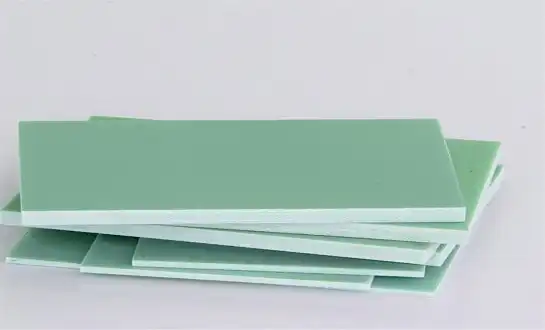
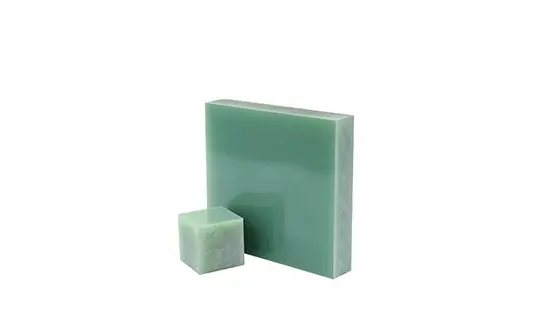
3240 epoxy glass laminates are high-tech materials made for tough industrial and electrical uses. These materials are made up of continuous E-glass cloth that is free of alkalis and is bound with epoxy resin and phenolic resin using heat and pressure. They have Class F insulation rates (155°C), which means they can be used for motors, transformers, and PCB fixings. The structure of the laminate makes it very stiff, doesn't let much water in, and has better dielectric strength than regular insulation boards.
Material Composition and Core Properties
The process of making it involves stacking glass cloth that is fully soaked with resin systems and sealing it at a controlled temperature and pressure. This makes a thick, uniform structure with tough upper layers that improve the way the surface wears. The material has a high tensile strength, which means it doesn't bend under mechanical stress, but it's still weak enough that if it's machined incorrectly, it will fail completely. Its thermal conductivity successfully gets rid of heat, which stops hotspots from forming during electrical operation. However, this same trait means that careful thermal management is needed during CNC cutting to keep the resin from breaking down.
Comparing 3240 with FR4 and Other Laminates
FR4 laminates are the most common choice for PCB uses because they are cost-effective and don't catch fire. However, 3240 laminates are better when transformer oil compatibility and higher mechanical strength are important. Epoxy glass composites stay the same size over a wider range of temperatures than phenolic cotton laminates, which are easier to work with but don't conduct electricity as well. The resin system in 3240 sheets resists water better than phenolics made from paper, so they are better for places that are damp. But this better performance comes with harder materials, which means that tools wear out faster during cutting processes.
Key Characteristics Affecting CNC Strategy
The normal size of a sheet is 1020mm x 2020mm, and thickness variations are usually between 0.5mm and 150mm. Tighter tolerances mean that you need to hold the workpiece and control the depth of the cut more precisely. Because the material is so fragile, controlling vibrations is very important. Too much talk causes tiny cracks that spread and cause delamination. For heat-sensitive materials, keeping an eye on the cutting temperatures is important because too much heat breaks the resin matrix and changes its shape. Chemical resistance to most solvents lets coolants be used, but it's still a good idea to test for compatibility with certain formulas.
Best Practices for CNC Cutting of 3240 Epoxy Glass Laminates
To make accurate cuts in epoxy glass laminates, you need to pay close attention to the tools, conditions, and how the work is held. Setups that aren't done right lose materials, cause delays in production, and damage the electrical insulation qualities. Over the course of many years of manufacturing, we've made these methods better by working with companies that make electrical equipment, industrial machinery, and auto parts and want uniform quality across big production runs.
Tool Selection and Preparation
When working with rough glass-reinforced 3240 epoxy glass laminates, carbide tools that are coated with diamonds last the longest. Standard high-speed steel gets dull quickly, which makes the sides rough and increases the cutting power. To avoid delamination as much as possible, pick tools with sharp cutting edges and positive rake angles. Spiral upcut bits are good for through-holes because they get rid of chips quickly, and downcut shapes keep thin sheets from tearing on the top. The diameter of the tool affects the chip clearance. Larger sizes reduce chatter but make it harder to do fine work. We suggest keeping separate tools for cutting laminates because metal-cutting tools transfer contaminants that hurt the insulating properties of the laminates.
Optimizing Spindle Speed and Feed Rate
Keeping the spinning speed and feed rate in balance controls how much heat is made and how smooth the surface is finished. Spindle speeds between 18,000 and 24,000 RPM and feed rates between 1.5 and 3 m/min usually make clean cuts in materials up to 10 mm thick. For thicker materials, slower speeds may be needed to keep the heat from building up too much and softening the resin matrix, which leads to errors in the measurements. A shallow depth of cut (0.5 to 1.5 mm per pass) spreads the cutting forces out equally, which lowers sound and tool movement. Change these settings based on the powers of your CNC machine and the thickness of the material you're using. Testing on scrap pieces will help you find the best settings for your production situation.
Workholding and Vibration Management
Secure clamping stops the sheet from moving, which can lead to mistakes in measurements and broken tools. Vacuum tables spread the supporting force out widely over big sheets so that stress points don't form in one place. Place mechanical clamps close to cutting lines to reduce the effects of cantilever. Put sacrificial backing boards under the pieces you're working on to keep the bottom surface from coming off when bits break through. Between the veneer and the work area, damping pads soak up vibration energy, which lowers chatter marks. Making sure the machine is sturdy by checking the spindle bearings and maintaining the linear guides on a regular basis reduces vibration problems that get worse as the tools wear out.
Dry Machining Versus Coolant Application
Dry cutting makes it easier to clean up chips and keeps water from getting on materials used for electrical shielding. Compressed air blast gets rid of chips from the cutting area well and cools the area a little. However, cutting settings that are too harsh produce a lot of heat, so cooling is needed for production amounts that are higher than trial quantities. If you need to use coolants, choose water-based ones that work with epoxy resins. Coolants made from petroleum may cause chemical reactions that weaken the structure of the laminate. Mist cooling systems keep the work area from getting too hot without drowning it, but collection systems are needed to get rid of particles in the air that can be harmful to your lungs.
Post-Cutting Quality Control
By deburring, sharp edges that get in the way of electrical openings and pose a safety risk when handling are removed. Small amounts can be deburred by hand with grit pads, but large production runs are better handled by automatic brush systems. Using callipers or coordinate measuring tools to check the dimensions of parts makes sure they meet the tolerance requirements. Micro-cracks, delamination, or resin degradation that can't be seen with the naked eye can be seen when the object is magnified. When you clean parts with isopropyl alcohol, you get rid of grinding leftovers, oils, and dust that get in the way of glueing or covering later on.
When it comes to epoxy glass laminates, these methods are the basis for solid CNC cutting. When operators are taught these methods, they consistently get good results, which lowers the amount of scrap and helps electrical makers and industrial equipment providers meet their tight delivery schedules.
Procurement Guidance and Supplier Insights for 3240 Epoxy Glass Laminates
There's more to finding good 3240 epoxy glass laminates insulation materials than just checking prices. Technical procurement experts judge sellers based on how well they can make things, how flexible their customisation options are, and how reliable their services are. Epoxy glass laminates can be bought from regional sellers, direct makers, and selling companies around the world. Each has its own benefits, which you should consider based on your production needs and risk tolerance.
Evaluating Supplier Capabilities and Certifications
Well-known companies keep their quality management systems up to date with ISO 9001 and their products certified with labels like UL recognition and RoHS compliance. These approvals give you peace of mind that the items you use will always meet the same standards. Suppliers who control the mixture of the resin, the buying of the glass cloth, and the laminate methods usually offer tighter thickness limits and more uniform mechanical qualities. For each output lot, you should ask for mill test records that show the dielectric strength, bending strength, and heat qualities. Suppliers who are ready to give these papers show that they are honest and committed to quality. When solving machine problems or finding the best cutting settings for a given job, the ability to provide technical help is very important.
Minimum Order Quantities and Lead Time Management
Standard sheet sizes (1020mm x 2020mm) usually have lower minimum order numbers (50–100 kg) than special sizes, which need dedicated production runs (500 kg or more). Different suppliers offer different thicknesses. Common thicknesses (1mm, 3mm, and 5mm) can be shipped right away, but custom widths may need 4-6 weeks to be made. Keeping a safety stock of widely used materials on hand can help keep the supply chain running smoothly, but keeping capital in inventory can make it hard to pay your bills. Setting up blanket purchase orders with planned releases strikes a balance between the cost of goods and the need to keep supplies flowing. When compared to suppliers who rely on third-party freight forwarders, those who handle their own transportation often offer more reliable delivery schedules.
Customization Services and Value-Added Processing
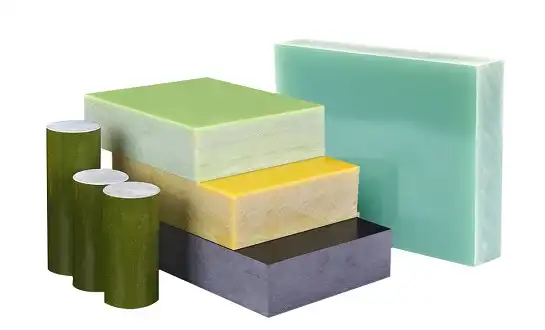
Pre-cut sheets to the sizes you specify cut down on waste and the cost of moving things around inside the company. Some providers offer CNC cutting services and send final parts that are ready to be put together. This is useful for parts with complicated shapes or when internal machining capacity is low. Custom colour choices, like natural yellow, red, green, and black, make it easier to tell the difference between parts that use different types of plastic. Smaller sheet shapes make it easier to handle and take up less store room, but the cost per kilogram goes up as more processing is done. Before committing to large-scale production, sample orders let you try how well the material works with your cutting tools and make sure it has the right electrical qualities.
Building Strategic Supplier Relationships
Long-term relationships with dependable providers give you more than just lower unit prices as a competitive edge. When there are shortages of raw materials, which happen from time to time in the resin and glass cloth markets, preferred customer standing often means getting more materials first. Technical teamwork helps you get the best material specs for your needs. When you work with suppliers who understand what you need for the end use, the results are better. Clear information about expected demand helps producers plan their production capacity, which cuts down on lead times during busy times. In order to avoid disagreements that slow down production, supply deals should clearly spell out payment terms, guarantee policies, and return processes for materials that don't meet requirements.
Troubleshooting and Optimization: Avoiding Common Pitfalls in CNC Cutting of 3240 Laminates
Cutting glass-reinforced epoxy laminates can be hard for even machine shops with a lot of experience. Seeing the signs early and taking the right steps to fix them stops scrap from building up and keeps production running smoothly. We've written down common problems we've seen in thousands of machining processes and given engineering teams workable answers they can use right away.
Addressing Delamination and Edge Separation
Layers separate along cut sides or inside the material body of 3240 epoxy glass laminates, which is a sign of delamination. Too fast of feed rates can cause shear stress between layers of glass, dull cutting tools that tear instead of shear material, or poor workholding that lets shaking happen. It often fixes the problem to slow down the spindle by 20 to 30 percent while keeping the feed rate the same. Check the sides of the tool under a microscope—even small chips cause cutting force mismatches that spread cracks. Over-clamping, which causes stress concentrations, can be avoided by gradually tightening the workholding. In glass-reinforced materials, climb milling (where the direction of the tool movement follows the direction of the feed) usually causes less delamination than regular milling.
Preventing Edge Chipping and Fraying
The quality of the sides affects both how they look and how well they conduct electricity. Rough edges cause stress to build up and make clearing lengths shorter. Sharp tools are still the best way to stop chipping, but tool shape is also important. Slower feed rates near the edges of the part cut down on exit-side tearout. Cutting tools don't pull out fibres when you use backing boards to hold the material as they cut through it. Changing the spindle speed changes how chips are made. If the speed is too low, fibres can bend instead of split neatly, and if the speed is too high, heat is created that weakens the resin and spreads it instead of cutting it. When cutting pieces from bigger sheets, the position of the material is important. Cutting parallel to the main fibre direction usually results in cleaner edges than cutting perpendicularly.
Managing Thermal Issues and Resin Degradation
Discolouration near the edges of cuts is a sign of thermal breakdown, which happens when the resin core is chemically changed by too much heat. This makes the area weaker in terms of both mechanical and electrical qualities. It takes more heat to make multiple short passes than it does to make one deep cut. Pausing between passes lets the heat escape, but it also makes the cycle take longer and makes the production less efficient. Using coolants to control temperature works well when they work with processes that come after. Using infrared thermometers to keep an eye on real cutting temperatures helps set safe parameter ranges. If the heat damages a material, you may need to use diamond-coated tools or slow down the cutting speed to stop the heat from building up.
Dimensional Accuracy and Tolerance Control
Parts that don't fit within the tolerances lose materials and cause shipping dates to be pushed back. As parts cool to room temperature, their sizes change because of thermal expansion during cutting. Measuring parts right after cutting gives inaccurate results. Dimensional mistakes are caused by machine movement and tool deflection, especially on parts that are far from where the work is being held. Positional precision is kept up by calibrating CNC machines on a frequent basis. When you use shorter tool overhangs, movement under cutting forces is lessened. Cutting forces push the workpiece against solid machine parts instead of away from them, which makes climb milling more accurate in terms of size than regular milling.
Long-Term Optimization Strategies
Training programs for operators that cover things like material qualities, how to properly handle tools, and how to change parameters speed up problem-solving and lower the number of mistakes that are made. Standard operating procedures that are written down record institutional knowledge and make sure that practices are the same across shifts and workers. When working with materials that are hard to make, buying CNC tools with a stronger frame and better sound damping works out very well. Monitoring measurement trends with statistical process control stops equipment drift before it makes parts that don't meet standards. Working with material sources to learn about how properties change from batch to batch helps you figure out what setting changes you'll need to make.
Conclusion
To get good at CNC machining of 3240 epoxy glass laminates, you need to know how the materials work, how to make the best cutting settings, and how to keep quality control uniform. The practices described—choosing the right tools, making sure machine speeds are matched, holding work securely, and systematically fixing problems—are the building blocks for dependable production operations. When choosing a material, you have to weigh the pros and cons of how easy it is to machine against the performance needs for things like electrical protection, mechanical strength, and the working conditions. Building relationships with experienced providers who can offer technical support, customisation options, and reliable delivery times will help your manufacturing skills and lower the risks in the supply chain.
FAQ
What kinds of thicknesses are there for epoxy glass laminates, and how does the thickness change the way they are machined?
Standard thicknesses range from 0.5 mm to 150 mm, and most providers stock the most popular sizes. Thinner materials (less than 3 mm) need extra support to keep them from bending while they're being cut, and bigger pieces (over 20 mm) need more than one short pass to keep the heat from building up. There is more stress inside thicker laminates, which can cause them to twist after being machined. To fix this, stress-relief procedures or different workholding strategies need to be used.
When I machine these materials, can I use normal coolants?
For managing heat during production cutting, water-based coolants that are compatible with epoxy resins work well. Cutting fluids made from gasoline should not be used because they might react chemically with the glue binder. Mist cooling systems keep temperatures under control while requiring little cleanup. Before starting production, testing the coolant's compatibility on scrap material stops chemical reactions that could damage the electrical properties that come up out of the blue.
How long does it usually take to get something from a supplier?
Standard sheet sizes and thicknesses usually ship within one to two weeks from reputable sources who keep stock on hand. Manufacturers may need 4 to 6 weeks to plan and make products with custom sizes or widths. Depending on the location and goods method, international shipping can take an extra two to four weeks. When you plan your purchases around your production figures, you can avoid rush orders that cost more for shipping.
Partner with J&Q for Superior 3240 Epoxy Glass Laminates
Every customer connection at J&Q is based on more than 20 years of experience making things and 10 years of experience trading with other countries. Our factories make sure that the quality is the same for thicknesses ranging from 0.5 mm to 150 mm, and they keep tight tolerances that make your CNC cutting tasks easier. As a provider of 3240 epoxy glass laminates with a lot of experience, we keep a large stock of common sizes and can also make products to fit specific needs. Our unified transportation operations set accurate arrival times, getting rid of supply chain risks that make it hard to plan output. Our engineering team is here to help you find the best cutting settings and solve any problems you're having with machining that are specific to your needs. Email us at info@jhd-material.com to get samples or talk about your insulation material needs. We're here to help your business succeed.
References
NEMA Standards Publication LI 1-1998: Industrial Laminated Thermosetting Products. National Electrical Manufacturers Association, Rosslyn, Virginia.
Harper, C.A., ed. (2000). Modern Plastics Handbook. McGraw-Hill Professional, New York.
Gomatam, R.R. and Sancaktar, E. (2006). "A Comprehensive Study on the Effects of Drilling on Glass Fiber Reinforced Plastic Composites." Journal of Composite Materials, 40(4), 289-308.
Teti, R. (2002). "Machining of Composite Materials." CIRP Annals - Manufacturing Technology, 51(2), 611-634.
Lee, S.M. (1989). International Encyclopedia of Composites, Volume 3. VCH Publishers, New York.
Davim, J.P. and Reis, P. (2005). "Drilling Carbon Fiber Reinforced Plastics Manufactured by Autoclave—Experimental and Statistical Study." Materials and Design, 26(8), 761-765.

Get a complete product list and quotation

J&Q New Composite Materials Company